High Courts judgments

10232 High Courts judgments explained in plain English: what was decided, the law applied and why it matters. Page 64 of 427.

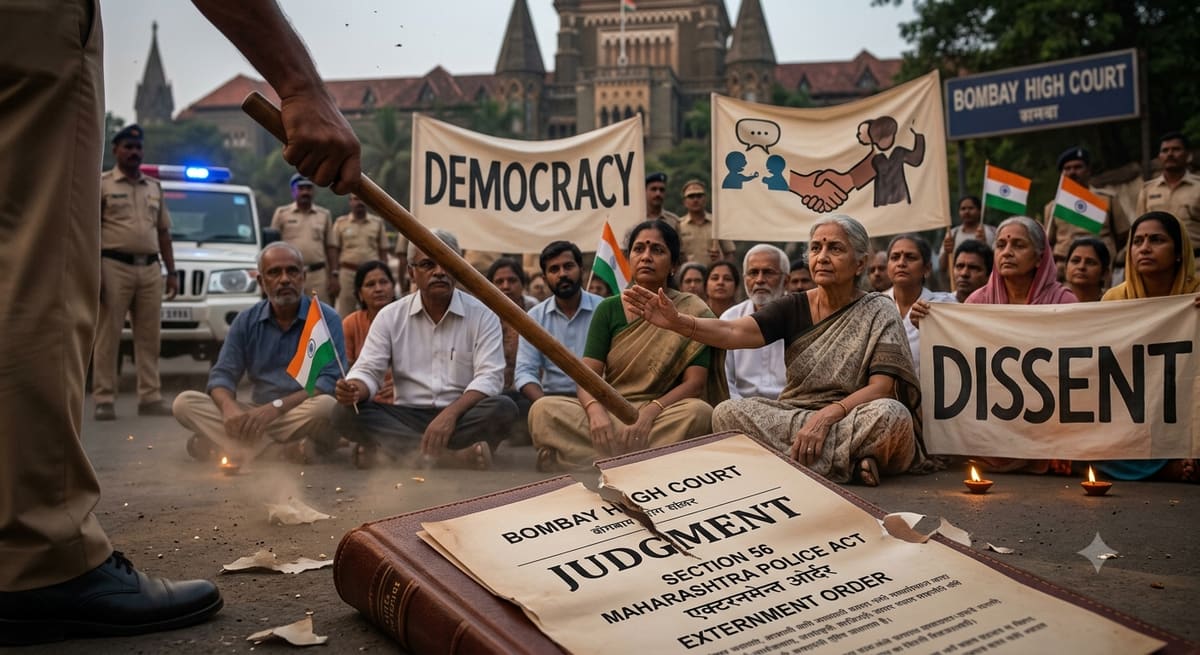
Section 56 Maharashtra Police Act | Externment Order Invalidated When Used to Suppress Peaceful Political Protest: Bombay HC
Case Law Analysis
|Bombay High Court

Section 56 Maharashtra Police Act | Externment Order Invalidated When Used to Suppress Peaceful Political Protest: Bombay HC

The Bombay High Court has ruled that using externment orders under Section 56 of the Maharashtra Police Act to silence peaceful political dissent by a registered party official violates fundamental rights to free speech and assembly. This sets a critical precedent: opposition to government policy, even when expressed through unapproved protests, cannot be equated with public disorder warranting forced displacement.
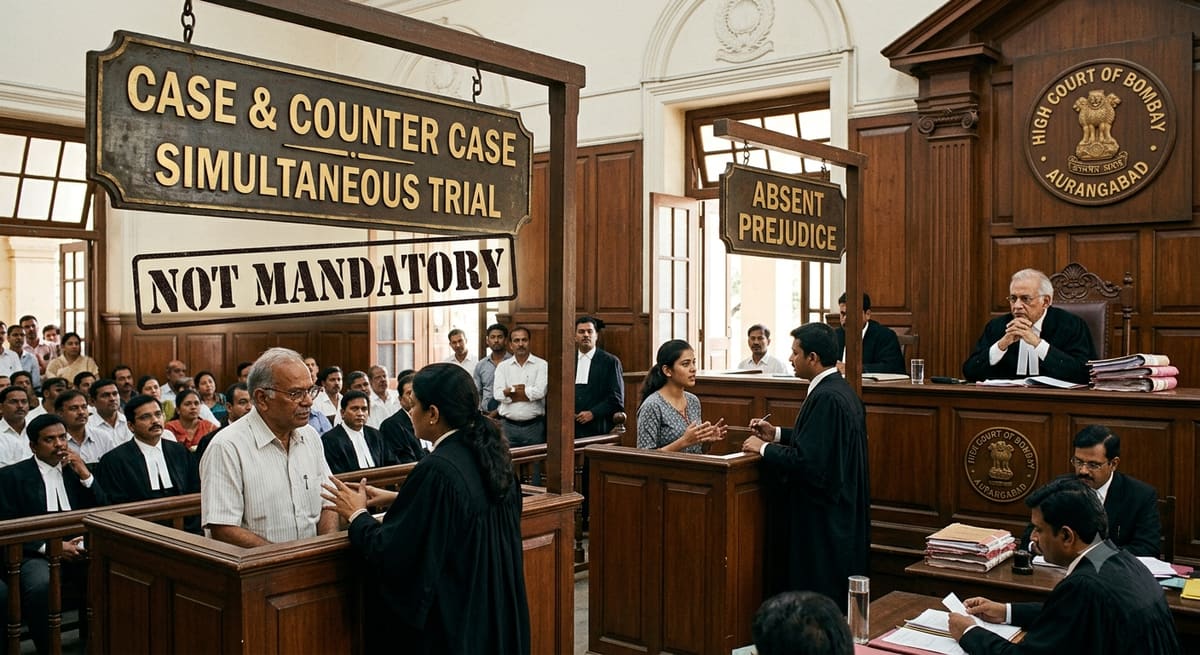
Section 465 CrPC | Simultaneous Trial of Case and Counter Case Not Mandatory Absent Prejudice : Bombay HC Aurangabad
Case Law Analysis
|Bombay High Court

Section 465 CrPC | Simultaneous Trial of Case and Counter Case Not Mandatory Absent Prejudice : Bombay HC Aurangabad

The Bombay High Court clarifies that procedural non-compliance in trying a criminal case and its counter case simultaneously does not invalidate proceedings unless the accused demonstrates actual prejudice. Section 465 CrPC operates as a curative provision, shielding convictions from technical defects when substantive justice is intact - a critical safeguard for prosecutors and trial courts navigating complex familial disputes.

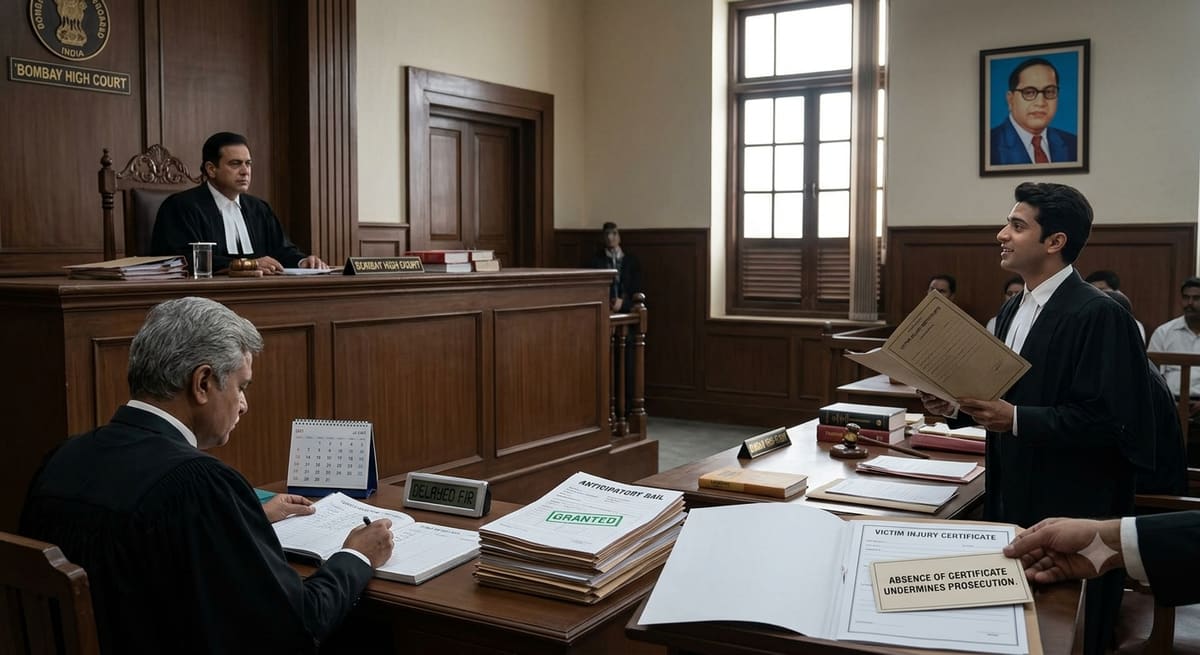
Anticipatory Bail Granted Where Delay in FIR and Absence of Victim Injury Certificate Undermine Prosecution Credibility | Section 438 BNSS : Bombay HC Aurangabad
Case Law Analysis
|Bombay High Court

Anticipatory Bail Granted Where Delay in FIR and Absence of Victim Injury Certificate Undermine Prosecution Credibility | Section 438 BNSS : Bombay HC Aurangabad

The Bombay High Court granted anticipatory bail to accused persons after finding that a four-day delay in filing the FIR, coupled with no medical evidence of assault on the alleged victim’s son, fatally weakened the prosecution’s case. This reinforces that procedural lapses and lack of corroborative evidence, even in serious allegations, must not override the constitutional right to liberty under Article 21 during investigation.

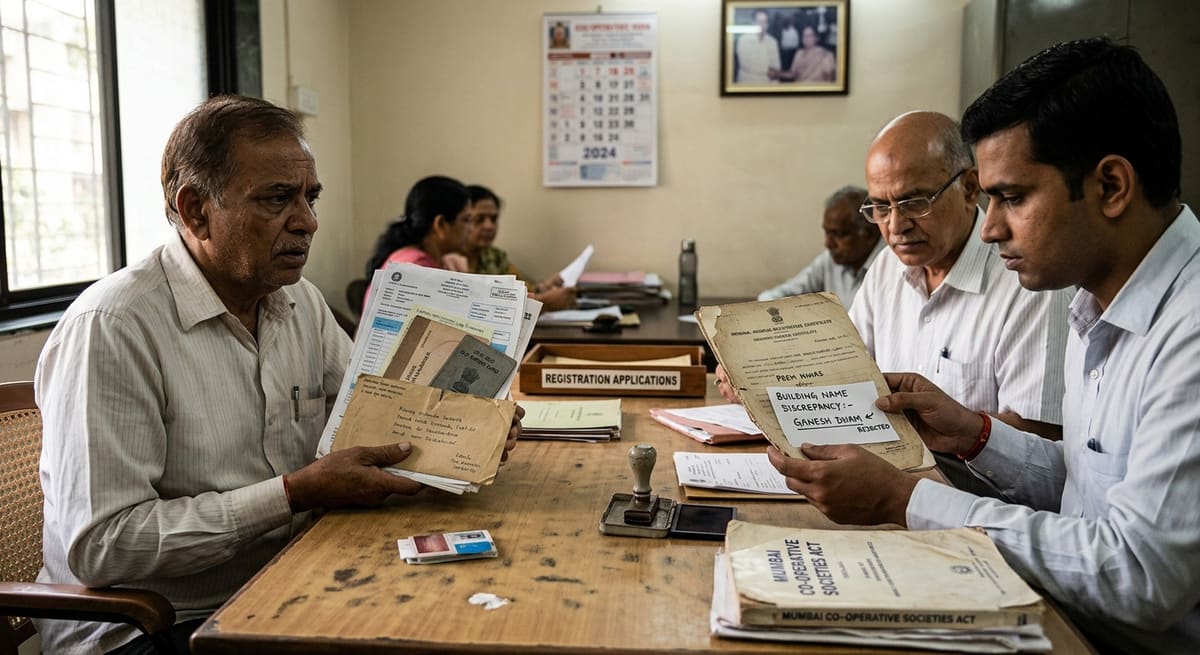
Rule 19 MCSR | Building Name Discrepancies Cannot Justify Refusal of Co-operative Society Membership : Bombay HC
Case Law Analysis
|Bombay High Court

Rule 19 MCSR | Building Name Discrepancies Cannot Justify Refusal of Co-operative Society Membership : Bombay HC

The Bombay High Court has ruled that co-operative societies cannot deny membership to eligible purchasers merely because the building name in the sale agreement differs from records maintained by the society or tax authorities. This clarifies that statutory membership rights under Rule 19 are absolute once conditions are met, and administrative inconsistencies are irrelevant - protecting buyers from arbitrary delays by societies and developers alike.

Legitimate Expectation in Recruitment | Amended Service Rules Cannot Derogate from Commenced Selection Process: Bombay HC
Case Law Analysis
|Bombay High Court

Legitimate Expectation in Recruitment | Amended Service Rules Cannot Derogate from Commenced Selection Process: Bombay HC

The Bombay High Court held that once a recruitment process is initiated under existing service rules, subsequent amendments cannot be applied retroactively to cancel or alter the selection, protecting candidates' legitimate expectations. This reinforces the principle that public employment processes must remain stable and predictable, safeguarding applicants who have invested time and effort in good faith.

Non-Statutory Leave Encashment Dues Attract 7% Interest as Natural Accrual | Allahabad HC Affirms Nand Lal Doctrine : Allahabad HC
Case Law Analysis
|Allahabad High Court

Non-Statutory Leave Encashment Dues Attract 7% Interest as Natural Accrual | Allahabad HC Affirms Nand Lal Doctrine : Allahabad HC

The Allahabad High Court has ruled that delayed payment of leave encashment - even when not mandated by statute - attracts 7% interest as a natural consequence of delayed capital, reinforcing the principle that administrative delays cannot deprive employees of fair compensation. This sets a critical precedent for all government and public sector employees awaiting delayed service benefits, aligning them with the equity-based logic of natural justice.

Section 56 Maharashtra Police Act | Externment Orders Violate Articles 19 & 21 If Used to Stifle Democratic Protests : Bombay HC
Case Law Analysis
|Bombay High Court

Section 56 Maharashtra Police Act | Externment Orders Violate Articles 19 & 21 If Used to Stifle Democratic Protests : Bombay HC

Bombay High Court quashes externment orders under Section 56 of the Maharashtra Police Act, ruling that suppressing protests against government policies through such orders infringes fundamental rights. The judgment reinforces that externment cannot be used as a tool to curb lawful dissent, setting a precedent for protecting democratic expression.

Legitimate Expectation Doctrine | Bombay HC Protects Employees from Arbitrary Cancellation of Near-Complete Promotion Process Under PMC Service Rules 2014
Case Law Analysis
|Bombay High Court

Legitimate Expectation Doctrine | Bombay HC Protects Employees from Arbitrary Cancellation of Near-Complete Promotion Process Under PMC Service Rules 2014

Bombay High Court ruled that employees acquire a legitimate expectation under Articles 14 and 16 when a promotion process governed by extant rules nears completion. The Court directed Pune Municipal Corporation to finalize the promotions within three weeks, reinforcing that administrative arbitrariness cannot override procedural fairness in service law.

Bank Account Freezing Without Notice Violates Natural Justice | Andhra Pradesh HC Directs Defreezing in UPI Fraud Case : AP HC
Case Law Analysis
|Andhra Pradesh High Court

Bank Account Freezing Without Notice Violates Natural Justice | Andhra Pradesh HC Directs Defreezing in UPI Fraud Case : AP HC

The Andhra Pradesh High Court ruled that freezing a bank account without prior notice or hearing violates principles of natural justice under Articles 14, 19(1)(g), and 21 of the Constitution. The court directed the defreezing of an account holding Rs. 8.26 lakh, emphasizing that businesses cannot be held liable for third-party UPI fraud without due process. This judgment sets a precedent for safeguarding commercial entities from arbitrary financial restrictions.

Clause 16, GO 25.07.2021 | Termination Without Reasoning Invalidates Future Employment Disability: Allahabad HC
Case Law Analysis
|Allahabad High Court

Clause 16, GO 25.07.2021 | Termination Without Reasoning Invalidates Future Employment Disability: Allahabad HC

The Allahabad High Court has ruled that terminating contractual employees under Government Order 25.07.2021 without providing any reasoning for rejecting their submissions renders the accompanying employment disability clause unenforceable. This upholds the principle that even contractual appointments are shielded by natural justice, requiring speaking orders before imposing career-long restrictions.

Equal Treatment in Service Benefits | Court Must Extend Prior Judgment Benefits to Similarly Situated Employees: Allahabad HC
Case Law Analysis
|Allahabad High Court

Equal Treatment in Service Benefits | Court Must Extend Prior Judgment Benefits to Similarly Situated Employees: Allahabad HC

The Allahabad High Court has ruled that once a judicial precedent grants service benefits to a group of employees based on their initial appointment date, those benefits must be extended to all similarly situated employees, regardless of when they were formally appointed. This reinforces the principle that administrative delays or procedural gaps cannot justify unequal treatment under service law, impacting thousands of ad-hoc appointees across Uttar Pradesh.

Section 67 U.P. Revenue Code, 2006 | Interim Relief Mandatory During Appeal Against Ejectment to Prevent Irreversible Dispossession : Allahabad HC
Case Law Analysis
|Allahabad High Court

Section 67 U.P. Revenue Code, 2006 | Interim Relief Mandatory During Appeal Against Ejectment to Prevent Irreversible Dispossession : Allahabad HC

The Allahabad High Court has ruled that appellate courts must grant interim protection against coercive ejectment orders under Section 67 of the U.P. Revenue Code, 2006, to prevent irreversible loss of property and income during pendency of appeal. This sets a binding standard for revenue authorities across Uttar Pradesh, ensuring procedural fairness in land and tenancy disputes.

Rule 4(1) Proviso, U.P. Govt. Servants (Discipline and Appeal) Rules, 1999 | Suspension Permitted Only If Allegations Warrant Major Penalty: Allahabad HC
|Allahabad High Court

Rule 4(1) Proviso, U.P. Govt. Servants (Discipline and Appeal) Rules, 1999 | Suspension Permitted Only If Allegations Warrant Major Penalty: Allahabad HC

The Allahabad High Court has ruled that suspension of government servants under U.P. Rules cannot be imposed unless the allegations, if proven, would ordinarily justify a major penalty. This reinforces the principle that suspension is not a punitive tool but a precautionary measure requiring a serious misconduct threshold, protecting employees from arbitrary administrative action.

Article 300A & DCPR 33(9) | MHADA Cannot Force Cluster Redevelopment on Co-operative Societies Without Consent : Bombay HC
Case Law Analysis
|Bombay High Court

Article 300A & DCPR 33(9) | MHADA Cannot Force Cluster Redevelopment on Co-operative Societies Without Consent : Bombay HC

Bombay High Court holds that MHADA lacks statutory authority to include co-operative housing societies in cluster redevelopment under DCPR 33(9) without their consent, as it violates lease rights and constitutional protections under Article 300A. The ruling reinforces that state agencies cannot override property rights without explicit legal backing.

Section 37 Arbitration Act | Unsubstantiated Loss of Profit Claims Cannot Sustain Arbitral Award: Karnataka HC
Case Law Analysis
|Karnataka High Court

Section 37 Arbitration Act | Unsubstantiated Loss of Profit Claims Cannot Sustain Arbitral Award: Karnataka HC

The Karnataka High Court ruled that arbitral tribunals cannot award loss of profits without concrete evidence, even if contract foreclosure was unlawful. The decision underscores that findings of fact in arbitration are binding unless perverse, rejecting a Rs. 4.38 crore claim for lack of proof. Contractors and businesses must now ensure robust documentation to sustain damages claims in arbitration.

Presidency Towns Insolvency Act | Creditors Can Lodge Claims Without Decree : Bombay HC
|Bombay High Court

Presidency Towns Insolvency Act | Creditors Can Lodge Claims Without Decree : Bombay HC

Bombay High Court clarifies that under the Presidency Towns Insolvency Act, 1909, creditors need not hold a decree to lodge claims with the official assignee. The official assignee must independently examine claims, and creditors with pending proceedings must secure final adjudication orders for dividend distribution, ensuring broader access to insolvency proceedings.

Legitimate Expectation & Article 14 | Bombay HC Bars Mid-Process Change in PMC Promotion Rules : Bombay HC
Case Law Analysis
|Bombay High Court

Legitimate Expectation & Article 14 | Bombay HC Bars Mid-Process Change in PMC Promotion Rules : Bombay HC

Bombay High Court rules that altering promotion rules after the selection process has commenced violates employees' legitimate expectation and constitutional rights under Articles 14 and 16. The court directed Pune Municipal Corporation to complete promotions under the original 2014 Rules, reinforcing procedural fairness in administrative actions affecting service law.

Section 11 Arbitration Act | Referral Court’s Role Confined to Prima Facie Arbitration Agreement Existence : Bombay HC
Case Law Analysis
|Bombay High Court

Section 11 Arbitration Act | Referral Court’s Role Confined to Prima Facie Arbitration Agreement Existence : Bombay HC

Bombay High Court clarifies that under Section 11 of the Arbitration Act, the referral court’s jurisdiction is strictly limited to verifying the prima facie existence of an arbitration agreement. Issues like limitation, abandonment, or merits of the dispute must be left to the arbitral tribunal, reinforcing minimal judicial intervention in arbitration referrals.

Section 32G Maharashtra Tenancy Act | Civil Courts Retain Exclusive Jurisdiction Over Joint Family Property Disputes : Bombay HC
Case Law Analysis
|Bombay High Court

Section 32G Maharashtra Tenancy Act | Civil Courts Retain Exclusive Jurisdiction Over Joint Family Property Disputes : Bombay HC

Bombay High Court rules that tenancy authorities under the Maharashtra Tenancy Act cannot adjudicate disputes involving joint family property, reinforcing civil courts' exclusive jurisdiction. The judgment clarifies that Section 32G orders do not override the civil court's authority in partition suits or ownership disputes under Hindu Law.

Section 23 Senior Citizens Act | Property Protection Limited to Fraudulent Transfers; Civil Courts Retain General Title Dispute Jurisdiction : Allahabad HC
|Allahabad High Court

Section 23 Senior Citizens Act | Property Protection Limited to Fraudulent Transfers; Civil Courts Retain General Title Dispute Jurisdiction : Allahabad HC

Allahabad High Court clarifies that the Maintenance and Welfare of Parents and Senior Citizens Act, 2007, only empowers authorities to invalidate property transfers made under fraudulent conditions under Section 23. All other title disputes must be resolved through civil courts, restricting the Act's scope to welfare-related fraud, not general property rights.

Registered Sale Deeds Prevail Over Revenue Records | Allahabad HC Upholds Title Based on 1913 & 1920 Deeds, Bars Municipal NOC Denial
Case Law Analysis
|Allahabad High Court

Registered Sale Deeds Prevail Over Revenue Records | Allahabad HC Upholds Title Based on 1913 & 1920 Deeds, Bars Municipal NOC Denial

Allahabad High Court rules that valid registered sale deeds from 1913 and 1920 override century-old revenue records classifying land as a pond. The judgment estops municipal authorities from denying NOCs for construction on developed abadi land, reinforcing the supremacy of documentary title over administrative records.