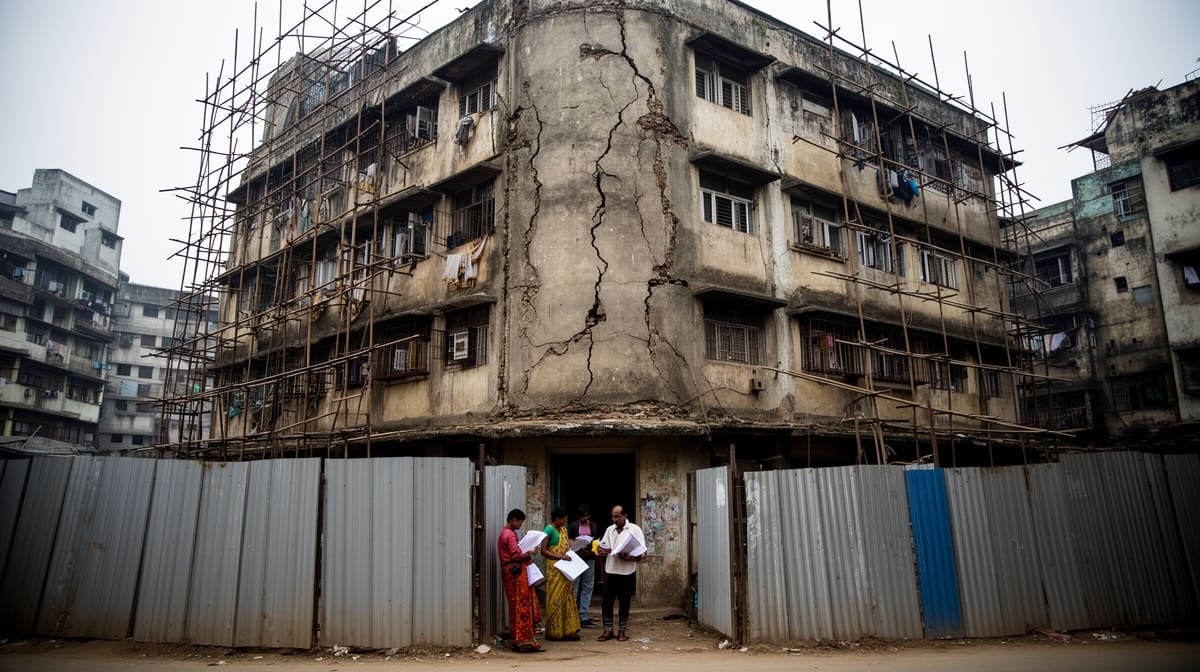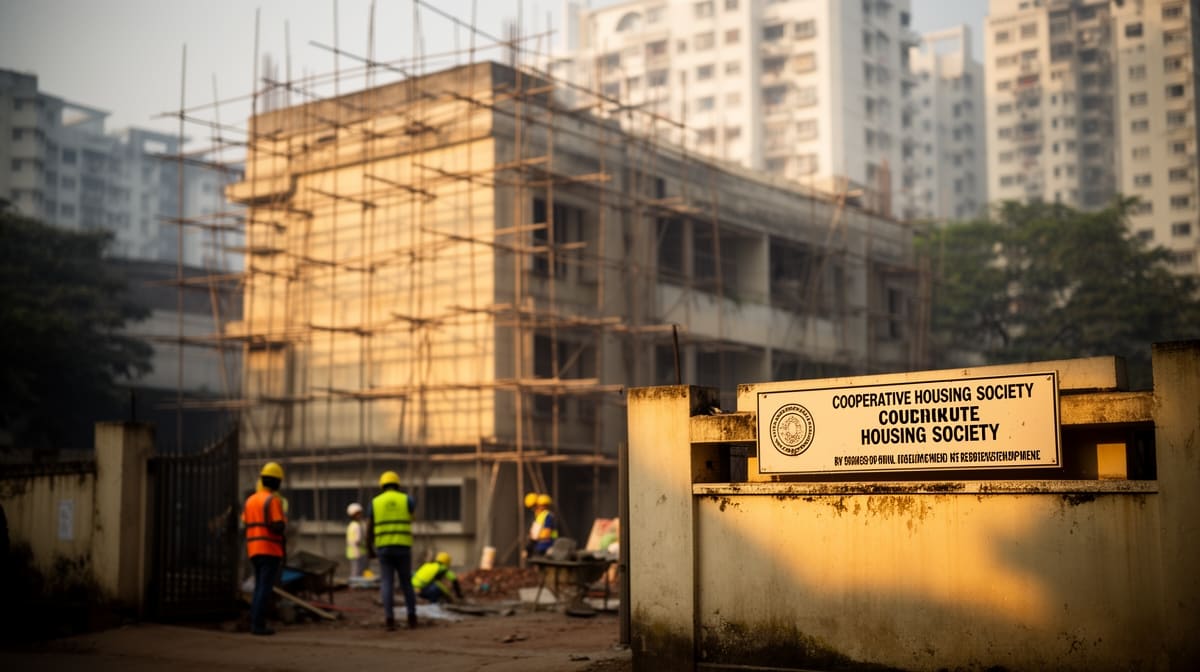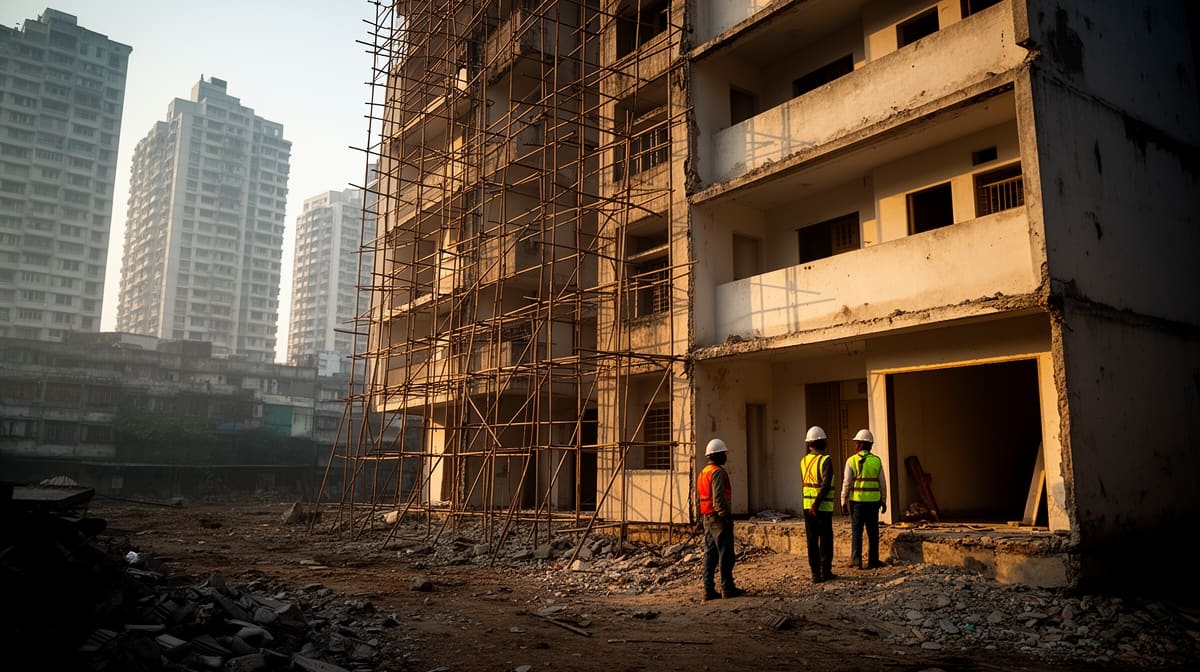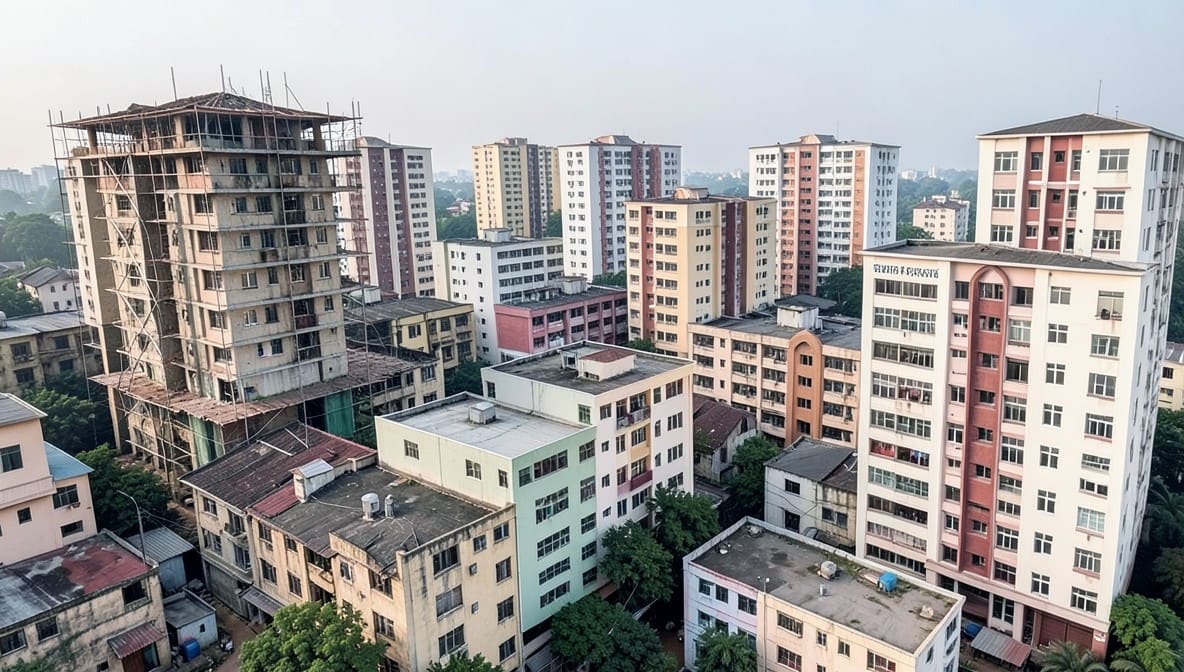
The Bombay High Court has delivered a significant judgment clarifying the limits of Maharashtra Housing and Area Development Authority (MHADA)'s powers in undertaking cluster redevelopment of housing societies. The Court held that MHADA cannot unilaterally include societies in redevelopment schemes without their consent or statutory authority, particularly when such inclusion violates lease agreements and constitutional rights under Article 300A of the Constitution of India.
Background & Facts
The Dispute
The judgment consolidates multiple writ petitions challenging Government Resolutions (GRs) dated 25.04.2025 and 15.12.2025, which proposed integrated cluster redevelopment of MHADA layouts in Adarsh Nagar (Worli) and Bandra Reclamation. The petitioners, primarily co-operative housing societies, argued that MHADA’s decision to redevelop their properties through a Construction and Development Agency (C & DA) without their consent violated their proprietary and statutory rights.
Key Facts
- M.I.G. Adarsh Nagar Co-operative Housing Society Limited (petitioner in WPL/16257/2026) holds sub-leases for lands admeasuring 19,873.73 square meters in Adarsh Nagar, Worli, comprising 24 buildings with 224 members and approximately 700 residents.
- The lands were originally allotted by MCGM in 1949 to the Bombay Provincial Housing Board, later vested in MHADA in 1977. Sub-leases were executed in 1982 for 99 years.
- The petitioners claim ownership of the buildings and sub-lessee rights over the land, entitling them to redevelop the property independently under DCPR 33(5).
- GR dated 25.04.2025 proposed integrated redevelopment of MHADA layouts, mandating that individual societies could not undertake standalone redevelopment and excluding Section 79A of the MCS Act, which governs society-led redevelopment.
- GR dated 15.12.2025 further diluted consent requirements, replacing individual member consent with society resolutions, contrary to DCPR 33(9)(4)(a).
- MHADA floated a tender on 08.04.2026 for appointing a C & DA for cluster redevelopment, including the petitioners’ properties without their consent or prior deliberation.
Procedural History
- 27.10.2023: Petitioner society applied to MHADA for No Objection Certificate (NOC) for redevelopment, but received no response.
- 21.07.2025: Petitioner submitted a detailed representation objecting to inclusion in the cluster redevelopment scheme, citing violations of lease agreements and DCPR provisions.
- 30.04.2026: Petitioner addressed another representation to MHADA, objecting to the tender and highlighting commercial and legal concerns, including:
- Erosion of independent redevelopment rights
- Inadequate consent mechanisms (51% of societies instead of individual members)
- Uncertain rehabilitation unit configurations
- Loss of autonomy and planning control
- 25.06.2026: The High Court reserved judgment after hearing arguments from both sides.
- 02.07.2026: Judgment pronounced, quashing the impugned GRs and tender to the extent they violated petitioners’ rights.
Relief Sought
The petitioners sought:
- Quashing of GRs dated 25.04.2025 and 15.12.2025 to the extent they compelled inclusion in cluster redevelopment without consent.
- Quashing of the tender dated 08.04.2026 for violating DCPR 33(5) and 33(9).
- Declaration that the petitioners have the right to redevelop their properties independently under DCPR 33(5).
- Directions to MHADA to refrain from interfering with the petitioners’ redevelopment rights without statutory authority.
The Legal Issue
The central legal question was: Whether MHADA can unilaterally include co-operative housing societies in a cluster redevelopment scheme under DCPR 33(9) without their consent, thereby overriding their lease rights and violating Article 300A of the Constitution?
Arguments Presented
For the Petitioners
-
Violation of Article 300A:
- The petitioners argued that MHADA’s actions amounted to deprivation of property without authority of law, violating Article 300A.
- GRs are executive instructions under Article 162 and Section 154 of the MRTP Act, not enacted law, and thus cannot override statutory rights.
- Right to property includes right to redevelop, which cannot be curtailed by executive fiats.
-
Ultra Vires DCPR 2034:
- DCR 33(5) requires consent of 51% of members or a valid society resolution for redevelopment.
- DCR 33(9)(4)(a) mandates consent of 51% of members of each building and 60% overall consent for cluster redevelopment.
- The impugned GRs diluted these requirements, replacing individual consent with society resolutions, which is contrary to DCPR.
-
Arbitrary Classification:
- The GRs clubbed High-Income Group (HIG), Middle-Income Group (MIG), and Low-Income Group (LIG) societies together, treating unequals as equals.
- HIG societies were not mentioned in the GRs, yet were included in the tender, leading to discriminatory treatment.
-
Violation of Maharashtra Co-operative Societies Act (MCS Act):
- The GRs mandated amalgamation/merger of societies without following Sections 17 and 18 of the MCS Act, which require consent of societies.
- Section 79A of the MCS Act (governing redevelopment) was excluded, depriving societies of their statutory rights.
-
Unreasonable Tender Conditions:
- The tender imposed arbitrary conditions, such as:
- Transit rent of Rs. 75,000/month (devoid of reasoning).
- Corpus fund for tenements (no basis for computation).
- Best-effort basis for implementation, relegating societies to uncertainty.
- The tender imposed arbitrary conditions, such as:
-
Precedents Relied Upon:
- B. K. Ravichandra v. Union of India: Right to property is a constitutional right, and deprivation requires authority of law.
- Vidya Devi v. State of Himachal Pradesh: State cannot dispossess citizens without due process.
- Hindustan Petroleum Corpn. Ltd. v. Darius Shapur Chenai: Compensation must be fair and just.
- Kolkata Municipal Corporation v. Bimal Kumar Shah: Seven sub-rights under Article 300A, including right to notice, fair compensation, and reasoned decision.
- Godrej and Boyce Manufacturing Company Limited v. State of Maharashtra: Executive instructions cannot override statutory rights.
- Smt. Damyanti Naranga v. Union of India: Right to form associations under Article 19(1)(c) includes right to exclude unwanted members.
- Olga Tellis v. Bombay Municipal Corporation: Procedure for deprivation of rights must be fair and reasonable.
For the Respondents (MHADA and State)
-
Public Interest and Housing Shortage:
- MHADA argued that cluster redevelopment is in public interest to address acute housing shortage in Mumbai.
- Integrated development ensures better infrastructure, amenities, and planned growth, unlike haphazard standalone redevelopment.
-
Statutory Authority Under MHADA Act:
- MHADA contended that Section 28 of the MHADA Act empowers it to develop and manage lands vested in it, including redevelopment.
- DCPR 33(9) permits cluster redevelopment without individual consent where MHADA undertakes redevelopment on its own land.
-
Adequate Compensation:
- MHADA claimed that petitioners are not deprived of property but are entitled to rehabilitation with additional incentives (e.g., larger area than statutory entitlement).
- Transit accommodation and corpus funds were provided as part of the rehabilitation package.
-
Precedent Reliance:
- Motilal Nagar Case (2025 SCC OnLine Bom 533): MHADA relied on this decision, where the Bombay High Court permitted redevelopment through C & DA for Motilal Nagar layouts, distinguishing it on the ground that DCR 33(5) applied (not DCR 33(9)).
The Court's Analysis
-
Right to Property Under Article 300A:
- The Court reiterated that Article 300A guarantees that no person shall be deprived of property save by authority of law.
- GRs are not “law” but executive instructions, and thus cannot override statutory rights or constitutional protections.
- Deprivation of property must follow due process, including notice, hearing, and fair compensation, as held in Kolkata Municipal Corporation v. Bimal Kumar Shah.
-
Violation of Lease Rights:
- The petitioners, as sub-lessees, have valuable rights under lease agreements, including right to redevelop under DCPR 33(5).
- MHADA’s attempt to include societies in cluster redevelopment without consent amounts to compulsory acquisition without authority of law.
- The Court relied on Mahendra Saree Emporium (II) v. G. V. Srinivasa Murthy to emphasize that sub-leases confer exclusive rights during the lease term.
-
Ultra Vires DCPR 2034:
- DCR 33(5) and 33(9) prescribe strict consent requirements for redevelopment.
- GR dated 25.04.2025 required 51% consent of total members in the layout, while GR dated 15.12.2025 replaced this with society resolutions, diluting statutory safeguards.
- The Court held that executive instructions cannot amend or override DCPR, which has statutory force under Section 22(m) of the MRTP Act.
-
Arbitrary and Discriminatory Treatment:
- The GRs treated HIG, MIG, and LIG societies uniformly, despite HIG societies not being mentioned in the original GR.
- 14 similarly situated societies were granted lease deeds and redevelopment permissions, while 12 others (including petitioners) were excluded, leading to discriminatory treatment.
- The Court relied on Navjyoti Coop. Group Housing Society v. Union of India to hold that legitimate expectation arises from consistent past practice, and defeating it requires prior notice and hearing.
-
Violation of MCS Act:
- The GRs mandated amalgamation/merger of societies without following Sections 17 and 18 of the MCS Act, which require consent of societies.
- Section 79A of the MCS Act (governing redevelopment) was excluded, depriving societies of their statutory rights.
- The Court relied on Jay Anand Co-operative Housing Society Ltd. v. State of Maharashtra to hold that bifurcation/amalgamation requires 3/4th member consent unless in public interest.
-
Unreasonable Tender Conditions:
- The tender lacked clarity on rehabilitation unit configurations, commercial benefits, and implementation timelines.
- Transit rent and corpus fund amounts were arbitrary, with no basis for computation.
- The Court held that vague and unreasonable conditions render the GRs and tender unconstitutional.
-
Distinguishing Motilal Nagar Case:
- MHADA relied on Motilal Nagar Case, where the Court permitted redevelopment through C & DA under DCR 33(5).
- The Court distinguished the present case, noting:
- Motilal Nagar involved DCR 33(5), while the present case involves DCR 33(9).
- DCR 33(9)(4)(a) permits cluster redevelopment without consent only if MHADA redevelops “on its own land”, i.e., unencumbered land without subsisting leases.
- In the present case, MHADA sought to redevelop lands with subsisting leases, which requires consent under DCR 33(5).
"The provisions of Regulation 33(9)(4)(a), if read to mean that in certain contingencies consent of the society or its members is not required, would be ultra vires the MRTP Act and Constitution of India, inasmuch as it would amount to allowing MHADA to take over the property and/or acquire the same without the authority of law by destroying the existing rights in the property."
The Verdict
The Bombay High Court allowed the writ petitions in part, holding:
- GRs dated 25.04.2025 and 15.12.2025 are quashed to the extent they compel inclusion of petitioners in cluster redevelopment without consent.
- Tender dated 08.04.2026 is quashed for violating DCPR 33(5) and 33(9).
- MHADA is directed to refrain from interfering with the petitioners’ right to redevelop their properties independently under DCPR 33(5).
- Petitioners are entitled to pursue redevelopment in accordance with Section 79A of the MCS Act and DCPR 33(5).
- No costs were awarded.
What This Means For Similar Cases
Executive Instructions Cannot Override Statutory Rights
- GRs and circulars issued under Article 162 or Section 154 of the MRTP Act cannot amend or override statutory provisions like DCPR or MCS Act.
- Deprivation of property rights requires statutory authority, not executive fiats.
- Practitioners must challenge executive actions that dilute statutory safeguards or violate constitutional rights.
Consent Requirements Under DCPR Are Non-Negotiable
- DCR 33(5) requires consent of 51% of members or a valid society resolution for redevelopment.
- DCR 33(9)(4)(a) mandates consent of 51% of members of each building and 60% overall consent for cluster redevelopment.
- Any deviation from these requirements (e.g., replacing individual consent with society resolutions) is ultra vires DCPR and unconstitutional.
- Societies must ensure strict compliance with consent mechanisms before agreeing to redevelopment.
Lease Rights Are Protected Under Article 300A
- Sub-lessees have proprietary rights over land and buildings during the lease term, including right to redevelop.
- MHADA cannot unilaterally alter lease terms or include societies in redevelopment schemes without consent or statutory authority.
- Forced inclusion in cluster redevelopment amounts to compulsory acquisition without authority of law, violating Article 300A.
- Societies should document lease agreements and assert their redevelopment rights under DCPR 33(5).
Arbitrary Classification and Discrimination Are Unconstitutional
- GRs that club unequals together (e.g., HIG, MIG, and LIG societies) without reasonable classification violate Article 14.
- Selective application of policies (e.g., granting lease deeds to some societies but not others) creates legitimate expectation, and defeating it requires prior notice and hearing.
- Practitioners must challenge discriminatory policies that favour certain groups while excluding similarly situated societies.
Tender Conditions Must Be Fair and Reasonable
- Tender documents must clearly define rehabilitation unit configurations, commercial benefits, and implementation timelines.
- Arbitrary figures (e.g., transit rent, corpus funds) without reasonable basis render the tender unconstitutional.
- Societies should scrutinize tender conditions and challenge vague or unreasonable terms that violate statutory rights or constitutional protections.