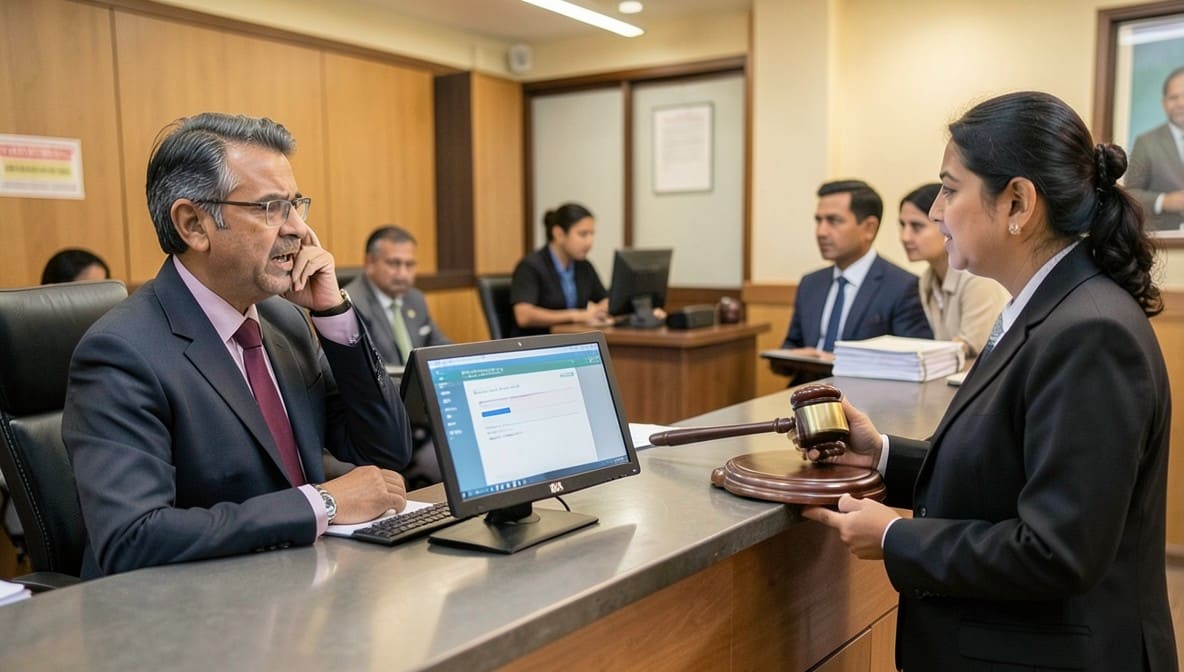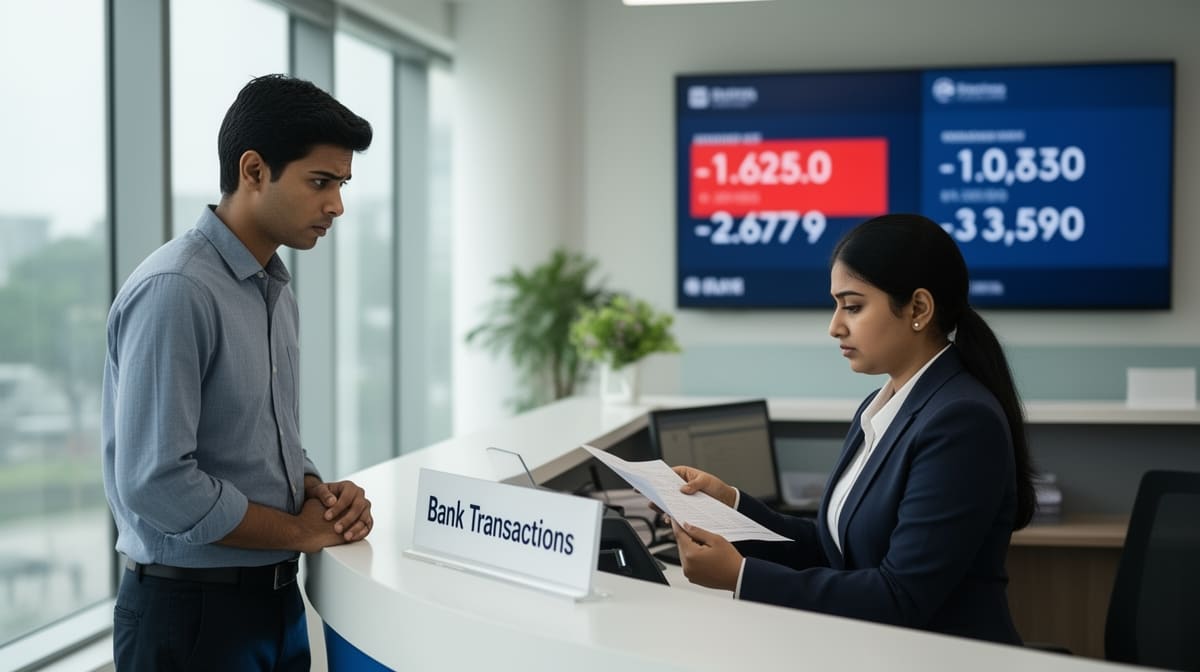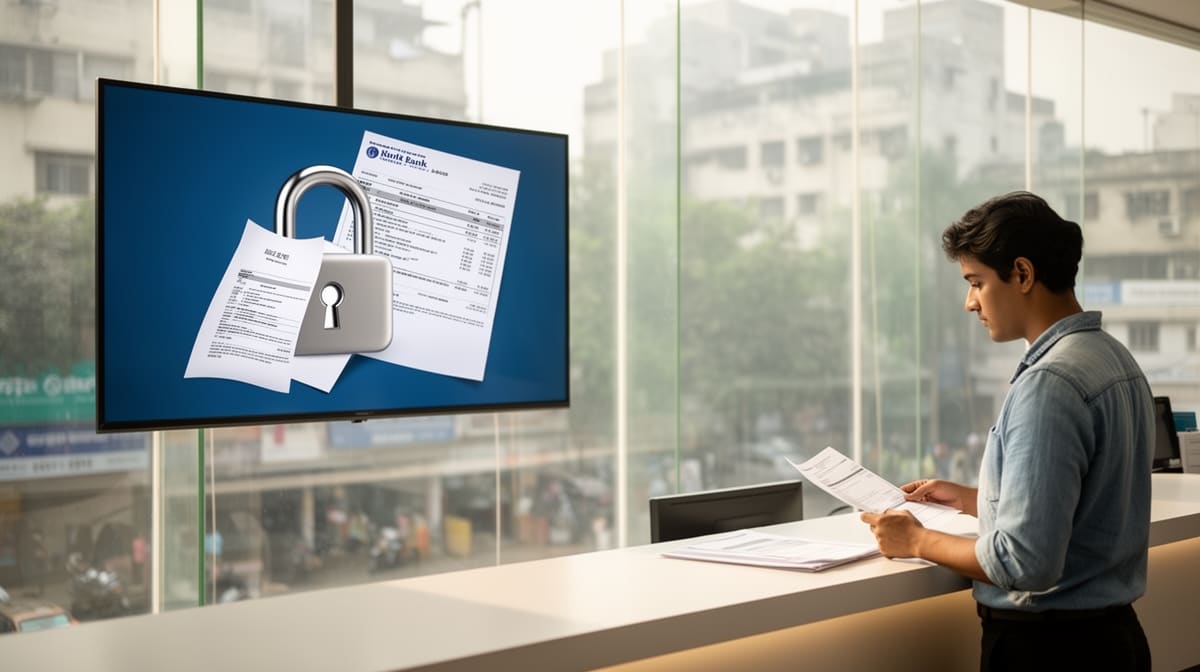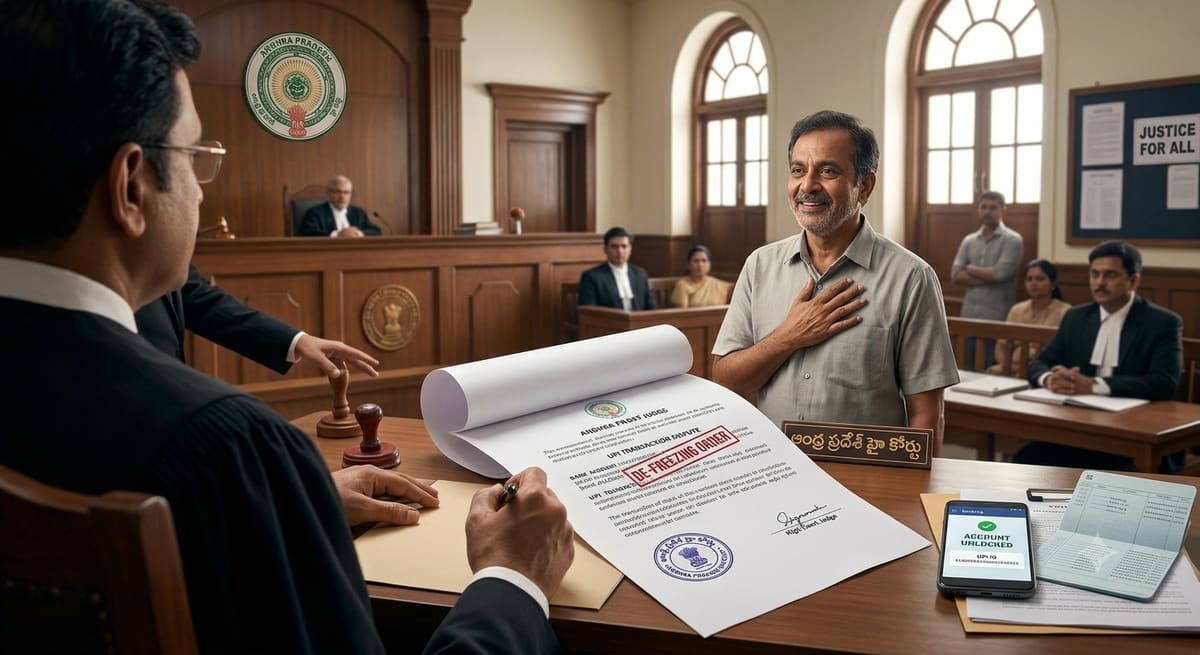
The Andhra Pradesh High Court has underscored the fundamental principle that bank accounts cannot be frozen without prior notice or opportunity of hearing, holding such actions arbitrary and violative of Articles 14, 19(1)(g), and 21 of the Constitution. The judgment provides critical safeguards for businesses operating through digital payment systems, where vendors face liability for third-party fraudulent transactions beyond their control.
Background & Facts
The Dispute
The petitioner, Sri Sai Wines, a licensed wine trader operating in Guntur District, Andhra Pradesh, held a current account (No. 43461149232) with the State Bank of India, Mangalagiri Branch. On 19.08.2025, the account was abruptly frozen by the bank at the instance of the Cyber Cell Officer, Patna District, following a complaint lodged by an individual who had purchased liquor worth Rs. 1,000 via UPI. The petitioner was neither informed of the freezing nor provided an opportunity to respond, leaving Rs. 8,26,633 stranded in the account.
Key Facts
The petitioner operates under license L.No.G.SI.No. GTR/34/2024-26, dated 30.10.2024
A UPI transaction (No. 461984251) for Rs. 1,000 was made on 19.08.2025 by an individual later accused of cheating
The State Bank of India froze the account on 19.08.2025 without prior notice
A letter dated 15.09.2025 was later served, but no reasons were disclosed
The petitioner issued a registered legal notice to the bank and Cyber Cell, but received no response
The account held Rs. 8,26,633 at the time of freezing, crippling the petitioner’s business operations
Procedural History
19.08.2025: Account frozen by State Bank of India at the behest of Cyber Cell, Patna
15.09.2025: Letter served to the petitioner, but no reasons provided for freezing
Post-15.09.2025: Petitioner issued legal notices to Respondents 3 and 4
Writ Petition No. 969/2026 filed under Article 226 before the Andhra Pradesh High Court
IA No. 1 of 2026 filed under Section 151 CPC seeking interim relief for defreezing the account
Relief Sought
The petitioner sought:
A Writ of Mandamus declaring the freezing of the account illegal, arbitrary, and violative of Articles 14, 19(1)(g), 21, and 300-A
Directions to defreeze the account and restore access
Interim relief under Section 151 CPC pending disposal of the main petition
The Legal Issue
The central question was whether freezing a bank account without prior notice, disclosure of reasons, or opportunity of hearing violates principles of natural justice and constitutional guarantees under Articles 14, 19(1)(g), and 21, particularly when the account holder is not implicated in the alleged offence.
Arguments Presented
For the Petitioner
The freezing of the account was without notice, without reasons, and without opportunity of hearing, rendering it arbitrary and illegal
The petitioner was not a party to the cheating case registered in Patna; the UPI transaction was legitimate
Rs. 8,26,633 was stranded, causing irreparable loss to the petitioner’s business
UPI transactions are ubiquitous in petty businesses, and vendors cannot verify the credentials of every buyer
Continuing the freeze would violate Article 19(1)(g) (right to carry on trade) and Article 21 (right to livelihood)
For the Respondents
No appearance was put forth by Respondents 3 to 5 despite service of notice
The Court's Analysis
The Court critically examined the procedural fairness of the account freezing, emphasizing that principles of natural justice must be adhered to even in administrative actions. Key observations included:
"No doubt, with regard to transactions in petty businesses, amounts are being transferred between vendors and vendees through PhonePe, Google Pay, etc., by using UPI. As rightly contended by the learned counsel for the petitioner, if any individual purchases goods and pays through UPI using the above said applications, the vendor cannot verify the credentials of such individual. Without verifying the credentials of the petitioner and without noticing his involvement in any criminal case registered against the said individual, the authorities cannot freeze the petitioner’s account."
The Court held that the freezing was unsustainable and contrary to law, as:
The petitioner was not implicated in the cheating case registered in Patna
The UPI transaction was legitimate, and the petitioner had no means to verify the buyer’s credentials
The absence of notice and opportunity of hearing rendered the action arbitrary and violative of Articles 14 and 21
The bank’s action at the behest of the Cyber Cell lacked legal authority without a speaking order
The Verdict
The Court allowed the writ petition and directed the State Bank of India (Respondent 3) to defreeze the petitioner’s account (No. 43461149232) immediately. The petition against the 5th respondent (Station House Officer, Bariarpur Police Station) was dismissed as not pressed. There was no order as to costs.
What This Means For Similar Cases
Freezing Bank Accounts Requires Strict Adherence to Natural Justice
Prior notice and opportunity of hearing are mandatory before freezing accounts, even in cybercrime investigations
Arbitrary freezing without disclosure of reasons violates Articles 14 and 21
Banks and cyber cells cannot act on mere suspicion without verifying the account holder’s involvement
UPI Transactions and Third-Party Liability
Vendors cannot be held liable for fraudulent UPI transactions by buyers unless active collusion is proven
Digital payment systems (PhonePe, Google Pay) are not grounds for presuming guilt of the vendor
Cyber cells must distinguish between legitimate transactions and fraudulent activities before taking coercive action
Interim Relief Under Article 226
Writ courts can intervene swiftly where constitutional rights are violated by administrative actions
Section 151 CPC can be invoked for urgent interim relief in cases of financial strangulation