The Bombay High Court has affirmed that co-operative housing societies cannot arbitrarily deny membership to purchasers who satisfy the statutory conditions under Rule 19 of the Maharashtra Co-operative Societies Rules, 1961. The judgment clarifies that procedural irregularities, such as discrepancies in building names or unresolved developer obligations, cannot override the statutory right of eligible purchasers to become members.
Background & Facts
The Dispute
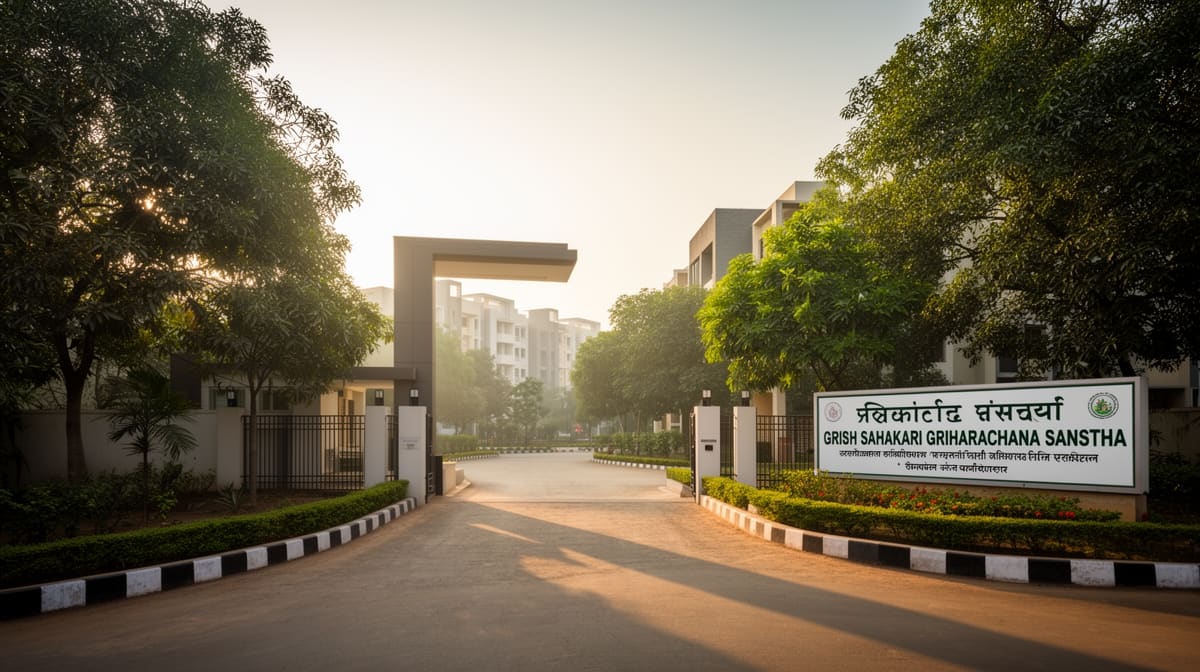
The petitioner, Dynasty Infrabuilders Pvt. Ltd., is a real estate developer that sold residential units in a housing project to 114 purchasers. These purchasers applied for membership in the respondent co-operative society, Khernagar "Deeplaxmi" Sahakari Grihanirman Sanstha Maryadit, as required under the Maharashtra Co-operative Societies Act, 1960. The society refused to admit them, citing multiple objections including: (i) mismatch in the building name between the Sale Agreement and society records; (ii) pending obligations under the Development Agreement with the developer; (iii) uncorrected property tax records; and (iv) concerns over the appointment of a Facility Manager.
Key Facts
The petitioner sold 114 residential units under individual Sale Agreements executed between 2020 and 2024.
Each purchaser submitted a membership application to the society under Rule 19 of the Maharashtra Co-operative Societies Rules, 1961.
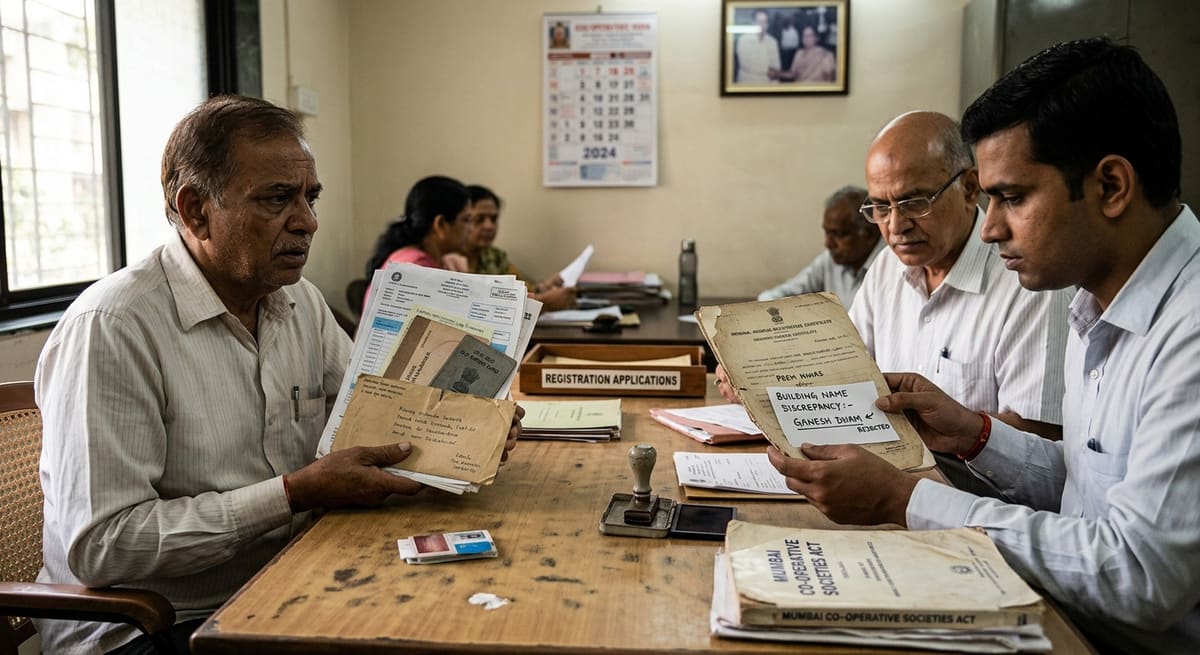
The society rejected all applications, asserting that the building name in the Sale Agreements ("Deeplaxmi Heights") differed from the name registered with the Municipal Corporation ("Khernagar Deeplaxmi Complex").
The Development Agreement between the society and the petitioner required payment of a corpus fund and membership fees, which remained partially unpaid.
Property tax assessments for the two wings of the building reflected inconsistent names.
The petitioner had appointed Crest Property Solutions Pvt. Ltd. as Facility Manager under Clause 6(4) of the Development Agreement.
No purchaser had been admitted as a member despite completion of construction and handover of units.
Procedural History
2024: 114 purchasers filed individual applications for membership; all were rejected by the society.
January 2025: Petitioner filed Commercial Arbitration Petition (L) No. 11707 of 2026 before the Bombay High Court’s Commercial Division, seeking direction for membership admission.
February 2026: Respondent society filed written objections reiterating all prior grounds for refusal.
July 2, 2026: Hearing concluded before Justice Amit Borkar.
The Parties' Positions
For the Petitioner: Argued that Rule 19 MCSR creates a statutory obligation on the society to admit eligible purchasers. Any refusal must be based solely on non-compliance with Rule 19 criteria. Discrepancies in building names, developer defaults, or Facility Manager appointments are extraneous and legally irrelevant.
For the Respondent: Contended that the society has discretion to verify all documentation before admitting members. The name mismatch, unpaid corpus, and unresolved tax records rendered the applications defective. The society also claimed it could not function independently due to the Facility Manager’s control.
Relief Sought
The petitioner sought: (i) a direction to the society to admit all 114 applicants as members; (ii) a declaration that building name discrepancies are invalid grounds for refusal; (iii) a direction to the Municipal Corporation to correct property tax records; and (iv) a clarification that the Facility Manager has no authority over society governance.
The Legal Issue
The central question was whether a co-operative housing society may refuse membership to a purchaser under Rule 19 of the Maharashtra Co-operative Societies Rules, 1961 on grounds unrelated to the statutory eligibility criteria, such as discrepancies in building names or pending obligations of the developer.
Arguments Presented
For the Petitioner
The petitioner relied on the mandatory language of Rule 19 MCSR, which prescribes exhaustive conditions for membership. Any refusal must be grounded in non-compliance with these conditions. The society’s objections - building name mismatch, developer defaults, and Facility Manager appointment - are collateral matters that do not affect the purchaser’s eligibility. The petitioner cited State of Maharashtra v. Smt. Sunita R. Desai to affirm that co-operative societies are statutory bodies bound by law, not private entities with unfettered discretion.
For the Respondent
The society argued that it has inherent authority to verify the authenticity of documents and ensure compliance with all legal and administrative formalities before admitting members. It contended that inconsistent building names create ambiguity in title records and could lead to future litigation. It also claimed that the developer’s failure to pay the corpus fund and membership fees rendered the applications incomplete. The society further asserted that the Facility Manager’s appointment under the Development Agreement implied shared control over administrative functions.
The Court's Analysis
The Court began by emphasizing that co-operative societies are creatures of statute, and their powers are not discretionary but circumscribed by law. Rule 19 MCSR sets out a closed list of conditions for membership: proof of purchase, payment of share capital, and adherence to by-laws. No other condition may be added.
"The society cannot decide such request according to its own choice. Its power is controlled by Rule 19 of the Maharashtra Co-operative Societies Rules, 1961."
The Court held that the discrepancy in building names - whether in Sale Agreements, tax records, or society registers - is a clerical or administrative issue, not a legal bar to membership. The society, not the purchaser, is responsible for maintaining accurate records. The developer’s obligations under the Development Agreement are contractual and enforceable against the developer alone; they cannot be weaponized to deny statutory rights to purchasers.
Regarding the Facility Manager, the Court noted that Clause 6(4) of the Development Agreement permits appointment for maintenance services only. It does not confer governance authority. The society retains exclusive control under the Act and its by-laws.
"The obligations created under the Development Agreement are binding upon the developer, including payment of the agreed corpus amount and membership fees. Those obligations are separate from the question of granting membership to eligible purchasers."
The Court rejected the society’s claim that it lacked autonomy, affirming that the appointment of a Facility Manager does not override the statutory governance structure of the society.
The Verdict
The petitioner succeeded. The Court directed the society to examine the 114 membership applications. If any application is deficient, the society must notify the applicant in writing within two weeks. Applicants shall rectify deficiencies within one week. Upon compliance, the society shall admit them as members within four weeks. The society is prohibited from rejecting any application on grounds other than those specified in the Maharashtra Co-operative Societies Act, 1960, the Rules, or its registered by-laws. The Municipal Corporation shall correct property tax records upon receipt of the society’s preferred building name. The developer shall execute the Permanent Alternate Accommodation Agreement for Seeta Seena Poojary using the name designated by the society. The cheque for outstanding corpus and membership fees shall be handed over on 3 July 2026.
What This Means For Similar Cases
Membership Cannot Be Withheld on Administrative Grounds
Practitioners representing purchasers may now assert that any refusal under Rule 19 MCSR must be strictly tied to statutory eligibility criteria.
Objections based on building name inconsistencies, tax record errors, or developer defaults are legally unsustainable and must be challenged immediately.
Developer Obligations Are Not a Shield Against Membership
Co-operative societies cannot use unpaid developer dues as leverage to deny membership to innocent purchasers.
Legal notices to societies should cite this judgment to compel admission where Rule 19 conditions are met.
Facility Manager Appointments Do Not Undermine Societal Autonomy
Any clause in a Development Agreement purporting to transfer governance authority to a Facility Manager is ultra vires.
Societies must be advised to issue formal notices to Facility Managers asserting their exclusive authority under the Act and by-laws.
A purchaser’s right to membership under Rule 19 MCSR is statutory and non-negotiable.
Societies must establish internal checklists aligned with Rule 19 to avoid arbitrary rejections.
Developers must ensure that Sale Agreements reflect the final registered building name to prevent future disputes.