In a significant ruling on the scope of interim relief during appeals against ejectment orders, the Allahabad High Court has directed that the operation of an ejectment order under Section 67 of the U.P. Revenue Code, 2006 must remain stayed pending appeal, and status quo must be maintained to prevent coercive measures. The judgment reinforces the principle that appeals against orders with serious civil consequences should not result in irreversible harm to the appellant, aligning with precedents that mandate judicial restraint during appellate proceedings.
Background & Facts
The Dispute
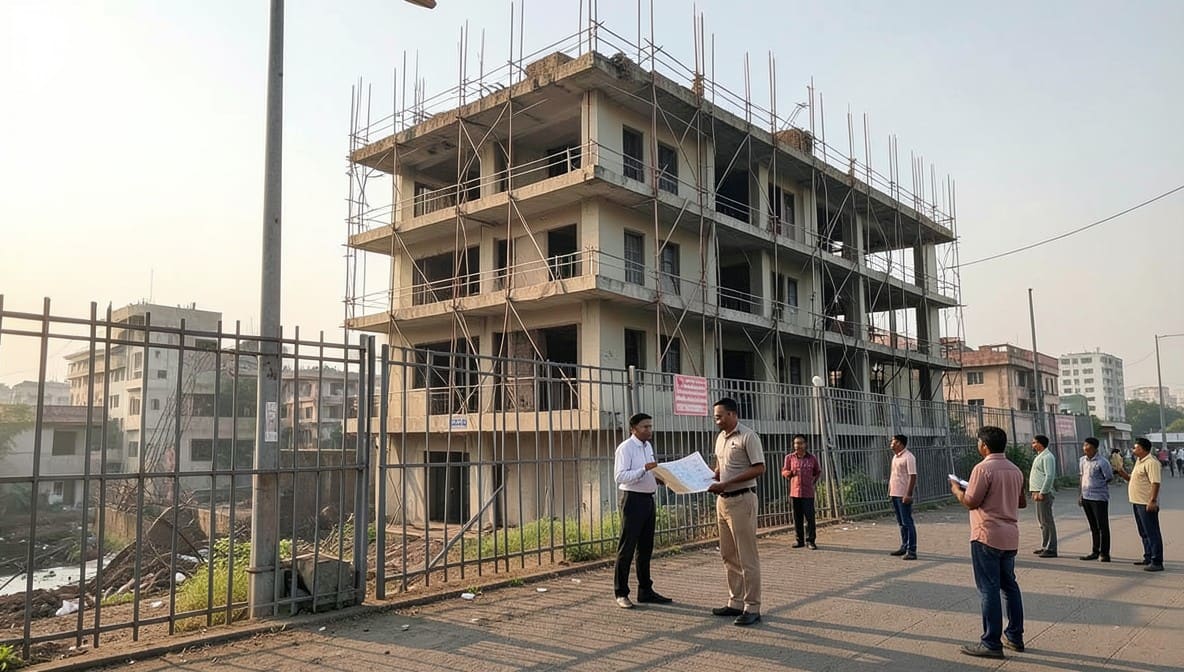
The petitioner, Rakesh Singh, owns private land (Gata No. 238, area 2.2165 hectare, village Sainjani, Tehsil Dataganj, District Budaun) on which he constructed seventeen shops. The Tehsildar, Budaun, initiated proceedings under Section 67 of the U.P. Revenue Code, 2006 and passed an order for ejectment and damages on 23.5.2026. Aggrieved by this order, the petitioner filed an appeal under Section 67(5) of the U.P. Revenue Code, 2006 along with a stay application. While the appellate court admitted the appeal, it did not grant interim protection, leading the authorities to take coercive measures against the petitioner.
Key Facts
- The petitioner owns Gata No. 238, village Sainjani, Tehsil Dataganj, District Budaun, on which he constructed seventeen shops
- Proceedings under Section 67 U.P. Revenue Code, 2006 were initiated by the Tehsildar
- Order for ejectment and damages passed on 23.5.2026
- Appeal filed under Section 67(5) U.P. Revenue Code, 2006 on 25.5.2026 (within two days of the order)
- Appeal admitted, but no interim relief granted
- Authorities took coercive measures pursuant to the Tehsildar’s order
Procedural History
- 23.5.2026: Tehsildar passed order for ejectment and damages in Case No. 5690 of 2026
- 25.5.2026: Petitioner filed Appeal No. 3841 of 2026 under Section 67(5) U.P. Revenue Code, 2006 along with stay application
- Pending: Appeal admitted, but no interim relief granted; coercive measures initiated
- July 2, 2026: Present writ petition filed before the Allahabad High Court
Relief Sought
The petitioner sought the following reliefs:
- Direction to respondents to remove lock and seal from seventeen shops constructed on Gata No. 238
- Direction to respondents not to interfere with the petitioner’s peaceful possession and enjoyment of income from twenty-four shops constructed on Gata No. 238-M
- Restrain respondents from dispossessing the petitioner and his family from the land
- Direction to respondents not to demolish the petitioner’s house and shops during the pendency of Appeal No. 3841 of 2026
- Costs of the petition
- Any other suitable direction as deemed fit by the Court
The Legal Issue
The central question was whether an appellate court is obligated to grant interim relief, including staying the operation of an ejectment order under Section 67 of the U.P. Revenue Code, 2006, during the pendency of an appeal, particularly when the order has serious civil consequences for the appellant.
Arguments Presented
For the Petitioner
- The order for ejectment and damages was passed arbitrarily and without considering the petitioner’s objections
- Despite the appeal being admitted, no interim protection was granted, leading to coercive measures
- Reliance on Rishipal Singh v. State of U.P. & Others (2023 (160) RD 204), which lays down guidelines for interim relief during appeals under Section 67 U.P. Revenue Code, 2006
- Urged the Court to direct the appellate authority to decide the appeal within a time-bound period and stay the operation of the Tehsildar’s order dated 23.5.2026
For the Respondent
- No interference was required as the appeal was pending before the appellate court
- The petitioner should pursue the appeal rather than filing a writ petition
- The Tehsildar’s order was rightly passed, and no interference was warranted
The Court's Analysis
The Court examined the principles governing interim relief during appeals against orders with civil consequences. It relied on two key precedents:
-
Ali Sher v. State of U.P. (2007 (102) RD 498): The Court held that if an order under appeal or revision has serious consequences, its operation must be suspended during the pendency of the appeal/revision. The judgment emphasized that stay should normally be granted unless the court records reasons for refusing it. The Court quoted:
"It is well settled that once an appeal or revision is entertained by a higher Court against an order having civil consequences stay normally should be granted to avoid swinging pendulum unless the Court for the reasons to be recorded finds that there is no case for grant of stay as observed by the Hon'ble Apex Court in the case of Mool Chand v. Raza Buland Sugar Industries."
-
Rishipal Singh v. State of U.P. & Others (2023 (160) RD 204): The Court laid down detailed guidelines for proceedings under Sections 67, 67A, and 26 of the U.P. Revenue Code, 2006, including the procedure for granting interim relief during appeals. Paragraph 74 of the judgment was particularly relevant, which prescribed:
"In case of appeal under Section 67(5) of the U.P. Revenue Code, 2006, preferred/filed within the time prescribed alongwith interim relief application, the interim relief application as far as possible should be decided within two weeks' time with prior notice to other side and where plea of settlement under Section 67-A has been taken before Assistant Collector-1st Class, and damages to the tune of 25% at-least of the total damages are paid and an affidavit of undertaking is filed for not raising any further construction upon the land in question, the authorities including civil administration should avoid taking any coercive measure pursuant to the order appealed against until the disposal of interim relief application. The Appellate authority may also consider granting interim relief on the very first day of filing of appeal with stay application if above conditions are fulfilled by the appellant."
The Court observed that the appellate authority failed to grant interim relief despite the appeal being admitted, which was contrary to the principles laid down in the aforementioned precedents. It noted that the coercive measures taken pursuant to the Tehsildar’s order could result in irreversible harm to the petitioner, warranting judicial intervention.
The Verdict
The Allahabad High Court disposed of the writ petition with the following directions:
- The District Magistrate, Budaun (Respondent No. 2), was directed to decide Appeal No. 3841 of 2026 under Section 67(5) of the U.P. Revenue Code, 2006 expeditiously, preferably within three months from the date of production of a certified copy of the order
- The operation and effect of the order dated 23.5.2026 passed by the Tehsildar in Case No. 5690 of 2026 was stayed pending the disposal of the appeal
- Parties were directed to maintain strict status quo with respect to possession of the plot in question
- The petitioner’s claims for reliefs (i) and (ii) were left open to be raised after the disposal of the appeal
What This Means For Similar Cases
Interim Relief Is Mandatory for Orders with Civil Consequences
- Practitioners must argue that appeals against orders with serious civil consequences (e.g., ejectment, demolition, or dispossession) should automatically attract interim relief, including stay of operation of the impugned order
- Courts are obligated to grant interim relief unless they record specific reasons for refusing it, as held in Ali Sher
- The failure to grant interim relief can render the appellate remedy illusory, justifying writ intervention
Appellate Authorities Must Decide Stay Applications Expeditiously
- Appellate authorities must decide stay applications within two weeks of filing, as prescribed in Rishipal Singh
- Coercive measures pursuant to the impugned order should be avoided until the disposal of the stay application, particularly if the appellant fulfills conditions such as:
- Payment of 25% of the damages assessed
- Filing an affidavit of undertaking not to raise further constructions
Status Quo Must Be Maintained During Pendency of Appeal
- The judgment reinforces that status quo must be maintained during the pendency of an appeal against ejectment or dispossession orders
- This principle applies even if the appellate authority has not explicitly granted interim relief, as the absence of such relief does not justify coercive action
- Practitioners can cite this judgment to challenge coercive measures taken during the pendency of appeals
Procedural Safeguards in Revenue Proceedings Are Non-Negotiable
- The guidelines in Rishipal Singh must be strictly followed in proceedings under Sections 67, 67A, and 26 of the U.P. Revenue Code, 2006
- Authorities must ensure:
- Proper survey and spot reports before initiating proceedings
- Transparency in calculation of damages based on circle rates
- Opportunity for the aggrieved party to cross-examine the report preparer
- Timely disposal of cases and appeals without routine adjournments
- Consideration of statutory protections (e.g., Section 67-A) during the main proceedings