Madras High Court judgments

539 Madras High Court judgments explained in plain English: what was decided, the law applied and why it matters. Page 4 of 23.

Section 149 MV Act | Insurer’s Recovery Rights Barred Without Precise Factual Proof of Invalid License : Madras HC
Case Law Analysis
|Madras High Court

Section 149 MV Act | Insurer’s Recovery Rights Barred Without Precise Factual Proof of Invalid License : Madras HC

Madras High Court rules that an insurer cannot recover compensation paid to accident victims unless it conclusively proves the driver’s license was invalid at the time of the accident. The judgment underscores that recovery proceedings under Section 149 of the Motor Vehicles Act demand strict factual accuracy, not mere allegations, to deny insurer liability.

Specific Performance Decree Does Not Transfer Title Without Registered Sale Deed : Madras HC Reaffirms Property Law Principle
Case Law Analysis
|Madras High Court

Specific Performance Decree Does Not Transfer Title Without Registered Sale Deed : Madras HC Reaffirms Property Law Principle

Madras High Court rules that a decree for specific performance under the Specific Relief Act does not automatically confer title to immovable property. Title passes only upon execution and registration of a sale deed, preserving co-owners' rights until formal transfer. The ruling allows partition suits to proceed despite unexecuted decrees, reinforcing the necessity of registered conveyance for legal title.

Article 21 & Police Duty | State Must Protect Religious Customs During Pending Litigation : Madras HC Directs Security for Thenur Mandagapadi Ritual
Case Law Analysis
|Madras High Court

Article 21 & Police Duty | State Must Protect Religious Customs During Pending Litigation : Madras HC Directs Security for Thenur Mandagapadi Ritual

Madras High Court holds that the state cannot cite pending hereditary disputes to deny police protection for recognised religious customs. The court directed targeted security for the Thenur Mandagapadi ritual during the Chithirai Festival, affirming that constitutional obligations to maintain public order and cultural rights supersede procedural delays in title adjudication.

Article 226 Writ Jurisdiction | Constitutional Courts Can Appoint Guardians for Incapacitated Persons Absent Statutory Framework : Madras HC
Case Law Analysis
|Madras High Court

Article 226 Writ Jurisdiction | Constitutional Courts Can Appoint Guardians for Incapacitated Persons Absent Statutory Framework : Madras HC

The Madras High Court invoked its Article 226 powers to appoint children as legal guardians of their comatose mother, enabling them to sell property and access bank accounts for medical care. This ruling establishes that constitutional courts can fill statutory gaps to protect the welfare of incapacitated individuals, setting a precedent for guardianship where formal legal provisions are silent.

Statutory Terminal Benefits Unconditional Upon Retirement | Madras HC Bars Withholding Gratuity & PF Over Pending Audit Allegations
Case Law Analysis
|Madras High Court

Statutory Terminal Benefits Unconditional Upon Retirement | Madras HC Bars Withholding Gratuity & PF Over Pending Audit Allegations

Madras High Court rules that retirement benefits like gratuity, provident fund, and leave encashment are statutory entitlements that cannot be withheld due to pending audit findings or surcharge allegations post-retirement. The judgment reinforces that terminal dues must be disbursed immediately upon superannuation, irrespective of ongoing investigations, protecting retiring employees from administrative delays.

Rule 631 TN Prison Rules | Mandamus Issued for Timely Decision on Premature Release for 100% Visually Disabled Convict : Madras HC
Case Law Analysis
|Madras High Court

Rule 631 TN Prison Rules | Mandamus Issued for Timely Decision on Premature Release for 100% Visually Disabled Convict : Madras HC

Madras HC holds that undue delay in deciding a life convict’s medical representation for premature release under Rule 631 of TN Prison Rules 2024 violates natural justice under Article 21. The court directs prison authorities to decide within four weeks, emphasizing procedural fairness for inmates with severe disabilities.

Section 22 Tamil Nadu HR & CE Act | Mandamus Issued for Six-Week Disposal of Temple Mismanagement Representations : Madras HC
Case Law Analysis
|Madras High Court

Section 22 Tamil Nadu HR & CE Act | Mandamus Issued for Six-Week Disposal of Temple Mismanagement Representations : Madras HC

The Madras High Court ruled that the Commissioner of Revenue Administration must dispose of representations alleging temple mismanagement within six weeks under Section 22 of the Tamil Nadu Hindu Religious and Charitable Endowments Act. Failure to act within this timeline violates statutory duty, empowering devotees and trustees to seek judicial redress for administrative delays.

Trust Deed Prevails Over Section 59 HR & CE Act | Madras HC Upholds Trustee Power to Remove Madathipathi Without Statutory Suit
Case Law Analysis
|Madras High Court

Trust Deed Prevails Over Section 59 HR & CE Act | Madras HC Upholds Trustee Power to Remove Madathipathi Without Statutory Suit

Madras High Court rules that a Trust Board's power under its Trust Deed to remove a Madathipathi is valid and supersedes the procedural requirement of a Section 59 suit under the HR & CE Act. The Court set aside the Commissioner's interference, reinforcing that private trust deeds can override statutory provisions where explicitly provided.

Locus Standi Under Tamil Nadu Apartment Ownership Act | RWA Lacks Legal Authority to Challenge Township Construction Without Owners Association Registration: Madras HC
Case Law Analysis
|Madras High Court

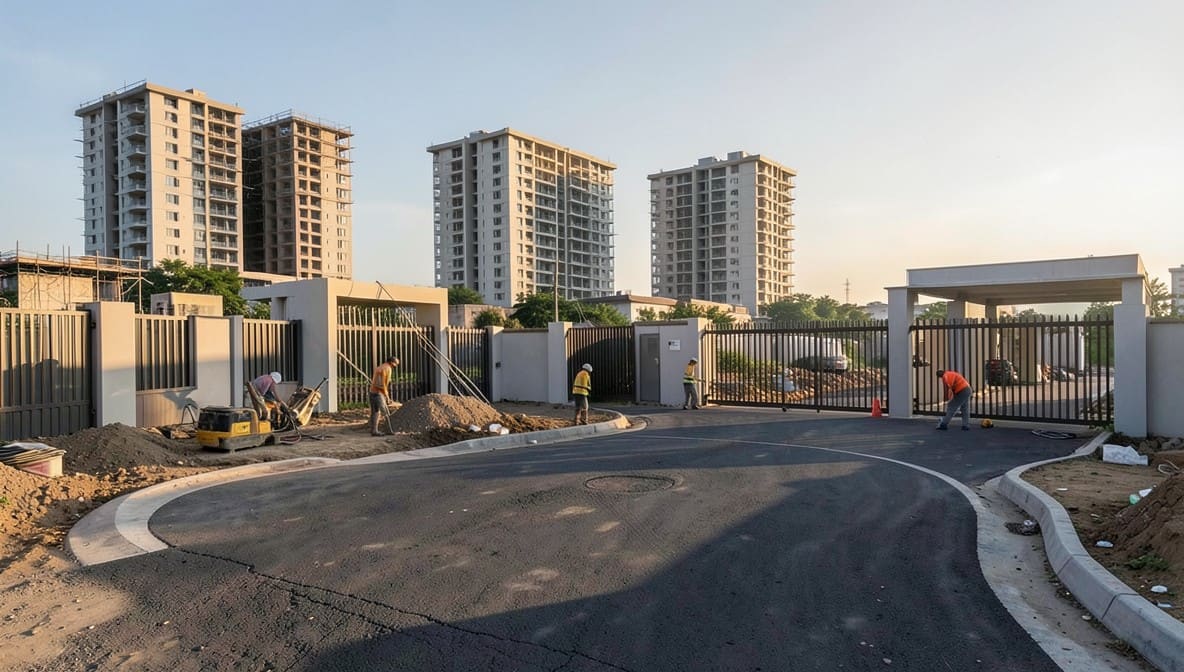
Locus Standi Under Tamil Nadu Apartment Ownership Act | RWA Lacks Legal Authority to Challenge Township Construction Without Owners Association Registration: Madras HC

Madras High Court dismisses a writ petition filed by a Residents Welfare Association (RWA), ruling that only a legally constituted Owners Association or Apex Federation under the Tamil Nadu Apartment Ownership Act, 1994, has locus standi to challenge township construction. The judgment reinforces statutory compliance for RWAs seeking judicial intervention in property disputes.

Article 14 & PMLA | Madras HC Mandates FDR Return with Interest Upon Quashing of Predicate Offence and PMLA Proceedings
Case Law Analysis
|Madras High Court

Article 14 & PMLA | Madras HC Mandates FDR Return with Interest Upon Quashing of Predicate Offence and PMLA Proceedings

Madras High Court rules that retention of a Fixed Deposit Receipt (FDR) after quashing of the predicate offence and PMLA proceedings violates Article 14, directing its return with accrued interest. The judgment reinforces that conditional securities under lookout circulars cannot be retained without legal basis, impacting enforcement agencies' compliance with court orders.

Section 132(4) IT Act | Confessions During Search Require Corroboration; Admissions Alone Insufficient for Income Addition : Madras HC
Case Law Analysis
|Madras High Court

Section 132(4) IT Act | Confessions During Search Require Corroboration; Admissions Alone Insufficient for Income Addition : Madras HC

Madras High Court rules that admissions made under Section 132(4) of the Income Tax Act during search proceedings cannot independently justify additions to undisclosed income. The court emphasized the need for corroborative evidence, setting aside additions related to deemed dividends and long-term capital gains due to lack of proof, reinforcing safeguards against self-incrimination in tax assessments.

Electricity Act 2003 | Pre-2007 Theft Assessments Valid Under Civil Jurisdiction Despite Special Court Provisions : Madras HC
Case Law Analysis
|Madras High Court

Electricity Act 2003 | Pre-2007 Theft Assessments Valid Under Civil Jurisdiction Despite Special Court Provisions : Madras HC

Madras High Court affirms that electricity distribution boards retain civil jurisdiction to assess liability for electricity theft occurring before the 2007 amendment, even where Special Courts were later empowered. The ruling bars delayed challenges under res judicata and reinforces the Board's authority to recover losses independently of criminal proceedings.

Section 36 Arbitration Act | No Appeal Lies Against Master's Order in Award Execution : Madras HC
Case Law Analysis
|Madras High Court

Section 36 Arbitration Act | No Appeal Lies Against Master's Order in Award Execution : Madras HC

Madras High Court rules that orders passed by the Master in execution of arbitration awards under Section 36 of the Arbitration Act are not appealable, reinforcing the finality of arbitral awards and limiting judicial intervention to Section 37 remedies. This decision impacts commercial dispute resolution by barring appellate challenges to execution proceedings, ensuring faster enforcement of awards.

Hindu Succession Act | Burden of Proof on Plaintiff for Joint Family Property; Oral Relinquishment & Single-Witness Will Valid Absent Suspicion : Madras HC
Case Law Analysis
|Madras High Court

Hindu Succession Act | Burden of Proof on Plaintiff for Joint Family Property; Oral Relinquishment & Single-Witness Will Valid Absent Suspicion : Madras HC

Madras High Court rules that the plaintiff must prove joint family property status, oral relinquishment supported by payment is legally valid, and a Will attested by one witness suffices under the Hindu Succession Act unless suspicious circumstances exist. The judgment clarifies evidentiary standards for succession disputes, impacting partition suits and testamentary validity in Hindu joint families.

Judicial Estoppel | Approbate and Reprobate Doctrine Bars Contradictory Relief in Writ Petitions : Madras HC
Case Law Analysis
|Madras High Court

Judicial Estoppel | Approbate and Reprobate Doctrine Bars Contradictory Relief in Writ Petitions : Madras HC

Madras High Court reinforces that parties cannot accept benefits under one court order while simultaneously seeking contradictory relief, invoking the 'approbate and reprobate' doctrine. The ruling dismisses a writ appeal attempting to sell plots after securing a prior order for sale deed cancellation and refund, emphasizing finality of judicial orders.

Tamil Nadu Tenant Protection Act | Mandatory Rent Arrears Notice & Revenue Records Proof Required for Eviction: Madras HC
Case Law Analysis
|Madras High Court

Tamil Nadu Tenant Protection Act | Mandatory Rent Arrears Notice & Revenue Records Proof Required for Eviction: Madras HC

Madras HC rules that eviction under the Tamil Nadu Tenant Protection Act requires strict compliance with Section 3(4)(b) notice for rent arrears and proof of disuse via Chitta and Adangal revenue records. Eviction on disuse grounds upheld, but rent default eviction quashed for procedural non-compliance, reinforcing tenant protections.

Section 149 MV Act | Insurer Liable for Gratuitous Passengers in Goods Vehicles Under 'Pay and Recover' Principle : Madras HC
Case Law Analysis
|Madras High Court

Section 149 MV Act | Insurer Liable for Gratuitous Passengers in Goods Vehicles Under 'Pay and Recover' Principle : Madras HC

Madras High Court reinforces that insurers must compensate accident victims in goods vehicles regardless of passenger status or driver's license validity, with the right to recover costs from the vehicle owner. This ruling upholds the 'pay and recover' doctrine under Section 149 of the Motor Vehicles Act, ensuring victim protection while balancing insurer rights.

Section 276CC Income Tax Act | Prosecution Invalid Without Jurisdictional AO Complaint & Mandatory Penalty Proceedings : Madras HC
|Madras High Court

Section 276CC Income Tax Act | Prosecution Invalid Without Jurisdictional AO Complaint & Mandatory Penalty Proceedings : Madras HC

Madras High Court quashes prosecution under Section 276CC of the Income Tax Act, ruling that only the jurisdictional Assessing Officer can file complaints, and penalty proceedings are a mandatory precondition. The judgment reinforces procedural safeguards against arbitrary tax prosecutions, impacting taxpayers and revenue authorities alike.

Section 311 CrPC | Statutory Right to Cross-Examine Victims Survives Legal Aid Counsel's Inaction : Madurai HC
Case Law Analysis
|Madras High Court

Section 311 CrPC | Statutory Right to Cross-Examine Victims Survives Legal Aid Counsel's Inaction : Madurai HC

Madurai Bench of Madras High Court rules that administrative circulars cannot override an accused's statutory right under Section 311 CrPC to cross-examine witnesses, even when legal aid counsel fails to act. The judgment reinforces fair trial guarantees and mandates trial courts to permit recall of witnesses for cross-examination upon accused's request.

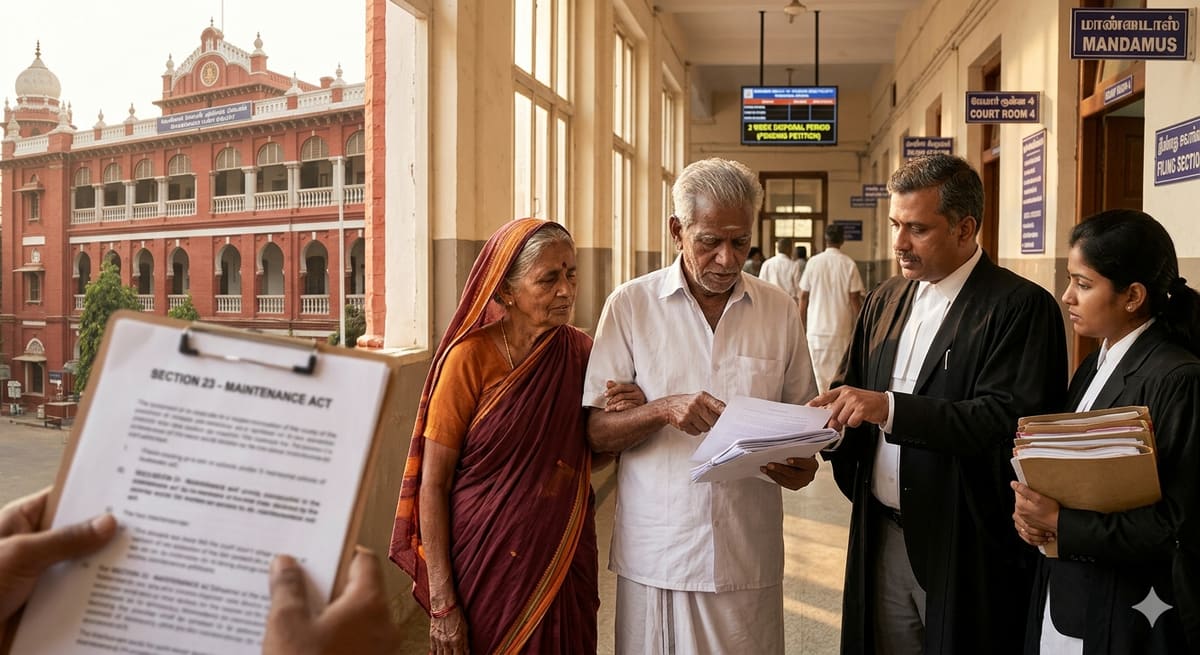
Section 23 Maintenance and Welfare of Parents Act | Mandamus Issued for Two-Week Disposal of Petition Seeking Settlement Deed Cancellation : Madurai HC
Case Law Analysis
|Madras High Court

Section 23 Maintenance and Welfare of Parents Act | Mandamus Issued for Two-Week Disposal of Petition Seeking Settlement Deed Cancellation : Madurai HC

Madurai High Court directs the Sub-Collector to dispose of a petition under Section 23 of the Maintenance and Welfare of Parents and Senior Citizens Act, 2007 within two weeks, reinforcing the statutory duty to adjudicate senior citizens' property disputes expeditiously. The ruling underscores that administrative delays in such petitions violate the Act's intent and warrant judicial intervention via mandamus.

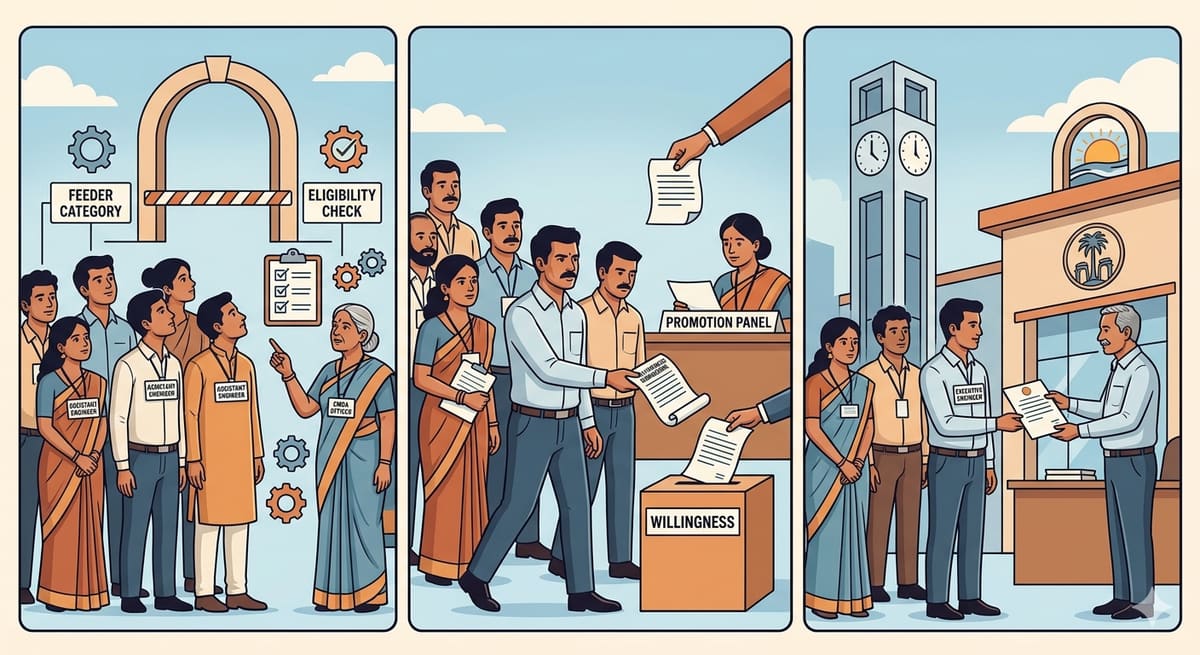
CMDA Service Regulations | Promotion Not Automatic; Willingness Submission & Feeder Category Compliance Mandatory : Madras HC
Case Law Analysis
|Madras High Court

CMDA Service Regulations | Promotion Not Automatic; Willingness Submission & Feeder Category Compliance Mandatory : Madras HC

Madras High Court rules that promotion under Chennai Metropolitan Development Authority Regulations requires active submission of willingness and strict adherence to feeder category requirements. The judgment underscores that service rules do not guarantee time-bound elevation, impacting government employees seeking career progression under administrative regulations.