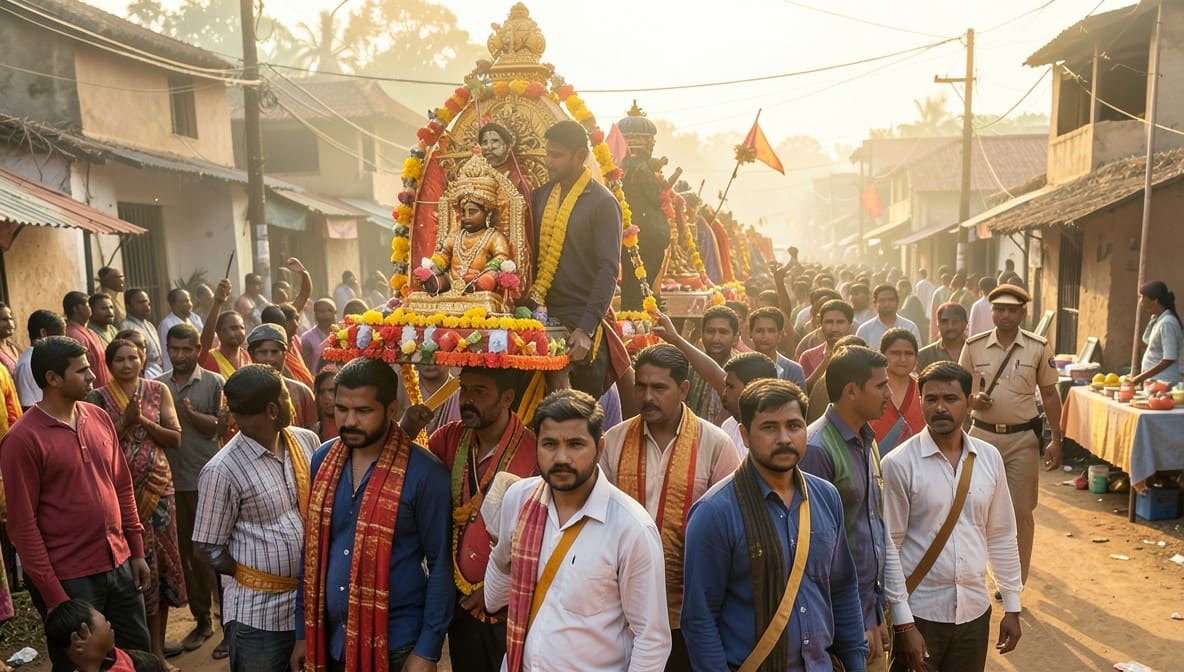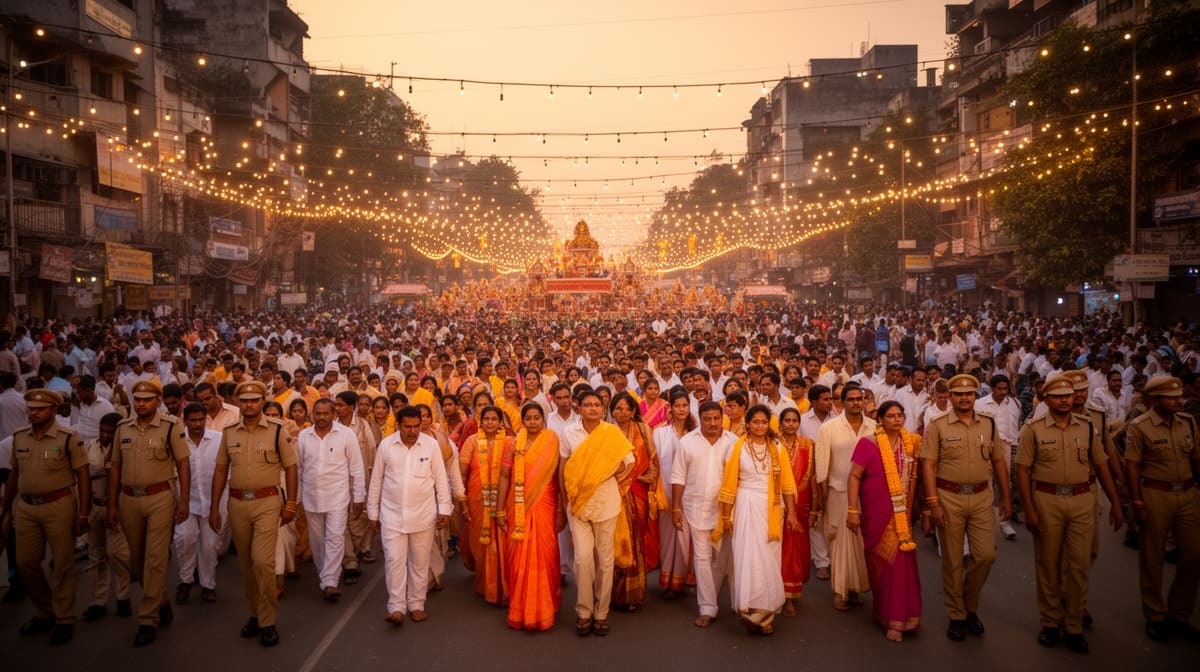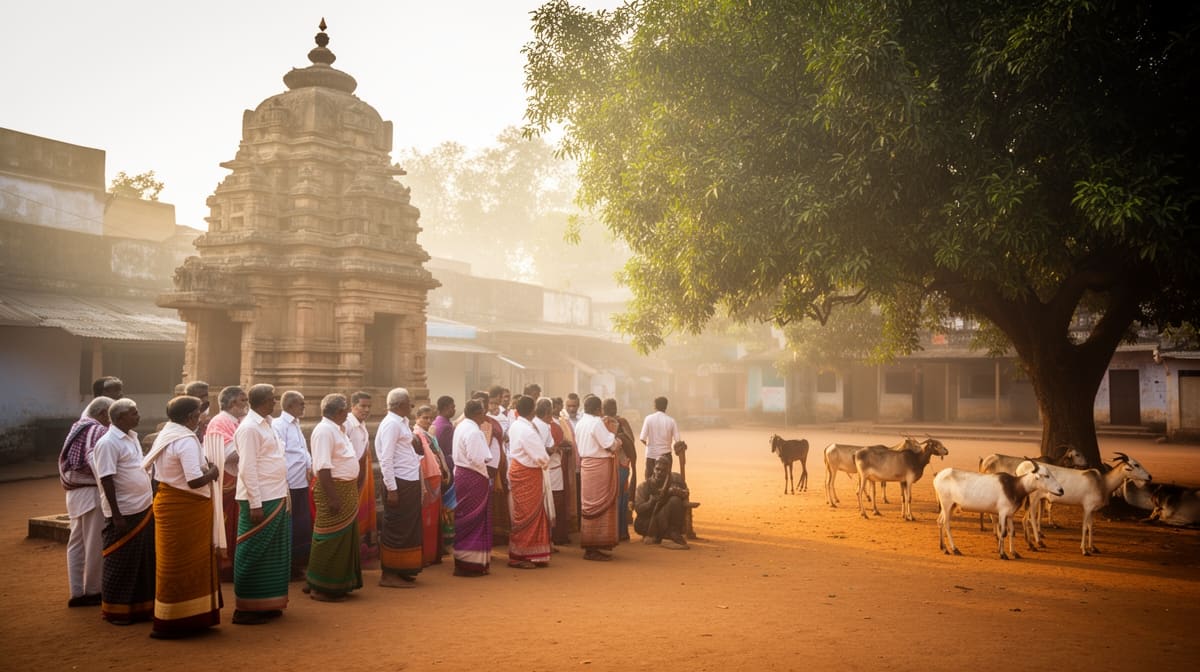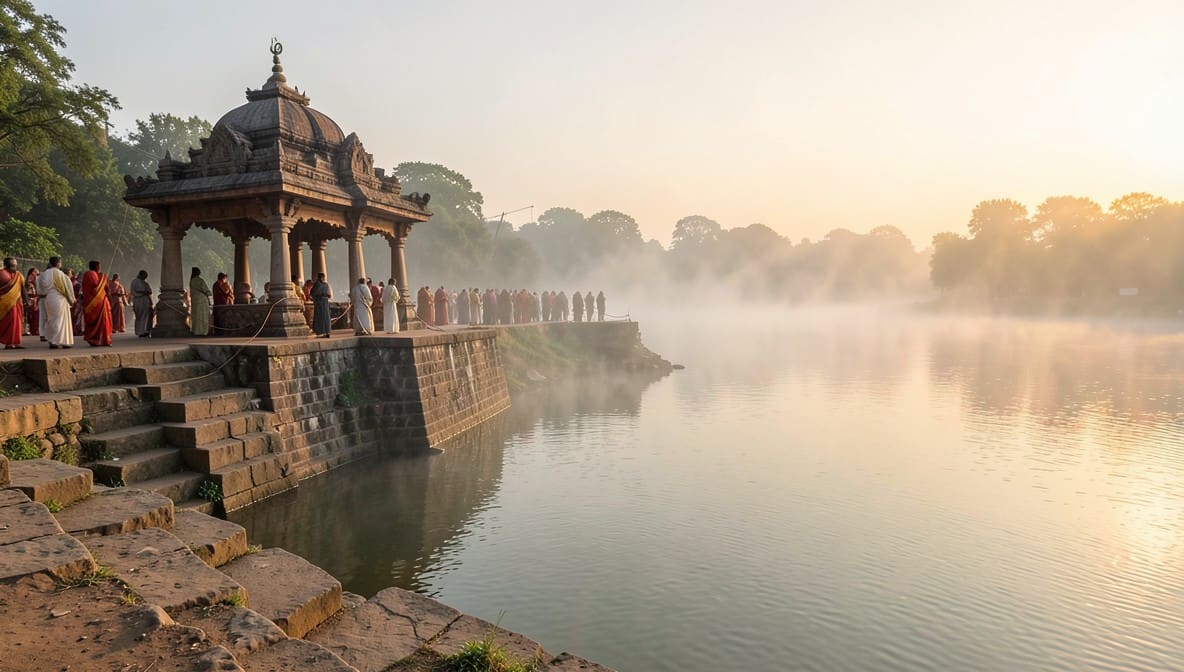
The Madras High Court has affirmed that the State has a constitutional duty to protect long-standing religious customs from unlawful obstruction, even when their legal validity is under judicial review. In a landmark order, the Court directed police authorities to ensure the peaceful performance of the Thenur Mandagapadi ritual during the Chithirai Festival, emphasizing that preservation of public order supersedes the need for adjudication of hereditary entitlements.
Background & Facts
The Dispute
The petitioner, a traditional representative of Thenur village, sought police protection to ensure the uninterrupted performance of the Thenur Mandagapadi - a centuries-old ceremonial ritual during the annual Chithirai Festival of Lord Kallazhagar in Madurai. The ritual involves the conferment of traditional honours upon seven hereditary Karikaarars of Thenur, including symbolic payment of Rs.200, coconuts, and fruits, recorded in a temple register. The petitioner alleged that during the 2025 festival, outsiders led by one Rajakumar obstructed the temple authorities from conferring these honours, disrupting the ritual and forcing Lord Kallazhagar to depart prematurely.
Key Facts
- The Thenur Mandagapadi is performed at the Thenur Mandapam in the Vaigai riverbed at Vandiyur, Madurai.
- The ritual is historically linked to the Nayakar period, when the Kallazhagar festival was shifted from Thenur to Madurai, and the Karikaarars were granted ceremonial honours as recognition of their consent.
- The honours are conferred upon seven traditional titles: Munsif Karikaarar, Kanakkapillai Karikaarar, Sethuramalinga Pillai Karikaarar, Nattamai Karikaarar, Ottadukku Karikaarar, Maniakarar Karikaarar, and Servai Karikaarar.
- Thenur village is noted for its Gandhian ethos, with no TASMAC shops or tobacco sales within its boundaries.
- The Chithirai Festival attracts approximately five lakh devotees, with three lakh present during concluding events.
- A representation dated 20.04.2026 was submitted to the respondents seeking police protection, which remained unaddressed.
Procedural History
- 20.04.2024: Hon’ble Division Bench of Madras High Court, in W.P.(MD) No.9494 of 2024, recorded a temple report acknowledging the antiquity of the Thenur Mandagapadi and permitted its continuation pending final adjudication.
- 2025: Obstruction occurred during the festival, preventing the customary honours from being conferred.
- 20.04.2026: Petitioner submitted formal representation to police and temple authorities seeking preventive protection.
- 29.04.2026: Writ Petition filed under Article 226 before the Madras High Court (Madurai Bench).
- 02.05.2026: Scheduled date of the Thenur Mandagapadi ritual.
The Parties' Positions
Petitioner: Argued that the Thenur Mandagapadi is a recognised, ancient custom judicially acknowledged in 2024, and that obstruction constitutes a breach of public order and defiance of court orders. The prayer is not for adjudication of rights but for protection of an existing practice.
Respondents (Police): Did not oppose the ritual’s performance but expressed practical constraints on deploying 100 additional personnel exclusively for the Mandapam. Stated that general festival bandobust would be enhanced, and suggested referring to Karikaarars by traditional titles, not individual names.
Respondent (Temple): Confirmed the ritual’s historical continuity and agreed to perform it as per custom, but declined to adjudicate disputes over who represents each Karikaarar title.
Relief Sought
The petitioner sought a writ of mandamus directing the respondents to:
- Provide adequate police protection for the Thenur Mandagapadi on 02.05.2026;
- Enable the Joint Commissioner of the temple to discharge duties without obstruction;
- Ensure the customary honours are conferred upon the seven Karikaarars by their traditional titles;
- Prevent interference by third parties;
- Act on the representation dated 20.04.2026.
The Legal Issue
The central question was whether, in the face of a judicially acknowledged custom and a reasonable apprehension of public disorder, the State’s duty under Article 226 to maintain law and order requires it to provide targeted police protection - even when the underlying hereditary claims remain subject to pending litigation.
Arguments Presented
For the Petitioner
The petitioner relied on the interim order dated 20.04.2024 in W.P.(MD) No.9494 of 2024, wherein the Division Bench explicitly recognised the antiquity of the Thenur Mandagapadi and permitted its continuation. Counsel argued that the ritual is not a newly asserted right but a protected custom, and that obstruction by outsiders amounts to a breach of public order. The prayer was strictly preventive, seeking no adjudication of titles or individual entitlements, only enforcement of an existing practice and protection of temple authorities in their official duties. Reliance was placed on the State’s constitutional obligation under Article 21 to protect the right to peaceful religious practice.
For the Respondent
The Government Advocate conceded the legitimacy of the ritual but highlighted logistical constraints in deploying disproportionate police resources for a single point during a festival involving lakhs of devotees. It was submitted that the police cannot be made arbiters of hereditary rights and that naming individuals could trigger future litigation. The suggestion was to refer only to the seven traditional titles, leaving identification of representatives to village and temple custom. The State affirmed its commitment to maintain order but sought to avoid judicial overreach into civil disputes.
The Court's Analysis
The Court began by situating the Thenur Mandagapadi within the broader civilisational framework of the Chithirai Festival, describing it as a ritual of historical depth, communal harmony, and cultural continuity. It noted that the temple administration’s report, recorded by the Division Bench in 2024, confirmed the custom’s antiquity and legitimacy. The Court emphasised that its role was not to adjudicate who qualifies as a Karikaarar, but to ensure that an existing, judicially noticed practice is not disrupted by unlawful interference.
"The duty of the State, in such matters, is not to create rights where none exist, nor to adjudicate intricate hereditary disputes in writ jurisdiction, but to ensure that recognised and existing customs are not disturbed by unlawful obstruction and that public peace is preserved."
The Court distinguished between civil adjudication and public order maintenance. While the pending writ petition in W.P.(MD) No.9494 of 2024 may ultimately determine hereditary entitlements, the immediate concern was the prevention of disorder. The Court held that the State’s obligation under Article 226 to protect public order is triggered not by the existence of a legal right per se, but by the reasonable apprehension of breach of peace.
The Court accepted the temple’s and police’s proposal to refer to the Karikaarars by their traditional titles rather than individual names, noting that this approach preserved the custom while avoiding the creation of new legal entitlements. It clarified that police were not to substitute themselves for temple or village authorities in determining representation, but were solely to prevent obstruction and regulate crowds.
The Court also underscored the symbolic importance of the festival as a nexus of Saivite and Vaishnavite traditions, and its role in fostering communal harmony - citing the deity’s visit to a Muslim household and association with Thulukka Nachiyar. It warned that devotion must not descend into confrontation, and that custom must not be converted into conflict.
The Verdict
The writ petition was allowed with the following directions:
- The Commissioner of Police and Inspector of Police shall provide adequate and effective police protection for the Thenur Mandagapadi on 02.05.2026;
- The Joint Commissioner of Arulmigu Kallazhagar Temple shall be enabled to discharge duties without obstruction;
- The temple shall conduct the ritual in accordance with established custom, subject to the pending proceedings in W.P.(MD) No.9494 of 2024;
- The customary honours shall be conferred upon the seven Karikaarars by their traditional titles: Munsif Karikaarar, Kanakkapillai Karikaarar, Sethuramalinga Pillai Karikaarar, Nattamai Karikaarar, Ottadukku Karikaarar, Maniakarar Karikaarar, and Servai Karikaarar;
- Police shall prevent any obstruction, intimidation, or unlawful interference by third parties;
- The number of police personnel deployed shall be determined by the competent authority, considering the sensitivity of the ritual, expected gathering, and prior disturbance;
- No person shall use this order to assert new claims or create rivalry;
- The respondents shall act on the representation dated 20.04.2026 and make arrangements sufficiently in advance of 02.05.2026.
What This Means For Similar Cases
Customary Practices Are Protected Even Amid Pending Litigation
- Practitioners may now invoke Article 226 to seek police protection for recognised religious customs when obstruction is reasonably apprehended, even if the underlying title is under judicial review.
- Courts will not require final adjudication of hereditary rights before ordering preventive measures to preserve public order.
Police Role Is Limited to Order Maintenance, Not Title Determination
- Law enforcement agencies must not substitute themselves for temple or village authorities in identifying beneficiaries of customs.
- Directions should refer to traditional titles, not individual names, to avoid creating new legal entitlements.
Preventive Writs Are Viable for Time-Sensitive Religious Events
- Where a festival date is imminent and disruption is likely, courts will treat writ petitions under Article 226 as urgent remedies for public order, not as forums for civil adjudication.
- Representations submitted to authorities must be formally acknowledged and acted upon in light of judicial directions.
Cultural Harmony Is a Constitutional Value
- Rituals that symbolise inter-community harmony (e.g., deity visiting a Muslim household) are protected as expressions of India’s pluralistic identity.
- Courts will view obstruction of such rituals not merely as civil disputes but as threats to social cohesion.