The Madras High Court has clarified that an eviction order under the Tamil Nadu Cultivating Tenants Protection Act, 1927, cannot be sustained on the ground of non-payment of rent unless the authority first issues a statutory notice requiring the tenant to pay the arrears within a stipulated time. The judgment reinforces procedural safeguards for cultivating tenants and sets a high evidentiary bar for proving disuse of agricultural land.
Background & Facts
The Dispute
The petitioner, Babu @ A.Subramaniam, is the legal heir of his father, who was a cultivating tenant under the original landowners, respondents’ predecessors-in-interest. The land in question is Survey No. 298, measuring 9.71 acres, located in Kinathukadavu Taluk, Coimbatore. The respondents initiated proceedings for eviction under the Tamil Nadu Cultivating Tenants Protection Act, 1927, in O.P. No. 26 of 1996, alleging two grounds: non-payment of rent and disuse of the land.
Key Facts
- The original lessee, the petitioner’s paternal uncle, executed a lease deed for Survey No. 298.
- The petitioner’s father and uncle cultivated the land jointly from the inception of the lease.
- Both the petitioner’s father and paternal uncle died during the pendency of proceedings.
- The petitioner claimed to have paid Rs. 1,10,000 towards rent, but no documentary evidence was produced.
- The respondents alleged that the petitioner had not paid rent since 1996 and had ceased agricultural activity.
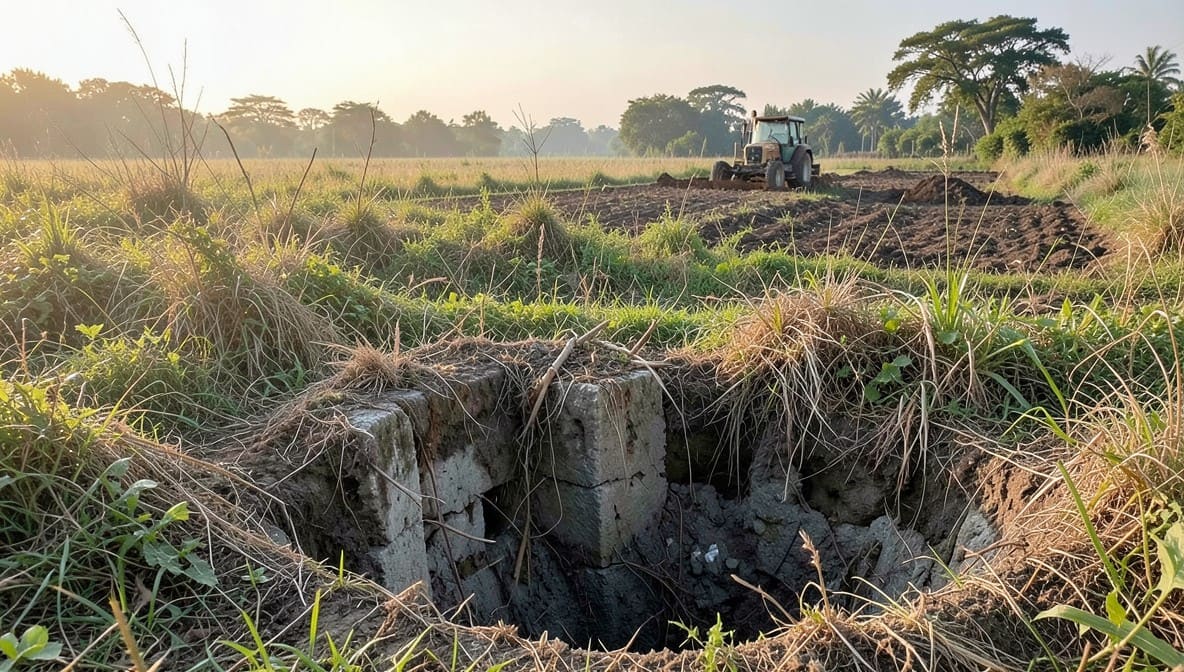
- A Revenue Inspector’s report dated 17.10.1997 stated that the irrigation well was covered with garbage and the electricity connection had been disconnected.
- The petitioner submitted photographs showing ploughing by tractor but did not produce Chitta or Adangal records.
- The petitioner filed a proof affidavit in 2016 but made no deposit of disputed rent.
Procedural History
- 1996: Eviction petition filed by respondents before the Special Deputy Collector, Revenue Court, Trichy Camp, Coimbatore.
- 17.10.1997: Revenue Inspector submits report alleging disuse of land.
- 2016: Petitioner files proof affidavit.
- 20.01.2022: Special Deputy Collector passes order of eviction on two grounds: non-payment of rent and disuse of land.
- 20.01.2022: Legal heirs of deceased landowners are brought on record without notice to the petitioner.
- 09.04.2026: Civil Revision Petition reserved for judgment.
- 30.04.2026: Judgment pronounced by the Madras High Court.
The Parties' Positions
Petitioner: Argued that he is a lawful cultivating tenant and heir to the original lessee. Contended that no statutory notice under Section 3(4)(b) was issued before eviction. Claimed rent payment of Rs. 1,10,000 and relied on photographs to prove cultivation. Asserted that the authority acted arbitrarily by relying on a 25-year-old inspector’s report without corroborating revenue records.
Respondents: Contended that the petitioner has been deliberately delaying proceedings since 1996. Asserted that no rent has been paid and no deposit has been made. Argued that the Revenue Inspector’s report, combined with the disconnection of electricity and neglect of the well, conclusively proves disuse. Stated that photographs are insufficient without Chitta and Adangal.
Relief Sought
The petitioner sought quashing of the eviction order dated 20.01.2022, restoration of his tenancy rights, and a direction to the authority to determine the rent payable and grant him time to pay.
The Legal Issue
The central question was whether Section 3(4)(b) of the Tamil Nadu Cultivating Tenants Protection Act, 1927 mandates that the authority must issue a notice requiring the tenant to pay arrears of rent before passing an eviction order, and whether disuse of land can be established solely on the basis of a Revenue Inspector’s report without supporting revenue records such as Chitta and Adangal.
Arguments Presented
For the Petitioner
The petitioner’s counsel relied on Chinnamarkathian @ Muthu Gounder v. Ayyavoo @ Periana Gounder (1982 (1) SCC 159) to argue that the authority is statutorily obligated to call upon the tenant to pay the arrears within a specified time before passing an eviction order. He submitted that the failure to issue such notice renders the eviction order illegal. He further contended that the petitioner had been continuously cultivating the land, as evidenced by photographs, and that the authority erred in relying on a 25-year-old report without verifying current land use through official records.
For the Respondent
The respondents’ counsel argued that the proceedings had been pending for nearly 30 years and that the petitioner had consistently failed to pay rent or deposit disputed amounts. He contended that the Revenue Inspector’s report, corroborated by the disconnection of electricity and the state of the well, provided sufficient evidence of disuse. He relied on 2023 Supreme Mad 1467 to assert that non-payment of rent and disuse are valid grounds for eviction, and that the petitioner’s failure to produce Chitta and Adangal rendered his claim of cultivation unsubstantiated.
The Court's Analysis
The Court undertook a detailed examination of Section 3(4)(b) of the Tamil Nadu Cultivating Tenants Protection Act, 1927, which provides that where a tenant is alleged to have defaulted in payment of rent, the authority "shall call upon the tenant to pay the rent due within such time as may be specified in the order" and only if the tenant fails to pay within that time may an order of eviction be passed.
"In the present case, from the perusal of the records, it could be seen that no such order as required under Sub-Section 4(b) of Section 3 had been made by the Authority and hence, eviction order made on that ground would have to be interfered with."
The Court held that the authority’s failure to issue a notice under Section 3(4)(b) was a fatal procedural defect. The absence of this mandatory step rendered the eviction on the ground of non-payment of rent legally unsustainable.
Regarding the second ground of disuse, the Court examined the Revenue Inspector’s report dated 17.10.1997. While acknowledging that the report indicated neglect of the irrigation well and disconnection of electricity, the Court emphasized that such observations alone are insufficient to prove long-term disuse. The Court noted that the petitioner had not produced Chitta or Adangal - the official land records maintained by the Revenue Department that reflect cultivation history, crop patterns, and land use.
"To discredit such a finding the petitioner had also not produced any Revenue Records such as Chitta and Adangal to substantiate that there has been a continuous agricultural activities being carried out in the land... except for a photograph which also do not suggest that there are agricultural operations being carried out except the land being ploughed by a tractor."
The Court found no perversity or illegality in the authority’s reliance on the inspector’s report, given the absence of rebuttal evidence from the tenant. The Court concluded that the ground of disuse under Section 3(2)(b) was adequately established.
The Verdict
The Civil Revision Petition was dismissed in part and allowed in part. The eviction order dated 20.01.2022 on the ground of non-payment of rent was set aside for failure to comply with Section 3(4)(b). However, the eviction order on the ground of disuse of land under Section 3(2)(b) was upheld. The petitioner’s tenancy rights are terminated solely on the basis of disuse. There shall be no order as to costs.
What This Means For Similar Cases
Notice Under Section 3(4)(b) Is Mandatory
- Practitioners must ensure that in every rent default case under the Tamil Nadu Tenant Protection Act, the authority issues a specific order calling upon the tenant to pay arrears within a stipulated time.
- Failure to issue such notice renders the eviction order void ab initio, regardless of the tenant’s conduct.
- Any eviction order passed without this step is liable to be set aside on revision.
Disuse Requires Documentary Corroboration
- A Revenue Inspector’s report alone is insufficient to prove disuse of agricultural land.
- Tenants must be prepared to produce Chitta and Adangal to substantiate continuous cultivation.
- Photographs or oral testimony without official land records will not suffice to rebut allegations of disuse.
- Landlords must rely on up-to-date revenue records, not outdated inspection reports, to establish disuse.
Procedural Compliance Trumps Delay
- While prolonged litigation may be viewed unfavorably, it cannot override statutory procedural mandates.
- Courts will not condone violations of mandatory statutory steps, even if the tenant has delayed proceedings.
- The law prioritizes due process over expediency in tenancy matters.