Madras High Court judgments

539 Madras High Court judgments explained in plain English: what was decided, the law applied and why it matters. Page 5 of 23.

TNSTCE Pension Scheme 1998 | Daily Wage Employees Entitled to Family Pension from Date of Appointment : Madras HC
Case Law Analysis
|Madras High Court

TNSTCE Pension Scheme 1998 | Daily Wage Employees Entitled to Family Pension from Date of Appointment : Madras HC

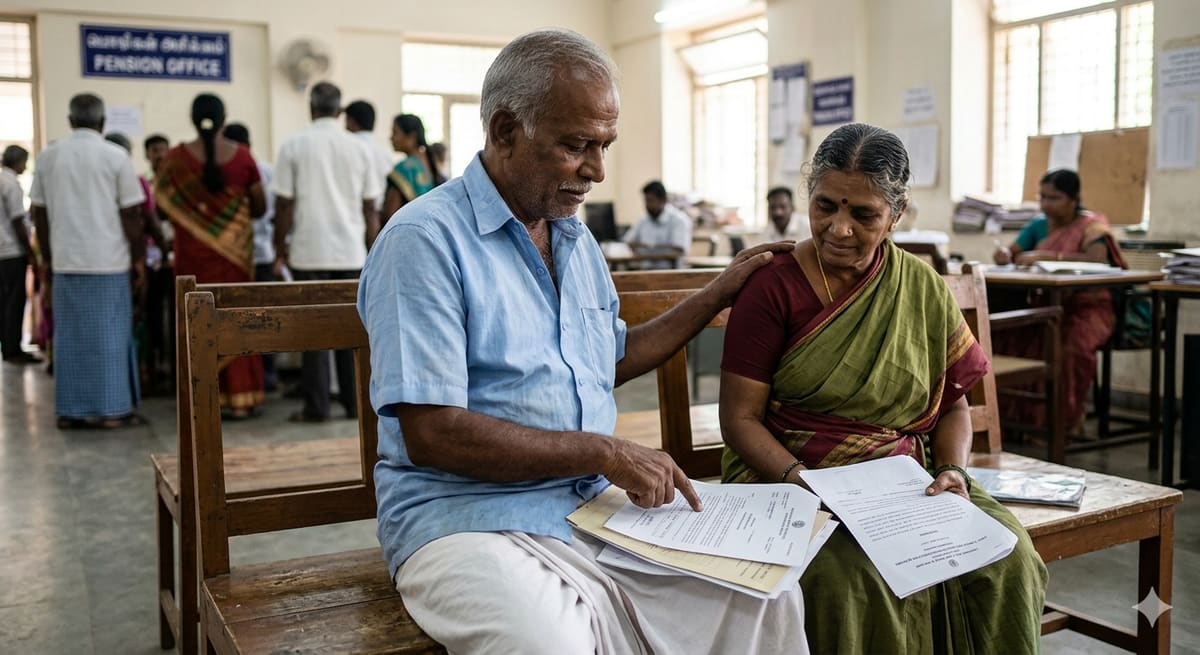
Madras High Court rules that daily wage employees of Tamil Nadu State Transport Corporation are entitled to family pension under the TNSTCE Pension Scheme 1998, counting their service from the date of appointment. The Court directed payment of pensionary benefits within eight weeks, reinforcing that arbitrary exclusions violate judicial discipline and service law principles.

Tamil Nadu Land Acquisition Act | Strict Procedural Compliance Mandatory for SIPCOT Exemptions: Madras HC
Case Law Analysis
|Madras High Court

Tamil Nadu Land Acquisition Act | Strict Procedural Compliance Mandatory for SIPCOT Exemptions: Madras HC

Madras High Court dismisses writ petitions challenging land acquisition after SIPCOT exempted 33.11 acres, reinforcing that partial exemptions do not absolve authorities from adhering to the Tamil Nadu Acquisition of Land for Industrial Purposes Act, 1997. The ruling underscores that procedural lapses in acquisition proceedings render them vulnerable to legal challenge, impacting industrial development projects statewide.

TN Goonda Act | Reliance on Dissimilar Bail Orders Vitiates Preventive Detention for Non-Application of Mind : Madras HC
Case Law Analysis
|Madras High Court

TN Goonda Act | Reliance on Dissimilar Bail Orders Vitiates Preventive Detention for Non-Application of Mind : Madras HC

Madras High Court quashed a preventive detention order under the Tamil Nadu Goonda Act, ruling that the detaining authority's reliance on bail orders from dissimilar cases demonstrated non-application of mind, violating constitutional safeguards under Article 22. The judgment reinforces that preventive detention cannot be mechanically justified by unrelated judicial orders.

Section 33(7) RP Act | No Judicial Mandate for Bye-Election Cost Affidavits from Multi-Seat Candidates : Madras HC
Case Law Analysis
|Madras High Court

Section 33(7) RP Act | No Judicial Mandate for Bye-Election Cost Affidavits from Multi-Seat Candidates : Madras HC

Madras High Court rules that imposing affidavit requirements on multi-seat candidates to cover bye-election costs exceeds judicial authority, as such reforms require legislative action. The judgment underscores judicial restraint in electoral law, leaving financial burdens of bye-elections to statutory amendments rather than PIL-driven mandates.

Hostel Use Qualifies as Residential for Property Tax | Madras HC Applies SC Precedent in Taghar Vasudeva Ambrish : Madurai Bench
Case Law Analysis
|Madras High Court

Hostel Use Qualifies as Residential for Property Tax | Madras HC Applies SC Precedent in Taghar Vasudeva Ambrish : Madurai Bench

The Madras High Court’s Madurai Bench has ruled that properties operated as hostels must be classified as residential for property tax purposes, not commercial, following the Supreme Court’s binding precedent in State of Karnataka v. Taghar Vasudeva Ambrish. This decision directly impacts municipal tax assessors across Tamil Nadu and empowers hostel operators to challenge misclassified commercial assessments, reinforcing the principle that actual use, not nominal designation, determines tax liability.

Tamil Nadu Land Revenue Code, Section 165 | Administrative Delay in Patta Issuance Violates Statutory Duty; Mandamus Issued for 12-Week Deadline : Madras HC
Case Law Analysis
|Madras High Court

Tamil Nadu Land Revenue Code, Section 165 | Administrative Delay in Patta Issuance Violates Statutory Duty; Mandamus Issued for 12-Week Deadline : Madras HC

The Madras High Court has directed Tahsildars to decide patta applications within 12 weeks, holding that prolonged inaction on land rights claims breaches statutory obligations under the Tamil Nadu Land Revenue Code. This ruling empowers landholders facing bureaucratic stalling and establishes a binding timeline for revenue officials, reinforcing property rights as enforceable public duties.

Section 6 Passports Act | Police Verification Alone Cannot Suspend Passport Issuance Without Pending Criminal Proceedings : Madurai HC
Case Law Analysis
|Madras High Court

Section 6 Passports Act | Police Verification Alone Cannot Suspend Passport Issuance Without Pending Criminal Proceedings : Madurai HC

Madurai HC rules that passport authorities cannot withhold issuance or renewal solely based on pending police verification unless criminal proceedings are actively pending before a court. The judgment reinforces statutory limits under Section 6 of the Passports Act, 1967, protecting applicants' right to mobility where no judicial proceedings exist.

Registration Act & Natural Justice | Probate Not Mandatory for Unregistered Wills in Non-Metro Areas: Madras HC
Case Law Analysis
|Madras High Court

Registration Act & Natural Justice | Probate Not Mandatory for Unregistered Wills in Non-Metro Areas: Madras HC

Madras HC rules that refusal to register a settlement deed based on an unprobated, unregistered will violates natural justice and is legally unsustainable in non-metropolitan areas. The court emphasized that probate is not a prerequisite for will validity outside metro jurisdictions, reinforcing procedural fairness in property registration disputes.

Live and Proximate Link | Unexplained 36-Day Delay Vitiates Preventive Detention Order Under TN Act: Madras HC
Case Law Analysis
|Madras High Court

Live and Proximate Link | Unexplained 36-Day Delay Vitiates Preventive Detention Order Under TN Act: Madras HC

The Madras High Court has ruled that a 36-day unexplained delay between arrest and detention order severs the essential connection between the grounds of detention and their purpose, rendering the order invalid. This reinforces that preventive detention cannot be sustained by stale or unexplained justifications, safeguarding Article 22 rights against arbitrary state action.

Trademark Infringement | Voluntary Video Removal & Binding Undertaking Disposes Suit: Madras HC Sets Precedent for Online IP Resolution
Case Law Analysis
|Madras High Court

Trademark Infringement | Voluntary Video Removal & Binding Undertaking Disposes Suit: Madras HC Sets Precedent for Online IP Resolution

The Madras High Court dismissed a trademark infringement suit after the defendant removed a defamatory YouTube video and filed a binding undertaking not to republish similar content. This establishes a new pathway for resolving online IP disputes without protracted litigation, benefiting brands facing digital defamation and intermediaries seeking to avoid liability.

Section 100 RP Act | Election Affidavit Non-Disclosure Must Be Challenged via Election Petition, Not Writ Under Article 226 : Madras HC
Case Law Analysis
|Madras High Court

Section 100 RP Act | Election Affidavit Non-Disclosure Must Be Challenged via Election Petition, Not Writ Under Article 226 : Madras HC

Madras High Court reaffirms statutory exclusivity under the Representation of the People Act, 1951, holding that election affidavit discrepancies can only be contested through election petitions, not writ jurisdiction. The ruling bars Article 226 remedies for non-disclosure, reinforcing procedural safeguards for electoral integrity.

Cultural Programs at Temples | Police Cannot Impose Arbitrary Restrictions; 14 Conditions Prescribed for Time, Content & Conduct : Madurai HC
Case Law Analysis
|Madras High Court

Cultural Programs at Temples | Police Cannot Impose Arbitrary Restrictions; 14 Conditions Prescribed for Time, Content & Conduct : Madurai HC

Madurai High Court quashed an arbitrary denial of permission for a temple festival, laying down 14 specific conditions to regulate timing, content, and conduct. The ruling ensures cultural rights under Article 25 are balanced with public order, setting a precedent for police powers in approving religious events.

Article 25 & Noise Pollution Rules | Temple Festivals Permitted Until Midnight on Final Day with 14 Conditions : Madurai HC
Case Law Analysis
|Madras High Court

Article 25 & Noise Pollution Rules | Temple Festivals Permitted Until Midnight on Final Day with 14 Conditions : Madurai HC

Madurai High Court balances religious freedom under Article 25 with public order, allowing cultural programs until 10 PM daily and extending Singari Melam and fireworks until midnight on the final festival day, subject to 14 strict conditions on content, attire, and noise levels. The ruling sets a precedent for regulating temple festivals without curbing religious practices.

BNSS Section 528 | Mere Apprehension of Police Bias Insufficient for Investigation Transfer Without Prima Facie Malafide Evidence : Madras HC
Case Law Analysis
|Madras High Court

BNSS Section 528 | Mere Apprehension of Police Bias Insufficient for Investigation Transfer Without Prima Facie Malafide Evidence : Madras HC

Madurai High Court rules that a petitioner's fear of biased investigation under BNSS Section 528 must be backed by concrete evidence of malafide conduct, not just subjective apprehension. The court directed disclosure of postmortem and viscera reports to ensure transparency while upholding police accountability in criminal probes.

CCTV Preservation Duty | Police Must Retain Footage Upon Credible Misconduct Allegation, Even Without FIR: Madras HC (Madurai Bench)
Case Law Analysis
|Madras High Court

CCTV Preservation Duty | Police Must Retain Footage Upon Credible Misconduct Allegation, Even Without FIR: Madras HC (Madurai Bench)

The Madras High Court has ruled that police are legally obligated to preserve CCTV footage whenever a credible allegation of misconduct is made, regardless of whether an FIR has been registered. This sets a critical precedent for procedural accountability, ensuring evidence is not destroyed before formal proceedings begin-empowering citizens and lawyers to demand transparency from law enforcement at the earliest stage.

Suspension Beyond 3 Months Without Charge Sheet Violates Natural Justice | Service Law: Madras HC
Case Law Analysis
|Madras High Court

Suspension Beyond 3 Months Without Charge Sheet Violates Natural Justice | Service Law: Madras HC

The Madras High Court has ruled that suspending a government employee beyond three months without filing a charge sheet breaches natural justice, mandating immediate reinstatement. This reinforces the binding precedent from Ajay Kumar Choudhary and G.O. No. 81, protecting thousands of state employees from indefinite administrative detention without formal allegations.

Hereditary Mutawalliship | Tenure Cannot Be Limited to One Year Under Wakf Proforma; Perpetuity Presumed Unless Expressly Restricted : Madras HC
Case Law Analysis
|Madras High Court

Hereditary Mutawalliship | Tenure Cannot Be Limited to One Year Under Wakf Proforma; Perpetuity Presumed Unless Expressly Restricted : Madras HC

The Madras High Court has ruled that hereditary mutawalliship under a wakf proforma is inherently perpetual, and imposing a fixed one-year term violates the foundational principle of hereditary succession in Islamic endowment law. This decision protects the rights of established hereditary successors and curbs arbitrary interference by Wakf Boards in succession planning, setting a critical precedent for all wakf properties governed by similar proformas.