The Madras High Court has affirmed that insurance companies remain liable to compensate victims of motor accidents even when the vehicle involved is a goods vehicle carrying gratuitous passengers, provided the insurer cannot invoke policy breaches to avoid liability. The judgment reinforces the humanitarian intent of the Motor Vehicles Act by prioritizing victim compensation over technical policy violations.
Background & Facts
The Dispute
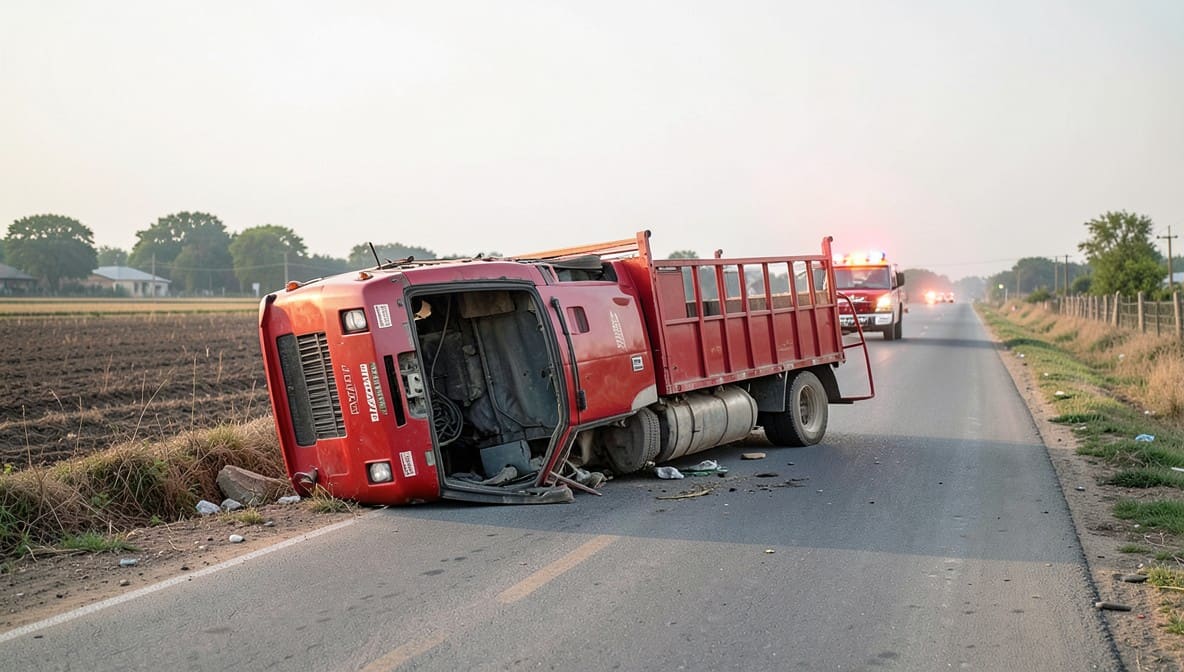
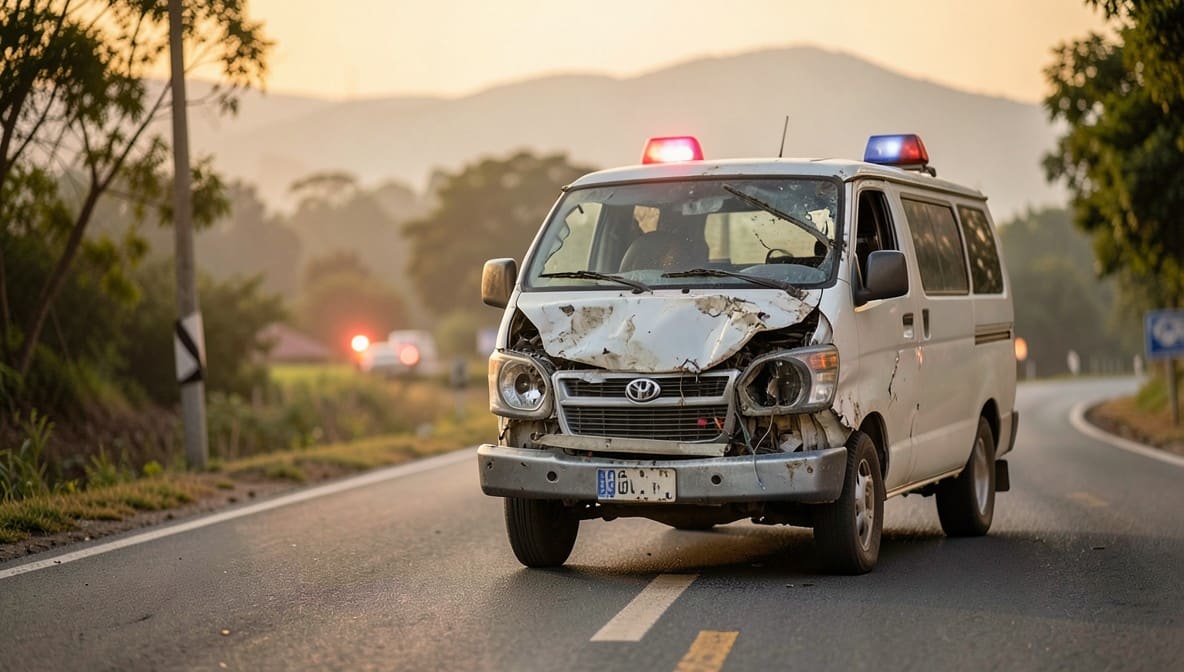
The present civil miscellaneous appeals arise from a motor accident that occurred on 16.06.2013 at approximately 16.00 hours on the Panruti-Kumbakonam National Highway near Thamaraikulam. The accident involved a van bearing Registration No. TN-31-AH-4711, which capsized due to the rash and negligent driving of its driver. The van was being used to transport cooking materials and firewood. Onboard were two passengers: J. Stella Mery and J. Reeta Mery, who sustained grievous injuries.
The van was insured with the appellant, Royal Sundaram Alliance General Insurance Company Limited. The vehicle was registered as a goods vehicle, and the driver held only a Light Motor Vehicle and Motor Cycle with Gear license, not a transport vehicle license.
Key Facts
- The van was registered as a goods vehicle and was being used to carry firewood and cooking materials at the time of the accident.
- The petitioners, J. Stella Mery and J. Reeta Mery, were travelling as passengers without payment or consideration - making them gratuitous passengers.
- The driver did not hold a valid license to operate a transport vehicle.
- The insurance policy was in force on the date of the accident.
- The claimants filed separate Motor Accident Claims Petitions: MCOP No. 8224 of 2013 (J. Stella Mery) and MCOP No. 597 of 2014 (J. Reeta Mery).
- Claim amounts sought: Rs. 15,00,000 and Rs. 10,00,000 respectively.
- The Insurance Company resisted liability on two grounds: (1) the vehicle was being used for commercial goods transport, not passenger carriage; and (2) the driver lacked a valid transport vehicle license.
Procedural History
- 16.06.2013: Motor accident occurred on Panruti-Kumbakonam National Highway.
- 2013: MCOP No. 8224 of 2013 filed by J. Stella Mery.
- 2014: MCOP No. 597 of 2014 filed by J. Reeta Mery.
- 13.09.2019: Motor Accident Claims Tribunal, Special Sub Judge No.1, Chennai, passed common award.
- Awarded Rs. 10,39,950 to J. Stella Mery.
- Awarded Rs. 2,95,000 to J. Reeta Mery.
- Directed insurer to pay compensation with 7.5% interest from date of petition until realization.
- Directed insurer to recover the amount from the vehicle owner.
- 2022: Civil Miscellaneous Appeals Nos. 856 and 946 of 2022 filed by the Insurance Company before the Madras High Court.
- 24.02.2026: Appeals reserved for judgment.
- 30.04.2026: Judgment pronounced.
The Parties' Positions
For the Appellant (Insurance Company)
- Argued that the vehicle was a goods vehicle, and transporting passengers in such a vehicle violated the terms of the insurance policy.
- Contended that the driver lacked a valid license to operate a transport vehicle, thereby breaching Section 147(2)(a) of the Motor Vehicles Act.
- Relied on Bharati Axa General Insurance Co. Ltd. v. Aandi and New India Assurance Co. Ltd. v. Asha Rani to argue that insurers are not liable in such cases.
- Asserted that the Tribunal erred in accepting disability certificates (Ex.C1 and Ex.C2) and in awarding excessive compensation under pecuniary and non-pecuniary heads.
For the Respondents (Claimants)
- Maintained that the claimants were innocent victims of a negligent accident.
- Argued that the purpose of the Motor Vehicles Act is compensatory and humanitarian.
- Relied on Manuara Khatun & Ors. and Saju P. Paul v. National Insurance Co. Ltd. to support the principle of ‘pay and recover’.
- Stated that policy breaches by the insured cannot defeat the claimant’s statutory right to compensation.
Relief Sought
The Insurance Company sought:
- Setting aside of the Tribunal’s award dated 13.09.2019.
- Dismissal of the claim petitions or reduction of compensation.
- Declaration that the insurer is not liable to pay compensation due to breach of policy conditions.
The Legal Issue
The central question was whether an insurance company can avoid liability under Section 147 of the Motor Vehicles Act, 1988 when the victim is a gratuitous passenger in a goods vehicle, and the driver lacks a valid transport license, and whether the Tribunal was justified in directing the insurer to pay compensation first and recover it later from the owner.
Arguments Presented
For the Appellant
The appellant relied on Bharati Axa General Insurance Co. Ltd. v. Aandi and New India Assurance Co. Ltd. v. Asha Rani to argue that when a vehicle is used contrary to its insured purpose - such as carrying passengers in a goods vehicle - the insurer is absolved of liability. It further contended that the driver’s lack of a valid transport license rendered the insurance policy void ab initio under Section 147(2)(a). The appellant also challenged the quantum of compensation, particularly the award of Rs. 9,07,200 for pecuniary loss and Rs. 1,50,000 for disability, asserting that the disability certificates were not properly authenticated.
For the Respondent
The respondents argued that the Motor Vehicles Act is a social welfare legislation designed to ensure prompt compensation to victims. They relied on Saju P. Paul v. National Insurance Co. Ltd. and Manuara Khatun & Ors., where the Supreme Court held that even when the victim is a gratuitous passenger in a goods vehicle, the insurer must pay compensation first and recover from the insured. The respondents emphasized that the breach of policy conditions by the insured cannot be used to deny relief to an innocent claimant.
The Court's Analysis
The Court undertook a detailed examination of the legislative intent behind Section 147 of the Motor Vehicles Act, 1988, which mandates compulsory insurance for third-party liability. The Court noted that the Act’s primary objective is to ensure that victims of motor accidents receive timely compensation, irrespective of the insured’s breach of policy terms.
The Court referred to the Supreme Court’s decision in Saju P. Paul v. National Insurance Co. Ltd. (2013) 2 SCC 41, which held that even when the victim is a gratuitous passenger in a goods vehicle, the insurer must pay the awarded compensation and then recover from the insured. The Supreme Court in Manuara Khatun & Ors. reaffirmed this principle, emphasizing that the benevolent object of the Act overrides technical policy violations.
"The Insurance Company has already deposited the entire awarded amount pursuant to the order of this Court passed on 1-8-2011... The claimant cannot be compelled to struggle further for recovery of the amount."
The Court observed that the claimants were not engaged in any illegal activity; they were merely passengers in a vehicle carrying goods. Their presence was incidental to the transport of firewood and cooking materials. The Court held that the driver’s lack of a valid license and the vehicle’s misuse were breaches by the insured, not the claimants. Therefore, the insurer could not escape liability.
The Court also found no merit in the challenge to the quantum of compensation. The Tribunal had carefully assessed medical evidence, including disability certificates, and applied appropriate multipliers under the principles laid down in Krishna v. K. Srinivasan. The awards were neither arbitrary nor excessive.
The Court concluded that the principle of ‘pay and recover’ is not an exception but a necessary mechanism to uphold the Act’s humanitarian purpose. The insurer’s remedy lies in recovery from the insured, not in denying compensation to the victim.
The Verdict
The Madras High Court dismissed both Civil Miscellaneous Appeals. The Tribunal’s award dated 13.09.2019 was upheld. The Insurance Company is directed to pay Rs. 10,39,950 to J. Stella Mery and Rs. 2,95,000 to J. Reeta Mery, with interest at 7.5% per annum from the date of filing of the respective claims until realization. The insurer may recover the entire amount paid from the vehicle owner, following the procedure laid down in Challa Upendra Rao. No costs were awarded.
What This Means For Similar Cases
Pay and Recover Is a Mandatory Remedy for Gratuitous Passengers
- Practitioners must now argue that Section 147 imposes absolute liability on insurers for third-party victims, even in goods vehicle accidents.
- Policy breaches by the insured (e.g., unlicensed driver, misuse of vehicle) cannot be invoked to deny compensation to innocent passengers.
- The ‘pay and recover’ mechanism is not discretionary - it is a statutory imperative under the Act’s humanitarian framework.
Disability Awards Must Be Upheld If Medically Supported
- Medical certificates, even if not notarized, are admissible if they are issued by qualified practitioners and form part of the evidentiary record.
- Tribunals are entitled to rely on such documents to determine pecuniary loss, provided the multipliers and methodology follow established precedents.
- Challenges to quantum must be grounded in procedural irregularities, not mere disagreement with the amount.
Insurers Must Distinguish Between Policy Defences and Statutory Liability
- Insurers should not contest claims on grounds of policy breach when victims are third parties.
- Recovery from the insured must be pursued separately through civil or arbitration proceedings, not as a condition precedent to compensation.
- This judgment reinforces that the claimant’s right to compensation is independent of the insured’s conduct.