Madras High Court judgments

539 Madras High Court judgments explained in plain English: what was decided, the law applied and why it matters. Page 3 of 23.

Rule 40 Tamil Nadu Suspension of Sentence Rules | Humanitarian Grounds Justify Emergency Leave Beyond Rule 6 Enumeration : Madras HC
Case Law Analysis
|Madras High Court

Rule 40 Tamil Nadu Suspension of Sentence Rules | Humanitarian Grounds Justify Emergency Leave Beyond Rule 6 Enumeration : Madras HC

Madras High Court invokes Rule 40’s exemption powers to grant emergency leave for post-death rituals, holding that rigid statutory grounds under Rule 6 cannot override humanitarian considerations in prison administration. The ruling sets a precedent for flexible interpretation of prison rules where cultural and familial obligations are at stake.

Section 276C(2) IT Act | Mens Rea Mandatory for Tax Evasion Prosecution : Madras HC Quashes Case Without Deliberate Intent
Case Law Analysis
|Madras High Court

Section 276C(2) IT Act | Mens Rea Mandatory for Tax Evasion Prosecution : Madras HC Quashes Case Without Deliberate Intent

Madras High Court rules that prosecution under Section 276C(2) of the Income Tax Act requires proof of wilful intent to evade tax, not mere non-payment. The court held that financial distress or inadvertent default does not attract penal provisions, reinforcing that mens rea is a prerequisite for criminal liability in tax evasion cases.

Section 528 BNSS | Mere Allegations Without Concrete Evidence Insufficient for Investigation Transfer: Madras HC
Case Law Analysis
|Madras High Court

Section 528 BNSS | Mere Allegations Without Concrete Evidence Insufficient for Investigation Transfer: Madras HC

The Madras High Court (Madurai Bench) ruled that a plea for transfer of investigation under Section 528 of the Bharatiya Nagarik Suraksha Sanhita (BNSS) must be backed by concrete evidence, not just allegations. The court dismissed the petition, emphasizing that interference is unwarranted post-charge sheet filing, especially in property disputes involving familial conflicts.

Rule 6 Tamil Nadu Suspension of Sentence Rules | Emergency Leave Granted Despite Security Risks in Emu Kozhi Scam Conviction : Madras HC
Case Law Analysis
|Madras High Court

Rule 6 Tamil Nadu Suspension of Sentence Rules | Emergency Leave Granted Despite Security Risks in Emu Kozhi Scam Conviction : Madras HC

Madras High Court grants a convict 3-day emergency leave under Rule 6 of the Tamil Nadu Suspension of Sentence Rules, 1982, to attend to his critically ill child, despite security concerns due to his involvement in the Emu Kozhi scam. The ruling underscores judicial discretion in balancing humanitarian grounds with public safety risks for prisoners.

Section 123 Customs Act | Burden of Proof Shifts to Revenue for Alleged Diversion of Duty-Free Imports : Madras HC Upholds Confiscation & Penalty
Case Law Analysis
|Madras High Court

Section 123 Customs Act | Burden of Proof Shifts to Revenue for Alleged Diversion of Duty-Free Imports : Madras HC Upholds Confiscation & Penalty

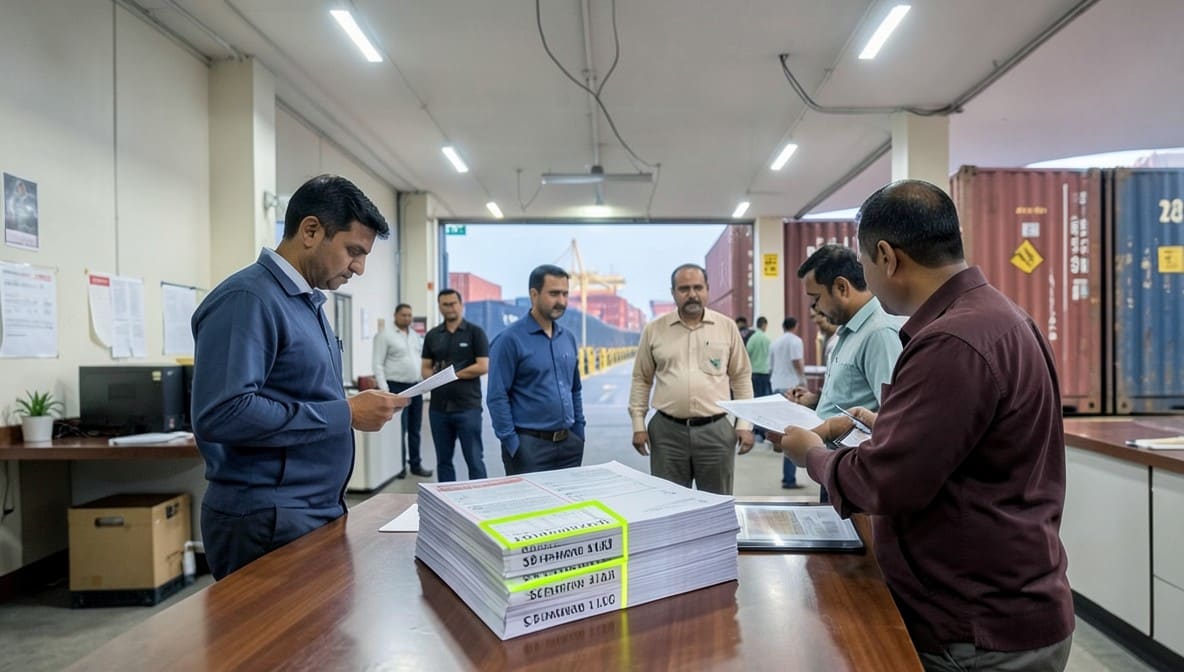
Madras High Court ruled that once importers establish prima facie compliance with Notification 32/97, the burden of proving diversion of duty-free goods shifts to the Revenue. The Court upheld confiscation and penalties of Rs. 71.72 lakh, reinforcing that fraudulent intent must be affirmatively proven by customs authorities, not presumed.

SC/ST Act & BNS | Conspiracy Without Overt Act Sufficient for Bail Denial; Parity & Incarceration Period Justify Relief : Madras HC
Case Law Analysis
|Madras High Court

SC/ST Act & BNS | Conspiracy Without Overt Act Sufficient for Bail Denial; Parity & Incarceration Period Justify Relief : Madras HC

Madras High Court ruled that mere conspiracy, even without an overt act, can justify denial of bail under the SC/ST Act and Bharatiya Nyaya Sanhita. However, bail was granted on parity grounds with co-accused and prolonged incarceration, setting a precedent for balancing stringent anti-atrocity laws with individual liberty.

Section 168 MV Act | Income Tax Deduction Must Reflect Actual Liability in Loss of Dependency Claims : Madras HC Corrects Rs. 1.55 Lakh Error
Case Law Analysis
|Madras High Court

Section 168 MV Act | Income Tax Deduction Must Reflect Actual Liability in Loss of Dependency Claims : Madras HC Corrects Rs. 1.55 Lakh Error

Madras High Court ruled that income tax deduction in motor accident compensation must align with the deceased's actual tax liability, not an arbitrary figure. The court modified the award from Rs. 49.28 lakh to Rs. 47.73 lakh, emphasizing statutory compliance in loss of dependency computations under the Motor Vehicles Act. This sets a precedent for precise tax adjustments in compensation calculations.

Section 168 MV Act | Disability Assessment Must Strictly Align With Medical Evidence : Madras HC Enhances Compensation to ₹18.89 Lakh
Case Law Analysis
|Madras High Court

Section 168 MV Act | Disability Assessment Must Strictly Align With Medical Evidence : Madras HC Enhances Compensation to ₹18.89 Lakh

Madras High Court ruled that disability assessments in motor accident claims must correspond with medical evidence, rejecting arbitrary tribunal determinations. The Court enhanced the disability percentage from 40% to 60%, raising compensation to ₹18.89 lakh with 7.5% interest, setting a precedent for evidence-based disability evaluations under the Motor Vehicles Act.

Section 80-A TN TCP Act | Madras HC Mandates 3-Week Disposal of Stay Applications; Bars Coercive Action Pending Appeal
Case Law Analysis
|Madras High Court

Section 80-A TN TCP Act | Madras HC Mandates 3-Week Disposal of Stay Applications; Bars Coercive Action Pending Appeal

Madras High Court reinforces due process by directing revisional authorities to decide stay applications under Section 80-A of the Tamil Nadu Town and Country Planning Act within three weeks. The Court prohibits demolition, sealing, or locking of premises during this period, ensuring property owners are protected from coercive action while their appeals are pending.

Article 226 | Minor’s Voluntary Consent Overrides Parental Custody Claims in Habeas Corpus Petition : Madurai HC
Case Law Analysis
|Madras High Court

Article 226 | Minor’s Voluntary Consent Overrides Parental Custody Claims in Habeas Corpus Petition : Madurai HC

Madurai Bench of Madras High Court ruled that a minor’s voluntary affirmation of her desire to return to parents and continue studies prevails over parental custody claims in habeas corpus proceedings, absent coercion. The court directed authorities to restrict contact with the minor except by her parents, reinforcing personal liberty under Article 21.

Motor Vehicles Act | Original Owner Liable for Post-Sale Accidents Despite NOC if Registration & Insurance Transfer Not Completed : Madras HC
Case Law Analysis
|Madras High Court

Motor Vehicles Act | Original Owner Liable for Post-Sale Accidents Despite NOC if Registration & Insurance Transfer Not Completed : Madras HC

Madras High Court rules that the original vehicle owner remains vicariously liable for accidents occurring post-sale if the registration and insurance transfer processes are not fully completed, even with a No Objection Certificate. The judgment underscores the legal obligation to notify insurers and transport authorities to avoid perpetual liability under tort and insurance law.

Motor Vehicles Act | Transport Permit is Inheritable Property; Renewal Mandatory Despite Delay if Succession Litigation Pending : Madras HC
Case Law Analysis
|Madras High Court

Motor Vehicles Act | Transport Permit is Inheritable Property; Renewal Mandatory Despite Delay if Succession Litigation Pending : Madras HC

Madras High Court rules that a transport permit under the Motor Vehicles Act is inheritable property, and its renewal cannot be denied merely due to delays beyond three months post-death if a partition suit is pending. The court held that preliminary decrees establishing enforceable interests obligate authorities to process renewals, ensuring legal heirs' rights are protected during succession disputes.

Employees' Compensation Act | Insurer Cannot Escape 12% Statutory Interest on Delayed Compensation Despite Policy Exclusion : Madras HC
Case Law Analysis
|Madras High Court

Employees' Compensation Act | Insurer Cannot Escape 12% Statutory Interest on Delayed Compensation Despite Policy Exclusion : Madras HC

Madras High Court rules that insurers under the Employees' Compensation Act, 1923, must pay 12% statutory interest on delayed compensation, even if the policy excludes it, provided the accident was reported on time. The ruling reinforces that statutory obligations override contractual exclusions, directly impacting insurers' liability in workmen compensation claims.

Section 68 Indian Evidence Act | Registered Will Valid Despite Unavailable Attesting Witness If Signature Verified by Credible Witness: Madras HC
Case Law Analysis
|Madras High Court

Section 68 Indian Evidence Act | Registered Will Valid Despite Unavailable Attesting Witness If Signature Verified by Credible Witness: Madras HC

Madras High Court rules that a registered will under Section 68 of the Indian Evidence Act is validly proved if the testator's and one attesting witness's signatures are verified by credible witnesses, even if the attesting witness is unavailable. This holding simplifies will probate for beneficiaries where attesting witnesses are deceased or untraceable.

Habeas Corpus Under Article 226 | Minor's Welfare Overrides Parental Custody in POCSO Cases : Madurai HC Directs Children’s Home Placement & POCSO Registration
Case Law Analysis
|Madras High Court

Habeas Corpus Under Article 226 | Minor's Welfare Overrides Parental Custody in POCSO Cases : Madurai HC Directs Children’s Home Placement & POCSO Registration

Madurai High Court ruled that a minor’s welfare supersedes parental custody rights when sexual abuse is alleged, directing the child’s placement in a children’s home and mandatory POCSO case registration against the stepfather and uncle. The ruling reinforces that habeas corpus petitions must prioritize the child’s safety over familial claims in abuse cases.

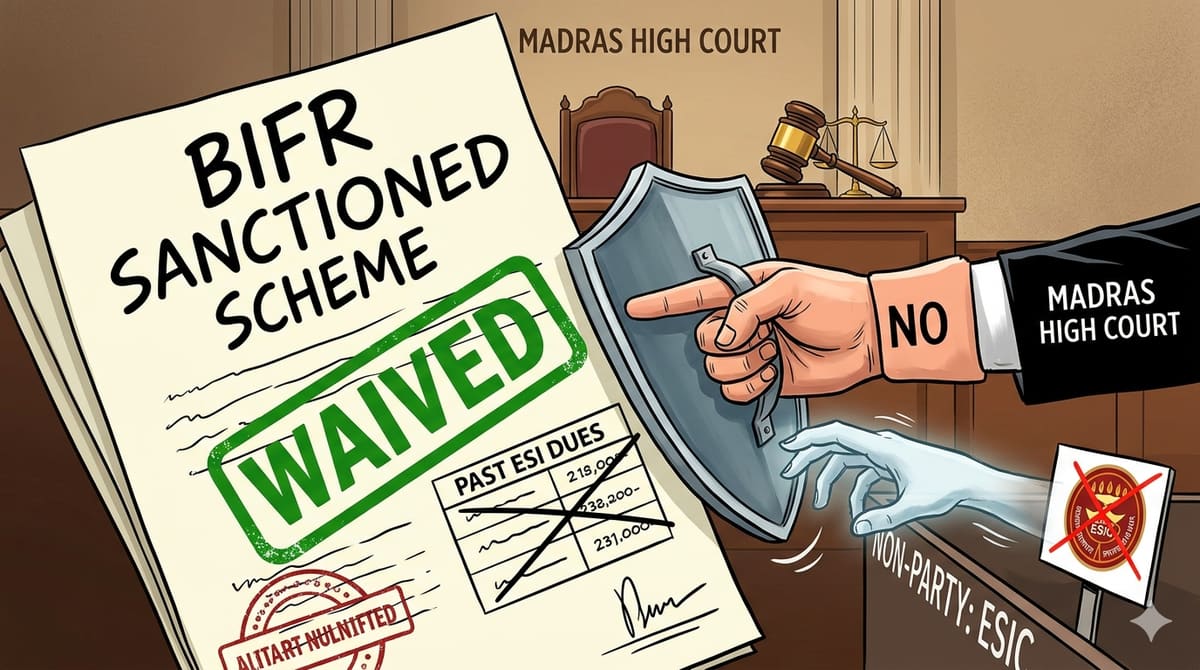
BIFR Sanctioned Scheme | Waived ESI Dues Cannot Be Revived Even Against Non-Party ESIC : Madras HC
Case Law Analysis
|Madras High Court

BIFR Sanctioned Scheme | Waived ESI Dues Cannot Be Revived Even Against Non-Party ESIC : Madras HC

Madras High Court rules that a BIFR-sanctioned rehabilitation scheme extinguishes ESI Corporation's right to recover waived contributions, interest, and damages, even if ESIC was not a party to the BIFR proceedings. The judgment bars revival of such claims post-scheme implementation, reinforcing the finality of statutory waivers in industrial revival schemes.

Section 14 Land Encroachment Act | Civil Courts Barred from Adjudicating Disputes During Pending Statutory Proceedings : Madras HC
Case Law Analysis
|Madras High Court

Section 14 Land Encroachment Act | Civil Courts Barred from Adjudicating Disputes During Pending Statutory Proceedings : Madras HC

Madras High Court holds that civil courts lack jurisdiction to entertain suits for injunction where statutory notices under Sections 6 and 7 of the Land Encroachment Act, 1905, are pending. Suppression of such notices by the plaintiff constitutes abuse of process, invoking the doctrine of unclean hands and barring civil court intervention.

Guardians and Wards Act | Father’s Natural Guardianship Overrides Grandparent Custody Claim Unless Formal Proceedings Initiated : Madras HC
Case Law Analysis
|Madras High Court

Guardians and Wards Act | Father’s Natural Guardianship Overrides Grandparent Custody Claim Unless Formal Proceedings Initiated : Madras HC

Madras High Court reaffirms that a biological father, as the natural guardian under the Guardians and Wards Act, holds primacy in custody matters unless formal legal proceedings challenge his right. The ruling underscores that grandparents or third parties must initiate proper guardianship proceedings to displace the father’s presumptive custody, even in cases of prior informal care arrangements.

DGP Circulars Under Writ Scrutiny | Madras HC Permits Adalum Padalum Dance with 14 Conditions to Prevent Obscenity & Communal Discord : Madurai Bench
Case Law Analysis
|Madras High Court

DGP Circulars Under Writ Scrutiny | Madras HC Permits Adalum Padalum Dance with 14 Conditions to Prevent Obscenity & Communal Discord : Madurai Bench

Madras High Court allows a temple festival cultural program under strict conditions derived from Tamil Nadu DGP circulars, reinforcing that police permissions for public events must balance cultural rights with public order. The ruling mandates no obscenity, no communal provocation, and strict time limits, setting a precedent for future cultural program approvals under writ jurisdiction.