The Madras High Court has affirmed that the powers of a Trust Board under a registered Trust Deed to remove a Madathipathi prevail over the procedural requirements of Section 59 of the Tamil Nadu Hindu Religious and Charitable Endowments Act. This landmark ruling reinforces the primacy of the Founder’s intent in religious endowments and clarifies the limits of state intervention in internal religious governance.
Background & Facts
The Dispute
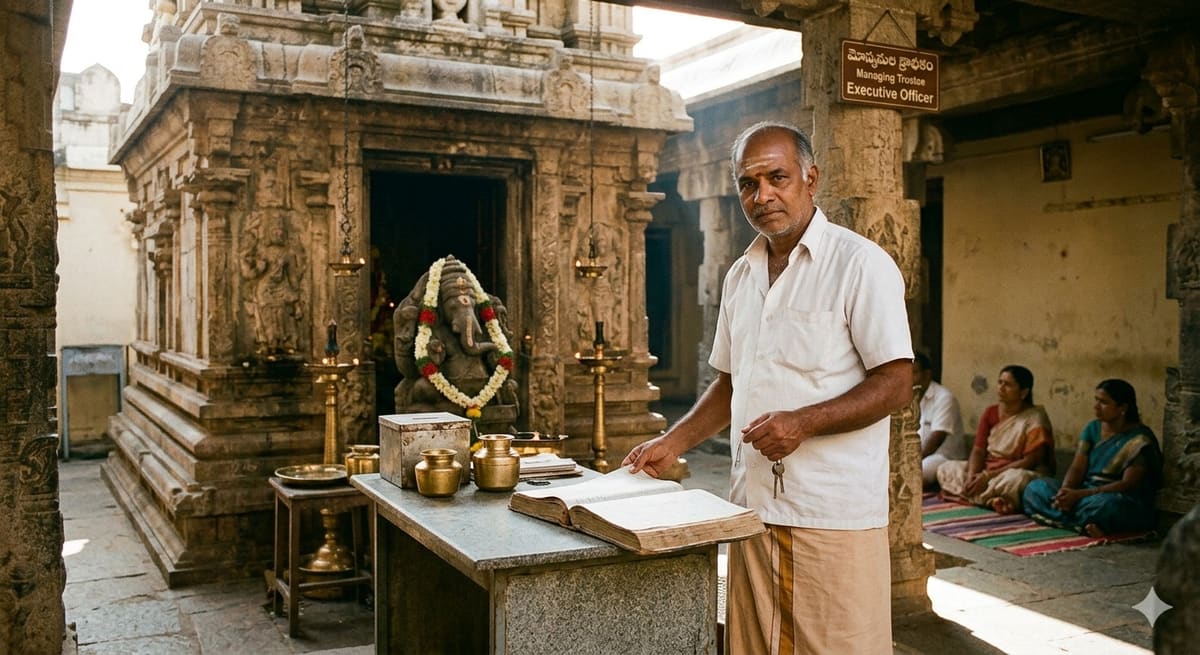
The dispute centers on the authority to appoint and remove the Madathipathi (pontiff) of the Dhakshinamurthy Mutt, a Hindu religious institution established in 1882 in Udhagamandalam (Ooty). The Mutt is governed by a registered Trust Deed dated 12.09.1917, which vests the power to appoint and remove the Madathipathi and Trustees in a Board of seven Trustees. The 4th respondent, Thava Thiru Maruthachala Adigalar, was appointed as Madathipathi in 2003 on a temporary basis by the Trust Board, following a request from the HR & CE Department to fill a vacancy that had existed since 1974. The appointment was communicated to the Department and remained unchallenged for over a decade.
Key Facts
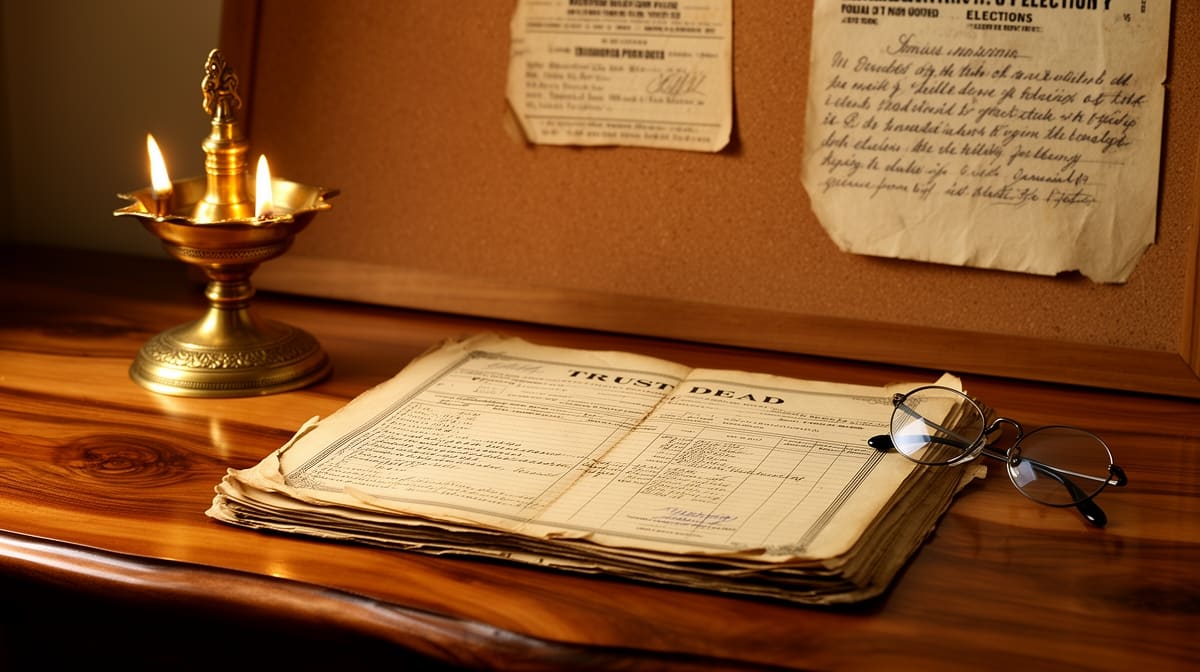
- The Trust Deed, registered as Document No. 473 of 1917, contains Clause 7, which empowers the Trustees to remove any Trustee or Madathipathi for acts prejudicial to the Trust.
- The 4th respondent, from 2003 to 2016, allegedly mismanaged Trust funds, failed to render accounts, and was absent from the Mutt premises, leading to complaints from devotees.
- On 28.06.2013, the Trust Board issued a notice to the 4th respondent seeking explanation for misconduct.
- On 04.01.2016, the Trust Board unanimously passed a resolution removing the 4th respondent as Madathipathi under Clause 7 of the Trust Deed.
- On 21.01.2016, the 4th respondent was directed to hand over all Mutt documents and assets.
- On 26.09.2016, the Trust Board informed the HR & CE Department of the removal and requested action to enforce it.
- The 4th respondent filed W.P. No. 36377/2016 seeking to restrain the bank from freezing Mutt accounts.
- On 14.06.2017, the Trust Board appointed Sri Someshwara Swamigal as the new Madathipathi and notified the Department.
- On 20.09.2017 and 26.09.2017, the Joint and Assistant Commissioners directed the bank to unfreeze accounts and permitted the 4th respondent to operate them, citing lack of legal authority for removal.
- The Mutt filed W.P. No. 26337/2017 challenging these orders.
- On 10.08.2018, the Madras High Court directed the parties to approach the Commissioner of HR & CE as the appellate authority.
- On 24.04.2023, the Commissioner affirmed the 2017 orders and set aside the 2016 removal, holding that only a suit under Section 59 of the Act could remove a Madathipathi.
- On 05.05.2024, the 4th respondent issued an advertisement for appointment of archakas and suspended the petitioner Gurukkal, who had served since 1958.
Procedural History
- 12.09.1917: Trust Deed executed and registered.
- 01.07.1974: Death of 6th Madathipathi; post remained vacant.
- 19.07.2001: HR & CE Department requested Trust Board to appoint a Madathipathi.
- 27.01.2003: Perur Aadheenam recommended 4th respondent as temporary Madathipathi.
- 03.04.2003: Trust Board appointed 4th respondent; notified Department.
- 28.06.2013: Trust Board issued notice to 4th respondent for misconduct.
- 04.01.2016: Trust Board resolved to remove 4th respondent under Clause 7 of Trust Deed.
- 21.01.2016: 4th respondent directed to surrender documents.
- 26.09.2016: Trust Board informed HR & CE Department of removal.
- 27.09.2016: 4th respondent challenged removal via legal notice.
- 07.01.2016: 4th respondent filed criminal complaint against Trustees.
- 14.06.2017: Trust Board appointed Sri Someshwara Swamigal as new Madathipathi.
- 20.06.2017: Appointment communicated to HR & CE Department.
- 20.09.2017: Joint Commissioner directed bank to unfreeze accounts and permit 4th respondent access.
- 26.09.2017: Assistant Commissioner directed police to assist 4th respondent in entering Mutt.
- 10.08.2018: Madras HC directed parties to approach Commissioner as appellate authority.
- 24.04.2023: Commissioner set aside 2016 removal, affirmed 2017 orders.
- 05.05.2024: 4th respondent issued advertisement for archakas and suspended Gurukkal.
- 12.06.2023: W.P. No. 15252/2023 filed by Mutt challenging Commissioner’s order.
- 14.04.2024: W.P. No. 14421/2024 filed by Mutt seeking prohibition of advertisement.
- 22.10.2024: W.P. No. 33254/2024 filed by Gurukkal challenging suspension.
The Parties' Positions
The Mutt and the Gurukkal contended that the Trust Deed, as the foundational document of the Mutt, grants the Trustees exclusive authority to remove the Madathipathi for misconduct, and that Section 59 of the Act is not a mandatory exclusive remedy. They argued that the Commissioner exceeded jurisdiction by collaterally invalidating a final, unchallenged removal order.
The Department and the 4th respondent contended that Section 59 of the Act is the sole legal mechanism for removal of a Madathipathi, that the Trust Deed is repugnant to the Act under Section 118, and that the Trustees lack locus to file the writ petition. They further argued that the 4th respondent’s appointment was permanent and that his social work disqualified him from removal.
Relief Sought
The Mutt sought quashing of the Commissioner’s order dated 24.04.2023, confirmation of the 2016 removal, and prohibition of the 4th respondent from operating bank accounts. The Gurukkal sought setting aside of his suspension and the advertisement for archakas. Both sought restoration of the status quo ante.
The Legal Issue
The central question was whether the Trustees of a religious Mutt, acting under a registered Trust Deed, may remove a Madathipathi for misconduct without instituting a suit under Section 59 of the Tamil Nadu Hindu Religious and Charitable Endowments Act, and whether the Commissioner may collaterally set aside such a removal in a revision proceeding not challenging it.
Arguments Presented
For the Appellant/Petitioner
The petitioners relied on Mahalinga Thambiran Swamigal v. Arulnandi Thambiran Swamigal (1974) to argue that the Founder’s intent, as embodied in the Trust Deed, governs succession and removal. They contended that Clause 7 of the Trust Deed explicitly permits removal for prejudicial acts, and that the Trustees are not “persons having interest” under Section 59(1), as defined by Section 6(15), which limits such persons to disciples or followers - not Trustees. They cited Godrej Sara Lee Ltd. to argue that where a legal issue is involved, the availability of an alternative remedy does not bar writ jurisdiction. They emphasized that the Department’s decade-long silence constituted deemed approval of the Trust Deed’s provisions.
For the Respondent/State
The respondents argued that Section 59 is the exclusive statutory mechanism for removal of a Madathipathi, and that any internal removal is void under Section 118 for being repugnant to the Act. They contended that the 4th respondent’s appointment was permanent, and that the Trustees are not empowered to remove him. They relied on R. Sampath v. Government of Tamil Nadu to assert that Madathipathis enjoy special protection under the Act, and that the writ petitions were barred by the availability of statutory revision under Section 114. They also challenged the petitioner’s locus, arguing that the Trustees were not recognized by the Department.
The Court's Analysis
The Court undertook a meticulous analysis of the Trust Deed, the Act, and relevant precedents. It held that the Trust Deed, registered in 1917, is the foundational instrument governing the Mutt, and that the appointment of the Madathipathi was made under Clause 1, which vests authority in the Trustees. Clause 7 explicitly permits removal for prejudicial conduct, and the 2016 resolution was passed after due deliberation and notice.
The Court rejected the respondents’ contention that Section 59 is the sole remedy. It held that the term “person having interest” under Section 6(15) refers to disciples or followers of the Mutt, not the Trustees themselves. Therefore, the Trustees are not bound to invoke Section 59 to remove a Madathipathi. The Court emphasized that Section 59 is an enabling provision for external parties, not a mandatory exclusive procedure for internal governance.
"The Trustees, who appointed the Madathipathi under the Trust Deed, are clothed with the inherent power to remove him for breach of trust, and this power cannot be whittled down by statutory provisions meant for external intervention."
The Court further held that the Commissioner’s order dated 24.04.2023 was ultra vires because it collaterally invalidated a final, unchallenged order of removal in a proceeding that only sought to restrain the 4th respondent from operating bank accounts. The Commissioner had no jurisdiction to grant relief not sought by any party.
The Court also examined the nature of the temple at Kandhal, Ooty. It found that the land was unclassified ‘Poramboke’ land, not owned by the Mutt, but used for religious purposes for over six decades. The temple’s management, though not covered by the Trust Deed, had been carried out by the Mutt with no objection from the Department. The Court held that while the Department has supervisory authority over the temple due to its location on Poramboke land, day-to-day management - including appointment of archakas - remains with the Trust Board.
The Court distinguished R. Sampath and His Holiness Kasiviswanatha Pandara Sannidhi, noting that those cases involved mismanagement by Trustees, not removal by Trustees under a valid Trust Deed. It affirmed the principle from Mahalinga Thambiran that good cause for removal may be established internally, and that the Act does not override the Founder’s scheme.
The Verdict
The writ petition in W.P. No. 15252/2023 is allowed. The Commissioner’s order dated 24.04.2023 is set aside. The resolution of the Trust Board dated 04.01.2016 removing the 4th respondent as Madathipathi is confirmed. The 4th respondent is permanently barred from operating any bank account of the Mutt. The Department is directed to retrieve all Mutt documents and assets from the 4th respondent and hand them over to the Trust Board. W.P. Nos. 14421 and 33254/2024 are allowed. The 4th respondent’s suspension of the Gurukkal and his advertisement for archakas are set aside. The Gurukkal is reinstated as Archaka. The Trust Board is directed to apply to the Commissioner within four weeks to include the temple under the Mutt’s management and to recognize the Trustees under the Trust Deed. The Commissioner must decide the application within four weeks thereafter. The Department shall not interfere in day-to-day temple affairs, including appointments.
What This Means For Similar Cases
Trust Deed Prevails Over Statutory Provisions
- Practitioners must now argue that where a registered Trust Deed provides for removal of a religious head, statutory provisions like Section 59 of the HR & CE Act do not override it unless the Deed is repugnant.
- The burden shifts to the state to prove repugnancy under Section 118 - not to assume it.
- Silence by the regulatory authority over decades constitutes deemed approval of the Trust’s internal governance.
Removal Is Not a Judicial Monopoly
- Religious institutions may remove their heads internally for misconduct without initiating a civil suit, provided the Trust Deed permits it.
- Courts will not entertain collateral attacks on final internal removals in revision or writ proceedings.
- The doctrine of res judicata applies to unchallenged removals, even if not formally adjudicated.
Administrative Oversight vs. Day-to-Day Control
-
The Department may supervise religious institutions on Poramboke land but cannot dictate appointments or rituals.
-
Any attempt by a removed official to issue appointments or suspend staff is void ab initio.
-
Institutions must proactively seek formal recognition of their governance structure to prevent future interference.
-
Practitioners should always verify the existence and terms of a Trust Deed before advising on removal procedures.
-
Regulatory authorities must act promptly and transparently when internal disputes arise - delay may be construed as acquiescence.
-
Writ petitions remain available where legal rights are infringed, even if alternative remedies exist, especially when jurisdictional errors are involved.