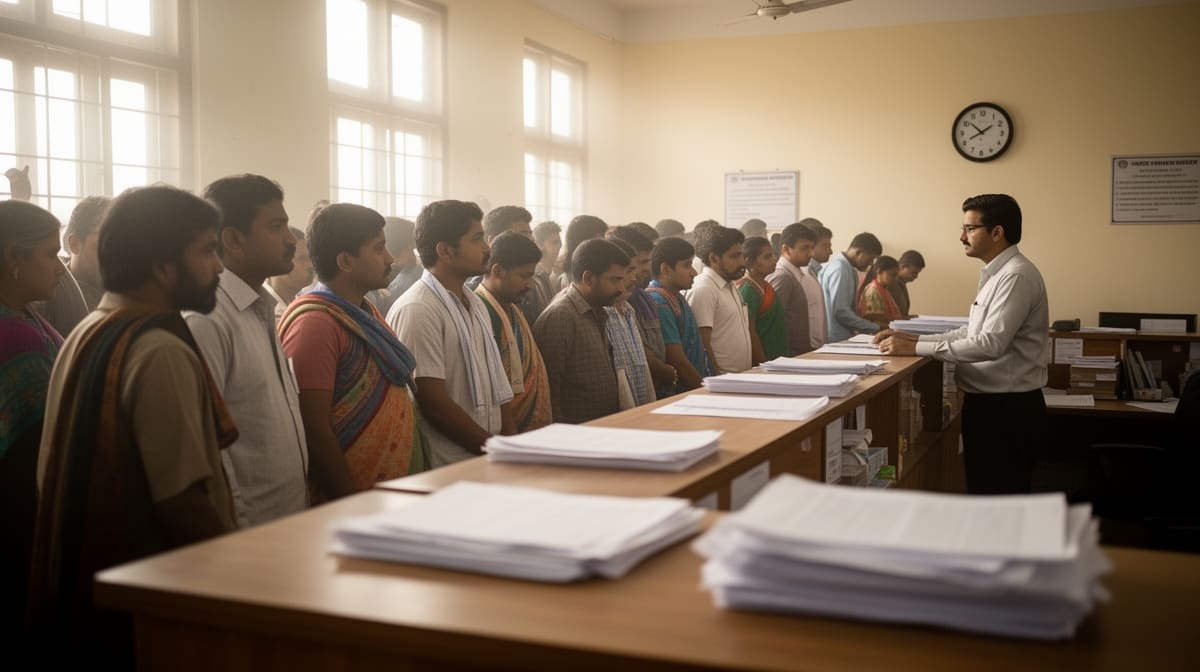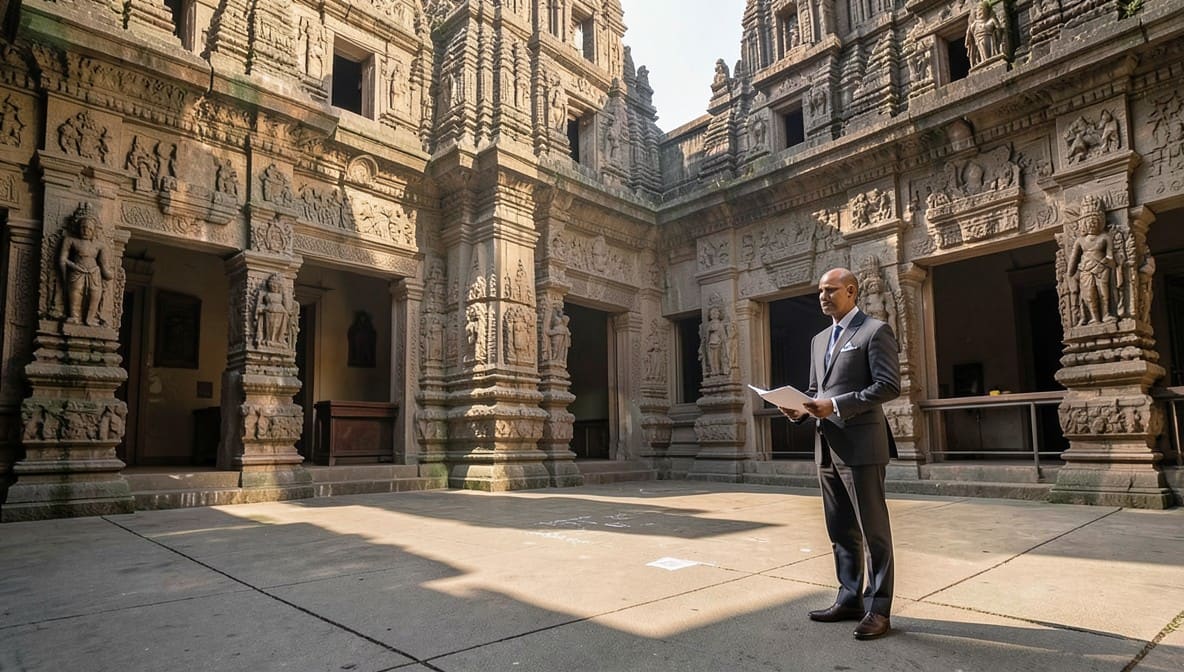
The Madras High Court has affirmed that statutory authorities have a non-delegable duty to safeguard the properties and administration of public religious institutions when allegations of mismanagement are formally brought to their notice. This judgment reinforces the legal obligation of the Hindu Religious and Charitable Endowments Department to act promptly on representations concerning temple governance.
Background & Facts
The Dispute
The petitioner, A. Radhakrishnan, filed a writ petition under Article 226 of the Constitution seeking a writ of mandamus to compel respondents to secure and safeguard the properties and administration of the Arulmigu Madhana Gopala Swamy Temple in Perambalur. The temple, described as an ancient and prominent religious institution associated with the Pandavas, owns substantial immovable and movable properties. Allegations were raised regarding mismanagement, unauthorized leasing of temple land, and substantial rental arrears owed by government departments.
Key Facts
- The temple is a public religious institution governed by the Tamil Nadu Hindu Religious and Charitable Endowments Act, 1959
- On 03.08.2018, the temple properties were leased out to the Health and Family Welfare Department and Handlooms and Textiles Department via Government Order No. 133 for a period of 33 years
- As per communication dated 07.12.2022, significant rental arrears were outstanding from the 3rd and 4th respondents
- The petitioner submitted a detailed representation on 28.03.2025 to the 6th respondent (Commissioner, HR & CE Department) highlighting administrative irregularities and financial defaults
- No action was taken by the 6th respondent for over a year
- A reminder representation was sent on 25.04.2026 to all respondents, which also went unanswered
Procedural History
- 28.03.2025: First representation submitted to the Commissioner, HR & CE Department
- 07.12.2022: Communication received regarding rental arrears from leased temple land
- 25.04.2026: Reminder representation sent to all respondents
- 29.04.2026: Writ Petition No. 17179 of 2026 filed before the Madras High Court
Relief Sought
The petitioner sought a writ of mandamus directing the respondents to:
- Consider the representations dated 28.03.2025 and 25.04.2026
- Take immediate steps to safeguard temple properties
- Investigate and rectify administrative and financial irregularities
- Pass a reasoned order on the allegations
The Parties' Positions
The petitioner, appearing in person, contended that the failure of the statutory authorities to act on his representations constituted a breach of their statutory obligations under the Tamil Nadu HR & CE Act. He emphasized the public nature of the temple and the vulnerability of its assets.
The respondents, through their Government Advocates, conceded that the representations would be considered and appropriate action taken in accordance with law, without contesting the petitioner’s right to seek judicial intervention.
The Legal Issue
The central question was whether the Commissioner of Revenue Administration, as the statutory authority under the Tamil Nadu Hindu Religious and Charitable Endowments Act, has a mandatory duty to consider representations concerning mismanagement of temple properties and to dispose of them within a reasonable time.
Arguments Presented
For the Petitioner
The petitioner relied on the statutory framework of the Tamil Nadu HR & CE Act, particularly Section 6(1), which declares public temples as institutions under the protection of the state. He argued that the failure to act on his representations amounted to a dereliction of statutory duty, especially given the temple’s status as a minor under the Act and the seriousness of allegations involving rental arrears and unauthorized leasing.
For the Respondent
The respondents did not dispute the petitioner’s right to seek redressal. The Government Advocate acknowledged the statutory obligation of the 5th respondent to act and undertook to consider the representations. No substantive legal opposition was raised to the petitioner’s core contention.
The Court's Analysis
The Court observed that the Arulmigu Madhana Gopala Swamy Temple is a public religious institution and, under Section 6(1) of the Tamil Nadu Hindu Religious and Charitable Endowments Act, is deemed a minor. This status imposes a heightened duty on the state authorities to protect its properties and ensure proper administration.
"When allegations of mismanagement and rental arrears are brought to the notice of the competent authority, it is the statutory duty of the 5th respondent to act upon the same without delay."
The Court emphasized that while it was not expressing any opinion on the truth or merit of the allegations, the representations made by the petitioner were formal, specific, and addressed to the statutory authority responsible for temple oversight. The lapse of more than a year without any response was deemed unacceptable.
The Court further held that the 5th respondent, as Commissioner of Revenue Administration, is the designated authority under the Act to investigate and resolve such matters. The duty to act is not discretionary but mandatory. The Court directed that the authority must afford the petitioner a hearing, pass a reasoned speaking order, and communicate it within a fixed timeframe.
The Verdict
The writ petition was disposed of with the following directions:
- The 5th respondent, Commissioner of Revenue Administration, shall consider the representations dated 28.03.2025 and 25.04.2026
- A hearing shall be afforded to the petitioner before passing final orders
- A reasoned speaking order shall be passed and communicated to the petitioner within six weeks from the date of receipt of a copy of this order
- The 5th respondent shall take an independent decision based on records and in accordance with the Tamil Nadu HR & CE Act
- No costs were awarded
What This Means For Similar Cases
Statutory Duty Is Non-Discretionary
- Practitioners can now invoke this judgment to compel action from HR & CE authorities when representations regarding temple mismanagement are ignored
- Delay beyond six weeks without reason may now be challenged as a violation of statutory obligation
Representation Triggers Mandatory Action
- Formal written representations to the Commissioner of Revenue Administration constitute sufficient trigger for statutory duty
- No prior departmental inquiry or complaint is required to activate this obligation
- The duty arises even if the allegations are unverified - the obligation is to investigate, not to adjudicate on merit at the initial stage
Speaking Orders Are Mandatory
- Authorities must now issue reasoned orders, not generic acknowledgments
- Failure to provide reasons may render the order liable to be set aside in future proceedings
- This sets a precedent for accountability in administrative decisions affecting religious institutions