
Custom, Excise & Service Tax Tribunal judgments

454 Custom, Excise & Service Tax Tribunal judgments explained in plain English: what was decided, the law applied and why it matters. Page 6 of 19.

Customs Exemption | Procedural Non-Compliance Does Not Void Benefit If Substantive Purpose Is Met : CESTAT
Case Law Analysis
|Custom, Excise & Service Tax Tribunal

Customs Exemption | Procedural Non-Compliance Does Not Void Benefit If Substantive Purpose Is Met : CESTAT

CESTAT rules that failure to meet a procedural condition under a customs exemption notification does not automatically trigger duty demand, provided the underlying objective of the condition has been achieved. This shields compliant importers from punitive demands when technical lapses don't undermine the exemption's intent, reinforcing proportionality in customs enforcement.
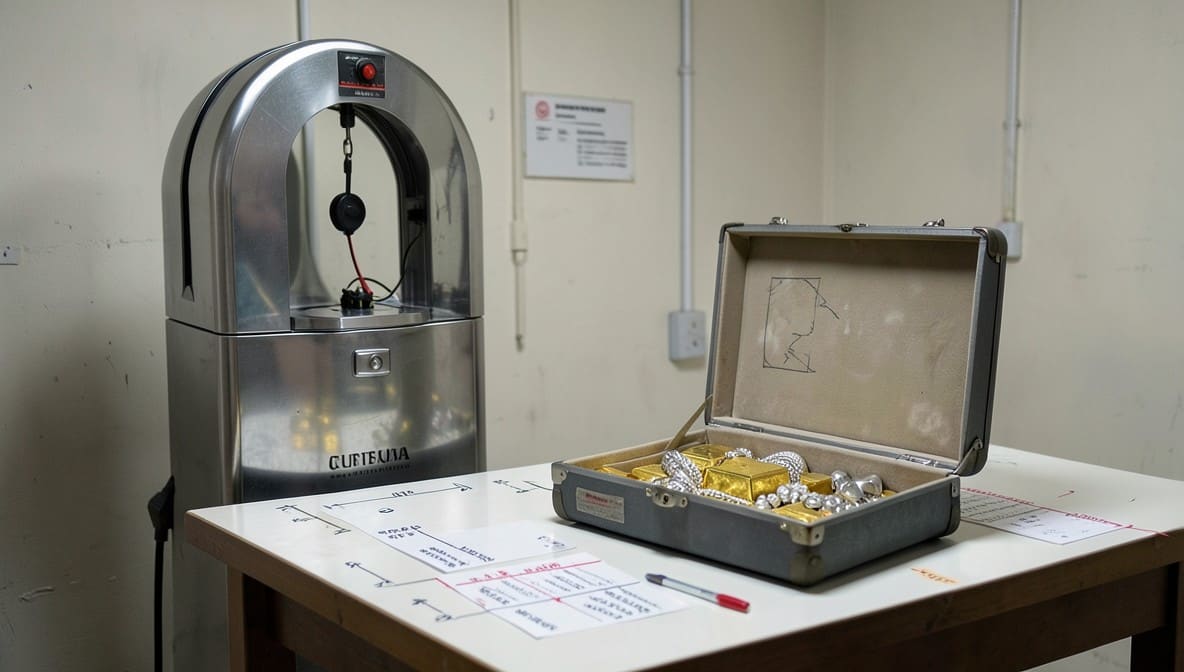

Section 112(b) Customs Act | Penalty Requires Proven Foreign Origin and Actual Knowledge of Smuggling; Mere Suspicion Insufficient : CESTAT Allahabad
Case Law Analysis
|Custom, Excise & Service Tax Tribunal

Section 112(b) Customs Act | Penalty Requires Proven Foreign Origin and Actual Knowledge of Smuggling; Mere Suspicion Insufficient : CESTAT Allahabad

CESTAT Allahabad quashed Rs. 8 lakh penalties on gold and silver seizures, ruling that customs authorities cannot impose penalties under Section 112(b) based on uncorroborated suspicion alone. The ruling mandates concrete evidence of foreign origin and actual knowledge of smuggling-setting a vital precedent for travelers and traders facing arbitrary confiscations without proof of intent.

CENVAT Credit Admissible for Ore Processing Services Despite 15% Waste Discard | CESTAT Clarifies 'Incidental to Manufacture' Under CCR
Case Law Analysis
|Custom, Excise & Service Tax Tribunal

CENVAT Credit Admissible for Ore Processing Services Despite 15% Waste Discard | CESTAT Clarifies 'Incidental to Manufacture' Under CCR

CESTAT rules that CENVAT credit on services like transportation and crushing of ore remains valid even when up to 15% of material is discarded as waste, as long as the services are directly incidental to the manufacture of final goods. This clarifies that the threshold of material yield does not disqualify input service eligibility under Rule 2(l) of CCR, benefiting mining-integrated manufacturers across steel and mineral industries.

CENVAT Credit Not Lapsed Under Rule 11(3) When Only Partial Products Are Exempted; Rule 6(3) Inapplicable to Exports Under Bond : CESTAT
Case Law Analysis
|Custom, Excise & Service Tax Tribunal

CENVAT Credit Not Lapsed Under Rule 11(3) When Only Partial Products Are Exempted; Rule 6(3) Inapplicable to Exports Under Bond : CESTAT

CESTAT rules that manufacturers retaining CENVAT credit on inputs used to produce both dutiable and exempted goods need not reverse credit merely because some final products are exempt - provided exports are made under bond. This clarifies that Rule 6(3) liability does not trigger for bonded exports, offering critical relief to export-oriented manufacturers with mixed product lines.

Section 114 Customs Act | Commission Agent Liable for Smuggling via Fraudulent Docs Even Without Physical Seizure in India : CESTAT New Delhi
Case Law Analysis
|Custom, Excise & Service Tax Tribunal

Section 114 Customs Act | Commission Agent Liable for Smuggling via Fraudulent Docs Even Without Physical Seizure in India : CESTAT New Delhi

CESTAT holds that a commission agent who fabricates export documents to smuggle controlled substances like Ketamine abroad incurs liability under Section 114 of the Customs Act, even when the contraband is seized overseas. This establishes that intent, orchestration, and document fraud - not physical presence of seized goods in India - are sufficient to trigger penalties, reshaping accountability for intermediaries in cross-border smuggling networks.

Renting Railway Space for Hoardings Is Renting of Immovable Property, Not Support Service | RCM Inapplicable: CESTAT Hyderabad
Case Law Analysis
|Custom, Excise & Service Tax Tribunal

Renting Railway Space for Hoardings Is Renting of Immovable Property, Not Support Service | RCM Inapplicable: CESTAT Hyderabad

CESTAT Hyderabad has ruled that leasing railway premises for advertising hoardings constitutes renting of immovable property under service tax law, not a business support service. This means the reverse charge mechanism does not apply, relieving advertisers from liability to pay tax on behalf of railways and clarifying the tax treatment of infrastructure-based advertising contracts nationwide.

Customs Appeal Limitation | Date of Communication Must Be Determined Before Rejecting on Time-Barred Grounds: CESTAT Chennai
|Custom, Excise & Service Tax Tribunal

Customs Appeal Limitation | Date of Communication Must Be Determined Before Rejecting on Time-Barred Grounds: CESTAT Chennai

CESTAT Chennai has ruled that rejecting customs appeals solely on limitation grounds without ascertaining the exact date of communication of the original order violates natural justice. This sets a binding precedent for appellate authorities to examine procedural fairness before dismissing appeals, protecting appellants from arbitrary time-bar rejections based on incomplete records.

CENVAT Credit Rule 2(l) | Repair & Maintenance of Plant & Machinery Qualifies as Input Service : CESTAT
Case Law Analysis
|Custom, Excise & Service Tax Tribunal

CENVAT Credit Rule 2(l) | Repair & Maintenance of Plant & Machinery Qualifies as Input Service : CESTAT

CESTAT upholds that expenditure on repair and maintenance of plant and machinery qualifies as an input service under Rule 2(l) of the CENVAT Credit Rules, 2004, entitling manufacturers to claim credit even when services are not directly linked to production. This clarifies a critical compliance gray area for capital-intensive industries and reverses arbitrary disallowances totaling over Rs. 20 lakh.

Composite Agricultural Activity Exempts Lease of Tea Estates with Infrastructure from Service Tax: CESTAT Chennai
Case Law Analysis
|Custom, Excise & Service Tax Tribunal

Composite Agricultural Activity Exempts Lease of Tea Estates with Infrastructure from Service Tax: CESTAT Chennai

CESTAT Chennai ruled that leasing tea estates along with incidental labor, machinery, and infrastructure constitutes a single composite agricultural activity, not a taxable service under the Negative List regime. This clarifies that farmers and plantation owners can lease land with operational assets without triggering service tax liability, reinforcing the exemption for genuine agricultural operations.

Cenvat Credit Refund Finality | Revenue’s Non-Appeal After Sanction Bars Re-Deduction : CESTAT Chandigarh
Case Law Analysis
|Custom, Excise & Service Tax Tribunal

Cenvat Credit Refund Finality | Revenue’s Non-Appeal After Sanction Bars Re-Deduction : CESTAT Chandigarh

CESTAT Chandigarh rules that once a Cenvat credit refund is sanctioned and the revenue department does not appeal, the quantum becomes final and cannot be reopened for re-deduction. This protects manufacturers from retrospective clawbacks and reinforces the principle of finality in tax adjudication, benefiting cement and capital goods industries relying on captive consumption exemptions.

Rule 6(5) Cenvat Credit Rules | Abatement under Notification 1/2006-ST Does Not Bar Credit on Common Inputs: CESTAT Chennai
Case Law Analysis
|Custom, Excise & Service Tax Tribunal

Rule 6(5) Cenvat Credit Rules | Abatement under Notification 1/2006-ST Does Not Bar Credit on Common Inputs: CESTAT Chennai

CESTAT Chennai holds that businesses claiming abatement on services like outdoor catering under Notification 1/2006-ST can still claim full Cenvat credit on common inputs, as long as those inputs are not used exclusively for exempt services. This resolves a long-standing ambiguity for hospitality and service providers, affirming that abatement and credit are not mutually exclusive under the Cenvat framework.

Customs Brokers Licensing Regulations, 2013 | Procedural Lapse Without Fraud or Revenue Loss Cannot Justify License Revocation: CESTAT Chennai
Case Law Analysis
|Custom, Excise & Service Tax Tribunal

Customs Brokers Licensing Regulations, 2013 | Procedural Lapse Without Fraud or Revenue Loss Cannot Justify License Revocation: CESTAT Chennai

CESTAT Chennai has ruled that revoking a customs broker’s license for mere procedural non-compliance-without evidence of fraud, intent, or revenue loss-is disproportionate and violates principles of natural justice. The decision restores the license and security deposit, setting a critical precedent for regulatory fairness in trade compliance and protecting small brokers from punitive overreach.

Certificate of Origin | Importers Cannot Be Penalized for Relying on Valid Foreign-Issued COOs; Verification Burden Lies with Customs : CESTAT Chennai
Case Law Analysis
|Custom, Excise & Service Tax Tribunal

Certificate of Origin | Importers Cannot Be Penalized for Relying on Valid Foreign-Issued COOs; Verification Burden Lies with Customs : CESTAT Chennai

CESTAT Chennai rules that importers acting in good faith on government-issued Certificates of Origin cannot be held liable for discrepancies in value addition claims. The Department must conduct its own statutory verification under the Interim Rules of Origin before denying preferential duty benefits, protecting importers from retrospective penalties based on unverified foreign data.

Section 35F Central Excise Act | Prior Deposits Exceeding Statutory Pre-Deposit Requirement Satisfy Compliance: CESTAT Chennai
Case Law Analysis
|Custom, Excise & Service Tax Tribunal

Section 35F Central Excise Act | Prior Deposits Exceeding Statutory Pre-Deposit Requirement Satisfy Compliance: CESTAT Chennai

CESTAT Chennai rules that cumulative pre-deposits made before the appeal, even if initially for interim relief, can satisfy the mandatory pre-deposit obligation under Section 35F if they exceed the statutory threshold. This protects taxpayers from technical dismissal of appeals and reinforces that substance over form governs compliance in tax appellate procedures.

CBLR 2013 Regulation 11 & 17 | Forfeiture of Security Deposit Sufficient for Supervisory Lapses Without Fraud : CESTAT Chennai
Case Law Analysis
|Custom, Excise & Service Tax Tribunal

CBLR 2013 Regulation 11 & 17 | Forfeiture of Security Deposit Sufficient for Supervisory Lapses Without Fraud : CESTAT Chennai

CESTAT Chennai rules that forfeiture of a customs broker’s security deposit constitutes an adequate penalty for regulatory failures under CBLR 2013, even where supervisory negligence is proven but deliberate fraud is absent. This sets a critical precedent for licensing authorities: proportionality trumps revocation when intent to defraud is not established, protecting brokers from disproportionate disciplinary action.

Transfer of Toll Collection Rights Is Taxable Service | NHAI Not Exempt Under Negative List : CESTAT Hyderabad
Case Law Analysis
|Custom, Excise & Service Tax Tribunal

Transfer of Toll Collection Rights Is Taxable Service | NHAI Not Exempt Under Negative List : CESTAT Hyderabad

CESTAT Hyderabad rules that NHAI’s assignment of toll collection rights to private contractors for fixed consideration constitutes a taxable service under the service tax regime, rejecting claims of sovereign immunity and negative list exemption. This sets a critical precedent for statutory authorities engaging in commercial activities, clarifying that public infrastructure operators cannot evade tax liability by masking revenue-generating contracts as sovereign functions.

Abetment Under Customs Act Requires Identified Principal Offender | Penalty Set Aside When Importer Untraceable : CESTAT Chennai
Case Law Analysis
|Custom, Excise & Service Tax Tribunal

Abetment Under Customs Act Requires Identified Principal Offender | Penalty Set Aside When Importer Untraceable : CESTAT Chennai

CESTAT Chennai has ruled that penalty for abetment under Section 112(a) of the Customs Act cannot be imposed without identifying the actual importer as the principal offender. This reinforces natural justice in customs enforcement, protecting intermediaries from vicarious liability when the true violator remains unknown, and sets a precedent for fair penalty imposition in smuggling cases.

Tariff Classification Consistency Over Years Bars Retroactive Reassessment | Central Excise Tariff Item 2403 99 | CESTAT
Case Law Analysis
|Custom, Excise & Service Tax Tribunal

Tariff Classification Consistency Over Years Bars Retroactive Reassessment | Central Excise Tariff Item 2403 99 | CESTAT

CESTAT rules that when both taxpayer and department consistently classify goods under the same tariff heading for years, the department cannot later reassess duties retroactively - establishing a binding legitimate expectation. Penalty under Rule 26 cannot be imposed without a prior finding of confiscation, reinforcing procedural safeguards for taxpayers relying on long-standing classification practices.

Clause 1C, Notification 04/2006-CE | Packaging with RSP Does Not Invalidate CVD Exemption for Industrial-Use Cement : CESTAT Chennai
Case Law Analysis
|Custom, Excise & Service Tax Tribunal

Clause 1C, Notification 04/2006-CE | Packaging with RSP Does Not Invalidate CVD Exemption for Industrial-Use Cement : CESTAT Chennai

CESTAT Chennai rules that imported cement in 50kg bags bearing MRP is eligible for concessional CVD exemption under Clause 1C if demonstrably intended for industrial or institutional use, not retail sale. The decision clarifies that packaging alone cannot override documented end-use, shielding bulk industrial buyers from arbitrary duty demands based on form rather than function.

Customs Valuation Rule 12 | Transaction Value Cannot Be Rejected Without Reliable Comparable Evidence: CESTAT Chennai
Case Law Analysis
|Custom, Excise & Service Tax Tribunal

Customs Valuation Rule 12 | Transaction Value Cannot Be Rejected Without Reliable Comparable Evidence: CESTAT Chennai

CESTAT Chennai has ruled that customs authorities cannot override the declared transaction value for imported used garments merely on suspicion of undervaluation. Any enhancement must be grounded in verifiable, contemporaneous comparable imports under Rule 5 - not speculative assumptions. This strengthens importers' rights under the Valuation Rules and curbs arbitrary valuation practices in the textile trade.

Per MT Payment for Loading/Unloading Not Manpower Supply | RCM Not Triggered: CESTAT Ahmedabad
Case Law Analysis
|Custom, Excise & Service Tax Tribunal

Per MT Payment for Loading/Unloading Not Manpower Supply | RCM Not Triggered: CESTAT Ahmedabad

CESTAT Ahmedabad ruled that payments made on a per-metric-ton basis for loading and unloading services, under the contractor’s supervision, do not constitute manpower supply services under service tax law. This means the reverse charge mechanism does not apply, shielding businesses from unwarranted tax demands when engaging contract labor for material handling rather than personnel deployment.

5G Radio Unit Classified as SDH Equipment Under CTH 8517 6260 Due to Synchronization Function | CESTAT Bangalore
Case Law Analysis
|Custom, Excise & Service Tax Tribunal

5G Radio Unit Classified as SDH Equipment Under CTH 8517 6260 Due to Synchronization Function | CESTAT Bangalore

CESTAT Bangalore ruled that Airspan's 5G radio unit qualifies as SDH equipment under CTH 8517 6260 because its synchronization capability aligns with the heading's technical definition, granting eligibility for Notification No. 57/2017's exemption. This sets a critical precedent for telecom importers seeking duty benefits on 5G infrastructure components by focusing on functional alignment over marketing labels.

Rule 6(3) CCR, 2004 | Value of DEPB-Exported Cotton Yarn Excluded from Exempted Goods for Cenvat Credit Reversal : CESTAT Chennai
Case Law Analysis
|Custom, Excise & Service Tax Tribunal

Rule 6(3) CCR, 2004 | Value of DEPB-Exported Cotton Yarn Excluded from Exempted Goods for Cenvat Credit Reversal : CESTAT Chennai

CESTAT Chennai rules that goods exported under the DEPB scheme must not be counted as exempted goods when calculating Cenvat credit reversal under Rule 6(3) of the CCR, 2004. This clarifies that export incentives like DEPB do not trigger credit reversal obligations, benefiting manufacturers who blend dutiable and exempted production with export-oriented schemes.

Customs Valuation Rule 3(1) | Transaction Value Cannot Be Rejected Without Proof of Financial Flowback or Violation of Natural Justice : CESTAT Chennai
|Custom, Excise & Service Tax Tribunal

Customs Valuation Rule 3(1) | Transaction Value Cannot Be Rejected Without Proof of Financial Flowback or Violation of Natural Justice : CESTAT Chennai

CESTAT Chennai has ruled that customs authorities cannot reject declared transaction value solely on suspicion of undervaluation without concrete evidence of financial flowback to the exporter or breach of natural justice. This sets a critical precedent for importers, requiring the department to meet a high evidentiary bar before re-determining value under the Customs Valuation Rules, 1988.