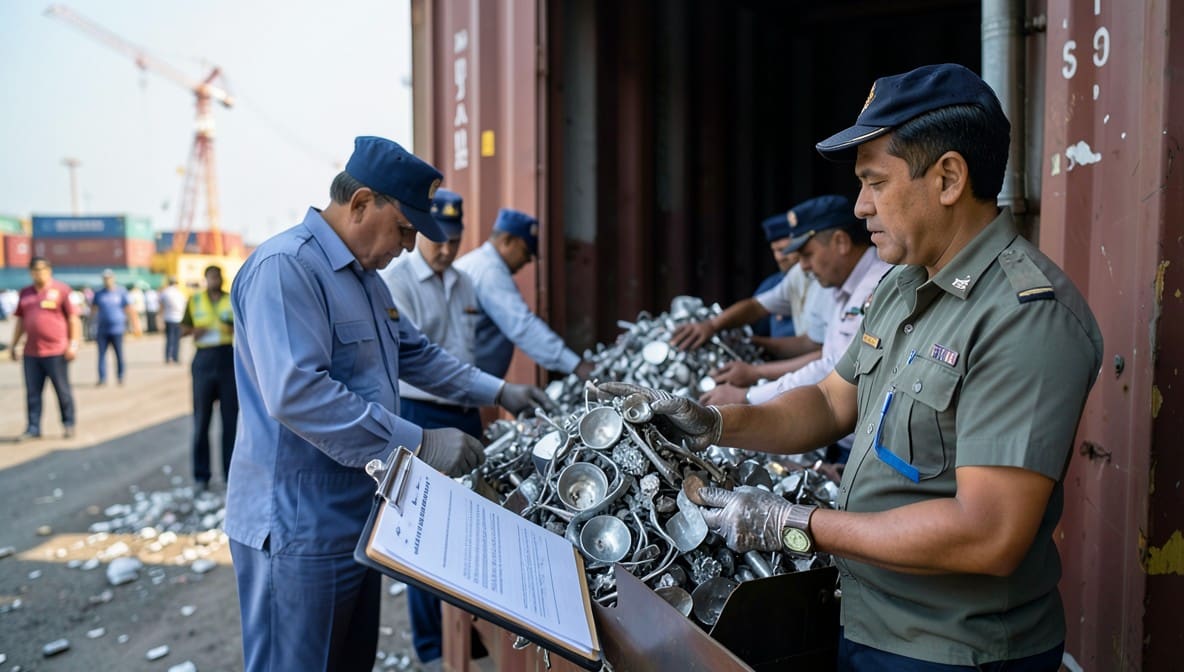
The Customs, Excise and Service Tax Appellate Tribunal has clarified that importers are not obligated to verify the internal cost structure of foreign suppliers when claiming preferential duty exemptions under free trade agreements. The Tribunal set aside penalties and duty demands against an Indian diamond importer for relying on a Certificate of Origin issued by Thailand, reinforcing that statutory verification mechanisms must be exhausted before denying benefits.
Background & Facts
The Dispute
M/s. Veekay Diamants, Mumbai, imported two consignments of gold jewellery studded with diamonds and rubies from Thailand under Bills of Entry dated 25.08.2010 and 22.10.2011. The appellant claimed exemption from customs duty under Notification No. 85/2004-Cus read with Notification No. 101/2004-Cus (N.T.), based on Certificates of Origin issued by the Government of Thailand, certifying that the goods met the Local Value-Added Content (LVAC) requirement of 20% under the Indo-Thailand Free Trade Agreement.
Key Facts
- The Certificates of Origin declared an LVAC of 22% for both consignments
- The goods were cleared by Customs authorities upon acceptance of the Certificates of Origin
- In August 2015, the Special Investigation and Intelligence Branch (SIIB) initiated an investigation alleging that actual LVAC was only 6.5%
- The Department’s computation relied solely on labour and handling charges, excluding manufacturing, overheads, and profit components
- A Show Cause Notice dated 15.12.2015 proposed denial of exemption, recovery of differential duty of Rs. 5,68,802, confiscation, and penalties under Sections 114A and 114AA of the Customs Act, 1962
- The Joint Commissioner of Customs passed Order-in-Original No. 122/2016 dated 20.02.2016 confirming the demand and penalties
- Commissioner of Customs (Appeals I) upheld the order via Order-in-Appeal No. 274 & 275/2016 dated 05.07.2016
Procedural History
- 25.08.2010: First consignment imported under Bill of Entry
- 22.10.2011: Second consignment imported under Bill of Entry
- August 2015: SIIB investigation initiated
- 15.12.2015: Show Cause Notice issued
- 20.02.2016: Order-in-Original passed by Joint Commissioner
- 05.07.2016: Order-in-Appeal upheld by Commissioner (Appeals I)
- 2016: Appeal filed before CESTAT Chennai Regional Bench
- 19.01.2026: Hearing conducted
- 02.06.2026: Final Order pronounced
The Parties' Positions
For the Appellant
- Relied on valid Certificates of Origin issued by Thailand’s designated authority
- Argued that Rule 6(d) of the Interim Rules of Origin mandates computation of LVAC as (FOB value of export product minus CIF value of non-originating materials) divided by FOB value
- Contended that the Department’s method - reducing value addition to labour and handling charges alone - is a statutory distortion
- Emphasized lack of access to foreign supplier’s cost structure
- Cited Romil Jewellery v. Commissioner of Customs and Keyur Shah & Ors. v. Commissioner of Customs to affirm that unilateral recomputation without invoking Rule 15 verification is invalid
For the Respondent
- Asserted that LVAC of 22% was inflated and actual value addition was only 6.5%
- Claimed importer bears responsibility to ensure correctness of exemption claims
- Relied on internal data from M/s Tanya Collections, Bangkok, to justify recomputation
- Invoked extended period under Section 28(4) and penalties under Sections 114A and 114AA
- Cited Vasavi Gold and Bullion Pvt. Ltd. v. Commissioner of Customs as precedent
Relief Sought
The appellant sought:
- Setting aside of the impugned Order-in-Appeal dated 05.07.2016
- Cancellation of duty demand of Rs. 5,68,802
- Quashing of penalties under Sections 114A and 114AA
- Cancellation of extended period invocation
- Restoration of duty exemption
The Legal Issue
The central questions were: (1) Whether the Department is justified in rejecting a Certificate of Origin issued by a foreign authority and recomputing LVAC using an alternate methodology not prescribed under the Interim Rules of Origin, and (2) Whether the importer can be held liable for suppression or wilful misstatement when all documents were disclosed and accepted at the time of import.
Arguments Presented
For the Appellant
The appellant relied on the statutory formula under Rule 6(d) of the Interim Rules of Origin, which defines LVAC as a ratio between the FOB value of the exported product and the CIF value of non-originating materials. It argued that the Department’s method - relying only on labour and handling charges - ignored manufacturing, overheads, and profit, thereby violating the statutory framework. The appellant cited Romil Jewellery and Keyur Shah, where CESTAT held that Customs authorities cannot substitute the prescribed formula or act as de facto origin certifiers. It further emphasized that Rule 15 mandates inter-governmental verification through designated authorities, which the Department never invoked. The appellant contended that the importer’s duty ends at producing the Certificate of Origin, and it cannot be expected to audit foreign suppliers.
For the Respondent
The Department argued that the importer has a duty to ensure the accuracy of exemption claims and cannot rely blindly on foreign certificates. It claimed that the declared LVAC of 22% was unsupported by underlying documents and that its own computation based on labour and handling charges was a reasonable proxy. It invoked the extended period under Section 28(4) and penalties under Sections 114A and 114AA, alleging suppression and wilful misstatement. It relied on Vasavi Gold, but failed to demonstrate that the Tribunal in that case upheld unilateral recomputation or denied exemption on similar grounds.
The Court's Analysis
The Tribunal conducted a rigorous statutory interpretation of the Interim Rules of Origin, particularly Rule 6(d) and Rule 15. It held that the Department’s method of computing LVAC by considering only labour and handling charges was a gross deviation from the statutory formula, which explicitly includes the FOB value of the export product and the CIF value of non-originating materials. The Tribunal observed:
"The Department, by reducing the concept of value addition solely to labour and handling charges, has effectively substituted the statutory formula with an artificial and truncated computation. Such substitution is impermissible in law."
It further noted that the Department failed to establish the CIF value of non-originating materials as required under Rule 6(e), rendering its entire computation legally untenable. The Tribunal emphasized that Certificates of Origin issued by designated foreign authorities are not mere procedural documents but foundational evidence under the statutory scheme. It held:
"The importer does not have access to the cost structure of the foreign supplier and cannot be expected to verify the internal composition of value addition."
The Tribunal distinguished Vasavi Gold, clarifying that in that case, the matter was remanded for proper verification, not upheld for unilateral recomputation. It affirmed the ratio in Romil Jewellery and Keyur Shah, holding that denial of exemption without invoking Rule 15 verification is legally unsustainable. On the issue of penalties, the Tribunal applied the Supreme Court’s ruling in Aban Loyd Chiles, stating that for suppression to be established, there must be wilful intent to evade duty. Since the appellant disclosed all documents and the Certificates were accepted by Customs, no such intent could be inferred. The Tribunal concluded:
"The case on hand at the best is one of difference in interpretation or methodology adopted by the Department and does not involve any element of fraud, suppression or wilful misstatement."
The Verdict
The appellant succeeded in full. The Tribunal set aside the Order-in-Appeal dated 05.07.2016 and the Order-in-Original dated 20.02.2016. The demand for differential duty of Rs. 5,68,802 was cancelled. The invocation of the extended period under Section 28(4) was quashed. Penalties imposed under Sections 114A and 114AA were set aside. The exemption under Notification No. 85/2004-Cus was restored. The Tribunal directed the Department to refund any amount already recovered, if any, within 6 weeks.
What This Means For Similar Cases
Importers Are Not Customs Auditors
- Practitioners must argue that importers are not obligated to verify the internal cost structure of foreign suppliers
- Reliance on a Certificate of Origin issued by a designated foreign authority is sufficient unless proven fraudulent
- Any challenge to LVAC must follow Rule 15 verification procedures, not internal Departmental computations
Penalty and Extended Period Invocations Require Wilful Intent
- Mere difference in interpretation or methodology does not constitute suppression under Section 28(4)
- Penalties under Sections 114A and 114AA require proof of wilful misstatement or collusion
- Absence of evidence of forgery, manipulation, or collusion negates penalty liability
Statutory Formulas Cannot Be Substituted by Administrative Discretion
- Customs authorities must apply prescribed formulas under Interim Rules of Origin without deviation
- Unilateral recomputation based on arbitrary methods (e.g., labour charges only) is legally invalid
- Precedents like Romil Jewellery and Keyur Shah now form binding guidance for all CESTAT benches