The Customs, Excise & Service Tax Appellate Tribunal (CESTAT) has clarified a critical aspect of CENVAT credit eligibility, holding that services used in processing raw ore - even when a significant portion is discarded as waste - are eligible for credit if they are directly or indirectly related to manufacture. This decision reinforces the broad interpretation of 'input service' under the CENVAT Credit Rules, 2004, and has immediate implications for manufacturers in mining, metallurgy, and heavy industries.
Background & Facts
The Dispute
M/s. Godawari Power & Ispat Ltd., a manufacturer of steel and steel products, was assessed by the Principal Commissioner of Central Goods and Service Tax and Central Excise, Indore, for alleged improper availing of CENVAT credit on input services related to ore handling, transportation, and crushing at its captive mines. The department disallowed credit for services rendered on the portion of ore discarded during processing, arguing that only the ore transported to the factory qualified as input.
Key Facts
- The appellant operated captive mines at Siltara, Raipur, extracting iron ore for use in steel production
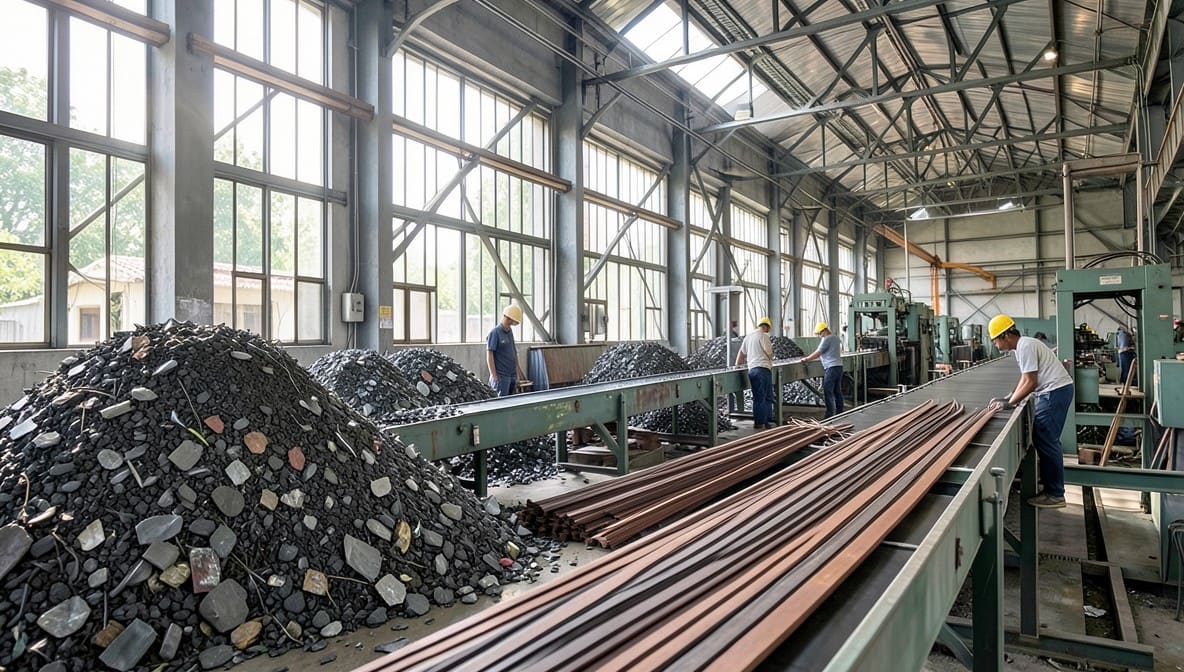
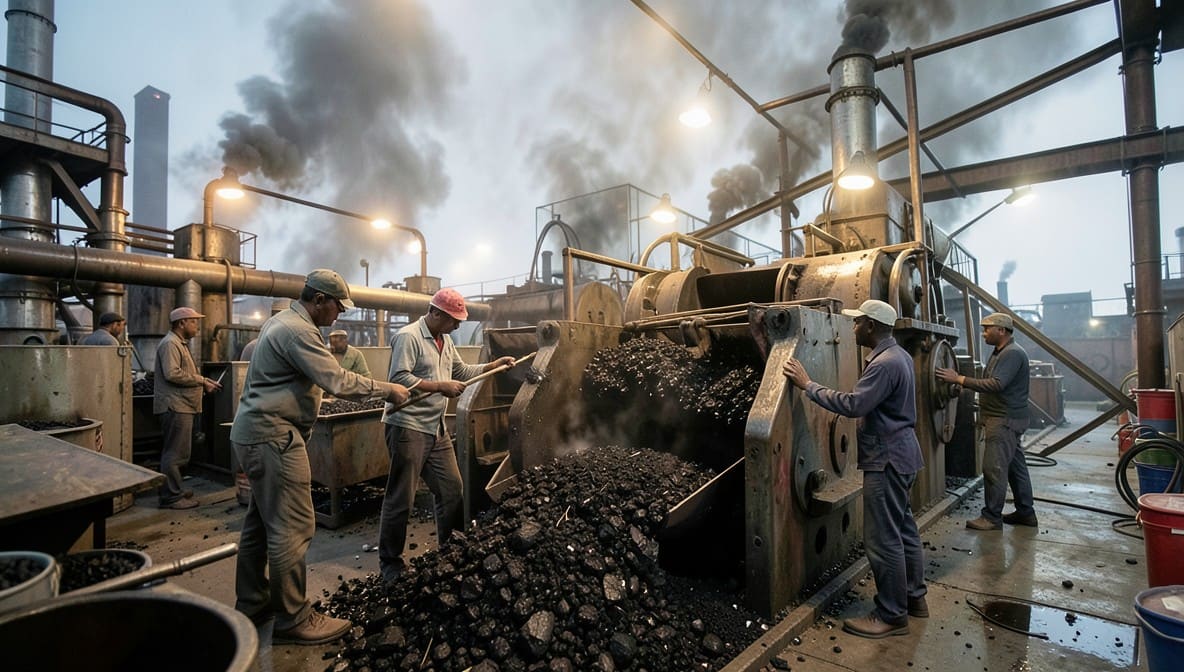
- Ore extracted from mines underwent crushing, handling, and transportation to remove debris and non-usable material
- Approximately 15% of the total ore extracted was discarded at the mine site as waste
- The remaining 85% was transported to the factory for use in manufacturing final excisable goods
- CENVAT credit was claimed on service tax paid for mining, handling, loading, and crushing services
- The audit concluded that credit was admissible only on services related to the 85% of ore that reached the factory
- Show cause notice dated 01.05.2015 was issued, and an order dated 31.03.2023 confirmed a demand of Rs. 2,41,33,025/- for disallowed CENVAT credit, along with interest and penalty
Procedural History
- 01.05.2015: Show cause notice issued under Rule 14 of CENVAT Credit Rules, 2004
- 31.03.2023: Order-in-Original passed by Principal Commissioner, Indore, confirming demand and penalty
- 2023: Appeal filed before CESTAT, New Delhi (Excise Appeal No. 55463 of 2023)
- 02.06.2026: Hearing conducted before CESTAT Principal Bench
- 05.06.2026: Final Order pronounced
Relief Sought
The appellant sought:
- Setting aside of the impugned order dated 31.03.2023
- Restoration of the CENVAT credit of Rs. 2,41,33,025/- claimed for services related to ore processing
- Cancellation of interest and penalty imposed under Rule 15 of CCR and Section 11AC(1)(b) of the Central Excise Act
The Legal Issue
The central question was whether services used in mining, handling, and crushing iron ore - where a portion of the ore is discarded as waste - constitute 'input services' under Rule 2(l) of the CENVAT Credit Rules, 2004, even if the discarded material does not reach the factory.
Arguments Presented
For the Appellant
The appellant’s counsel argued that the definition of 'input service' under Rule 2(l) is expansive, covering services used directly or indirectly in or in relation to manufacture. They emphasized that ore processing - including crushing and debris removal - is an essential, integral step in steel manufacturing. Without such processing, the raw ore cannot be rendered suitable for use in blast furnaces. They cited the statutory definition of 'manufacture' under Section 2(f) of the Central Excise Act, which includes processes incidental or ancillary to production. The appellant contended that the department’s narrow interpretation - limiting credit only to the portion of ore reaching the factory - ignores the reality of industrial manufacturing and contradicts the legislative intent behind CENVAT.
For the Respondent
The Revenue contended that CENVAT credit is permissible only for services directly linked to inputs that become part of the final product. Since 15% of the ore was discarded at the mine and never entered the manufacturing process, the services related to that portion were not 'in relation to manufacture' and thus ineligible for credit. They relied on the literal reading of Rule 2(l), arguing that credit must be apportioned based on the quantity of ore actually consumed in production.
The Court's Analysis
The Tribunal undertook a detailed textual analysis of Rule 2(l) of the CENVAT Credit Rules, 2004, which defines 'input service' as any service used by a manufacturer, whether directly or indirectly, in or in relation to the manufacture of final products and clearance of final products up to the place of removal.
"The scope of the expression 'directly or indirectly in or in relation to manufacture' is very wide as discussed above. We cannot countenance a situation where without crushing the mined ore and discarding the unnecessary material the manufacture of the final goods can take place."
The Court noted that the definition has three components: the 'means' part, the 'includes' part, and the 'excludes' part. The dispute fell squarely within the 'means' part, which was not restricted by any exclusion clause. The Tribunal further referred to Section 2(f) of the Central Excise Act, 1944, which defines 'manufacture' to include any process incidental or ancillary to the completion of a manufactured product. This statutory definition, incorporated into the CCR via Rule 2(t), significantly broadens the scope of what qualifies as manufacturing.
The Tribunal rejected the Revenue’s apportionment approach, observing that manufacturing processes inherently involve waste removal. Using the analogy of Michelangelo sculpting marble, the Court explained that removal of excess material is not a separate or ancillary activity - it is an inseparable part of the manufacturing process. The fact that 15% of the ore was discarded did not negate the fact that the entire processing operation was essential to render the ore usable for steel production.
The Court emphasized that the CENVAT regime is designed to eliminate cascading taxation on inputs used throughout the production chain. Limiting credit to only the portion of material that becomes part of the final product would defeat this purpose and impose an artificial, impractical burden on manufacturers.
The Verdict
The appeal was allowed. The impugned order dated 31.03.2023 was set aside. The appellant is entitled to the full CENVAT credit of Rs. 2,41,33,025/- claimed for services related to ore handling, transportation, and crushing, irrespective of the 15% waste generated. The interest and penalty imposed under Rule 15 of CCR and Section 11AC(1)(b) of the Central Excise Act were cancelled. Consequential relief, if any, shall be granted as per law.
What This Means For Similar Cases
Input Services Are Not Limited to Directly Consumed Inputs
- Practitioners can now confidently claim CENVAT credit for services used in pre-processing stages - even when waste is generated - provided the service is integral to making the input usable for manufacture
- The burden shifts to the Revenue to prove that a service falls within an express exclusion under Rule 2(l), not to prove that the input was fully consumed
Manufacturing Includes Waste Removal as an Integral Process
- Industries such as mining, cement, metallurgy, and ceramics must reassess their CENVAT credit claims for crushing, screening, washing, and sorting services
- Apportionment of credit based on yield ratios (e.g., 85% usable ore) is no longer legally tenable under CCR
- Documentation must clearly link service usage to the manufacturing process, not to the quantity of final output
Broad Interpretation of 'Incidental or Ancillary' Is Now Firmly Established
- Any process that enables the transformation of raw material into a marketable product qualifies as 'manufacture' under Section 2(f)
- Services such as ore beneficiation, dewatering, and size reduction are now clearly covered as 'input services'
- Tax officers must apply the definition of 'manufacture' holistically, not narrowly, when assessing CENVAT claims