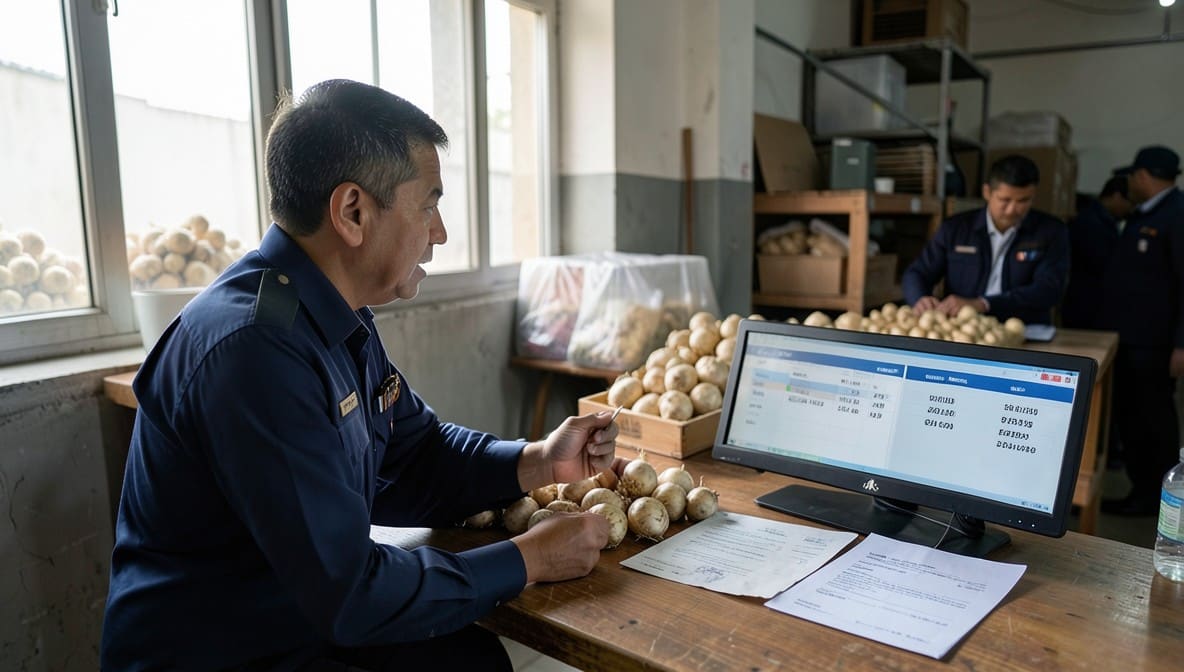
The Customs, Excise and Service Tax Appellate Tribunal (CESTAT), Chennai, has delivered a significant ruling affirming that declared transaction value in customs assessments cannot be rejected based on suspicion, unverified documents, or retracted statements. The judgment reinforces the Department’s burden to prove undervaluation through legally admissible evidence and establishes critical safeguards against arbitrary valuation adjustments.
Background & Facts
The Dispute
M/s. Em Pee Bee International, an importer of apples from the USA, declared transaction values ranging from USD 10.5 to USD 12 per carton for 37 Bills of Entry filed between March 2001 and March 2003. The Commissioner of Customs, Chennai, rejected these declared values under Section 14 of the Customs Act, 1962, and re-determined the assessable value using the Customs Valuation Rules, 1988. The Department alleged that the importer maintained two sets of invoices - one genuine with higher value and another falsified for customs clearance - thereby evading duty.
Key Facts
- The imports were made between 01.03.2001 and 31.03.2003
- Declared values were consistently within USD 10.5 - 12 per carton across all 37 Bills of Entry
- Payments for imports were made through formal banking channels with documentary evidence
- The Directorate of Revenue Intelligence (DRI) initiated investigation in 2004
- The Department relied on:
- Unsigned, computer-generated "parallel invoices" with no signatures or authentication
- Overseas verification reports from foreign authorities, not subjected to cross-examination
- Insurance documents indicating higher values
- E-mails allegedly showing coordination for undervaluation, unauthenticated
- Statements recorded under Section 108 of the Customs Act, later retracted by the declarants
- No evidence of cash payments, financial flowback, or additional remittances was produced
- The importer had disclosed all details at the time of import; no material was withheld
Procedural History
- March 2001 - March 2003: Importation of apples under 37 Bills of Entry
- 2004: DRI initiated investigation; SCN issued on 15.06.2004
- 28.09.2007: Commissioner of Customs passed Order-in-Original No. 6740/2007:
- Rejected transaction value
- Re-determined assessable value
- Demanded differential duty of approximately Rs. 98 lakhs
- Ordered confiscation of goods valued at Rs. 7.35 crores
- Imposed penalties on importer and Shri N.C. Alexander under Section 112(a)
- 2007: Appeals filed before CESTAT Chennai (C/394/2007 and C/395/2007)
- 12.01.2026: Oral arguments heard
- 29.05.2026: Final order pronounced
The Parties' Positions
Appellants (M/s. Em Pee Bee International and Shri N.C. Alexander):
- Contended that declared values were genuine and supported by commercial invoices and bank records
- Argued that parallel invoices were unauthenticated, unsigned, and inadmissible
- Highlighted that overseas verification reports were selective, uncorroborated, and not shared fully
- Stated that Section 108 statements were retracted at the earliest opportunity and lacked independent corroboration
- Emphasized absence of any financial flowback or extra remittance
- Invoked National Fruits Agency v. Commissioner of Customs as binding precedent
Respondent (Commissioner of Customs):
- Asserted that parallel invoices, insurance documents, and e-mails collectively proved undervaluation
- Claimed that retracted statements retained evidentiary value as they were recorded under statutory authority
- Argued that overseas verification confirmed higher values abroad
- Contended that the extended period under Section 28 was rightly invoked due to suppression and wilful misstatement
- Maintained that Shri N.C. Alexander, through correspondence and coordination, abetted the undervaluation
Relief Sought
The appellants sought:
- Setting aside of Order-in-Original No. 6740/2007
- Cancellation of differential duty demand of Rs. 98 lakhs
- Quashing of confiscation order for goods valued at Rs. 7.35 crores
- Vacation of penalties imposed on both the importer and Shri N.C. Alexander
- Declaration that the extended period of limitation under Section 28 was invalid
The Legal Issue
The central questions were: (1) Whether the declared transaction value under Section 14 of the Customs Act, 1962 can be rejected without proof of additional consideration or financial flowback; (2) Whether retracted statements and unauthenticated documents can sustain a finding of undervaluation; and (3) Whether the extended period of limitation under Section 28 can be invoked in the absence of proven suppression or wilful misstatement.
Arguments Presented
For the Appellant
The appellant’s counsel, Mr. B. Satish Sundar, argued that the Department failed to discharge its burden under Section 14 to prove that the declared value was not the price actually paid or payable. He emphasized that transaction value is the primary basis of valuation and can be displaced only by cogent, admissible evidence. The parallel invoices were computer-generated, unsigned, and unauthenticated. No witness was examined to prove their origin. The overseas verification reports were not cross-examined, violating principles of natural justice. The Section 108 statements were retracted and remained uncorroborated. Crucially, there was no evidence of any additional payment, cash flow, or remittance to the overseas supplier. The appellant relied on National Fruits Agency v. Commissioner of Customs and Union of India v. Kamlakshi Finance Corporation Ltd., asserting that the Tribunal was bound by its own precedent unless stayed. The penalty on Shri N.C. Alexander was baseless, as mere association or correspondence cannot establish abetment under Section 112(a).
For the Respondent
The authorized representative, Ms. Anandalakshmi Ganeshram, contended that the cumulative weight of parallel invoices, insurance documents, e-mails, and overseas verification established a prima facie case of undervaluation. She argued that retracted statements retained evidentiary value because they were recorded under statutory authority and contained detailed admissions. The Department asserted that the extended period under Section 28 was valid because the undervaluation was concealed and could not have been detected during routine assessment. She maintained that Shri N.C. Alexander’s role in coordinating with overseas suppliers and facilitating invoice manipulation amounted to abetment under Section 112(a).
The Court's Analysis
The Tribunal conducted a meticulous review of the evidence and held that the Department’s case was fundamentally flawed. It emphasized that transaction value is the primary basis of customs valuation, and its rejection requires the Department to prove, through admissible evidence, that the declared price is not the price actually paid or payable. The burden lies squarely on the Revenue.
"In valuation matters, suspicion, however strong, cannot take the place of proof. In the absence of evidence of actual payment or financial flowback, the declared transaction value cannot be rejected."
The Tribunal found that the parallel invoices were unsigned, computer-generated printouts with no authentication, no witness testimony, and no opportunity for cross-examination. Such documents, under Section 104 of the Indian Evidence Act, are inadmissible without proof of authenticity. The overseas verification reports were selective, lacked correlation with the specific 37 consignments, and were not shared fully with the appellants, violating the right to a fair hearing.
The Tribunal further held that insurance values cannot be equated with transaction value, and e-mails, being unauthenticated, could not form the basis of a finding. The retracted Section 108 statements were deemed legally insufficient without independent corroboration, as established in Truwoods Private Limited v. Commissioner of Customs and Mihir Enterprises v. Commissioner of Customs.
Critically, the Department produced no evidence of financial flowback - no additional remittances, no cash payments, no bank trails, no receipts by the overseas supplier. The theory of cash payments was speculative and unsupported. The Tribunal noted that even if higher values were shown abroad, without proof of corresponding payment, they cannot displace the declared transaction value.
The Tribunal also held that the invocation of the extended period under Section 28 required proof of suppression or wilful misstatement with intent to evade duty. Since no undervaluation was established, the allegation of suppression collapsed. The importer had disclosed all details at the time of import, and the Department had accepted the declarations without objection.
Regarding penalty on Shri N.C. Alexander, the Tribunal held that mere association, communication, or coordination does not constitute abetment under Section 112(a). There was no evidence of active participation, knowledge, or mens rea. The penalty was therefore unsustainable.
The Tribunal reaffirmed its own decision in National Fruits Agency, which was not stayed by the Supreme Court, and held it binding under the doctrine of stare decisis.
The Verdict
The appeals were allowed. The impugned Order-in-Original No. 6740/2007 dated 28.09.2007 is set aside in toto. The demand for differential duty of Rs. 98 lakhs is cancelled. The confiscation order for goods valued at Rs. 7.35 crores is quashed. The penalties imposed on M/s. Em Pee Bee International and Shri N.C. Alexander under Section 112(a) are set aside. The invocation of the extended period under Section 28 is held invalid. All consequential proceedings arising from the impugned order are nullified.
What This Means For Similar Cases
Transaction Value Cannot Be Rejected on Suspicion Alone
- Practitioners must insist that the Department produce admissible, corroborated evidence of additional consideration before any transaction value rejection
- Unsigned, unauthenticated documents, even if seemingly incriminating, are legally insufficient
- Absence of financial flowback or extra remittance is fatal to the Department’s case
Retracted Statements Require Independent Corroboration
- Section 108 statements, once retracted, cannot be the sole basis for adverse findings
- Any reliance on such statements must be backed by independent documentary or testimonial evidence
- Denial of cross-examination on key evidence vitiates the entire proceeding
Extended Period of Limitation Requires Proven Suppression
-
Mere undervaluation allegations, without proof of deliberate concealment, cannot trigger extended limitation
-
If the importer disclosed all particulars at the time of import, suppression cannot be inferred
-
Revenue must prove intent to evade duty - not just a higher value abroad
-
Practitioners should challenge valuation orders where the Department relies on overseas data without correlation to specific consignments
-
Penalty proceedings against third parties (e.g., agents, brokers) must be supported by direct evidence of active participation, not mere association
-
Always invoke National Fruits Agency and Truwoods as binding precedents in similar cases