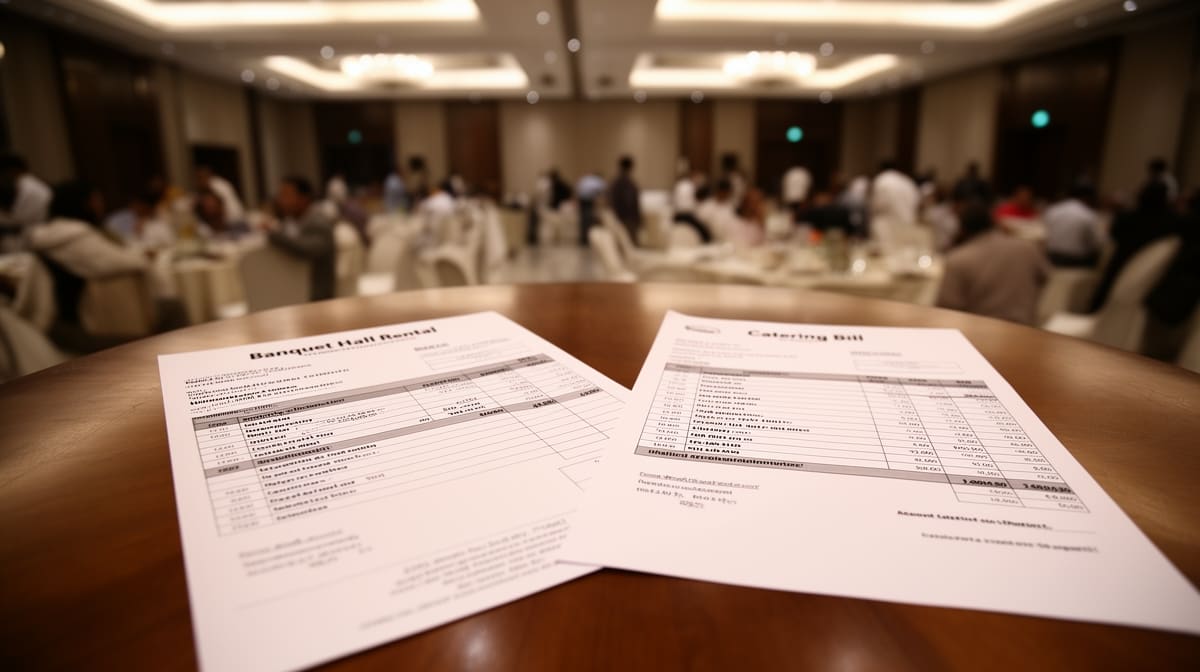
The Customs, Excise & Service Tax Appellate Tribunal, Chennai, has clarified a critical conflict between Cenvat credit entitlement and service tax abatement, establishing that Rule 6(5) of the Cenvat Credit Rules, 2004, overrides restrictive provisions in Notification No. 1/2006-ST when common input services are used for both taxable and exempted outputs. This ruling resolves long-standing ambiguity for service providers in hospitality and event management sectors.
Background & Facts
The Dispute
The appellant, Apeejay Surendra Park Hotels Ltd., operates a luxury hotel in Chennai and provides multiple taxable services including Business Auxiliary Service, Business Support Service, outdoor catering, mandap keeper, and Goods Transport Agency (GTA) services. During the financial years 2008-09 to 2010-11, the appellant availed Cenvat credit on common input services such as telephone, security, management consultancy, internet, and equipment hire. Simultaneously, it claimed abatement under Notification No. 1/2006-ST dated 01.03.2006 for outdoor catering, mandap keeper, and GTA services, paying service tax on only 60% of the taxable value.
The Revenue alleged that the appellant had violated the proviso to Notification No. 1/2006-ST, which bars the availment of abatement if Cenvat credit has been taken on input services used for providing the abated service. The Commissioner of Central Excise, Puducherry, issued an Order-in-Original dated 04.12.2015, confirming a demand of Rs. 37,74,164/- for service tax on the ground that the appellant had improperly claimed both abatement and Cenvat credit.
Key Facts
- The appellant was registered under multiple taxable service categories including outdoor catering and mandap keeper
- For the period April 2008 to March 2011, the appellant claimed abatement under Notification No. 1/2006-ST on 60% of the value for outdoor catering, mandap keeper, and GTA services
- The appellant availed Cenvat credit on common input services such as management consultancy, security agency services, internet, and technical certification
- The appellant did not claim Cenvat credit on input services exclusively used for abated services
- The SCN dated 20.04.2013 raised a demand for Rs. 37,74,164/- for service tax and Rs. 1,07,29,311/- for excess Cenvat credit, but the Commissioner accepted the appellant’s position on the latter and confined the demand to the abatement issue
- The appellant maintained that Rule 6(5) of the Cenvat Credit Rules, 2004, permitted credit on common inputs as long as they were not used exclusively for exempted services
Procedural History
- 01.04.2008 to 31.03.2011: Period under dispute for service tax and Cenvat credit
- 20.04.2013: Show Cause Notice issued by the Commissioner
- 04.12.2015: Order-in-Original passed by Commissioner of Central Excise, Puducherry, confirming demand of Rs. 37,74,164/-
- 2016: Service Tax Appeal No. 40382 of 2016 filed before CESTAT Chennai
- 16.02.2026: Hearing concluded
- 02.06.2026: Final Order passed by CESTAT Chennai
Relief Sought
The appellant sought setting aside of the impugned order dated 04.12.2015, deletion of the demand of Rs. 37,74,164/-, and cancellation of interest and penalty. The appellant also contended that the demand was time-barred as the SCN was issued more than 18 months after the end of the financial year.
The Legal Issue
The central question was whether the proviso to Notification No. 1/2006-ST, which denies abatement if Cenvat credit is taken on input services used for the abated service, overrides the entitlement under Rule 6(5) of the Cenvat Credit Rules, 2004, which permits credit on common input services used for both taxable and exempted outputs, provided they are not used exclusively for exempted services.
Arguments Presented
For the Appellant
The appellant argued that Rule 6(5) of the CCR, 2004, contains a non obstante clause that overrides conflicting provisions in other rules and notifications. The proviso to Notification No. 1/2006-ST only prohibits credit on input services used exclusively for the abated service, not on common inputs used for multiple services. The appellant relied on Lemon Tree Premier v. CCT, Hyderabad-IV [2024 (4) TMI 397], where the Tribunal held that Rule 6(5) permits credit if the input services are not exclusively used for exempted services. The appellant further submitted that the demand was time-barred as the SCN was issued beyond 18 months and there was no suppression or misstatement.
For the Respondent
The Revenue contended that the proviso to Notification No. 1/2006-ST clearly bars abatement if Cenvat credit is taken on any input service used for the abated service, regardless of whether the input is common or exclusive. It argued that Rule 6(5) cannot override a specific exemption notification and that the appellant had improperly claimed both benefits simultaneously, violating the conditional nature of the abatement.
The Court's Analysis
The Tribunal undertook a detailed analysis of the statutory framework, emphasizing the primacy of legislative intent and harmonious construction. It noted that Rule 6(5) of the CCR, 2004, explicitly begins with a non obstante clause: "Notwithstanding anything contained in sub-rules (1), (2) and (3)". This clause is a legislative device designed to confer overriding effect on the provision, even against conflicting provisions in other rules or notifications.
"The said Rule starts with a non obstante clause, which is a legislative device seeking to confer overriding effect upon a particular provision over other conflicting provisions that may be found either in the same enactment or some other enactment."
The Tribunal held that the word "such" in the proviso to Notification No. 1/2006-ST refers only to input services used exclusively for the abated service, not to common inputs used for both taxable and exempted services. The proviso does not prohibit credit on inputs used for other taxable services merely because they are also used for abated services.
The Tribunal further relied on the Supreme Court’s holding in Collector of Central Excise, Pune v. Dai Ichi Karkkaria Ltd. that there is no one-to-one relationship between input and output in the Cenvat credit scheme. Services are consumed as rendered and cannot be segregated with mechanical precision. Therefore, credit must be denied only where the input is exclusively used for exempted services.
The Tribunal also affirmed the precedent in Lemon Tree Premier, observing that the appellant was rendering other taxable services such as health club and internet cafe services during the relevant period. Since the common inputs were not used exclusively for the abated services, the credit was fully permissible under Rule 6(5).
The Tribunal concluded that the Revenue’s interpretation would render Rule 6(5) otiose and defeat the legislative intent behind the non obstante clause. The demand, therefore, could not be sustained on merits.
The Verdict
The appellant succeeded. The Tribunal set aside the impugned order dated 04.12.2015 insofar as it confirmed the demand of Rs. 37,74,164/- for service tax on the ground of improper availing of abatement and Cenvat credit. The demand, interest, and penalty were deleted. The Tribunal held that the appellant was entitled to claim Cenvat credit on common input services under Rule 6(5) of the CCR, 2004, even while availing abatement under Notification No. 1/2006-ST, provided the inputs were not used exclusively for the abated services. The appeal was allowed.
What This Means For Similar Cases
Cenvat Credit on Common Inputs Is Permissible with Abatement
- Practitioners may now confidently claim Cenvat credit on common input services (e.g., security, internet, management consultancy) even when abatement is claimed under Notification 1/2006-ST, provided the inputs are not exclusively used for the abated service
- The burden now shifts to the Revenue to prove exclusive use of inputs for exempted services, not merely concurrent use
- Hoteliers, event managers, and catering service providers can re-evaluate past assessments and file refund claims where similar demands were raised
Rule 6(5) Overrides Conflicting Notifications
- The non obstante clause in Rule 6(5) is a statutory override mechanism that prevails over conditional exemptions
- Any departmental circular or order attempting to restrict credit under Rule 6(5) on the basis of abatement notifications is legally unsustainable
- Taxpayers must ensure their accounting systems clearly segregate inputs used exclusively for exempted services from those used for mixed purposes
Time-Barred Demands Must Be Raised Early
- Although the Tribunal did not decide on limitation due to merits being decided in favor of the appellant, the judgment reaffirms that interpretational disputes do not constitute suppression
- Practitioners should raise limitation as a preliminary objection in all service tax appeals where the SCN is issued beyond 18 months from the end of the financial year
- The absence of fraud or concealment renders extended period invocation invalid, even if the demand is substantial