The Customs, Excise & Service Tax Appellate Tribunal (CESTAT) has clarified a critical distinction between contractual work performed on a per-unit basis and taxable manpower supply services under the reverse charge mechanism. This ruling provides definitive guidance to manufacturers and service recipients on when service tax liability arises under Notification No. 30/2012-ST.
Background & Facts
The Dispute
The appellant, Himadri Speciality Chemical Limited (formerly Himadri Chemicals & Industries Limited), located at Plot No. 2901/2902, GIDC Vapi, Gujarat, entered into a contractual arrangement with Mr. Shyam B. Mandal for loading, unloading, and batch charging of raw materials at its manufacturing plant. The Revenue alleged that this arrangement constituted a supply of manpower service, attracting service tax under the reverse charge mechanism (RCM) as per Notification No. 30/2012-ST dated 20.06.2012. A show cause notice dated 27.11.2015 was issued by the Vadodara Audit-III Commissionerate, demanding service tax of Rs. 1,67,291 for the financial years 2012-13 to 2014-15, along with interest and penalty under Sections 75 and 78(1) of the Finance Act, 1994. The notice invoked the extended period of limitation, alleging suppression of facts.
Key Facts
- The appellant held a centralized service tax registration with Kolkata Service Tax Commissionerate under registration number AAACH7475HST001.
- No separate registration was obtained for the Vapi unit.
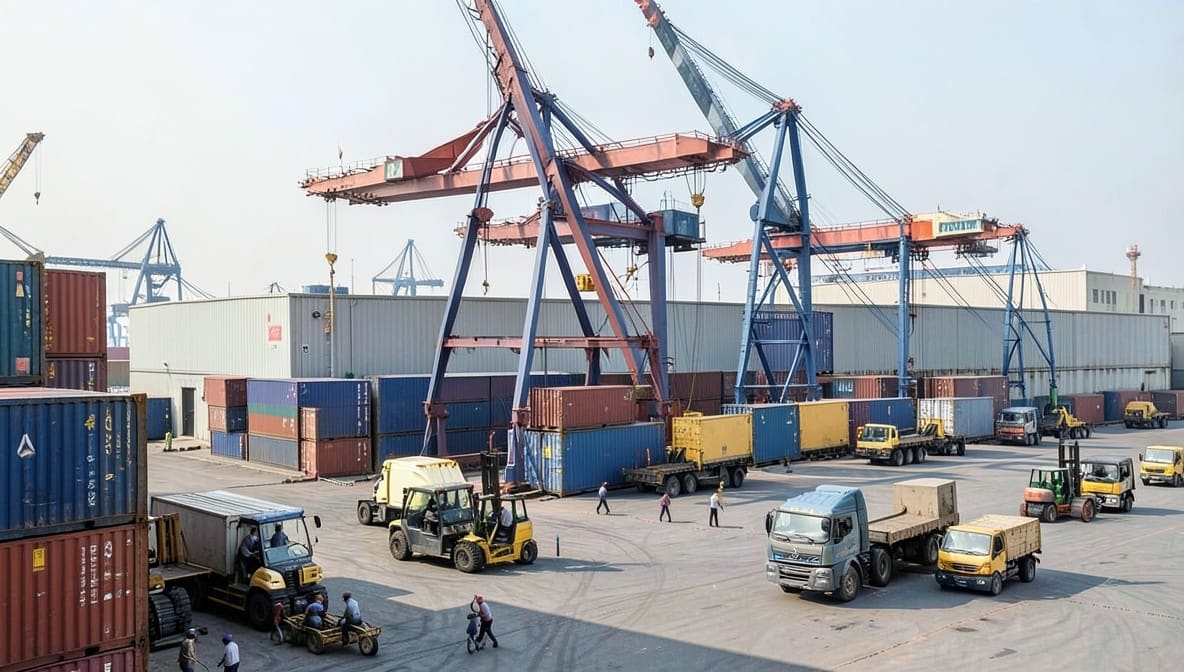
- The contract with Mr. Shyam B. Mandal, dated 01.01.2014, specified payment on a per metric ton (MT) basis for loading/unloading of material bags, batch charging for production, and loading/unloading of import/export cargo.
- The contract explicitly stated: "The contractor shall under his supervision and control ensure that his workers perform his work diligently..." and held the contractor liable for any damage caused by improper handling.
- The appellant did not recruit, select, or pay wages to the workers; all supervision, discipline, and operational control rested with the contractor.
- The appellant’s ST-3 returns did not disclose these payments, leading to the audit discovery.
- The Assistant Commissioner passed an order on 04.05.2017 confirming the demand.
- The Commissioner (Appeals) upheld the demand via order dated 16.05.2018.
Procedural History
- 27.11.2015: Show cause notice issued by Vadodara Audit-III Commissionerate.
- 04.05.2017: Order passed by Assistant Commissioner confirming demand of Rs. 1,67,291 + interest + penalty.
- 16.05.2018: Commissioner (Appeals) upheld the order.
- 12.06.2018: Service Tax Appeal No. 12307 of 2018 filed before CESTAT, West Zonal Bench, Ahmedabad.
- 05.02.2026: Hearing held before CESTAT.
- 02.06.2026: Final order passed by CESTAT.
The Parties' Positions
For the Appellant
- The contract was for specific work (loading/unloading on per MT basis), not supply of manpower.
- The contractor retained full control over workers, including hiring, wages, discipline, and liability for damage.
- CBIC Circular No. 190/9/2015-ST dated 15.12.2015 and subsequent CESTAT rulings (Gokul Ram Gurjar, Shailu Traders, Ramadhar Singh) support that such arrangements are not taxable as manpower supply.
- Jurisdictional defect: Only Kolkata Commissionerate, where centralized registration was held, had authority to issue the notice.
- No suppression or evasion: Tax liability, if any, would have been neutral due to Cenvat credit eligibility.
For the Respondent
- The payment structure was linked to the number of persons deployed, not the volume of work completed.
- The appellant exercised control over the workers during operations.
- The failure to disclose transactions in ST-3 returns constituted suppression, justifying extended period of limitation.
- The taxable event occurred at Vapi, giving Valsad Commissionerate jurisdiction.
Relief Sought
The appellant sought: (1) Setting aside of the impugned order dated 16.05.2018; (2) Quashing of the service tax demand of Rs. 1,67,291; (3) Cancellation of interest and penalty; (4) Declaration that the show cause notice was issued without jurisdiction.
The Legal Issue
The central questions were: (1) Whether the Vadodara and Valsad Commissionerates had jurisdiction to issue and confirm a service tax demand against a taxpayer with centralized registration in Kolkata? (2) Whether the contractual arrangement with Mr. Shyam B. Mandal constituted a taxable "manpower supply service" under Notification No. 30/2012-ST?
Arguments Presented
For the Appellant
The appellant relied on multiple CESTAT precedents to argue that the essence of the contract was execution of specific work, not supply of labor. The per MT payment structure, contractor’s exclusive control over workers, and liability for damage indicated a works contract, not manpower supply. The appellant cited Gokul Ram Gurjar v. CCE, Jaipur (2018), Shailu Traders v. CCE, Indore (2018), and Shri Ramadhar Singh v. CCE, Raipur (2018), all holding that where control and supervision remain with the contractor and payment is output-based, the service is not taxable under manpower supply. The appellant also invoked MIRC Electronic Ltd. v. CCE, Noida (2019) and CCE Hyderabad v. Larsen & Toubro Ltd. (2019) to establish that only the jurisdiction where centralized registration is held may issue notices. Further, reliance was placed on Nirlon Ltd. v. CCE (2015) and CCE v. Tenneco RC India Pvt. Ltd. (2015) to argue revenue neutrality precludes evasion.
For the Respondent
The Revenue contended that the nature of the work - loading and unloading - necessarily involved deployment of labor under the appellant’s operational oversight. It argued that the per MT payment was merely a convenient metric and did not negate the reality of manpower supply. The Revenue maintained that the taxable event occurred at Vapi, giving local Commissionerates jurisdiction. It further asserted that non-disclosure in ST-3 returns amounted to suppression, justifying the extended period of limitation under Section 73(1).
The Court's Analysis
The Tribunal undertook a two-pronged analysis: jurisdiction and substantive classification.
On jurisdiction, the Tribunal examined the principle of centralized registration under the Finance Act, 1994. It cited Larsen & Toubro Ltd. v. CCE, Hyderabad (2019), where CESTAT held that centralized registration confers jurisdiction on the registering Commissionerate even when services are rendered elsewhere. The Tribunal found that the Commissioner (Appeals) had incorrectly concluded that the appellant’s centralized registration was invalid. The Tribunal stated: "There is no dispute that the appellant is having centralized registration with Kolkata Service Tax. Revenue has not supported their say by any decision which could justify legality of action taken by Vadodara Audit III Commissionerate..." Consequently, the Tribunal held that the show cause notice and adjudication by Valsad Commissionerate were ultra vires.
On merits, the Tribunal analyzed the contractual terms and applied the test established in Gokul Ram Gurjar and Shailu Traders. It emphasized that the key determinant is not the nature of the task, but the control and payment structure. The Tribunal noted: "The language of the contract clearly reveals that it is not for supply of manpower and only specific work was assigned to the contractor for completion." It further observed that the contractor bore responsibility for worker selection, supervision, and liability for damage - hallmarks of a works contract, not manpower supply. The Tribunal distinguished the present case from situations where the recipient controls hiring, wages, or discipline. It concluded: "Since the essence of contract is execution of assigned work and control over the workman and supervision was always with the appellant, it cannot be said that the activities undertaken by the appellant fall under the category of man power recruitment or supply agency service."
The Tribunal also rejected the Revenue’s claim of suppression, noting that even if service tax were payable, the appellant would have been eligible for Cenvat credit, rendering the transaction revenue-neutral under Nirlon Ltd.
The Verdict
The appeal was allowed. The Tribunal set aside the order dated 16.05.2018 passed by the Commissioner (Appeals) and quashed the service tax demand of Rs. 1,67,291, along with all interest and penalty. The Tribunal held that the show cause notice issued by Vadodara Audit-III Commissionerate and the adjudication by Valsad Commissionerate were without jurisdiction. The demand was also unsustainable on merits, as the contract did not constitute a taxable manpower supply service.
What This Means For Similar Cases
Contractual Work on Output Basis Is Not Manpower Supply
- Practitioners must analyze the contract’s terms - not the nature of the task - to determine taxability.
- Payment linked to measurable output (e.g., per MT, per unit, per batch) strongly indicates a works contract, not manpower supply.
- If the contractor retains control over hiring, wages, discipline, and liability for damage, the service is outside the scope of Notification No. 30/2012-ST.
Centralized Registration Confers Exclusive Jurisdiction
- Only the Commissionerate where centralized registration is held may issue show cause notices for service tax liabilities.
- Local Commissionerates cannot assert jurisdiction merely because the service was rendered within their territorial limits.
- Any demand issued by a non-registering Commissionerate is void ab initio and must be challenged on jurisdictional grounds.
Revenue Neutrality Bars Evasion Allegations
- Where the recipient would be eligible for Cenvat credit on service tax paid under RCM, the doctrine of revenue neutrality applies.
- Absence of actual loss to the exchequer negates allegations of suppression or willful evasion under Section 73(1).
- Tax authorities cannot invoke extended limitation periods in revenue-neutral scenarios.