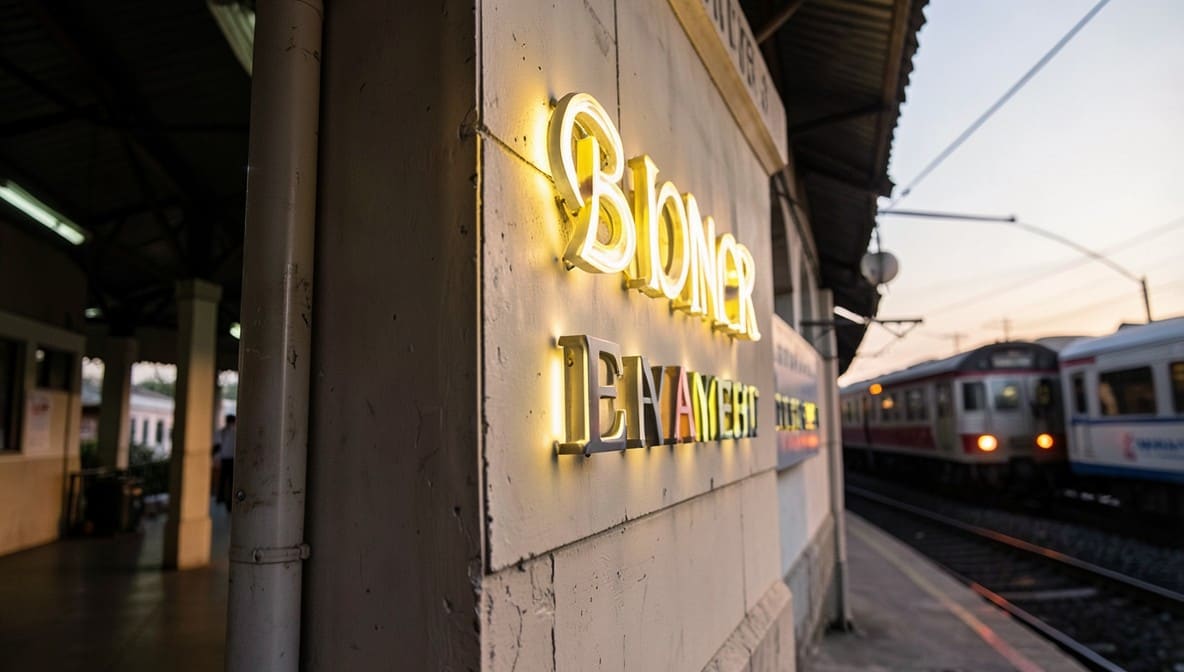
The Central Excise and Service Tax Appellate Tribunal, Hyderabad, has clarified a critical distinction in service tax jurisprudence: the leasing of railway space for advertisement hoardings constitutes renting of immovable property, not a support service. This ruling resolves long-standing ambiguity for businesses engaged in outdoor advertising and has direct implications for tax liability under the reverse charge mechanism.
Background & Facts
The Dispute
The Department of Central Tax, Guntur, initiated proceedings against M/s Prakash Arts Pvt Ltd (Respondent) and its Director and CEO, Shri C.D.V. Subba Rao, alleging that the Respondent had evaded service tax by failing to discharge liability under the reverse charge mechanism (RCM) for services received from South Western and South Central Railways. The Department contended that the Railways provided "support services" by granting rights to display advertisements on railway premises, thereby triggering RCM liability under Notification No. 30/2012-ST dated 20.06.2012.
Key Facts
- The Respondent participated in tenders issued by South Western Railway and South Central Railway for the installation of glow signboards, billboards, and uni-poles at railway stations.
- Successful bids resulted in license agreements, including one dated 06.02.2013 with South Western Railway.
- The Respondent paid a "license fee" to the Railways for the right to use specified, demarcated spaces on railway property for advertising purposes.
- The Respondent separately provided advertisement services to third-party clients and discharged service tax on those services.
- The Department alleged that the license fee paid to Railways constituted consideration for "support services" under Section 65B(49) of the Finance Act, 1994, making the Respondent liable under RCM for the period July 2012 to September 2016.
- The Respondent paid Rs. 60,64,789 towards service tax for the period April 2016 to September 2016, which the Department sought to appropriate against the alleged demand.
Procedural History
- 11.04.2018: Show Cause Notice (SCN) issued under Section 73(1) of the Finance Act, 1994, invoking extended period for suppression of facts.
- 18.10.2018: Adjudicating Authority dropped proceedings, holding that the transaction was not a support service and fell under renting of immovable property.
- 21.04.2026: Hearing before the Division Bench of CESTAT Hyderabad.
- 03.06.2026: Final Order passed dismissing the Department’s appeal.
The Parties' Positions
Department’s Position: The Railways provided "support services" by granting advertisement rights, which are explicitly included in the definition of support services under Section 65B(49). The Respondent, as recipient, was liable under RCM. The non-disclosure of license fees in ST-3 returns constituted suppression warranting extended period and penalty.
Respondent’s Position: The Railways merely leased out space for a license fee. The transaction was renting of immovable property (RIPS), a declared service under Section 66E, and not a support service. RCM did not apply to RIPS. The payment of license fee was not a service received but a rent payment. The non-disclosure was not suppression as there was no statutory obligation to declare non-RCM services.
Relief Sought
The Department sought to set aside the Adjudicating Authority’s order, reinstate the SCN, recover service tax for the period July 2012 to September 2016, impose penalty under Sections 76, 77, and 78, and invoke the extended period of limitation.
The Legal Issue
The central question was whether the grant of rights to display advertisements on railway premises, in exchange for a license fee, constitutes a "support service" under Section 65B(49) of the Finance Act, 1994, thereby attracting service tax under the reverse charge mechanism, or whether it qualifies as "renting of immovable property" under Section 66E, which is subject to forward charge and excluded from RCM.
Arguments Presented
For the Appellant
The Department argued that the definition of "support services" under Section 65B(49) explicitly includes "advertisement and promotion". It contended that by allowing the Respondent to use railway space for advertising, the Railways were providing an advertising service, which the Respondent had outsourced. The Department relied on clauses in the license agreement (6(f) and 7(e)) to argue that the Respondent was obligated to pay service tax. It further asserted that the Respondent’s failure to disclose license fees in ST-3 returns amounted to suppression of facts, justifying invocation of the extended period and imposition of penalty.
For the Respondent
The Respondent argued that the Railways did not provide any advertising service. The Respondent arranged for the design, printing, installation, and maintenance of the hoardings. The Railways merely provided space for a fee. The transaction was clearly renting of immovable property, as defined under Section 65(90a) and Explanation 2 thereto, which includes permitting use of space irrespective of transfer of possession. The Respondent relied on Shah Publicity v. CCE, affirmed by the Supreme Court, which held that advertising services require active involvement in planning and execution - none of which the Railways performed. The Respondent further argued that RIPS is excluded from RCM under Notification No. 30/2012 and that non-disclosure of license fees was not suppression since no statutory provision required such disclosure.
The Court's Analysis
The Tribunal conducted a meticulous analysis of the statutory definitions and the factual matrix. It began by examining the definition of "support services" under Section 65B(49), which includes functions that entities carry out in their ordinary course but may outsource. The Court emphasized that for a service to qualify as support service, the provider must ordinarily engage in that activity and outsource it. The Railways, as a public transport entity, do not ordinarily engage in advertising or promotion. Their primary function is rail transport, not marketing.
"The agreements clearly indicate that they have called for tenders for permitting to display advertisement at demarked sites; that the assessee has to arrange their own material/electricity to erect display hoardings."
The Tribunal found no evidence that the Railways outsourced any advertising function. The Respondent alone planned, created, and maintained the advertisements. The Railways merely provided space. The Court distinguished this from true advertising services, which involve creative or promotional activity, as clarified in Shah Publicity.
The Tribunal then turned to the alternative classification proposed by the Respondent and accepted by the Adjudicating Authority: renting of immovable property. It examined Section 66E and Explanation 2 to Section 65(90a), which explicitly includes "allowing or permitting the use of space in an immovable property" as RIPS, regardless of whether possession is transferred. The license fee paid was found to be a rental consideration, not payment for a service.
"The term 'license fee', on its own, cannot be construed to mean that it is for transfer of right to advertise within Railway premises. The license can be even for the rent for taking certain specified space for specified period for any particular use."
The Court held that RIPS is a declared service under Section 66E and is excluded from RCM under Notification No. 30/2012. Therefore, any service tax liability, if any, would lie with the Railways on a forward charge basis, not the Respondent.
Regarding the extended period, the Tribunal agreed with the Adjudicating Authority that non-disclosure of license fees in ST-3 returns did not constitute suppression, as there was no statutory obligation to declare services received under forward charge. The payment of Rs. 60,64,789 was deemed irrelevant since the entire demand was held unsustainable on merit.
The Verdict
The appeal was dismissed. The Tribunal upheld the Adjudicating Authority’s order dated 18.10.2018, which dropped the proceedings. The Department’s demand for service tax, interest, penalty, and invocation of the extended period for the period July 2012 to September 2016 was set aside. No tax, interest, or penalty was payable by the Respondent. The payment of Rs. 60,64,789 made by the Respondent for the period April 2016 to September 2016 was not required to be appropriated, as the entire demand was held legally unsustainable.
What This Means For Similar Cases
Renting of Space Is Not Advertising Service
- Practitioners must distinguish between providing space and providing advertising services. Merely allowing placement of ads on property does not constitute an advertising service.
- Businesses paying license fees to railway authorities, airports, or metro corporations for hoarding space are not liable under RCM if the transaction is purely for space rental.
RCM Does Not Apply to RIPS
- The exclusion of RIPS from RCM under Notification No. 30/2012 is now firmly established. Service tax liability, if any, rests with the property owner, not the advertiser.
- Tax consultants must review all agreements for public infrastructure use to determine whether they are RIPS or support services.
Non-Disclosure ≠ Suppression Without Statutory Obligation
-
Failure to disclose payments for non-RCM services in ST-3 returns does not constitute suppression of facts.
-
The burden of proving suppression lies with the Department and requires clear statutory disclosure obligations, which were absent here.
-
Practitioners can now confidently argue that RIPS is a distinct category, and RCM liability cannot be imposed merely because a service involves advertising.
-
This precedent strengthens the position of outdoor advertising agencies and reduces compliance risk in infrastructure-based advertising.