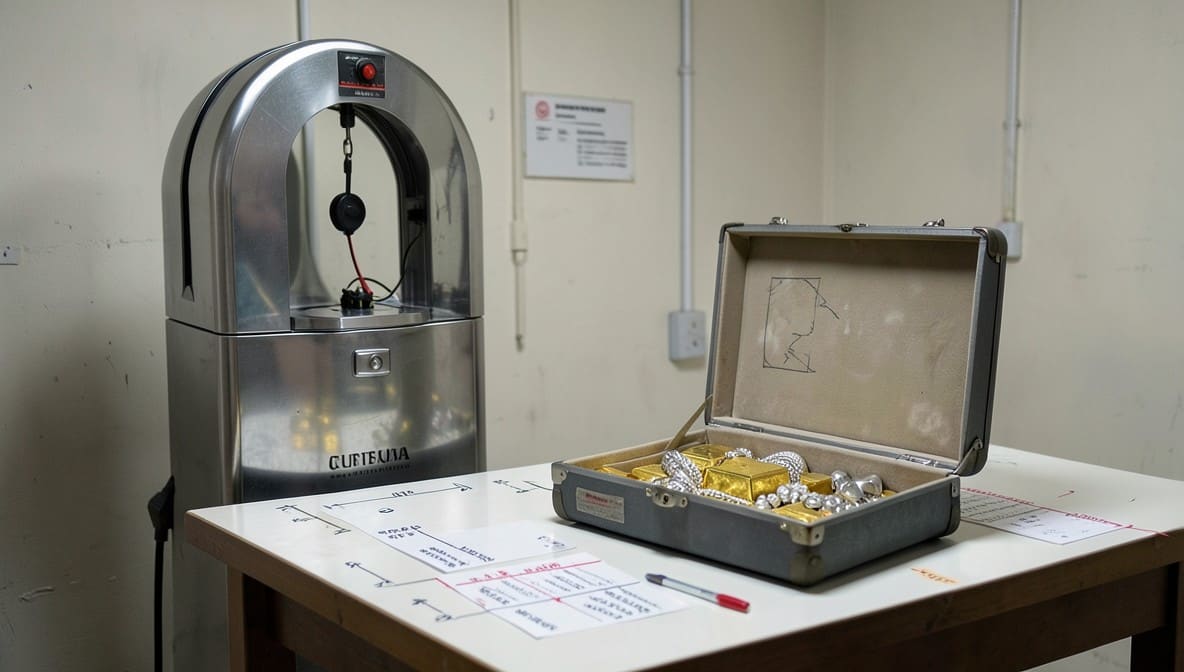
The Customs Appellate Tribunal has delivered a significant ruling clarifying the evidentiary threshold for imposing penalties under Section 112(b) of the Customs Act, 1962. In setting aside penalties of Rs. 8 lakhs each on two appellants for possession of gold and silver, the Tribunal emphasized that suspicion, presumption, and uncorroborated allegations are legally insufficient to establish smuggling liability. This judgment reinforces the principle that penal consequences require concrete proof of foreign origin, conscious knowledge, and direct nexus.
Background & Facts
The Dispute
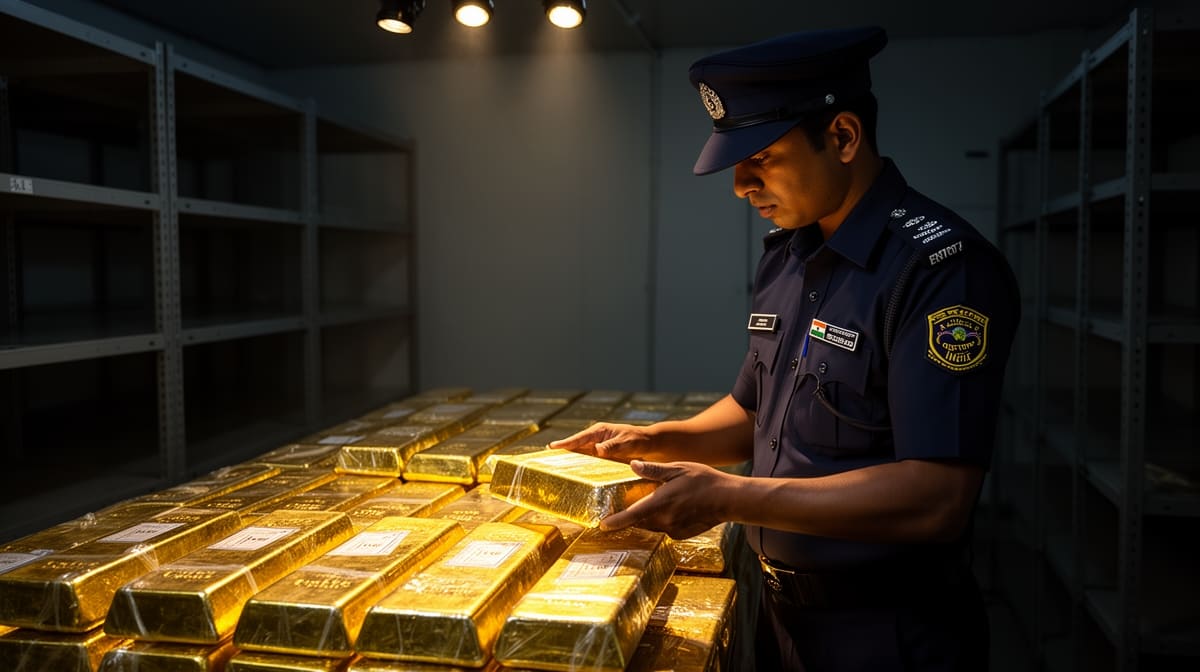
The appellants, Shri Shyam Kishore Johari and Shri Roop Kishore Johari, father and son respectively, were traveling in a car registered in the name of Shyam Kishore Johari (Registration No. UP78GX1363) when intercepted by Directorate of Revenue Intelligence (DRI) officers near Indira Canal, Ayodhya Road, Lucknow on 21.03.2023. Gold weighing 2485 grams and silver ornaments weighing 8.550 kgs were recovered from a concealed cavity in the back seat of the vehicle. Neither appellant claimed ownership of the seized items, nor did they offer any explanation for their presence. The Department levied penalties of Rs. 8 lakhs each under Section 112(b) of the Customs Act, 1962, alleging smuggling from Nepal. The Commissioner (Appeals) upheld the penalty on 30.06.2025, prompting these appeals.
Key Facts
- The car was intercepted on 21.03.2023 near Lucknow
- Recovered items: 2485 grams of gold and 8.550 kgs of silver ornaments
- Gold purity: 98.15% by weight (CRCL Report No. CRCL/71/753(DRI) dated 19.05.2023)
- Silver alloy content: 53.96% silver (CRCL Report No. CRCL/71/754(DRI))
- Marking 'AL ETIHAD' found on gold bars, identified as a Dubai-based refinery
- Appellants stated they were returning from a pilgrimage to Baba Baidyanath Temple in Deoghar, Jharkhand
- Appellants denied any visit to Nepal or involvement in import of gold/silver
- No documentary evidence (travel tickets, customs declarations, purchase receipts) was produced by either party
- DRI did not produce any evidence of cross-border movement, surveillance footage, or communication records linking appellants to smuggling
- No independent witness or corroborative evidence established smuggling from Nepal
Procedural History
- 21.03.2023: Seizure of gold and silver by DRI, Lucknow
- 19.05.2023: CRCL Delhi issued test reports on purity of seized goods
- 05.07.2023: Show Cause Notice issued under Section 112(b) of Customs Act, 1962
- 15.08.2023: Written submissions filed by appellants denying involvement
- 30.06.2025: Commissioner (Appeals) upheld penalty of Rs. 8 lakhs each
- 15.08.2025: Customs Appeal No. 70085/2026 filed by Shyam Kishore Johari
- 15.08.2025: Customs Appeal No. 70094/2026 filed by Roop Kishore Johari
- 06.05.2026: Hearing before CESTAT Allahabad
- 05.06.2026: Final order pronounced
The Parties' Positions
Appellants: Argued that the gold and silver were not imported from Nepal, that the CRCL report showed purity inconsistent with typical imported gold (which exceeds 99.9%), and that the 'AL ETIHAD' marking pointed to Dubai origin. They contended that the DRI’s entire case rested on speculation, with no evidence of cross-border movement, no corroborative testimony, and no proof of conscious knowledge or intent. They relied on Sharan Kumar Singh v. State of Punjab and Mahabir Biswas v. State of West Bengal to challenge the voluntariness of statements.
Respondent (Department): Contended that the concealment in a vehicle cavity, combined with the appellants’ silence and failure to explain possession, established smuggling from Nepal. Relied on Commissioner of Customs, Kolkata v. Anil Kumar Gaur to argue that belated denial of voluntary statements cannot override prolonged silence during investigation.
Relief Sought
The appellants sought setting aside of the penalty order dated 30.06.2025, cancellation of the Rs. 8 lakh penalty imposed under Section 112(b), and release of the seized gold and silver ornaments.
The Legal Issue
The central question was whether Section 112(b) of the Customs Act, 1962 permits imposition of penalty based solely on suspicion, presumption, and uncorroborated allegations, without concrete proof of foreign origin, smuggling, and the appellant’s conscious knowledge or involvement.
Arguments Presented
For the Appellant
The appellants’ counsel argued that Section 112(b) requires three essential ingredients: (i) proof of foreign origin, (ii) proof of smuggling with conscious knowledge, and (iii) a direct nexus between the accused and the contraband. They emphasized that the CRCL report showed gold purity at 98.15%, which is below the typical 99.9% purity of imported gold, suggesting domestic or non-Nepalese origin. The 'AL ETIHAD' mark indicated Dubai origin, not Nepal. No evidence of travel to Nepal, no customs declarations, no financial trail, and no witness testimony linked the appellants to smuggling. They cited Customs v. Mohammad Bagour and Portland Cement (I) Ltd. v. Commissioner of C.Ex. to assert that confessional statements without corroboration are legally inadequate. They further relied on Sharan Kumar Singh and Mahabir Biswas to challenge the voluntariness of any recorded statements.
For the Respondent
The Department’s representative contended that concealment of goods in a vehicle cavity, coupled with the appellants’ failure to explain possession, constituted sufficient indicia of smuggling. They relied on Commissioner of Customs, Kolkata v. Anil Kumar Gaur, arguing that prolonged silence during investigation cannot be neutralized by later denials. They asserted that the burden of explanation shifted to the appellants once contraband was found in their vehicle, and their failure to provide a credible account justified the penalty.
The Court's Analysis
The Tribunal undertook a rigorous analysis of the evidentiary record and the statutory requirements under Section 112(b). It held that the Department’s case was built entirely on conjecture and assumption, not on tangible evidence. The CRCL report, while confirming the presence of gold and silver, did not establish foreign origin. The purity level of 98.15% was inconsistent with standard imported gold, and the 'AL ETIHAD' marking pointed to Dubai, not Nepal. The Tribunal observed:
"The entire investigation and conclusion of smuggling is based on the same converge i.e. on the presumption that the Appellants have visited Nepal/gold has been imported from Nepal."
It further noted that no evidence was produced to establish the route of smuggling, no communication records linked the appellants to any third party, and no witness corroborated the Department’s claim of Nepal origin. The Tribunal distinguished Anil Kumar Gaur on the ground that in that case, there was corroborative evidence of cross-border movement and prior smuggling history, which was entirely absent here. The Tribunal emphasized:
"In absence of proof regarding foreign origin and smuggling of gold, imposition of penalty is not sustainable."
It held that mere possession of contraband in a vehicle, without proof of knowledge, intent, or origin, cannot trigger penal liability under Section 112(b). The Tribunal rejected the argument that silence equates to admission, noting that the appellants had consistently denied involvement and that no formal confession was recorded. The absence of any corroborative evidence rendered the Department’s case legally untenable.
The Verdict
The appellants succeeded. The Tribunal set aside the penalty order dated 30.06.2025 and cancelled the penalty of Rs. 8 lakhs each imposed under Section 112(b) of the Customs Act, 1962. The seized gold and silver ornaments were ordered to be released to the appellants, subject to any applicable statutory obligations under the Act. No further penalty or fine was imposed.
What This Means For Similar Cases
Proof of Foreign Origin Is Non-Negotiable
- Practitioners must now insist on scientific and documentary proof of foreign origin before any penalty under Section 112(b) is sustained
- Purity levels, hallmarking, refinery markings, and import documentation are critical
- A CRCL report alone is insufficient if it does not conclusively establish origin
Knowledge and Nexus Must Be Proven, Not Presumed
- Mere possession in a vehicle does not equate to smuggling knowledge
- The Department must establish a direct link between the accused and the act of concealment or import
- Silence cannot substitute for evidence; denial must be evaluated in context of the entire record
Judicial Scrutiny of DRI Investigations Is Increasing
- Tribunals are no longer accepting speculative narratives based on 'concealment' alone
- Cases relying on assumptions about Nepal or Bangladesh origin without corroborative evidence are likely to be overturned
- Practitioners should challenge DRI reports for lack of chain of custody, absence of forensic linkage, and failure to rule out domestic sources