The Central Excise and Service Tax Appellate Tribunal (CESTAT), Chennai, has delivered a landmark ruling clarifying that leasing agricultural land along with incidental infrastructure, labour, and machinery for plantation activities constitutes a composite agricultural transaction exempt from service tax. This decision reinforces the principle that statutory exemptions and negative list exclusions must be interpreted broadly to protect core agricultural operations from artificial fragmentation for taxation purposes.
Background & Facts
The Dispute
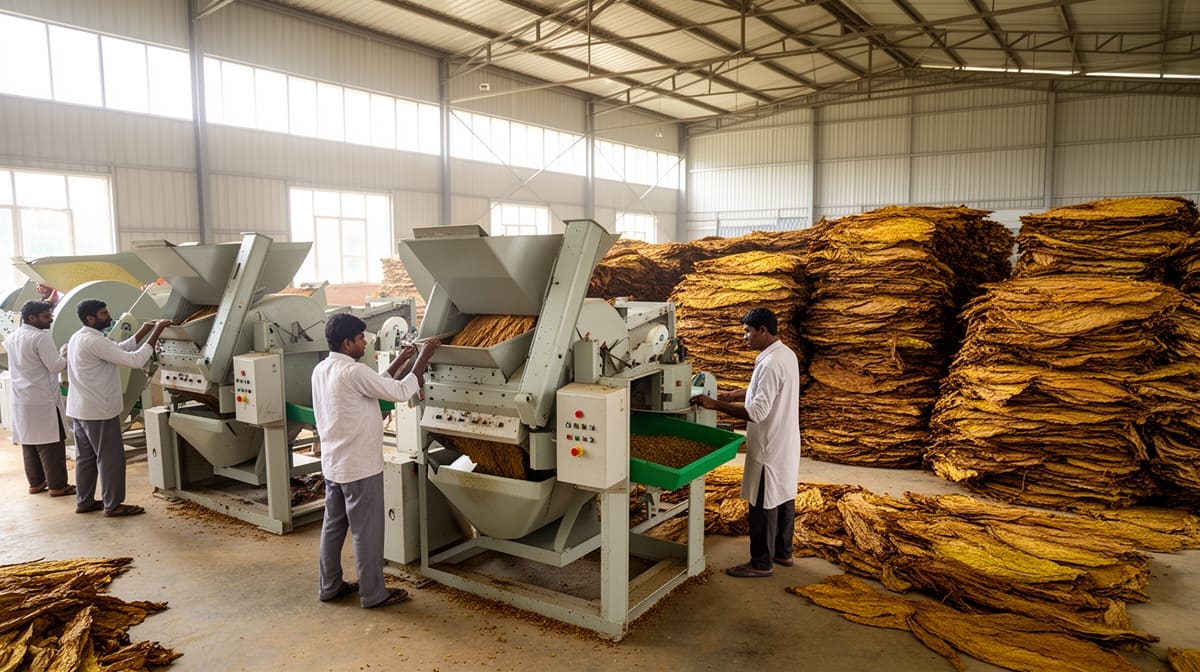
M/s. NEPC Agro Foods Limited (the Appellant), engaged in tea plantation at Mount Stuart and Waverly Estates in Valparai, Tamil Nadu, entered into a Lease Agreement dated 30.10.2009 with M/s. Waterfall Estate Pvt. Ltd. The agreement granted the lessee exclusive rights to carry out all plantation activities, including cultivation, irrigation, harvesting, and processing of green tea leaves. The lease consideration was not fixed but was calculated as a percentage of the auction price of harvested green tea leaves, directly linking payment to agricultural output.
Key Facts
- The Appellant owned the tea estates and provided land, labour quarters, offices, a dispensary, a creche, and tractors for use by the lessee.
- The lessee was responsible for all operational costs, including wages, statutory benefits, fertilizers, irrigation, and maintenance of machinery.
- The lease agreement explicitly stated that the lessee had absolute control over day-to-day operations, including supervision of workers.
- The Appellant did not receive any separate consideration for the use of buildings, machinery, or labour.
- The lease period spanned from 30.10.2009 to 30.06.2017.
Procedural History
- 29.07.2016: Commissioner of Central Excise, Customs and Service Tax, Coimbatore, issued Order-in-Original No. CBE/ST/26/2016-Commr., demanding service tax, interest, and penalties for the period November 2009 to June 2017 under three heads: Renting of Immovable Property Service, Manpower Recruitment or Supply Agency Service, and Supply of Tangible Goods Service.
- 05.04.2019: Commissioner (Appeals), Coimbatore, upheld the demand in Order-in-Appeal No. CMB-CEX-000-APP-076/2019.
- 24.03.2026: Service Tax Appeal No. 42197/2016 and Service Tax Appeal No. 41307/2019 were heard together by CESTAT Chennai.
- 02.06.2026: Final Order passed by CESTAT Chennai allowing the appeals.
Relief Sought
The Appellant sought setting aside of the impugned orders dated 29.07.2016 and 05.04.2019, along with cancellation of all service tax demands, interest, and penalties, on the ground that the transaction was a composite agricultural activity exempt from service tax under the Finance Act, 1994.
The Legal Issue
The central question was whether leasing tea estates along with incidental infrastructure, labour, and machinery for plantation activities constitutes a taxable service under the categories of "Renting of Immovable Property Service", "Manpower Recruitment or Supply Agency Service", or "Supply of Tangible Goods Service", or whether it qualifies as a composite agricultural activity excluded from service tax under Section 66D of the Finance Act, 1994.
Arguments Presented
For the Appellant
The Appellant contended that the entire arrangement was a single, indivisible agricultural transaction. It relied on the Supreme Court’s judgment in Doypack Systems Pvt. Ltd. v. Union of India to argue that the phrase "in relation to" must be interpreted expansively to include all activities integrally connected with agriculture. It emphasized that the lease consideration was tied to agricultural output, not to rental value, and that the lessee bore all operational costs, including wages and machinery use. The Appellant further cited Tribunal decisions in CCE Kolhapur v. Yashwant SSK Ltd. and Raje Vijaysingh Dafale SSK Ltd. v. CCE Kolhapur to show that where no separate consideration flows to the lessor for labour or machinery, no taxable service arises. It also argued that the demand was barred by limitation as there was no suppression or fraud.
For the Respondent
The Department contended that the lease involved separate taxable services: (i) renting of immovable property (buildings, quarters), (ii) supply of manpower (through payment of wages and employer-employee relationship), and (iii) supply of tangible goods (tractors and machinery). It argued that the presence of infrastructure and equipment transformed the transaction into a commercial arrangement. It further claimed that the Appellant had suppressed material facts by not registering or filing returns, justifying invocation of the extended period under Sections 73 and 78 of the Finance Act, 1994.
The Court's Analysis
The Tribunal undertook a detailed analysis of the lease agreement, statutory provisions, and judicial precedents. It observed that the dominant nature of the transaction was agricultural, with all ancillary elements - buildings, labour quarters, tractors, and even the deployment of workers - being essential to the cultivation and harvesting of tea. The Tribunal emphasized that the consideration was not fixed rent but a share of the auction price of green tea leaves, indicating revenue-sharing rather than commercial leasing.
"The expression 'in relation to' (so also 'pertaining to'), is a very broad expression which pre-supposes another subject matter. These are words of comprehensiveness which might both have a direct significance as well as an indirect significance depending on the context..."
The Tribunal applied this principle from Doypack Systems to hold that the provision of infrastructure and labour was not an independent service but an integral part of the agricultural activity. It further noted that under the pre-negative list regime, Notification No. 6/2005-ST as amended by Notifications 4/2007-ST and 8/2008-ST exempted services relating to agriculture. With effect from 01.07.2012, Section 66D of the Finance Act, 1994 placed agricultural services in the negative list, explicitly excluding them from taxation.
Regarding manpower supply, the Tribunal found no evidence of separate consideration flowing to the Appellant. The lessee paid wages directly, bore statutory obligations, and exercised full control over workers. The Tribunal relied on CCE Kolhapur v. Yashwant SSK Ltd. and Raje Vijaysingh Dafale SSK Ltd. to hold that absence of consideration negates the existence of a service. Similarly, for supply of tangible goods, the Tribunal noted no transfer of possession or control of machinery, and no separate charge for tractor use.
The Tribunal concluded that the Department’s attempt to vivisect a composite agricultural arrangement into multiple taxable services was legally unsustainable. It held that the statutory exemptions and negative list were designed precisely to prevent such artificial fragmentation.
The Verdict
The Appellant succeeded. The CESTAT Chennai set aside the impugned orders dated 29.07.2016 and 05.04.2019. All demands for service tax, interest under Section 75, and penalties under Sections 77 and 78 were cancelled. The Tribunal held that the entire transaction was exempt from service tax under Section 66D of the Finance Act, 1994, and no further relief was required as the demands were wholly unsustainable.
What This Means For Similar Cases
Agricultural Leases Are Not Commercial Renting
- Practitioners must argue that any lease of agricultural land with incidental infrastructure (sheds, quarters, irrigation systems) is part of a composite agricultural activity if the primary purpose is cultivation.
- Fixed rent is not the sole indicator of commercial renting; revenue-sharing models tied to output are strong evidence of agricultural intent.
No Taxable Service Without Separate Consideration
- Where wages, utilities, or equipment use are borne entirely by the lessee and no payment flows to the lessor, claims of manpower supply or tangible goods service fail.
- The burden shifts to the Department to prove independent consideration - mere expenditure by the lessee does not constitute taxable supply.
Negative List Exclusions Are Broadly Interpreted
-
The negative list under Section 66D must be read expansively to protect agricultural operations from fragmentation.
-
Pre-negative list exemptions (e.g., Notification 6/2005-ST) continue to inform interpretation even post-2012, especially where the nature of activity remains unchanged.
-
Always examine whether the transaction is a single integrated activity or artificially segmented for tax purposes.
-
Cite Doypack Systems and Tribunal precedents like Yashwant SSK Ltd. to counter Departmental attempts to classify agricultural arrangements as commercial services.