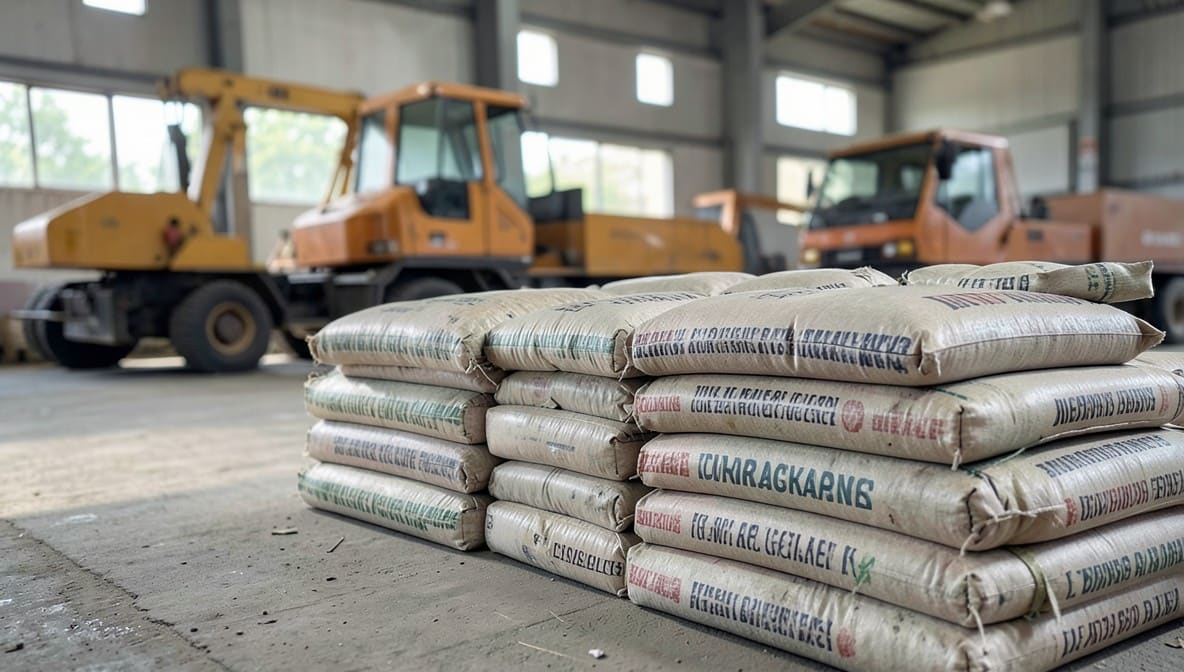
The Customs, Excise and Service Tax Appellate Tribunal (CESTAT) Chennai has clarified that the mere packaging of imported cement in 50 kg bags with printed Retail Sale Price (RSP) does not disqualify it from concessional Countervailing Duty (CVD) benefits under Clause 1C of Notification No. 04/2006-CE, provided the goods are intended for industrial or institutional use. This ruling reinforces the principle that the nature of the end-use, not the form of packaging, determines eligibility for exemption.
Background & Facts
The Dispute
The appellant, M/s. Greatway Impex, imported Ordinary Portland Cement from Pakistan through Tuticorin Port during June-July 2010 under four Bills of Entry. The cement was packed in 50 kg bags with printed RSP and claimed concessional CVD under Clause 1C of Notification No. 04/2006-CE dated 01.03.2006, which provides a lower duty rate for cement not cleared in packaged form for retail sale. The department rejected this claim, asserting that the presence of RSP on packaging rendered the cement eligible only under Clause 1A(ii), which applies to packaged cement with RSP exceeding Rs. 190 per 50 kg bag. The department reassessed the duty, demanding Rs. 1,72,769 as differential CVD, along with interest and penalty under Section 114A of the Customs Act, 1962.
Key Facts
- The appellant imported cement between 01.06.2010 and 31.07.2010 under four Bills of Entry
- All cement was packed in 50 kg bags with printed RSP of Rs. 200 per bag
- The appellant consistently maintained that the cement was supplied exclusively to industrial and institutional consumers, including construction firms and hollow block manufacturers
- No retail sale of the imported cement was ever alleged or proven by the department
- The appellant submitted purchase invoices and delivery records showing sales to contractors and industrial units
- The department did not produce any evidence of retail distribution, consumer complaints, or market surveys
- The department relied on the RSP printed on the bags to infer retail intent, without any corroborative evidence
Procedural History
- 01.06.2010 to 31.07.2010: Import of cement under four Bills of Entry
- 16.02.2016: Order-in-Original No. 24/2016 issued by the Assistant Commissioner of Customs, Tuticorin, confirming differential duty demand of Rs. 1,72,769, interest, and penalty
- 29.05.2015: Show Cause Notice issued under Section 28(4) invoking extended period of limitation on grounds of suppression
- 11.01.2017: Order-in-Appeal No. 05/2017-TTN(CUS) passed by Commissioner (Appeals-II), Tiruchirappalli, upholding the Order-in-Original
- 20.07.2017: Customs Appeal No. 40841 of 2017 filed before CESTAT Chennai
- 16.04.2026: Hearing conducted before CESTAT Chennai
- 02.06.2026: Final Order No. 40676/2026 pronounced
The Parties' Positions
For the Appellant
- Argued that Clause 1C applies to cement not intended for retail sale, regardless of packaging
- Relied on the explanation to Notification No. 04/2006-CE, which excludes goods from "packaged form" if the Standards of Weights and Measures (Packaged Commodities) Rules are not applicable
- Emphasized that the cement was sold only to bulk industrial buyers, not through retail outlets
- Cited two binding precedents: Anthony Metals & Ors. v. Commissioner of Customs (2019 TMI 1258) and Ramky Infrastructure Ltd. v. Commissioner of Customs (2026 TMI 438), both involving identical facts and decided in favor of importers
- Contended that the department failed to prove any suppression or misdeclaration
For the Respondent
- Maintained that the presence of RSP on 50 kg bags automatically brought the cement within Clause 1A(ii)
- Argued that the declared RSP was not credible and substituted it with contemporaneous RSP from another importer
- Invoked Section 28(4) of the Customs Act, 1962, alleging suppression and misdeclaration
- Relied on Rule 12 of the Customs Valuation Rules to justify reassessment
- Asserted that packaging with RSP indicated retail intent, irrespective of actual end-use
Relief Sought
The appellant sought:
- Setting aside of the impugned Order-in-Appeal dated 11.01.2017
- Setting aside of the Order-in-Original dated 16.02.2016
- Cancellation of differential duty demand of Rs. 1,72,769
- Cancellation of interest and penalty imposed under Section 114A
- Declaration that the appellant was entitled to concessional CVD under Clause 1C
The Legal Issue
The central question was whether imported cement in 50 kg bags with printed RSP qualifies for concessional CVD under Clause 1C of Notification No. 04/2006-CE when the goods are demonstrably intended for industrial or institutional use, and whether the department can invoke the extended period under Section 28(4) of the Customs Act, 1962 to reassess duty based on alleged suppression in the absence of evidence of retail sale or wilful misdeclaration.
Arguments Presented
For the Appellant
The appellant’s counsel, Mr. S. Shriram, argued that the notification’s exemption under Clause 1C is determined by the nature of the end-use, not the packaging. He emphasized that the explanation to the notification explicitly excludes goods from the definition of "packaged form" if they are not subject to the Standards of Weights and Measures (Packaged Commodities) Rules. He cited Anthony Metals and Ramky Infrastructure as binding precedents where CESTAT had held that industrial use negates retail intent. He further contended that the department’s reliance on Rule 12 of the Valuation Rules was legally flawed, as no proper valuation under Section 14 was conducted, and no evidence was produced to justify substitution of RSP. He also highlighted that the imports were assessed by departmental officers at the time of entry, and the extended period under Section 28(4) could not be invoked without proof of suppression.
For the Respondent
The authorized representative, Mr. Vineet Goyal, reiterated the department’s position that the presence of RSP on packaging triggered Clause 1A(ii). He argued that the declared RSP was inconsistent with market rates and that contemporaneous RSP from another importer should be adopted. He maintained that the department had sufficient grounds to invoke Section 28(4) due to alleged misdeclaration of the nature of goods. He did not produce any evidence of retail sales, consumer complaints, or market surveys to substantiate the claim of suppression.
The Court's Analysis
The Tribunal conducted a meticulous review of the notification’s language, the factual record, and binding precedents. It held that the key determinant under Clause 1C is the intended consumer, not the packaging. The explanation to the notification clearly states that goods not subject to the Packaged Commodities Rules are not deemed "packaged" for the purpose of duty classification, even if packed in bags.
"Merely because goods are packed in bags or carry printed RSP does not ipso facto lead to the conclusion that they are intended for retail sale. The relevant test is the nature of sale and intended consumer category."
The Tribunal found that the department had failed to produce a single instance of retail sale by the appellant. The absence of any evidence rebutting the appellant’s consistent claim of industrial supply rendered the department’s assumption legally untenable. The Tribunal further held that the department’s substitution of RSP under Rule 12 was procedurally invalid, as no valuation determination under Section 14 was undertaken, and no comparability analysis was conducted. The reliance on another importer’s RSP was arbitrary and unsupported by evidence.
The Tribunal also emphasized that the imports occurred in 2010, prior to the introduction of self-assessment under Section 17 in 2011. The Bills of Entry were scrutinized and assessed by departmental officers at the time of import, meaning the department had full knowledge of the packaging and RSP. In such circumstances, the allegation of suppression lacked factual foundation.
The Tribunal explicitly followed its own binding decisions in Anthony Metals and Ramky Infrastructure, noting that identical facts had been decided in favor of importers. It held that the extended period under Section 28(4) could not be invoked without proof of wilful misstatement or concealment, which was entirely absent.
The Verdict
The appellant succeeded. The CESTAT Chennai set aside the impugned Order-in-Appeal dated 11.01.2017 and the Order-in-Original dated 16.02.2016. The differential duty demand of Rs. 1,72,769, along with interest and penalty under Section 114A, was cancelled. The appellant is entitled to the concessional CVD benefit under Clause 1C of Notification No. 04/2006-CE. The appeal was allowed with consequential reliefs, if any, in accordance with law.
What This Means For Similar Cases
Packaging Does Not Equal Retail Intent
- Practitioners must now argue that the nature of end-use, not packaging, determines eligibility under exemption notifications
- Importers of industrial goods in packaged form (e.g., cement, chemicals, fertilizers) can rely on this ruling to challenge reassessments based solely on RSP markings
- Maintain clear documentation of bulk sales to industrial clients, including invoices, delivery challans, and buyer profiles
Extended Period Requires Proof of Suppression
- Section 28(4) cannot be invoked merely because the department later disagrees with an assessment
- If goods were assessed at the time of import under scrutiny, and no fraud or concealment is proven, the extended period is unsustainable
- The burden of proving suppression lies squarely on the department
Valuation Cannot Be Substituted Arbitrarily
-
Reassessment based on contemporaneous RSP from another importer is invalid without a proper valuation under Section 14
-
Rule 12 of the Valuation Rules requires demonstrable comparability in trade level, quantity, and conditions
-
Departments must produce market surveys or verified transaction data to justify substitution
-
Always challenge reassessments that rely on RSP without evidence of actual retail distribution
-
Cite Anthony Metals and Ramky Infrastructure as binding precedents in similar cases
-
File appeals promptly to preserve the benefit of prior assessments under pre-self-assessment regime