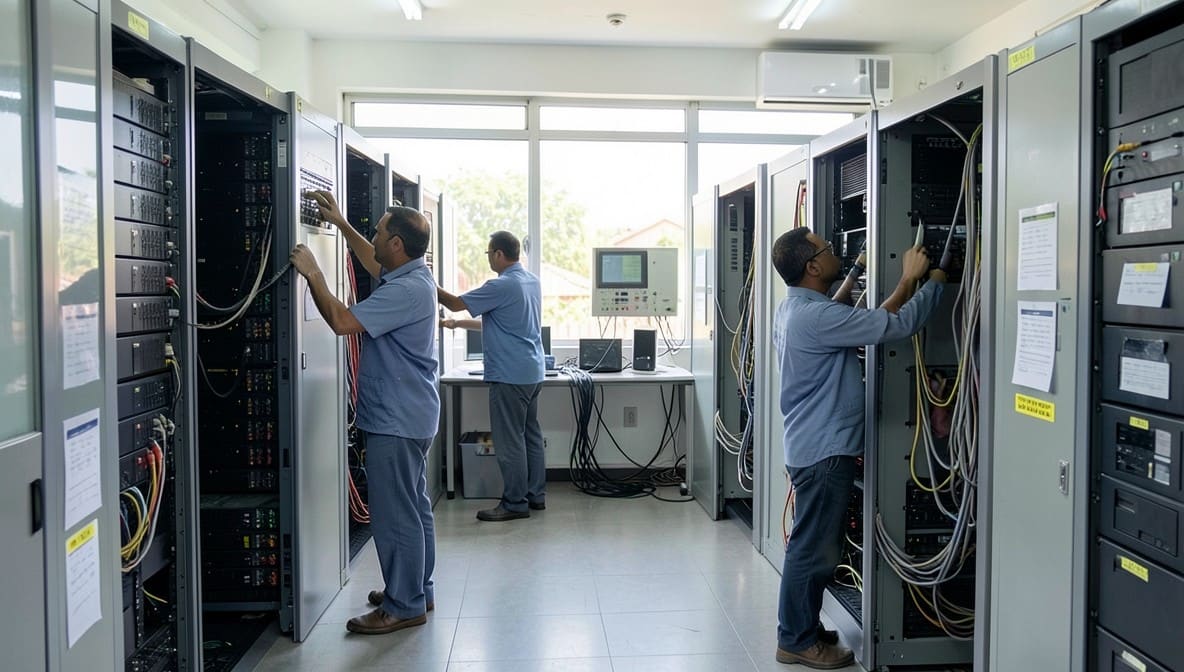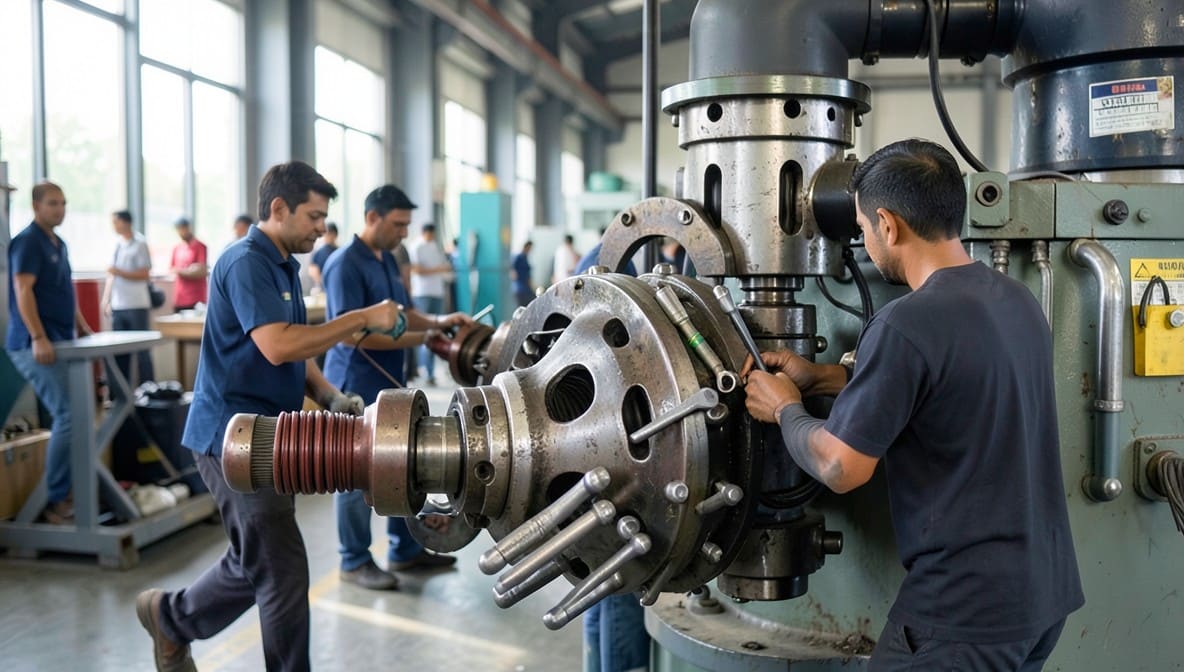
The Customs, Excise & Service Tax Appellate Tribunal (CESTAT) has clarified that CENVAT credit on services used for repair and maintenance of plant and machinery is legally admissible under the CENVAT Credit Rules, 2004, overturning a disallowance of over Rs. 20 lakh and upholding credit of Rs. 67.5 lakh despite procedural irregularities in invoices. This ruling reinforces the distinction between construction services and maintenance activities under tax law, with significant implications for manufacturers across heavy industries.
Background & Facts
The Dispute
The dispute arose from a show cause notice issued on 23.02.2016 by the Principal Commissioner, CGST & Central Excise, Ujjain, proposing to recover central excise duty of Rs. 2,49,40,473/- on alleged wrongful availment of CENVAT credit by Jayaswal NECO Industries Limited, a manufacturer of sponge iron, pig iron, and billets under Chapter 72 of the Central Excise Tariff Act, 1985. The department alleged that the appellant had availed CENVAT credit on ineligible input services, including insurance, works contracts, civil construction, and manpower supply services, during the period April 2011 to January 2014.
Key Facts
- The appellant is engaged in the manufacture of dutiable goods under Chapter 72 of the Central Excise Tariff Act, 1985
- An internal audit by the Central Excise Commissionerate, Raipur, concluded on 01.09.2014, identifying discrepancies in CENVAT credit availed
- A separate audit by the Comptroller and Auditor General (CAG) issued observations on 03.06.2014 for the period April 2011 to March 2013
- A special audit was conducted, with findings communicated via letter dated 22.07.2014
- The appellant voluntarily reversed CENVAT credit of Rs. 33,44,889/- with interest of Rs. 14,06,799/- prior to the issuance of the show cause notice
- The appellant submitted detailed replies to audit memos and the show cause notice dated 23.02.2016
- The show cause notice proposed disallowance of CENVAT credit across 13 categories totaling Rs. 2,49,40,473/-
- The Principal Commissioner’s order dated 29.03.2023 allowed Rs. 1,95,45,909/- and disallowed Rs. 53,94,564/-, while dropping Rs. 67,50,989/-
Procedural History
- 01.09.2014: Final Audit Report issued by Central Excise Commissionerate, Raipur
- 03.06.2014: CAG observations communicated to the appellant
- 22.07.2014: Special audit findings communicated
- 23.02.2016: Show cause notice issued proposing recovery of Rs. 2,49,40,473/-
- 13.03.2016: Detailed reply filed by the appellant
- 29.03.2023: Order-in-Original passed by Principal Commissioner disallowing Rs. 53,94,564/- and dropping Rs. 67,50,989/-
- 13.04.2026: Hearing before CESTAT, Principal Bench, New Delhi
- 02.06.2026: Final Order passed by CESTAT
The Parties' Positions
For the Appellant (Jayaswal NECO Industries Limited)
- Argued that CENVAT credit on marine cargo insurance, works contract services for repair/maintenance of plant and machinery, and manpower supply services for factory maintenance were admissible under Rule 2(l) of the CENVAT Credit Rules, 2004
- Submitted detailed bifurcation of insurance services, including marine cargo insurance (Rs. 9,50,177/-), and clarified that survey services (Rs. 1,20,614/-) were wrongly classified as marine cargo insurance
- Contended that works contract services were for repair and maintenance of existing machinery, not construction of civil structures
- Asserted that manpower supply services were for repair during factory shutdowns, not civil construction
- Relied on M/s. Adbur Private Limited v. CST, Delhi to argue that procedural lapses in invoices cannot override substantive eligibility
For the Respondent (Principal Commissioner, CGST & Central Excise)
- Contended that marine cargo insurance credit was not substantiated with proper documentation
- Argued that works contract services for plant and machinery fell under the exclusion clause of Rule 2(l) as they constituted construction
- Maintained that manpower supply services were for civil construction and thus ineligible
- Asserted that invoices for Rs. 67,50,989/- lacked proper description of services and were invalid under Rule 9(2) of the CENVAT Credit Rules, 2004
Relief Sought
- Appellant sought setting aside of the disallowance of Rs. 53,94,564/- and restoration of CENVAT credit
- Appellant also sought confirmation of the dropped demand of Rs. 67,50,989/-
- Department sought reversal of the allowance of Rs. 67,50,989/- and confirmation of the disallowance of Rs. 53,94,564/-
The Legal Issue
The central question was whether CENVAT credit on services used for repair and maintenance of plant and machinery qualifies as an eligible input service under Rule 2(l) of the CENVAT Credit Rules, 2004, and whether procedural deficiencies in invoices can justify denial of credit when substantive eligibility is established.
Arguments Presented
For the Appellant
The appellant relied on the plain language of Rule 2(l), which explicitly includes services used in relation to "modernization, renovation or repairs of a factory" as eligible input services. Counsel submitted that marine cargo insurance was directly connected to the business of transporting raw materials and finished goods, and the bifurcation of insurance credits was correctly documented. For works contract services, counsel emphasized that the invoices clearly indicated repair and maintenance of existing machinery, not new construction. Regarding manpower supply services, the appellant produced invoices dated 27.04.2011 and 04.05.2011 showing services rendered during factory shutdowns for maintenance, not civil construction. The appellant also cited M/s. Adbur Private Limited v. CST, Delhi to argue that denial of credit on the basis of address mismatches or incomplete invoice descriptions is legally unsustainable when the underlying service is eligible and received.
For the Respondent
The department contended that the appellant failed to justify the availment of marine cargo insurance credit, asserting that the Rs. 9,50,177/- claimed was not supported by documents. It argued that works contract services, even if for repair, fell under the exclusion clause as they were "construction services" under a broad interpretation. The department further maintained that the invoices for Rs. 67,50,989/- lacked service descriptions, violating Rule 9(2) of the CENVAT Credit Rules, which requires invoices to contain a clear description of services rendered. The department insisted that procedural compliance is mandatory and cannot be waived even if the service is otherwise eligible.
The Court's Analysis
The Tribunal undertook a detailed examination of the nature of each disputed service, applying the statutory definition of "input service" under Rule 2(l) of the CENVAT Credit Rules, 2004. The Court emphasized that the exclusion clause in Rule 2(l) applies only to works contract services used for "construction of a building or a civil structure or a part thereof," and not to repair or maintenance of plant and machinery.
"Works contract services in respect of erection, repair, maintenance, painting and fabrication of plant/machinery cannot be construed as construction of a civil structure. Thus, it will do not fall in the excluded category of rule 2(l) of the 2004 Credit Rules."
The Tribunal noted that the Principal Commissioner had erroneously classified survey services (Rs. 1,20,614/-) as marine cargo insurance (Rs. 9,50,177/-), despite the appellant’s clear bifurcation in its reply. The Court held that the department’s assertion that the appellant failed to submit documents was factually incorrect, as the detailed insurance credit schedule was part of the show cause reply.
Regarding the Rs. 26,880/- disallowed for manpower supply services, the Tribunal accepted the appellant’s evidence that the services were rendered during factory shutdowns for maintenance of machinery, not civil construction. The invoices clearly indicated the nature of work, and the Tribunal held that such services are integral to manufacturing and thus qualify as input services.
On the issue of Rs. 67,50,989/- credit availed on invoices lacking service descriptions, the Tribunal relied on its own precedent in M/s. Adbur Private Limited v. CST, Delhi, observing that denial of credit on technical grounds of invoice format cannot override the substantive eligibility of the service. The Court held that the appellant had established receipt of services, payment of service tax by the provider, and the eligibility of the service under Rule 2(l). The procedural lapse in invoice description, without evidence of fraud or evasion, cannot justify denial of credit.
The Verdict
The appellant succeeded on all counts. The CESTAT set aside the disallowance of CENVAT credit amounting to Rs. 53,94,564/- and allowed the credit in full. The department’s appeal against the allowance of Rs. 67,50,989/- was dismissed. The order dated 29.03.2023 was modified to reflect full admissibility of both amounts. No penalty or interest was imposed. The Tribunal directed the department to process the refund of the disallowed credit within 6 weeks of the order date.
What This Means For Similar Cases
Repair and Maintenance Are Not Construction
- Practitioners must distinguish between "construction" and "repair/maintenance" when advising manufacturers on CENVAT eligibility
- Invoices and internal records should clearly document the nature of work performed on plant and machinery
- Any disallowance based on the assumption that works contract services are automatically excluded must be challenged with documentary evidence of maintenance intent
Procedural Lapses Cannot Override Substantive Eligibility
- CENVAT credit cannot be denied solely because invoices lack detailed service descriptions, if the service is eligible and received
- The burden shifts to the department to prove fraud or evasion, not merely procedural non-compliance
- Tax authorities must apply the principle of substance over form when evaluating credit claims under Rule 9(2)
Insurance and Manpower Services Are Eligible if Directly Connected
- Marine cargo insurance, storage policies, and survey fees directly linked to manufacturing logistics qualify as input services
- Manpower supply services for factory maintenance, even if provided by third parties, are eligible if used in relation to modernization or repair
- Taxpayers should maintain clear service-wise records and bifurcate insurance credits to avoid misclassification