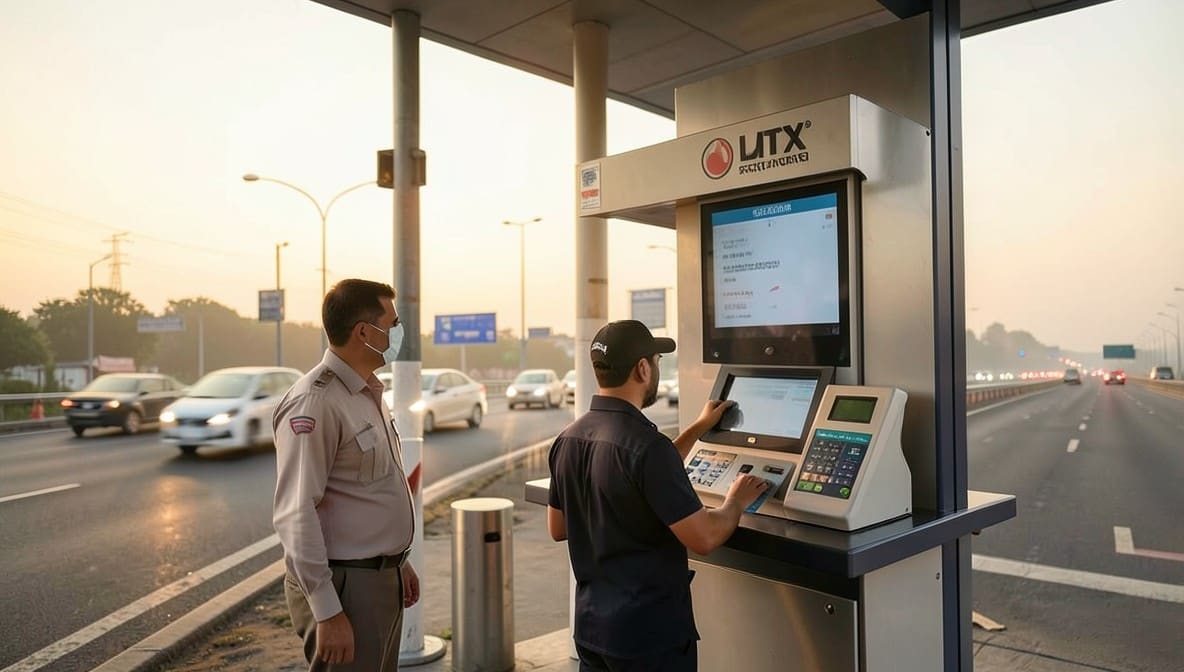
The Central Excise and Service Tax Appellate Tribunal (CESTAT), Hyderabad, has clarified that the transfer of toll collection rights by the National Highways Authority of India (NHAI) to private contractors for fixed consideration constitutes a taxable service, irrespective of NHAI’s statutory status. This ruling resolves long-standing ambiguity on whether such commercial arrangements fall within the negative list exemptions under the Finance Act, 1994.
Background & Facts
The Dispute
The present appeals arise from three separate orders-in-original passed by the Commissioner of Central Excise & Service Tax, Visakhapatnam, demanding Service Tax, interest, and penalties on amounts received by NHAI from contractors for the transfer of rights to collect user fees (tolls) at various toll plazas on national highways. The core dispute centers on whether NHAI’s receipt of lump-sum payments from contractors for exclusive rights to collect tolls constitutes a taxable service under the Service Tax regime applicable between 2005 and 2017.
Key Facts
- NHAI, a statutory body constituted under the National Highways Authority of India Act, 1988, is empowered under Section 7 of the National Highways Act, 1956 to levy and collect tolls.
- Between 2005 and 2017, NHAI entered into contracts with private contractors for the exclusive right to collect tolls at specific toll plazas, including Krishnavaram on NH-5.
- Under these contracts, contractors were required to pay a fixed weekly amount to NHAI, irrespective of actual toll collections or traffic volume.
- For the period 20/01/2011 to 19/01/2012, the contractor agreed to pay Rs. 35,82,00,000 as lump-sum consideration for one year’s toll collection rights.
- NHAI did not register for Service Tax, did not file returns, and did not pay any tax on these receipts.
- The Department assessed Service Tax liability for three distinct periods: (i) pre-01.07.2012 (under franchise service), (ii) 01.07.2012 to 31.03.2016 (under negative list regime), and (iii) 01.04.2016 to 30.06.2017 (post-amendment period).
- The Department invoked the extended period of limitation under Section 73(1) of the Finance Act, 1994, alleging suppression of facts.
Procedural History
- 31.01.2014: Order-in-Original No. 04/2014 (BVSNK) passed by Commissioner, Visakhapatnam, demanding Service Tax, interest, and penalty for period up to 30.06.2012.
- 14.02.2017: Order-in-Original No. KKD-EXCUS-COM-28/16-17 passed for period 01.07.2012 to 31.03.2016.
- 30.06.2018: Order-in-Original No. VSP-EXCUS-001-COM-005-18-19 passed for period 01.04.2016 to 30.06.2017.
- 21482/2014: Appeal filed by NHAI against order dated 31.01.2014.
- 30677/2017: Appeal filed against order dated 14.02.2017.
- 31212/2018: Appeal filed against order dated 30.06.2018.
- 05.02.2026: Hearing held before CESTAT Hyderabad.
- 02.06.2026: Final order passed dismissing all appeals.
The Parties' Positions
NHAI (Appellant): Argued that:
- Toll collection is a statutory function under the NHAI Act, 1988, and thus a sovereign function immune from taxation.
- The transaction is not a service but a delegation of a statutory duty.
- The consideration received is not for a service but for the transfer of a statutory right, which is non-taxable.
- The activity falls under Section 66D(h) of the Finance Act (exemption for access to roads via toll).
- Circular No. 152/3/2012-ST dated 22.02.2012 explicitly excludes tolls from Service Tax.
- No suppression of facts; bonafide belief in non-taxability precludes penalty.
Department (Respondent): Contended that:
- NHAI is a body corporate acting on business principles under Section 10 of the NHAI Act.
- The transaction is a commercial assignment of exploitable rights, not a sovereign function.
- The consideration paid is for the transfer of a commercial franchise, not for toll collection itself.
- The negative list exemption under Section 66D(h) applies only to tolls collected from road users, not to payments received by NHAI from contractors.
- Circular No. 152/2012 applies only to tolls collected by SPVs from users, not to lump-sum transfers to contractors.
- NHAI’s failure to register or file returns negates any claim of bonafide belief.
Relief Sought
NHAI sought quashing of the demand notices, cancellation of interest and penalties, and declaration that the transfer of toll collection rights is not a taxable service. The Department sought confirmation of the original demands, including interest and penalties.
The Legal Issue
The central question was whether the transfer of exclusive rights to collect tolls from road users to private contractors for a fixed, non-variable consideration constitutes a taxable service under the Finance Act, 1994, and whether such activity is exempt under Section 66D(a) or (h) as a sovereign function or as access to a road.
Arguments Presented
For the Appellant
NHAI relied on Ideal Road Builders Pvt Ltd. v. Commissioner of Service Tax and MMK Toll Road Pvt Ltd. v. Commissioner of Service Tax to argue that toll collection is non-taxable. It cited Circular No. 152/3/2012-ST to assert that tolls paid by users are outside the tax net. It further invoked Collector of Central Excise v. Dhiren Chemical Industries to argue that departmental circulars are binding. It also relied on Hindustan Steel Ltd. v. State of Orissa and Akbar Badruddin Jiwani v. Collector of Customs to contend that bonafide belief negates penalty. It emphasized that NHAI acts as an agent of the Central Government and that the transaction falls under Section 66D(a) as a service rendered by the Government.
For the Respondent
The Department countered that NHAI’s role is commercial, not sovereign, as it operates on business principles under Section 10 of the NHAI Act. It relied on L&T v. Commissioner of Service Tax and Navayuga Engineering Co. Ltd. v. Commissioner of Central Excise to argue that compensation received for granting toll collection rights is taxable. It distinguished Circular No. 152/2012 as applicable only to tolls collected by SPVs from users, not to lump-sum transfers to contractors. It also cited Notification No. 22/2016-ST to argue that exemption for natural resources does not extend to toll rights.
The Court's Analysis
The Tribunal conducted a detailed examination of the contractual terms, statutory framework, and judicial precedents. It emphasized that the nature of the transaction must be determined by its substance, not its form.
"The agreement clearly establishes that NHAI does not merely authorize contractors to assist in collection of toll, it transfers valuable and exclusive commercial right to collect user fee and appropriate the collection for fixed consideration."
The Tribunal held that the contractors pay a predetermined amount irrespective of actual toll collections, indicating that the consideration is for the transfer of a commercial right, not for toll collection itself. This distinguishes the transaction from the mere collection of statutory tolls.
The Tribunal rejected NHAI’s claim of sovereign immunity, noting that Section 10 of the NHAI Act mandates it to act on business principles. Sovereign functions such as defense or law enforcement cannot be delegated, but commercial exploitation of infrastructure rights can.
"Transfer of toll collection rights through competitive bidding for commercial consideration is manifestly a business activity and not an inalienable sovereign function."
The Tribunal further held that Section 66D(h) exemption for "access to a road or bridge on payment of toll charges" applies only to the toll collected from end-users, not to the consideration received by NHAI from contractors. The latter is a separate economic transaction.
The Tribunal also distinguished Circular No. 152/2012, which addresses tolls collected by SPVs from users, and noted that the present case involves a direct transfer of rights to contractors for lump-sum payment - a fundamentally different arrangement.
Regarding the extended period of limitation, the Tribunal found that NHAI’s failure to register, file returns, or disclose the receipts over multiple years negated any claim of bonafide belief. The Tribunal cited Navayuga Engineering Co. Ltd. as directly on point and binding.
The Verdict
The appeals were dismissed. The Tribunal upheld the Service Tax demand, interest, and penalties imposed by the Department. NHAI is liable for Service Tax on the lump-sum amounts received from contractors for the transfer of toll collection rights for the periods 2005 - 2012 (as franchise service) and 2012 - 2017 (as taxable service). Interest under Section 75 of the Finance Act, 1994, is payable on the unpaid tax from the due date until payment. Penalties under Section 78 are confirmed. The Department’s invocation of the extended period of limitation under Section 73(1) is sustained.
What This Means For Similar Cases
Commercial Transfer of Public Infrastructure Rights Is Taxable
- Practitioners must now treat any fixed-fee transfer of rights to collect tolls, parking fees, or usage charges from public infrastructure as a taxable service.
- Even if the entity is a statutory body like NHAI, NHA, or state highway corporations, commercial exploitation of statutory rights triggers tax liability.
- The mere fact that the underlying activity is statutorily mandated does not immunize the commercial arrangement from taxation.
Negative List Exemptions Are Narrowly Construed
- Section 66D(h) exemption applies only to the toll paid by the end-user, not to payments received by intermediaries for transferring collection rights.
- Any arrangement where a public authority receives consideration from a third party for granting exclusive access rights will not qualify for negative list exemption.
- Circulars and notifications must be interpreted strictly; exemptions for toll collection do not extend to franchise arrangements.
Bonafide Belief Cannot Shield Non-Compliance
- Failure to register, file returns, or disclose income over multiple years negates claims of bonafide belief.
- Taxpayers cannot rely on subjective interpretations of law when statutory provisions and judicial precedents are clear.
- Penalties and extended limitation periods will be applied where there is systemic non-compliance, even if the taxpayer is a government entity.
Precedent Binding on All Jurisdictions
- The Navayuga Engineering Co. Ltd. decision, rendered by this very bench, is binding on all similar cases.
- Tribunals across India must follow this precedent when adjudicating disputes involving transfer of toll collection rights.
- Practitioners should cite this judgment in all pending and future cases involving PPP models, concession agreements, and toll rights.