The Chennai Regional Bench of the Customs, Excise and Service Tax Appellate Tribunal has delivered a significant ruling clarifying the limits of revenue authorities in rejecting declared transaction values for imported used garments. The judgment reinforces that valuation enhancements under the Customs Valuation Rules require concrete, comparable evidence and cannot be based on speculative or generalized assumptions. This decision provides critical guidance for importers of heterogeneous goods and reiterates the principle that procedural compliance must not override substantive legal safeguards.
Background & Facts
The Dispute
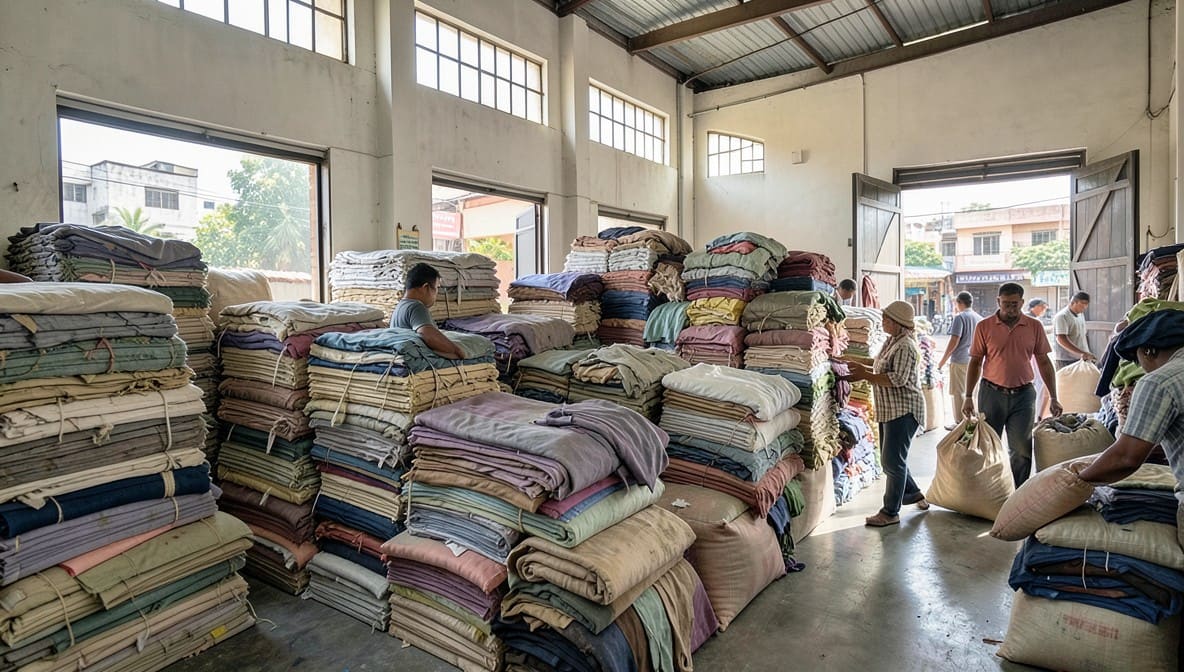
The present batch of four appeals arises from adjudication proceedings initiated by the Chennai II Commissionerate against M/s Kayem Exim Private Limited and M/s Eskay Enterprises (collectively, "Appellants") for the import of used garments between July 2017 and May 2018. The Appellants declared the goods as "old and worn unmutilated clothing fumigated" under CTH 6309 0000, declaring values based on supplier invoices. Upon examination, the adjudicating authority found the goods to be mixed lots of used clothing and rejected the declared transaction value, enhancing the assessable value under Rule 5 of the Customs Valuation Rules, 2007. The goods were also confiscated under Sections 111(d) and 111(m) of the Customs Act, 1962, with redemption fines and penalties imposed.
Key Facts
- The Appellants imported mixed consignments of used garments from various overseas suppliers between July 2017 and May 2018
- Each consignment varied significantly in quality, condition, color, size, and usability
- Declared values were supported by commercial invoices, packing lists, and bills of lading
- Examination reports confirmed the goods were correctly described as used clothing
- No DGFT license was produced for import of second-hand garments, which are restricted under the Foreign Trade Policy
- The adjudicating authority rejected the declared value on the ground that it appeared lower than other imports, without establishing comparability
- No market survey or evidence of additional consideration flowing to suppliers was produced
- The Appellants made no attempt to conceal the nature of goods or misdeclare quantity or origin
Procedural History
- July 2017 to May 2018: Multiple Bills of Entry filed by Appellants for import of used garments
- 2018: Adjudication proceedings initiated by Chennai II Commissionerate
- 23.05.2018: Commissioner of Customs (Appeals-II) passed Order-in-Appeal C.Cus.II No. 190-324/2018, upholding enhancement of value, confiscation, and penalties
- 2018: Appellants filed four appeals before the Customs, Excise and Service Tax Appellate Tribunal (CESTAT)
- 27.01.2026: Hearing conducted before CESTAT Chennai Regional Bench
- 02.06.2026: Final Order pronounced
The Parties' Positions
For the Appellants
- Declared transaction value was genuine, supported by invoices and documentation
- No evidence of additional consideration or undervaluation was produced by the Department
- Goods were correctly declared as used clothing; no misdeclaration occurred
- Valuation under Rule 5 was arbitrary, lacking comparability in quality, quantity, or commercial level
- Confiscation under Section 111(m) was unjustified as there was no concealment or misdeclaration
- Redemption fine and penalty were excessive, disproportionate, and punitive
- Relied on Laxmi Colour Labs v. Collector of Customs, Prayas Woollens Pvt. Ltd., and BIL Power Ltd.
For the Respondent
- Declared values were unreasonably low and did not reflect market value
- Enhancement was based on contemporaneous import data available with the Department
- Import of second-hand garments without DGFT license is prohibited under Foreign Trade Policy
- Confiscation under Sections 111(d) and 111(m) was justified
- Redemption fine and penalty were reasonable deterrents against policy violations
- Appellants had accepted enhanced value at clearance and were estopped from challenging it later
Relief Sought
The Appellants sought:
- Setting aside of the enhancement of assessable value
- Quashing of confiscation under Section 111(m)
- Reduction of redemption fine to a proportionate level
- Reduction or waiver of penalty under Section 112(a)
- Acceptance of declared transaction value as the correct assessable value
The Legal Issue
The central questions were: (1) Whether the rejection of declared transaction value under Rule 12 of the Customs Valuation Rules, 2007 and its replacement under Rule 5 is legally sustainable without evidence of comparability; (2) Whether confiscation under Section 111(m) is justified in the absence of misdeclaration; and (3) Whether the redemption fine and penalty imposed are proportionate to the violation and the nature of the goods.
Arguments Presented
For the Appellant
The Appellants contended that the declared transaction value must be accepted unless the Department proves it is unreliable under Rule 12. They emphasized that the goods were heterogeneous used garments with no standard quality, making comparison with other imports invalid. They cited Laxmi Colour Labs to reject the claim of estoppel, arguing that clearance under compulsion to avoid demurrage does not waive legal rights. They relied on Prayas Woollens and BIL Power Ltd. to show that uniform valuation without evidence of similarity is illegal. They further argued that redemption fine must reflect actual profit margin, not serve as punishment, and that penalty should be moderate where no fraudulent intent exists.
For the Respondent
The Revenue argued that the declared values were below market rates and that contemporaneous import data justified enhancement. It claimed that import of second-hand garments without DGFT license rendered them liable for confiscation under both Sections 111(d) and 111(m). It contended that the redemption fine and penalty were necessary deterrents against policy violations. It also asserted that the Appellants had acquiesced to the enhanced value at the time of clearance, thereby barring subsequent challenge.
The Court's Analysis
The Tribunal began by rejecting the Revenue’s argument that acceptance of enhanced value at clearance creates an estoppel. It cited Laxmi Colour Labs v. Collector of Customs to affirm that "there is no estoppel in taxation matters," and compliance under compulsion to avoid detention charges cannot waive the right to challenge valuation in appeal.
"Transaction value cannot be rejected merely because the declared price appears low in comparison with other imports. Unless reliable evidence is produced to establish that the declared price is not genuine, the transaction value must be accepted."
The Tribunal then examined the Department’s reliance on contemporaneous imports. It noted that no evidence was produced to demonstrate that the goods used for comparison were identical or similar in quality, condition, country of origin, or commercial level. The goods imported were explicitly described as mixed, heterogeneous lots of used clothing, inherently variable in composition. The Tribunal held that applying a uniform per-kilogram value without individual assessment violated the sequential and evidentiary requirements of Rule 5.
"Since no evidence was produced by the Revenue, enhancement of the price of the impugned goods appears to be without any basis... Due to the said deficiency in the whole proceeding, we are of the considered view that there is no sufficient basis for revenue to enhance the value of imported goods."
On confiscation, the Tribunal upheld confiscation under Section 111(d) since the import of second-hand garments without a DGFT license is a clear violation of the Foreign Trade Policy. However, it set aside confiscation under Section 111(m), which requires misdeclaration or concealment. The examination reports confirmed the goods were correctly declared as used clothing, and there was no evidence of fraudulent intent.
Regarding redemption fine, the Tribunal rejected the arbitrary imposition and cited Dharshan Singh & Company and K.M. Cherian, emphasizing that the fine must bear a reasonable nexus to the profit margin. It noted the absence of any market survey or evidence of substantial profit, and highlighted the socially sensitive nature of the trade - used garments sold in economically weaker markets. It concluded that a 10% redemption fine of the declared invoice value was fair and proportionate.
On penalty under Section 112(a), the Tribunal acknowledged the statutory violation but found no mens rea. It held that while a penalty was warranted to deter non-compliance, the absence of fraud or concealment justified a moderate imposition. A penalty of 5% of the declared value was deemed appropriate as a measured deterrent.
The Verdict
The Appellants succeeded in part. The Tribunal set aside the enhancement of assessable value and directed acceptance of the declared transaction value. Confiscation under Section 111(m) was set aside, but confiscation under Section 111(d) was upheld. The redemption fine was reduced to 10% of the declared invoice value, and the penalty under Section 112(a) was reduced to 5% of the declared value. The impugned orders were modified accordingly, with consequential relief to be granted in accordance with law.
What This Means For Similar Cases
Transaction Value Must Be Accepted Unless Proven Unreliable
- Practitioners must insist that revenue authorities produce concrete, documented evidence of non-genuineness before challenging transaction value
- Generalized comparisons with other imports without matching quality, quantity, or commercial level are legally insufficient
- Importers should document and retain all invoices, correspondence, and shipping records to substantiate declared values
Confiscation Under Section 111(m) Requires Misdeclaration
- Confiscation under Section 111(m) cannot be applied merely because goods are restricted; there must be proof of concealment or misdeclaration
- Correct declaration of restricted goods, even without a license, attracts only Section 111(d) confiscation
- Examination reports and declaration accuracy are critical defenses against Section 111(m) proceedings
Redemption Fine and Penalty Must Be Proportionate
- Redemption fines must reflect actual or estimated profit margin, not serve as punitive measures
- In cases involving low-margin, socially sensitive goods (e.g., used clothing), authorities must consider economic context
- Penalties under Section 112(a) should be moderate where no fraudulent intent is established
- Practitioners should request market surveys or profit analyses before agreeing to any fine or penalty