Bombay High Court judgments

2128 Bombay High Court judgments explained in plain English: what was decided, the law applied and why it matters. Page 21 of 89.

Natural Justice | Denial of Inquiry Report in Departmental Proceedings Vitiates Penalty; Bombay HC Quashes Compulsory Retirement : Bombay HC (Aurangabad Bench)
|Bombay High Court

Natural Justice | Denial of Inquiry Report in Departmental Proceedings Vitiates Penalty; Bombay HC Quashes Compulsory Retirement : Bombay HC (Aurangabad Bench)

The Bombay High Court has held that denying a government employee access to the Inquiry Officer’s report before imposing compulsory retirement violates the fundamental principles of natural justice. This ruling reinforces that procedural fairness in disciplinary actions is non-negotiable - especially in public sector employment where livelihoods hang in the balance.

CPC Order XXI Rule 41(3) | Settlement Does Not Vacate Civil Detention But Justifies Remission in Interest of Justice : Bombay HC
Case Law Analysis
|Bombay High Court

CPC Order XXI Rule 41(3) | Settlement Does Not Vacate Civil Detention But Justifies Remission in Interest of Justice : Bombay HC

The Bombay High Court held that even when parties settle a civil execution dispute, prior civil detention under CPC Order XXI Rule 41(3) for disobedience of court orders is not automatically nullified. However, the court may remit the sentence in the interest of justice, affirming that judicial discipline and compliance remain paramount even after resolution. This clarifies the limits of settlement in execution proceedings and impacts judgment debtors facing detention.

Court Receiver Cannot Be Discharged Until Underlying Arbitration Dispute Is Resolved | Section 9 Arbitration Act : Bombay HC
Case Law Analysis
|Bombay High Court

Court Receiver Cannot Be Discharged Until Underlying Arbitration Dispute Is Resolved | Section 9 Arbitration Act : Bombay HC

The Bombay High Court has ruled that a Court Receiver appointed under Section 9 of the Arbitration Act remains in equitable custody until the substantive dispute between the parties is finally settled, regardless of a subsequent consent award. This ensures asset preservation aligns with the arbitration’s ultimate outcome, affecting parties relying on interim receiverships in complex partnership or property disputes.

BNS Section 143 + ITA Sections 3-5 | Bail Granted to Lodge Owner Without Direct Exploitation of Major Victim : Bombay HC (Nagpur Bench)
Case Law Analysis
|Bombay High Court

BNS Section 143 + ITA Sections 3-5 | Bail Granted to Lodge Owner Without Direct Exploitation of Major Victim : Bombay HC (Nagpur Bench)

The Bombay High Court held that mere ownership of a premises where prostitution occurs, without evidence of active involvement or exploitation, does not justify denial of bail when the victim is an adult. This clarifies the threshold for criminal liability under the new Bharatiya Nyaya Sanhita and Immoral Traffic Prevention Act, protecting property owners from automatic presumption of guilt.

Corporate Liability for Outsourced Safety Failures | No Criminal Liability Without Direct Control or Knowledge Under BNS Sections 105, 125 : Bombay HC
Case Law Analysis
|Bombay High Court

Corporate Liability for Outsourced Safety Failures | No Criminal Liability Without Direct Control or Knowledge Under BNS Sections 105, 125 : Bombay HC

The Bombay High Court quashed criminal charges against Rebel Foods' General Manager, holding that outsourcing specialized work to a licensed contractor absolves the principal of criminal liability under BNS 2023 unless there is direct control over unsafe practices or knowledge of imminent danger. This sets a critical precedent for gig economy platforms and corporate clients relying on third-party vendors for high-risk operations.

Compassionate Appointment | Substitution of Name Permitted on Waiting List Even After Expiry of 45-Year Age Limit Under Revised Policy : Bombay HC (Aurangabad Bench)
|Bombay High Court

Compassionate Appointment | Substitution of Name Permitted on Waiting List Even After Expiry of 45-Year Age Limit Under Revised Policy : Bombay HC (Aurangabad Bench)

The Bombay High Court has ruled that a dependent’s name may be substituted on a compassionate appointment waiting list even after the original applicant has exceeded the statutory age limit of 45 years, provided the substitution arises from genuine hardship and the policy permits such flexibility. This sets a precedent for humane interpretation of welfare-based appointments, benefiting families who face delays in administrative processing due to bureaucratic inertia.

Exoneration in Departmental Proceedings Bars Criminal Prosecution Under IPC Sections 409, 420, 465, 468, 471 | Quashing of FIR for Abuse of Process : Bombay HC (Aurangabad Bench)
Case Law Analysis
|Bombay High Court

Exoneration in Departmental Proceedings Bars Criminal Prosecution Under IPC Sections 409, 420, 465, 468, 471 | Quashing of FIR for Abuse of Process : Bombay HC (Aurangabad Bench)

Bombay High Court quashed an FIR under IPC Sections 409, 420, 465, 468, and 471, ruling that continuing criminal prosecution after exoneration in departmental proceedings amounts to abuse of process. The judgment reinforces that parallel proceedings without fresh evidence violate principles of natural justice and fairness, offering relief to public servants facing dual proceedings for the same alleged misconduct.

Section 28A Land Acquisition Act | 6-Month Deadline for Disposal of Enhanced Compensation Applications: Bombay HC
|Bombay High Court

Section 28A Land Acquisition Act | 6-Month Deadline for Disposal of Enhanced Compensation Applications: Bombay HC

The Bombay High Court has mandated that Land Acquisition Officers must decide pending Section 28A applications for enhanced compensation within six months, ending decades-long delays that denied landowners timely justice. This directive ensures enforceable timelines for statutory remedies under the 1894 Act, directly impacting thousands of pending claims across Maharashtra.

Condonation of Delay | False Pleadings Disentitle Equitable Relief Under Maharashtra Co-operative Societies Act : Bombay HC
Case Law Analysis
|Bombay High Court

Condonation of Delay | False Pleadings Disentitle Equitable Relief Under Maharashtra Co-operative Societies Act : Bombay HC

The Bombay High Court has ruled that submitting false or misleading statements in a condonation of delay application automatically disqualifies a party from claiming equitable relief under the Maharashtra Co-operative Societies Act. This sets a critical precedent for cooperative housing disputes, where procedural integrity now overrides substantive claims when deception is proven.

Bharatiya Nyaya Sanhita Section 318(4) | Bail Granted in Trust Property Disputes Where Case Rests Solely on Documentary Evidence: Bombay HC (Aurangabad)
Case Law Analysis
|Bombay High Court

Bharatiya Nyaya Sanhita Section 318(4) | Bail Granted in Trust Property Disputes Where Case Rests Solely on Documentary Evidence: Bombay HC (Aurangabad)

The Bombay High Court has ruled that custodial detention is unnecessary in cases where trust property disputes are substantiated by documentary evidence and no independent criminal intent is established, effectively limiting criminal prosecution to cases beyond civil boundary disputes. This sets a critical precedent for protecting trustees and managers from weaponized criminal complaints in civil matters.

Criminal Antecedents Alone Cannot Deny Anticipatory Bail Under BNS & FSS Act | Bombay HC (Nagpur Bench)
Case Law Analysis
|Bombay High Court

Criminal Antecedents Alone Cannot Deny Anticipatory Bail Under BNS & FSS Act | Bombay HC (Nagpur Bench)

The Bombay High Court has ruled that prior criminal history, without evidence of flight risk or threat to investigation, cannot be the sole ground to reject anticipatory bail under the Bharatiya Nyaya Sanhita and Food Safety Act. This reinforces the Supreme Court’s stance in Ayub Khan and protects accused persons from automatic denial based on past charges - even when facing serious non-bailable offences.

Public Contract Payments | Undisputed Running Bills Must Be Paid Within Two Weeks Under Writ Jurisdiction: Bombay HC
Case Law Analysis
|Bombay High Court

Public Contract Payments | Undisputed Running Bills Must Be Paid Within Two Weeks Under Writ Jurisdiction: Bombay HC

The Bombay High Court has mandated that state departments must release undisputed running bills to contractors within two weeks, or face judicial consequences. This ruling reinforces contractual fairness in public infrastructure projects and protects contractors from financial collapse due to administrative delay, directly safeguarding public interest and project continuity.

Natural Justice | Denial of Cross-Examination Must Be Proven, Not Presumed; Declined Opportunity ≠ Denied Right : Bombay HC
Case Law Analysis
|Bombay High Court

Natural Justice | Denial of Cross-Examination Must Be Proven, Not Presumed; Declined Opportunity ≠ Denied Right : Bombay HC

The Bombay High Court clarified that in disciplinary proceedings, a mere refusal to exercise an offered chance to cross-examine does not amount to a violation of natural justice - the burden lies on the employee to prove actual denial, not assume it. This sets a critical precedent for universities and public employers handling service disputes, reinforcing that procedural fairness requires active assertion, not passive assumption.

Natural Justice | Distress Warrant for Maintenance Arrears Cannot Be Cancelled Without Notice to Debtor: Bombay HC
Case Law Analysis
|Bombay High Court

Natural Justice | Distress Warrant for Maintenance Arrears Cannot Be Cancelled Without Notice to Debtor: Bombay HC

The Bombay High Court has ruled that cancelling a distress warrant for maintenance arrears without serving notice to the recipient violates fundamental principles of natural justice. This sets a critical precedent for family courts: financial recovery orders must follow due process, even when dealing with persistent defaulters, ensuring procedural fairness overrides summary disposal.

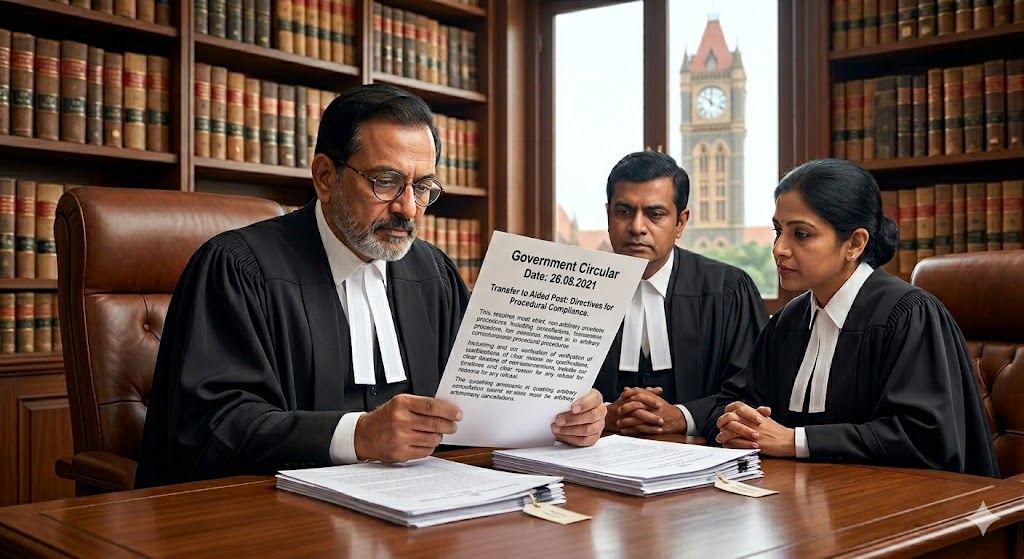
Government Circular 26.08.2021 | Transfer to Aided Post Requires Strict Procedural Compliance; Bombay HC Quashes Arbitrary Cancellation : Bombay HC
Case Law Analysis
|Bombay High Court

Government Circular 26.08.2021 | Transfer to Aided Post Requires Strict Procedural Compliance; Bombay HC Quashes Arbitrary Cancellation : Bombay HC

The Bombay HC has invalidated the cancellation of a teacher’s transfer to an aided post, holding that authorities must strictly follow the procedural safeguards mandated by Government Circular 26.08.2021. This ruling binds all educational institutions in Maharashtra to prioritize documented qualifications and transparent process over discretionary decisions, safeguarding service rights in public education appointments.

Anticipatory Bail | Absence of Injury Certificate Undermines Seriousness of Assault Allegations Under BNS Section 118(1): Bombay HC (Aurangabad Bench)
Case Law Analysis
|Bombay High Court

Anticipatory Bail | Absence of Injury Certificate Undermines Seriousness of Assault Allegations Under BNS Section 118(1): Bombay HC (Aurangabad Bench)

The Bombay High Court granted anticipatory bail where no injury certificate was produced to substantiate assault claims under BNS Section 118(1), establishing that procedural gaps in medical evidence can critically weaken the prosecution’s case. This ruling reinforces proportionality in bail decisions and signals that courts will not presume gravity from uncorroborated allegations alone, benefiting accused persons in non-fatal assault cases.

Consumer Protection Act Section 2(1)(g) | Manufacturer and Dealer Jointly Liable for 58-Day Extended Warranty Repair Delay: Maharashtra State Commission
Case Law Analysis
|Bombay High Court

Consumer Protection Act Section 2(1)(g) | Manufacturer and Dealer Jointly Liable for 58-Day Extended Warranty Repair Delay: Maharashtra State Commission

The Maharashtra State Consumer Commission held that both the car manufacturer and authorized dealer are jointly liable for deficiency in service when an extended warranty repair takes 58 days, awarding ₹3 lakh for loss of use and mental agony. This sets a critical precedent: warranty obligations are not delegated away - both parties remain accountable for service failures under the Consumer Protection Act.

Section 127 MRTP Act | Land Reservation Lapses Automatically After 12-Year Inaction & Purchase Notice: Bombay HC (Aurangabad Bench)
Case Law Analysis
|Bombay High Court

Section 127 MRTP Act | Land Reservation Lapses Automatically After 12-Year Inaction & Purchase Notice: Bombay HC (Aurangabad Bench)

Bombay High Court reaffirms that land reservations under Section 127 of the MRTP Act lapse by operation of law if authorities fail to acquire or develop the land within 12 years of a valid purchase notice. Landowners are entitled to de-reservation without being forced to accept Transferable Development Rights (TDR), protecting their property rights against administrative inaction.

Section 482 CrPC | FIR Quashed When Prosecution Relies Solely on Uncorroborated Co-Accused Statement : Bombay HC (Aurangabad Bench)
Case Law Analysis
|Bombay High Court

Section 482 CrPC | FIR Quashed When Prosecution Relies Solely on Uncorroborated Co-Accused Statement : Bombay HC (Aurangabad Bench)

Bombay High Court rules that an FIR under Sections 328, 272, 273, and 34 IPC cannot stand if the prosecution's case rests exclusively on a co-accused's statement without independent material evidence. The judgment reinforces the principle that corroboration is essential for sustaining criminal proceedings where accusations lack substantive proof.

Section 354A MMC Act | Roof Replacement with Different Material Requires Prior Municipal Permission : Bombay HC
Case Law Analysis
|Bombay High Court

Section 354A MMC Act | Roof Replacement with Different Material Requires Prior Municipal Permission : Bombay HC

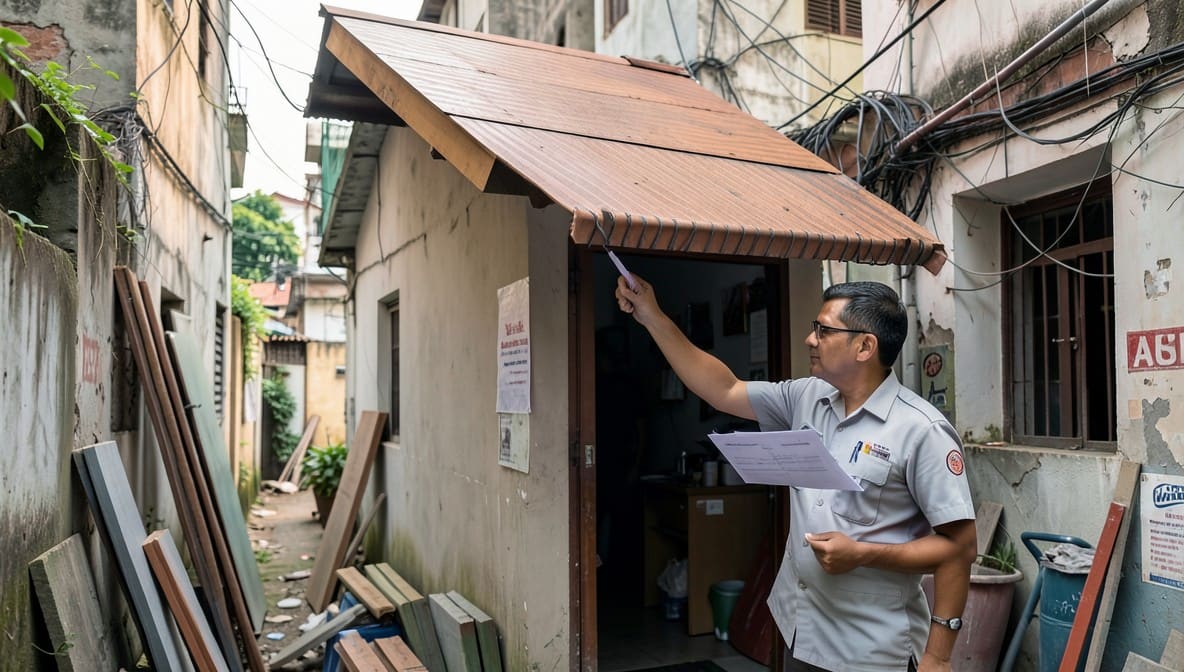
Bombay High Court rules that replacing a roof with a different material (e.g., Ladi Coba slab instead of A.C. sheets) constitutes an 'alteration' under Section 354A of the Mumbai Municipal Corporation Act, mandating prior permission. The Court dismissed reliance on a 1987 circular, reinforcing strict compliance with statutory provisions for property modifications.

Section 149 MRTP Act | Civil Courts Can Examine Nullity of Planning Authority Notices Despite Finality Clause: Bombay HC
Case Law Analysis
|Bombay High Court

Section 149 MRTP Act | Civil Courts Can Examine Nullity of Planning Authority Notices Despite Finality Clause: Bombay HC

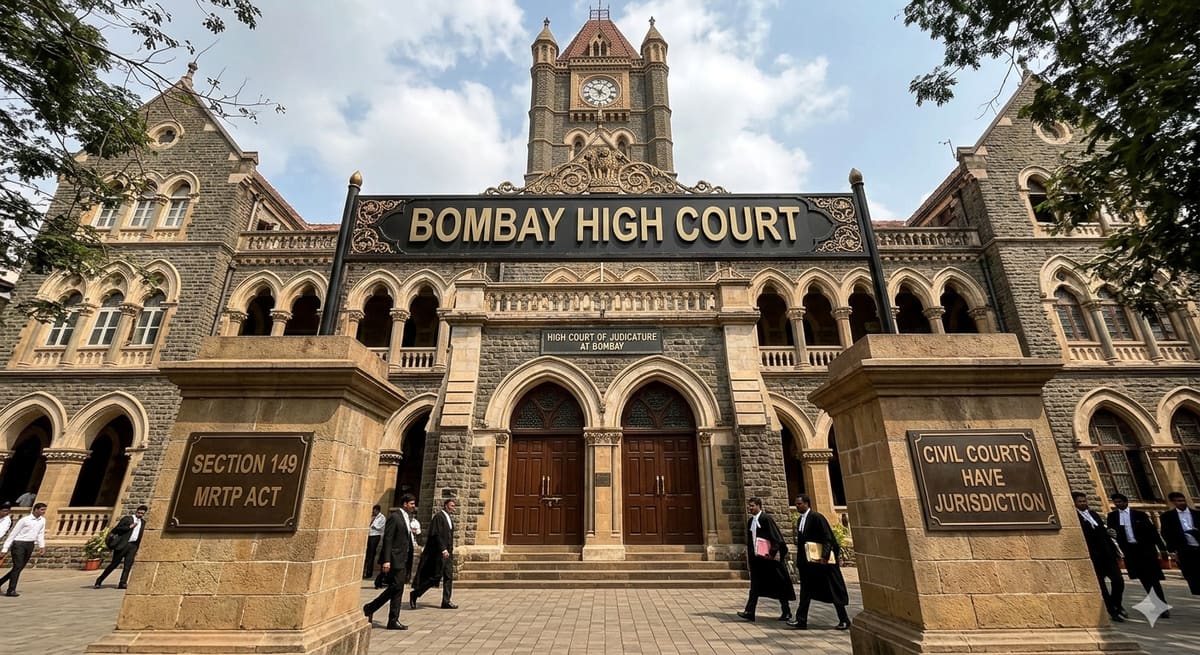
Bombay High Court holds that civil courts retain jurisdiction to scrutinize notices under Section 149 of the MRTP Act if they are prima facie nullities, even where the provision bars further appeals. Plaintiffs must prove jurisdictional errors or arbitrariness-not mere illegality-to challenge such notices. This ruling clarifies the scope of judicial review over planning authority orders.

Street Vendors Act, 2014 | Licensee May Change Goods Sold After Original Supplier Ceases Operations; Cancellation Violates Right to Livelihood : Bombay HC
Case Law Analysis
|Bombay High Court

Street Vendors Act, 2014 | Licensee May Change Goods Sold After Original Supplier Ceases Operations; Cancellation Violates Right to Livelihood : Bombay HC

The Bombay High Court has ruled that cancelling a street vendor’s license solely because their original supplier stopped business violates the right to livelihood under the Street Vendors Act, 2014. Municipal authorities must permit vendors to switch to new goods within four weeks, recognizing vending as a dynamic livelihood, not a static contractual arrangement tied to a single supplier.

Section 9 Arbitration Act | Dissenting Members Cannot Be Evicted Until Full IOD & Contractual Conditions Met: Bombay HC
|Bombay High Court

Section 9 Arbitration Act | Dissenting Members Cannot Be Evicted Until Full IOD & Contractual Conditions Met: Bombay HC

Bombay HC clarifies that dissenting members of a cooperative housing society cannot be compelled to vacate premises under a redevelopment agreement until the developer obtains Full IOD and fulfills all contractual conditions. The court held that mere submission of Consenting Member Declarations does not override the statutory safeguards for dissenting members, ensuring interim relief under Section 9 of the Arbitration Act.