The Bombay High Court has clarified that merely outsourcing hazardous work to an independent contractor does not impose criminal liability on the principal, absent direct control, technical knowledge, or active involvement in the unsafe act. This judgment reinforces the principle that liability under the Bharatiya Nyaya Sanhita, 2023, requires personal culpability, not vicarious attribution.
Background & Facts
The Dispute
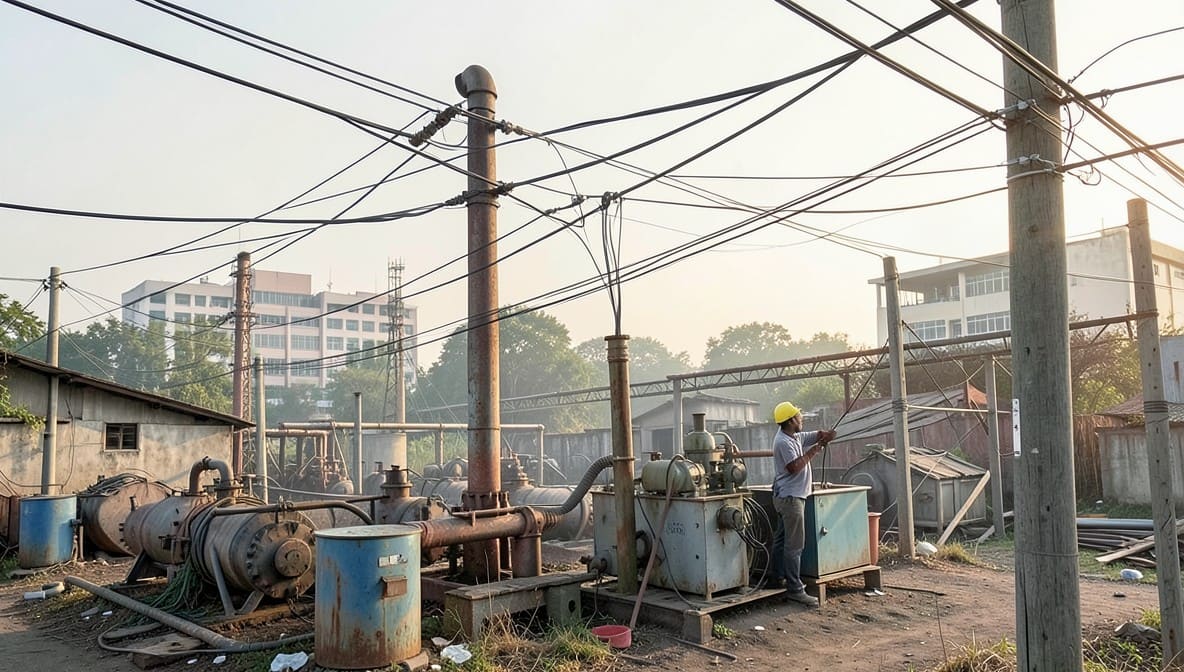
On 13.06.2025, between 16:00 and 18:00, a gas leak caused the compressor of an air-conditioner at the Cloud Kitchen premises, located at Plot No. 38, Veer Savarkar Marg, Mahim, Mumbai, to explode. The explosion resulted in the death of worker Noor Alam Ahmed Ali Sheikh and serious injuries to three other workers. The air-conditioner was being repaired by technicians employed by M/s Crystal Aircon, a specialist contractor engaged by Rebel Foods Pvt. Ltd. for maintenance services.
Key Facts
- The air-conditioner repair work was contracted out by Rebel Foods Pvt. Ltd. to M/s Crystal Aircon, owned by Ashok Naik (Accused No. 1)
- Ashok Naik and his workers were solely responsible for the repair, including procurement of tools, safety measures, and execution of the task
- The Petitioner, Pramod Nivrutti Ghuge, was General Manager of Rebel Foods Pvt. Ltd. and had no technical expertise in air-conditioning systems
- No evidence suggests the Petitioner supervised, directed, or was present during the repair work
- The repair was undertaken without safety equipment, a decision entirely within the control of Accused No. 1
- The complaint was lodged by Police Constable Vikas A. Mali on 13.06.2025
- The impugned FIR, Crime No. I-0282/2025, named the Petitioner as Accused No. 2 solely on the ground that he "awarded the contract" to Accused No. 1
Procedural History
- 13.06.2025: FIR registered at Mahim Police Station for offences under Sections 105, 125(a), 125(b), 288, 289 and 324(5) of the Bharatiya Nyaya Sanhita, 2023
- 13.06.2025: Charge-sheet filed and registered as Sessions Case No. 1345 of 2025 before the 10th Sessions Judge, Mumbai
- 2026: Petitioner filed Criminal Writ Petition No. 1065 of 2026 under Article 226 of the Constitution and Section 528 of the Bharatiya Nagarik Suraksha Sanhita, 2023, seeking quashing of the FIR and charge-sheet
- 08.05.2026: Petition reserved for judgment
- 22.06.2026: Judgment pronounced
Relief Sought
The Petitioner sought quashing of the impugned FIR (Crime No. I-0282/2025) and the resulting charge-sheet (Sessions Case No. 1345 of 2025) insofar as they impute criminal liability to him, on the grounds that no ingredients of the alleged offences are made out against him.
The Legal Issue
Can a corporate executive be held criminally liable under Section 105 of the Bharatiya Nyaya Sanhita, 2023 for the death of a worker caused by an independent contractor’s negligence, when the executive had no control over the work, no technical knowledge, and did not participate in or supervise the unsafe act?
Arguments Presented
For the Petitioner
The Petitioner’s counsel argued that the Petitioner’s role was limited to contracting out maintenance work to a specialist firm, M/s Crystal Aircon, which had exclusive control over its employees and the repair process. No allegation was made that the Petitioner directed the repair method, provided tools, or was present at the site. The Petitioner lacked the technical competence to supervise the work. Reliance was placed on Yuvraj Laxmilal Kanther v. State of Maharashtra and Pavneet Singh Sethi v. State of Maharashtra to establish that Section 105 BNS 2023 requires a positive act done with knowledge of likely death, which cannot be inferred from mere contractual delegation. The Petitioner’s conduct amounted to no more than a commercial decision, not criminal negligence.
For the Respondent/State
The Additional Public Prosecutor contended that as General Manager, the Petitioner had a duty of care to ensure safe working conditions, even for outsourced work. She argued that by engaging an unqualified contractor without verifying safety protocols, the Petitioner demonstrated reckless disregard for worker safety, thereby satisfying the knowledge requirement under Section 105 BNS 2023. She relied on the principle of corporate accountability to argue that senior management cannot evade liability by outsourcing hazardous tasks.
The Court's Analysis
The Court undertook a rigorous analysis of Section 105 of the Bharatiya Nyaya Sanhita, 2023, which corresponds to Section 304 Part II IPC. The Court emphasized that the essential ingredients are: (i) a positive act causing culpable homicide not amounting to murder; (ii) knowledge that the act is likely to cause death; and (iii) absence of intention to cause death.
"The doer must have the knowledge that the act performed by him would likely cause death etc but there should not be any intention to cause death."
The Court held that the Petitioner did not perform any act - positive or otherwise - that could be linked to the explosion. The repair work was entirely under the control of an independent contractor with specialized expertise. The Petitioner had no role in selecting the workers, providing equipment, or supervising the procedure. The Court distinguished between commercial delegation and criminal culpability, noting that liability under Section 105 BNS 2023 cannot be imposed merely because a person engaged a contractor who subsequently acted negligently.
The Court further relied on Pavneet Singh Sethi, which held that "silence, inaction or mere lapses" cannot constitute the positive act required for culpable homicide. The Petitioner’s failure to inspect the contractor’s safety practices, while potentially a civil or regulatory lapse, did not rise to the level of criminal knowledge under Section 105.
The Court also examined the other charges under Sections 125(a), 125(b), 288, 289 and 324(5) of the BNS 2023 and found no material to support their application against the Petitioner. The Court concluded that the FIR and charge-sheet against the Petitioner constituted an abuse of process under the guidelines in State of Haryana v. Bhajan Lal.
The Verdict
The Petitioner succeeded. The Court quashed and set aside the impugned FIR (Crime No. I-0282/2025) and the charge-sheet (Sessions Case No. 1345 of 2025) insofar as they impute criminal liability to the Petitioner. The Court held that no offence under Section 105 or any other provision of the Bharatiya Nyaya Sanhita, 2023, was made out against him. There shall be no order as to costs.
What This Means For Similar Cases
Corporate Delegation Does Not Equal Criminal Liability
- Practitioners must argue that engaging a specialist contractor absolves the principal of direct criminal responsibility unless there is evidence of active direction, supervision, or knowledge of imminent danger
- Mere contractual oversight or failure to audit safety practices cannot substitute for the required "knowledge" under Section 105 BNS 2023
- This judgment reinforces that criminal liability under BNS 2023 requires personal culpability, not vicarious attribution
Distinction Between Civil Negligence and Criminal Culpability
- Employers may still face civil or regulatory penalties for unsafe contracting practices, but criminal charges require a higher threshold of mens rea
- Regulatory authorities (e.g., Labour Department, ESI) remain empowered to impose administrative penalties, but police cannot convert commercial negligence into criminal conspiracy
- Legal advisors should advise clients to maintain written contracts with independent contractors specifying safety obligations, to further insulate against criminal liability
Precedent for Quashing Baseless FIRs Against Corporate Executives
- This judgment provides a strong precedent for moving under Section 528 BNSS 2023 to quash FIRs where the accused’s role is purely administrative or contractual
- Courts will now scrutinize whether the accused performed a "positive act" with knowledge of likely death, not merely whether they were in a position of authority
- Practitioners should cite Yuvraj Laxmilal Kanther and Pavneet Singh Sethi in motions to quash FIRs involving outsourced work