The Bombay High Court, Nagpur Bench, has reiterated that criminal antecedents alone cannot be the sole ground for rejecting anticipatory bail. In a case involving offences under the Bharatiya Nyaya Sanhita, 2023 and the Food Safety and Standards Act, 2006, the Court granted bail while emphasizing that reliance on a co-accused’s confession without corroborative evidence is legally unsustainable. This judgment reinforces the principle that bail decisions must be based on merits, not past records.
Background & Facts
The Dispute
The applicant, Wasim Akhtar Zimri, sought anticipatory bail in Crime No. 0658/2026 registered at Police Station Ramnagar, Chandrapur. The offences alleged against him include violations under Sections 123, 223, 275, and 49 of the Bharatiya Nyaya Sanhita, 2023, read with Sections 30(2)(a), 26(2)(iv), 3, 4, and 59 of the Food Safety and Standards Act, 2006. The prosecution’s case hinged on the seizure of contraband articles (flavoured gutka and tobacco) from the residence of a co-accused, Siddhant Madhav Gondhane, who implicated the applicant during interrogation.
Key Facts
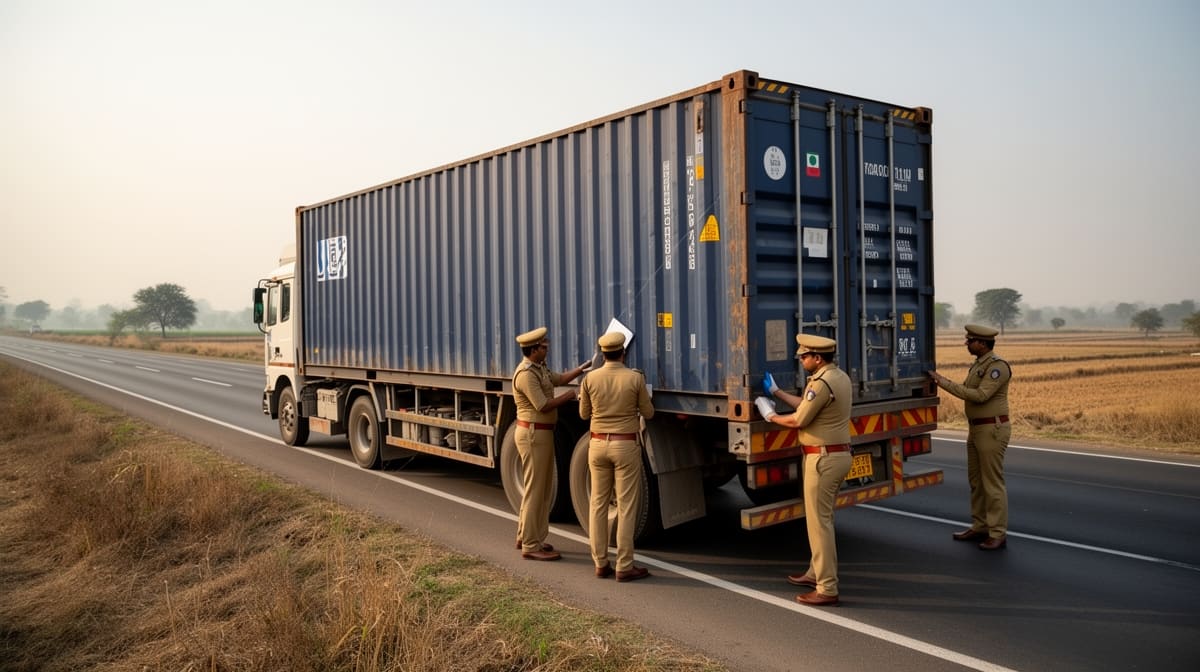
- 15.05.2026: Police raided the residence of co-accused Siddhant Madhav Gondhane based on secret information, seizing flavoured gutka and tobacco stored illegally for sale.
- Post-arrest disclosure: Siddhant named the applicant as the owner of the contraband, leading to the registration of Crime No. 0658/2026 against the applicant.
- Criminal antecedents: The applicant had 10 prior cases, of which:
- Two were quashed,
- One resulted in acquittal,
- One ended in discharge,
- Two were pending,
- One had anticipatory bail granted,
- The status of the remaining three was not specified.
- No direct evidence: The prosecution relied solely on the co-accused’s statement, with no other material linking the applicant to the offence.
Procedural History
- Initial bail application: Filed before the Sessions Court, which rejected it primarily due to the applicant’s criminal antecedents.
- 19.06.2026: The applicant approached the Bombay High Court, Nagpur Bench, seeking anticipatory bail.
Relief Sought
The applicant sought anticipatory bail, arguing that:
- His criminal antecedents were not a valid ground for denial of bail,
- The prosecution’s case rested solely on the co-accused’s confession, which lacked corroborative evidence,
- His custodial interrogation was unnecessary for further investigation.
The Legal Issue
The central question before the Court was whether criminal antecedents alone could justify the denial of anticipatory bail, and whether a co-accused’s confession recorded during police investigation could be relied upon to implicate a third party without corroborative evidence.
Arguments Presented
For the Applicant
- Criminal antecedents: Relying on Ayub Khan v. State of Rajasthan (2025 All SCR (Cri) 1347), the applicant argued that past records cannot be the sole basis for rejecting bail.
- Lack of evidence: The prosecution’s case rested entirely on the co-accused’s statement, which was inadmissible under Section 161 of the Code of Criminal Procedure (CrPC) and Sections 25 and 26 of the Indian Evidence Act, 1872. The applicant cited P. Krishna Mohan Reddy v. State of Andhra Pradesh (2025 SCC Online SC 1187), which held that a confession implicating a third party requires corroboration to be admissible.
- No custodial interrogation needed: The applicant contended that his cooperation could be ensured without arrest, as no direct evidence linked him to the offence.
For the Respondent/State
- Gravity of offence: The State likely argued that the offences under the Food Safety and Standards Act and Bharatiya Nyaya Sanhita were serious, warranting denial of bail.
- Criminal antecedents: The State may have emphasized the applicant’s past records as a ground for rejecting bail.
- Reliance on co-accused’s statement: The prosecution possibly contended that the co-accused’s confession was sufficient to implicate the applicant.
The Court's Analysis
The Court conducted a two-pronged analysis:
-
Criminal Antecedents: The Court reiterated the principle established in Ayub Khan v. State of Rajasthan that criminal antecedents alone cannot be the sole ground for denying bail. While acknowledging the applicant’s past records, the Court emphasized that bail decisions must be based on the merits of the case, not merely on the accused’s history.
-
Evidentiary Reliance on Co-Accused’s Confession: The Court relied heavily on P. Krishna Mohan Reddy v. State of Andhra Pradesh, which held that:
- A confession recorded during police investigation (Section 161 CrPC) cannot be used to implicate a third party without corroborative evidence.
- Such confessions are hit by Sections 25 and 26 of the Indian Evidence Act, which bar the admissibility of confessions made to police officers.
- The Court observed:
"Thus, Section 30 itself makes it clear that the whole legal exercise by virtue of which this provision of law can be made applicable, depends upon the proving of confession before a court which makes it into an admissible one in order to implicate the other accused provided the confession given by such person is established with full strength on the basis of other materials pertaining to the attendant circumstances. It would necessarily mean that mere confession alone will not be adequate or sufficient to implicate other persons. It is incumbent that there are other materials also which would render support or substantiate the case of the confession."
The Court concluded that the prosecution’s reliance on the co-accused’s confession, without any corroborative evidence, was legally unsustainable. It held that the applicant’s custodial interrogation was unnecessary, as his cooperation could be secured through alternative means.
The Verdict
The Bombay High Court granted anticipatory bail to the applicant, Wasim Akhtar Zimri, subject to the following conditions:
- Bail bond: The applicant must execute a Personal Recognizance (P.R.) Bond of Rs. 25,000 with one solvent surety in the like amount.
- Attendance: The applicant must attend the concerned police station every Sunday and Thursday between 12:00 PM and 2:00 PM until the filing of the chargesheet and cooperate with the investigation.
- Contact details: The applicant must furnish his address and telephone/mobile numbers to the investigating officer and the court and not change them until the final disposal of the case.
- Non-interference: The applicant must not induce, threaten, or promise any witness to dissuade them from disclosing facts to the court or police.
- Non-obstruction: The applicant must not hamper the investigation or tamper with evidence.
- Cancellation: In case of breach of conditions, the trial court may cancel the bail after providing an opportunity of hearing to both sides.
What This Means For Similar Cases
Criminal Antecedents Are Not Conclusive
- Bail decisions must be merit-based: Practitioners should argue that past criminal records, while relevant, cannot be the sole ground for denying bail. Courts must evaluate the current offence’s merits, including the strength of evidence and the need for custodial interrogation.
- Precedential support: The judgment reinforces the principle in Ayub Khan v. State of Rajasthan that gravity of offence alone cannot justify denial of bail. Defence counsel should cite this judgment to counter arguments based solely on the accused’s history.
Confessions Without Corroboration Are Inadmissible
- Evidentiary standards: Prosecutions relying on co-accused confessions must ensure corroborative evidence to implicate third parties. Mere confessions recorded during police investigation (Section 161 CrPC) are insufficient and inadmissible under Sections 25 and 26 of the Indian Evidence Act.
- Defence strategy: Defence counsel should challenge the admissibility of confessions lacking corroboration, citing P. Krishna Mohan Reddy v. State of Andhra Pradesh. This judgment provides a strong precedent to argue that police-recorded confessions cannot be the sole basis for implicating an accused.
Custodial Interrogation Must Be Justified
- Alternative measures: Courts may direct accused persons to cooperate with investigations without arrest, especially when no direct evidence links them to the offence. Practitioners should argue for non-custodial cooperation where the investigation does not require physical custody.
- Proportionality: The judgment underscores that arrest and detention must be proportional to the offence and the evidence. Defence counsel can leverage this to seek bail in cases where the prosecution’s case is weak or based on inadmissible evidence.