Bombay High Court judgments

2128 Bombay High Court judgments explained in plain English: what was decided, the law applied and why it matters. Page 23 of 89.

Section 22 Specific Relief Act | Specific Performance of Undivided Share Mandates Partition Claim: Bombay HC
|Bombay High Court

Section 22 Specific Relief Act | Specific Performance of Undivided Share Mandates Partition Claim: Bombay HC

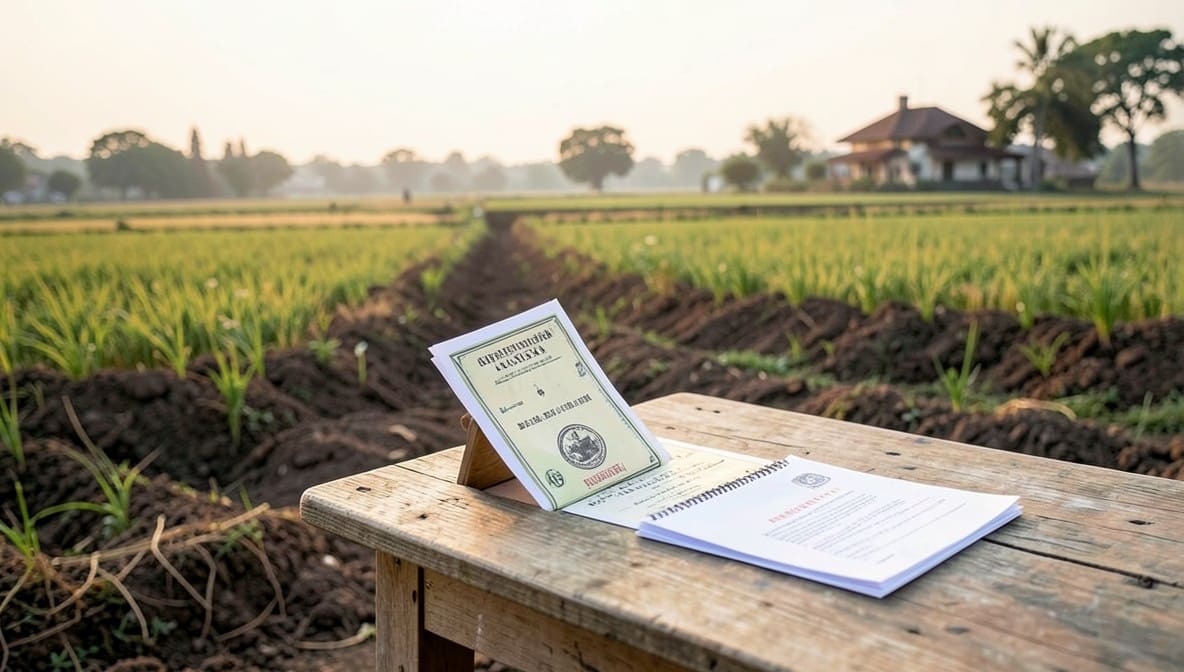
Bombay High Court rules that a suit for specific performance of an undivided share in immovable property must include a claim for partition under Section 22 of the Specific Relief Act, 1963. The Court also held that contingent contracts become void upon withdrawal of the underlying litigation, and blanket injunctions require precise property description to be valid.

Section 18 SC/ST Act | Vague, Omnibus Allegations Cannot Trigger Non-Bailable Bar; Bailable BNSS Offences Entitle Accused to Pre-Arrest Bail : Bombay HC
Case Law Analysis
|Bombay High Court

Section 18 SC/ST Act | Vague, Omnibus Allegations Cannot Trigger Non-Bailable Bar; Bailable BNSS Offences Entitle Accused to Pre-Arrest Bail : Bombay HC

The Bombay High Court holds that generalized, unattributed allegations under the SC/ST Act do not satisfy the threshold for invoking Section 18’s non-bailable bar, and where accompanying BNSS offences are bailable, pre-arrest bail must be granted. This clarifies that procedural vagueness cannot substitute for specific intent in atrocities cases, protecting accused persons from automatic custodial pressure.

SC/ST Act Section 3(1) | Special Court Must Record Prima Facie Case Before Denying Anticipatory Bail : Bombay HC
Case Law Analysis
|Bombay High Court

SC/ST Act Section 3(1) | Special Court Must Record Prima Facie Case Before Denying Anticipatory Bail : Bombay HC

The Bombay High Court has ruled that Special Courts under the SC/ST Act cannot reject anticipatory bail without explicitly examining whether a prima facie case of atrocity exists. This mandates a substantive threshold for bail denial, protecting accused persons from arbitrary detention where allegations lack foundational evidence - a vital safeguard for procedural fairness in caste-based criminal proceedings.

Rule 45 Trade Marks Rules 2017 | Two-Month Evidence Affidavit Deadline is Directory, Not Mandatory : Bombay HC
Case Law Analysis
|Bombay High Court

Rule 45 Trade Marks Rules 2017 | Two-Month Evidence Affidavit Deadline is Directory, Not Mandatory : Bombay HC

Bombay High Court holds that the two-month deadline for filing an Evidence Affidavit under Rule 45 of the Trade Marks Rules 2017 is directory, allowing extensions under Section 131 of the Trade Marks Act 1999 even after expiry. This ruling clarifies that procedural timelines in rectification proceedings may be relaxed where justice demands, offering relief to parties facing delays.

Section 9 Arbitration Act | Refusal to Execute Documents for Award Enforcement Violates Finality: Bombay HC
Case Law Analysis
|Bombay High Court

Section 9 Arbitration Act | Refusal to Execute Documents for Award Enforcement Violates Finality: Bombay HC

The Bombay High Court has ruled that a party’s refusal to complete procedural formalities-like signing bank documents or filing partnership forms-after a final arbitral award is issued constitutes an unlawful obstruction of enforcement. This holding reinforces that the finality of arbitral awards cannot be undermined by passive non-cooperation, even absent a Section 34 challenge, and binds all parties to act in good faith to give effect to the award.

Unregistered Lease by Unauthorized POA Holder Invalidates Possession Claim | No Lawful Title Without Registration: Bombay HC
Case Law Analysis
|Bombay High Court

Unregistered Lease by Unauthorized POA Holder Invalidates Possession Claim | No Lawful Title Without Registration: Bombay HC

The Bombay High Court nullified an injunction granted to a respondent based on an unregistered lease executed by a power of attorney holder with no authority to lease the entire property. This ruling reinforces that mere physical possession under an ultra vires lease cannot confer lawful possession without valid title or registered authority, impacting landlords, tenants, and property litigants relying on informal agreements.

CPC Section 60(1)(kb) | Insurance Maturity Proceeds Lose Exemption Upon Payout to Judgment Debtor: Bombay HC
Case Law Analysis
|Bombay High Court

CPC Section 60(1)(kb) | Insurance Maturity Proceeds Lose Exemption Upon Payout to Judgment Debtor: Bombay HC

The Bombay High Court has ruled that once insurance maturity proceeds are paid out to the policyholder, they cease to be protected under CPC Section 60(1)(kb), making them attachable by decree holders. This clarifies a critical boundary in asset protection, affecting insurers, policyholders, and creditors alike by ending ambiguity around when exempt funds become recoverable assets.

Service Law | Vulgar Language Targeting Women Beneficiaries Constitutes Grave Misconduct Justifying Dismissal: Bombay HC
Case Law Analysis
|Bombay High Court

Service Law | Vulgar Language Targeting Women Beneficiaries Constitutes Grave Misconduct Justifying Dismissal: Bombay HC

The Bombay High Court upheld the dismissal of an employee who used derogatory language toward Koli women, the very community his role was meant to serve. This ruling establishes that abuse directed at protected beneficiaries is not merely offensive conduct but a fundamental breach of trust warranting termination, setting a critical precedent for workplace dignity in public-service roles.

RERA Section 40 | Writ Jurisdiction Under Article 226 Barred When Statutory Appeal Exists: Bombay HC
Case Law Analysis
|Bombay High Court

RERA Section 40 | Writ Jurisdiction Under Article 226 Barred When Statutory Appeal Exists: Bombay HC

The Bombay High Court has ruled that developers cannot bypass MahaRERA’s statutory appeal mechanism by filing writ petitions challenging recovery orders under Section 40 of RERA. This reinforces that specialized tribunals like RERA are the exclusive forum for resolving real estate disputes, preserving legislative intent and preventing forum shopping by promoters.

Notional Increment Entitlement for Zilla Parishad Employees with 6+ Months' Service | Rule 10, Maharashtra Civil Service (Revised Pay) Rules, 2009 : Bombay HC
Case Law Analysis
|Bombay High Court

Notional Increment Entitlement for Zilla Parishad Employees with 6+ Months' Service | Rule 10, Maharashtra Civil Service (Revised Pay) Rules, 2009 : Bombay HC

The Bombay High Court has ruled that Zilla Parishad employees who serve six months or more in a financial year are entitled to a notional annual increment effective July 1, even if they retire before that date. This directly impacts pension calculations and entitles them to arrears, reinforcing the principle that service duration, not retirement timing, triggers incremental benefits under the 6th Pay Commission framework.

Anticipatory Bail | Misrepresentation of Mobile Device in Investigation Vitiates Cooperation Claim Under BNSS Section 438 : Bombay HC
|Bombay High Court

Anticipatory Bail | Misrepresentation of Mobile Device in Investigation Vitiates Cooperation Claim Under BNSS Section 438 : Bombay HC

The Bombay HC ruled that deliberately surrendering a different mobile phone than the one used in the crime constitutes misrepresentation, nullifying claims of cooperation and justifying custodial interrogation for recovery of material digital evidence. This sets a critical precedent: voluntary surrender of evidence must be truthful to qualify for anticipatory bail under BNSS, not merely procedural compliance.

RTE Act Section 12(1)(c) | State Must Timely Reimburse Private Schools for Economically Weaker Section Admissions Within Statutory Deadline : Bombay HC
Case Law Analysis
|Bombay High Court

RTE Act Section 12(1)(c) | State Must Timely Reimburse Private Schools for Economically Weaker Section Admissions Within Statutory Deadline : Bombay HC

The Bombay High Court has mandated that the Zilla Parishad decide pending reimbursement claims from RTE-compliant schools within three weeks, affirming that delayed payments violate the state’s constitutional duty to fund statutory educational obligations. This ruling directly impacts hundreds of private schools financially strained by unreimbursed costs for admitting EWS students, reinforcing that compliance cannot be penalized by administrative inertia.

Compassionate Appointment | Valid Parental ST Certificate Eliminates Need for Re-verification by Applicant: Bombay HC
|Bombay High Court

Compassionate Appointment | Valid Parental ST Certificate Eliminates Need for Re-verification by Applicant: Bombay HC

The Bombay High Court has ruled that when a parent’s Scheduled Tribe certificate is lawfully issued and validated, a dependent seeking compassionate appointment need not submit a fresh caste certificate - doing so imposes an unlawful burden. This protects vulnerable families from bureaucratic re-traumatization and affirms that documentary continuity, not redundant proof, satisfies constitutional safeguards under Article 14 and the Scheduled Tribes Order, 1950.

Caste Validity Certificate | Scrutiny Committees Lack Authority to Cancel Certificates Without Pre-Independence Evidence: Bombay HC
Case Law Analysis
|Bombay High Court

Caste Validity Certificate | Scrutiny Committees Lack Authority to Cancel Certificates Without Pre-Independence Evidence: Bombay HC

The Bombay High Court has ruled that Scheduled Tribe Scrutiny Committees cannot cancel caste validity certificates based on vigilance reports alone, as they lack statutory power to review previously issued certificates. The judgment mandates that pre-independence documentary proof, not post-facto investigations, must govern caste claims under the Maharashtra Caste Certificate Act, 2000 - protecting thousands of tribal claimants from arbitrary cancellations.

Section 189(2) & (4) BNSS | Bail Granted for Instigating Stone-Pelting During Arrest When Injuries Are Simple and Investigation Complete : Bombay HC
Case Law Analysis
|Bombay High Court

Section 189(2) & (4) BNSS | Bail Granted for Instigating Stone-Pelting During Arrest When Injuries Are Simple and Investigation Complete : Bombay HC

The Bombay High Court granted bail to an accused who incited stone-pelting to hinder a police arrest, holding that mere instigation without direct violence, coupled with simple injuries and a completed investigation, does not justify continued pre-trial detention. This reinforces that bail under BNSS must be guided by proportionality, not punitive presumption, especially when the accused played no direct physical role in the assault.

Bail Granted Post-Charge Sheet Under BNSS | Investigation Complete & Weapons Recovered Nullifies Custodial Need : Bombay HC
Case Law Analysis
|Bombay High Court

Bail Granted Post-Charge Sheet Under BNSS | Investigation Complete & Weapons Recovered Nullifies Custodial Need : Bombay HC

The Bombay High Court granted bail to accused in a grievous injury case after the charge-sheet was filed and all weapons recovered, holding that custodial interrogation is no longer justified when investigation is closed and evidence secured. This reinforces that bail under BNSS is not automatically denied in serious cases if procedural safeguards are met and detention loses its purpose.

MTP Act Section 3(2)(b) | Reproductive Autonomy of Intellectually Disabled Rape Survivor Overrides 24-Week Limit Under Article 21 : Bombay HC
Case Law Analysis
|Bombay High Court

MTP Act Section 3(2)(b) | Reproductive Autonomy of Intellectually Disabled Rape Survivor Overrides 24-Week Limit Under Article 21 : Bombay HC

The Bombay High Court held that the reproductive autonomy of a 34-year-old woman with moderate intellectual disability and autism, victimized by sexual assault, supersedes the statutory 24-week cap under the MTP Act. This ruling affirms that disability does not diminish bodily integrity under Article 21 and mandates medical boards to prioritize dignity over rigid timelines when assessing termination requests for vulnerable survivors.

Section 7(5) Arbitration Act | General Reference to Main Contract Insufficient to Bind Subcontractors to Arbitration : Bombay HC
Case Law Analysis
|Bombay High Court

Section 7(5) Arbitration Act | General Reference to Main Contract Insufficient to Bind Subcontractors to Arbitration : Bombay HC

The Bombay High Court has ruled that subcontractors cannot be bound by an arbitration clause from a main contract unless the clause is expressly incorporated with specific reference under Section 7(5) of the Arbitration and Conciliation Act. This clarifies consent requirements for non-signatories and impacts construction and infrastructure disputes where subcontracting is common.

Condonation of Delay | Time Spent Pursuing Order IX Rule 13 CPC Constitutes Sufficient Cause for First Appeal Delay: Bombay HC
Case Law Analysis
|Bombay High Court

Condonation of Delay | Time Spent Pursuing Order IX Rule 13 CPC Constitutes Sufficient Cause for First Appeal Delay: Bombay HC

The Bombay High Court has ruled that a litigant’s diligent pursuit of relief under Order IX Rule 13 CPC - even after prior rejections - amounts to sufficient cause to condone excessive delay in filing a first appeal. This clarifies that procedural good faith in challenging an ex parte decree, not just the final outcome, can justify extension of limitation under the Limitation Act, benefiting litigants misled by procedural lapses.

Builder’s Non-Delivery + Dishonoured Cheques = Deficiency in Service & Unfair Trade Practice | CPA 2019, Section 2(1)(o) & 2(1)(r) : Maharashtra SCDRC
Case Law Analysis
|Bombay High Court

Builder’s Non-Delivery + Dishonoured Cheques = Deficiency in Service & Unfair Trade Practice | CPA 2019, Section 2(1)(o) & 2(1)(r) : Maharashtra SCDRC

The Maharashtra State Consumer Commission held that accepting full payment without delivering the flat, coupled with issuing dishonoured cheques, constitutes both deficiency in service and unfair trade practice under the Consumer Protection Act, 2019. This ruling reinforces that residential buyers acting in good faith are protected consumers - not investors - and builders cannot evade liability through financial misrepresentation.

Cooperative Housing Society | Cannot Impose Non-Occupancy Charges or Deny Membership to Owner-Occupier Who Paid Full Consideration : Maharashtra SCDRC
Case Law Analysis
|Bombay High Court

Cooperative Housing Society | Cannot Impose Non-Occupancy Charges or Deny Membership to Owner-Occupier Who Paid Full Consideration : Maharashtra SCDRC

The Maharashtra State Consumer Commission ruled that housing societies violate the Consumer Protection Act by charging non-occupancy fees or withholding membership from flat owners who have paid the full sale consideration and reside in the unit. This sets a critical precedent protecting homeowners from exploitative society bylaws and reinforces that physical possession coupled with full payment equates to lawful occupancy rights.

Regulation 15.4 MERC Regulations | Loose Connection ≠ Defective Meter; Consumer Liable for Full Billing Period : Bombay HC
Case Law Analysis
|Bombay High Court

Regulation 15.4 MERC Regulations | Loose Connection ≠ Defective Meter; Consumer Liable for Full Billing Period : Bombay HC

Bombay High Court clarifies that a loose connection in an electricity meter does not qualify as a 'defective meter' under MERC Regulations, upholding MSEDCL's recovery of ₹16.83 lakh for the disputed period. The ruling reinforces that consumers cannot evade billing liability by citing technical defects unless the meter itself is proven defective.