The Bombay High Court has clarified that while dissenting members of a cooperative housing society cannot obstruct a redevelopment project approved by the majority, they cannot be compelled to vacate their premises until the contractual conditions for possession are fully met. The Court drew a critical distinction between the obligation to submit declarations and the obligation to surrender possession, upholding the staged nature of redevelopment agreements under the Arbitration and Conciliation Act, 1996.
Background & Facts
The Dispute
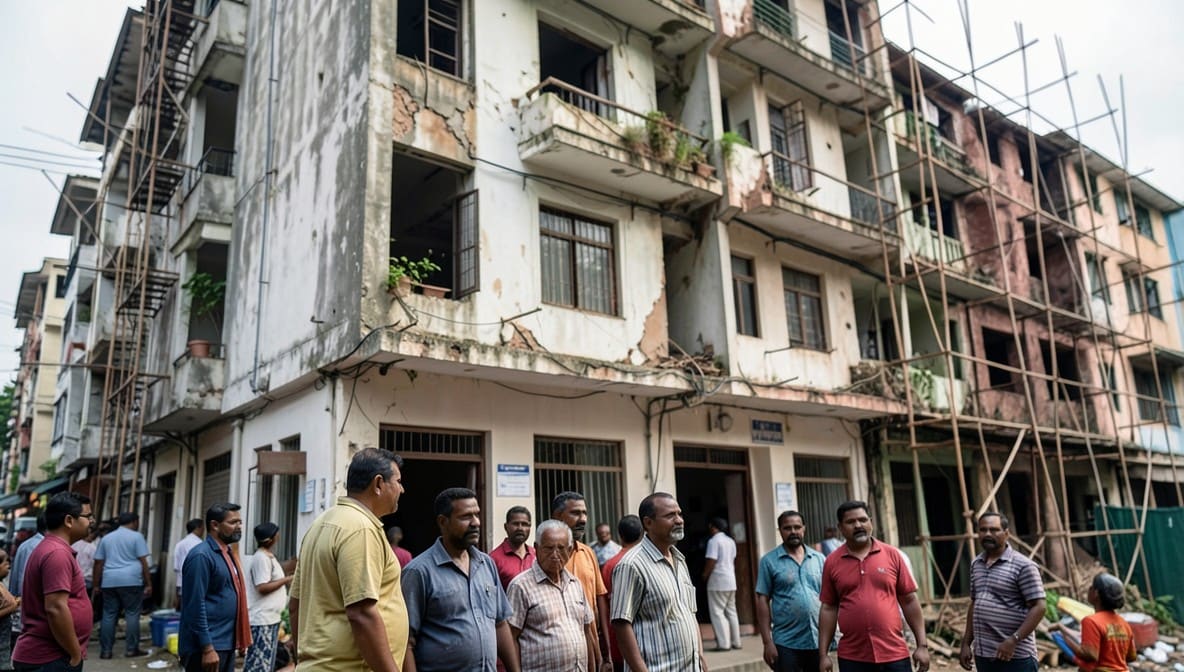
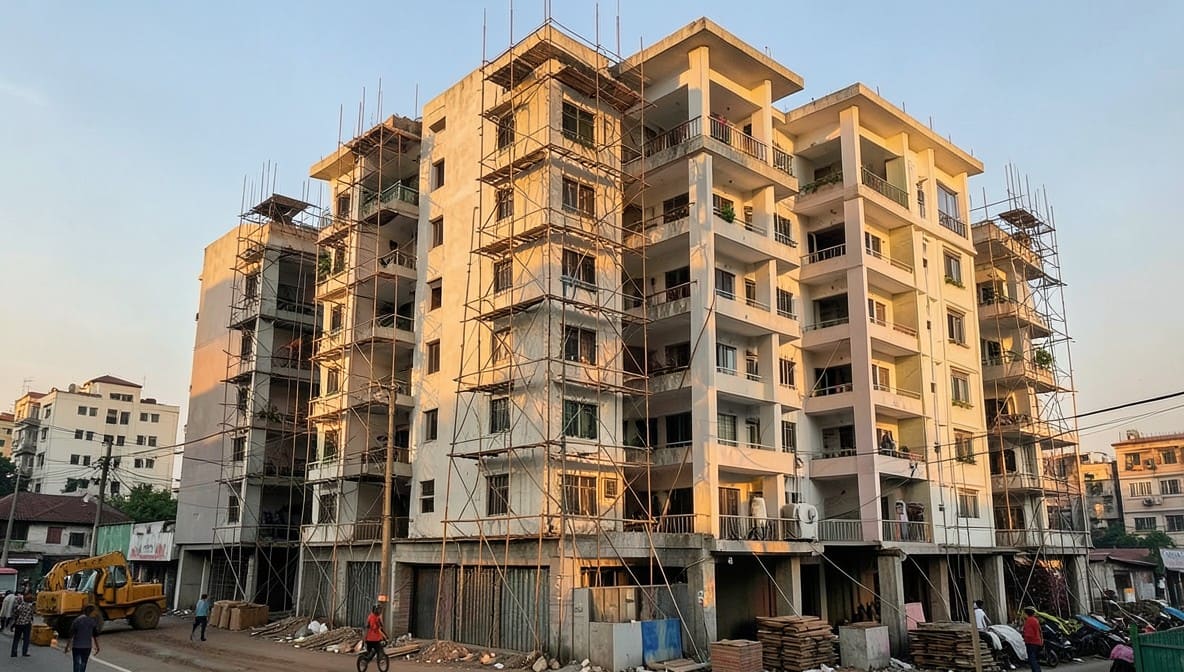
The dispute arises from the redevelopment of Moon Craft Apartments Cooperative Housing Society Limited, a 49-year-old building in Bandra, Mumbai, comprising 38 residential flats. In December 2021, the Society, through a unanimous resolution at a Special General Body Meeting, resolved to redevelop the building. Subsequent meetings led to the appointment of Palash PMC LLP as Project Management Consultant on 4 September 2022, and the petitioner, Wadhwa Estates and Developers (India) Private Limited, as the developer on 21 May 2023. On 31 March 2025, the petitioner, the Society, and 22 members executed and registered a Development Agreement containing a detailed, multi-stage procedure for redevelopment.
Key Facts
- The Society was formed in 1972; the building was constructed in 1975.
- The building has 38 flats and 7 garages, occupied by 36 members.
- The Development Agreement, dated 31 March 2025, contains Clause 17, which prescribes a sequential process for redevelopment.
- The Agreement defines key terms: "MDP IOD" (Minimum Development Potential Intimation of Disapproval), "Full IOD" (Full Intimation of Disapproval), and "Development Potential" as approximately 6,450 sq. m.
- The Agreement requires compliance with Regulation 33(7) of the DCPR 2034 for FSI entitlement.
- On 5 March 2026, the petitioner obtained the MDP IOD from the BMC and communicated it to the Society via letter dated 7 March 2026.
- On 6 March 2026, the Society emailed all members requesting submission of Consenting Member Declarations in the format prescribed under Annexure D/2.
- By 24 March 2026, 32 of 38 members submitted their declarations.
- Respondent Nos. 2 to 11 (eight members) refused to submit their declarations.
- The petitioner has not yet obtained Full IOD, nor has it issued the 45-day Notice to Vacate under Clause 17.4.
- The petitioner has not loaded the full development potential, nor obtained Civil Aviation permissions.
- A draft supplementary agreement proposing use of additional FSI under Regulation 33(20) was circulated but never executed by the Society.
Procedural History
- 5 December 2021: Special General Body Meeting passes unanimous resolution for redevelopment.
- 4 September 2022: Palash PMC LLP appointed as Project Management Consultant.
- 21 May 2023: Petitioner appointed as developer by Special General Body Meeting.
- 8 June 2023: Deputy Registrar of Cooperative Societies issues No Objection Certificate.
- 18 August 2024 & 26 January 2025: Special General Body Meetings approve final Development Agreement.
- 31 March 2025: Development Agreement executed and registered by petitioner, Society, and 22 members.
- 5 March 2026: Petitioner obtains MDP IOD from BMC.
- 6 March 2026: Society notifies members to submit Consenting Member Declarations.
- 24 March 2026: 32 members submit declarations; respondents 2 - 11 refuse.
- 11 June 2026: Arbitration Petition (L) No. 13424 of 2026 reserved for judgment.
- 18 June 2026: Judgment pronounced.
The Parties' Positions
For the Petitioner: Argued that Clause 17.2 of the Development Agreement authorises legal action against dissenting members who fail to submit declarations after MDP IOD is obtained. Relied on Girish Mulchand Mehta v. Mahesh S. Mehta and Pranav Constructions Ltd. v. Priyadarshini CHS to assert that Section 9 of the Arbitration Act permits interim relief against non-signatory members who obstruct redevelopment approved by the Society. Contended that refusal to submit declarations creates a real apprehension of future breach and justifies protective orders.
For Respondents 2 - 11: Argued that they are not signatories to the Development Agreement and therefore not bound by its arbitration clause. Contended that Section 9 cannot be used to grant final relief or enforce future obligations. Emphasised that Clause 17.4, which triggers the obligation to vacate, requires Full IOD and loading of full development potential - conditions not yet met. Highlighted ambiguity in the MDP IOD’s basis (Regulation 33(7) vs. 33(20)) and absence of Society-wide approval for any revised FSI model. Asserted that the petition is premature, speculative, and amounts to a collusive attempt to bypass arbitration.
Relief Sought
The petitioner sought: (a) Direction to respondents 2 - 11 to execute and submit Consenting Member Declarations under Annexure D/2; (b) Direction to vacate and hand over possession of Flat Nos. 2, 4, 5, 8, 10, 12, and 15 within 45 days of issuance of the Notice to Vacate under Clause 17.4; (c) Appointment of a Court Receiver with powers under Order XL Rule 1 CPC to take forcible possession of the flats; (d) Injunction restraining respondents from transferring, encumbering, or alienating their flats.
The Legal Issue
The central question was whether Section 9 of the Arbitration and Conciliation Act, 1996 permits a developer to seek interim relief against dissenting members of a cooperative housing society for failure to submit Consenting Member Declarations prior to the contractual stage for possession, and whether such relief can extend to directions for future eviction before the conditions in Clause 17.4 are fulfilled.
Arguments Presented
For the Appellant/Petitioner
The petitioner relied on Girish Mulchand Mehta v. Mahesh S. Mehta and Pranav Constructions Ltd. v. Priyadarshini CHS to argue that dissenting members, though not signatories, are bound by the redevelopment scheme approved by the Society under the Maharashtra Cooperative Societies Act. It contended that Clause 17.2 explicitly authorises legal proceedings against non-cooperating members at the declaration stage, and that Section 9 is designed to prevent multiplicity of proceedings. The petitioner argued that refusal to submit declarations creates a real and reasonable apprehension of breach, justifying interim protection. It further submitted that the relief sought in prayer clause (b) is conditional and tied to future contractual events, not immediate eviction.
For the Respondent/State
The respondents argued that Section 9 cannot be used to enforce obligations that have not yet matured under the contract. They relied on Space Master Realtors v. Mulund Sandhyaprakash CHS to assert that non-signatories cannot be subjected to arbitration-related remedies. They contended that the MDP IOD obtained on 5 March 2026 may not comply with the contractual requirement of Regulation 33(7) alone, as the petitioner had previously proposed a revised scheme under Regulation 33(20). They emphasized that Clause 17.4 is a distinct, later stage requiring Full IOD and loading of development potential - conditions not yet satisfied. The respondents also argued that the petition is collusive, as the Society and petitioner are aligned, and that granting relief now would undermine the contractual sequence and expose members to premature eviction.
The Court's Analysis
The Court began by affirming the unique legal character of cooperative housing societies under the Maharashtra Cooperative Societies Act. Citing Anita Enterprises v. Belfer Coop. Housing Society and Daman Singh v. State of Punjab, it held that membership in a cooperative society entails collective obligations, and decisions of the General Body bind all members - even dissenters - so long as they are validly passed. The Court observed that a member’s rights to redevelopment benefits, transit rent, and alternate accommodation flow from the Society’s collective decision, not individual consent.
"Membership in a cooperative society is not only a source of rights but also a source of obligations. The concept of cooperation itself requires that matters affecting the society must be decided collectively."
However, the Court sharply distinguished between the binding nature of collective decisions and the enforceability of contractual obligations. It held that while dissenting members cannot block redevelopment, they cannot be compelled to perform contractual acts before the agreed stages are reached. The Court undertook a detailed textual analysis of Clause 17 of the Development Agreement, noting its sequential structure:
- Stage 1: Obtain CRZ and MDP IOD;
- Stage 2: Members submit Consenting Member Declarations;
- Stage 3: Developer loads TDR/FSI and obtains Full IOD;
- Stage 4: Notice to Vacate issued;
- Stage 5: Vacant possession surrendered.
The Court found that the petitioner had completed Stage 1 (MDP IOD obtained on 5 March 2026) and the Society had triggered Stage 2 by calling for declarations. The refusal of respondents 2 - 11 to submit declarations thus constituted a breach of the contractual obligation under Clause 17.2, which explicitly authorises legal action at this stage.
"The very presence of Clause 17.2 suggests that the parties themselves contemplated the possibility of judicial intervention even at the declaration stage."
However, the Court held that Stage 4 - vacation of premises - remains untriggered. The petitioner has not obtained Full IOD, loaded the full development potential, or issued the 45-day Notice to Vacate. The Court rejected the petitioner’s argument that prayer clause (b) was merely "conditional," noting that seeking a judicial direction for future performance of an untriggered obligation effectively anticipates the contract’s terms.
"A Court exercising powers under Section 9 is empowered to protect contractual rights and preserve the subject matter of disputes. At the same time, the Court cannot ignore the sequence incorporated by the parties."
The Court also dismissed the request for appointment of a Court Receiver, distinguishing the facts from Girish Mulchand Mehta, where possession had already been vacated by the majority and the project was at an advanced stage. Here, no member had vacated, and the contractual trigger for possession had not occurred.
The Court further rejected the allegation of collusion, holding that the Society’s support for its chosen developer is not collusive but contractual. It also declined to adjudicate on the FSI dispute under Regulation 33(7) vs. 33(20), holding that such issues remain open for future determination.
The Verdict
The petitioner succeeded in part. The Court ordered:
- Respondent Nos. 2 to 11 shall execute and submit the Consenting Member Declarations in the format prescribed under Annexure D/2 to the Development Agreement dated 31 March 2025 within four weeks from the date of this order;
- Respondent Nos. 2 to 11 are restrained from creating, transferring, alienating, encumbering, or otherwise dealing with their respective flats (Flat Nos. 2, 4, 5, 8, 10, 12, and 15) in any manner that prejudices the redevelopment;
- The prayer for direction to vacate possession under Clause 17.4 is rejected as premature;
- The prayer for appointment of a Court Receiver with powers of forcible possession is rejected;
- All other reliefs are dismissed;
- No order as to costs.
What This Means For Similar Cases
Declarations Are a Separate, Enforceable Obligation
- Practitioners must now treat submission of Consenting Member Declarations under Clause 17.2 as a distinct contractual obligation enforceable under Section 9, even before Full IOD is obtained.
- Failure to submit declarations after MDP IOD can be challenged via interim injunction, not merely through arbitration.
- Developers should ensure formal notice of declaration requirements is issued by the Society, not just the developer, to strengthen enforceability.
Possession Relief Remains Conditional and Premature
- Courts will not grant eviction or possession orders until all conditions under Clause 17.4 are met: Full IOD, loaded development potential, and formal 45-day notice.
- Applications seeking anticipatory possession orders will be dismissed unless the contractual trigger is demonstrably satisfied.
- Developers must document each stage of compliance (e.g., FSI approvals, Civil Aviation permissions) to establish readiness for the next phase.
Non-Signatories Are Not Immune, But Contractual Sequence Prevails
- Non-signatory members of cooperative societies are bound by redevelopment decisions made by the General Body, but not by contractual stages they have not agreed to perform.
- The absence of a signature does not shield a member from obligations flowing from collective decisions, but it does prevent enforcement of contractual steps not yet triggered.
- Developers must avoid conflating collective binding force with contractual enforceability - each must be addressed separately in pleadings.