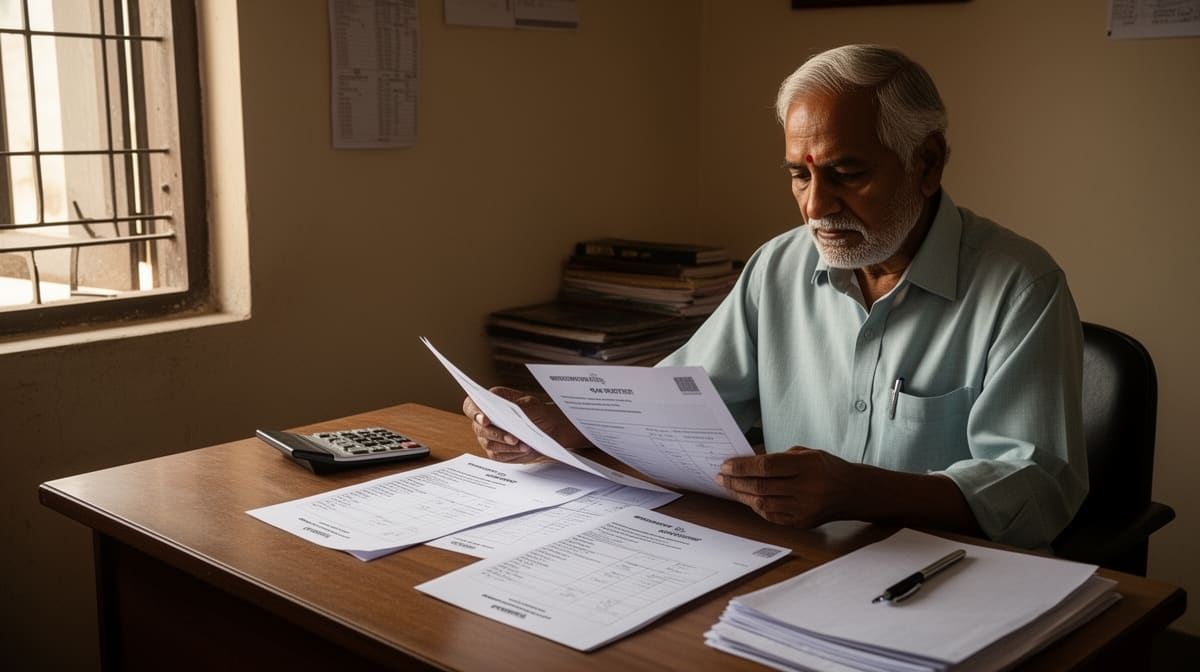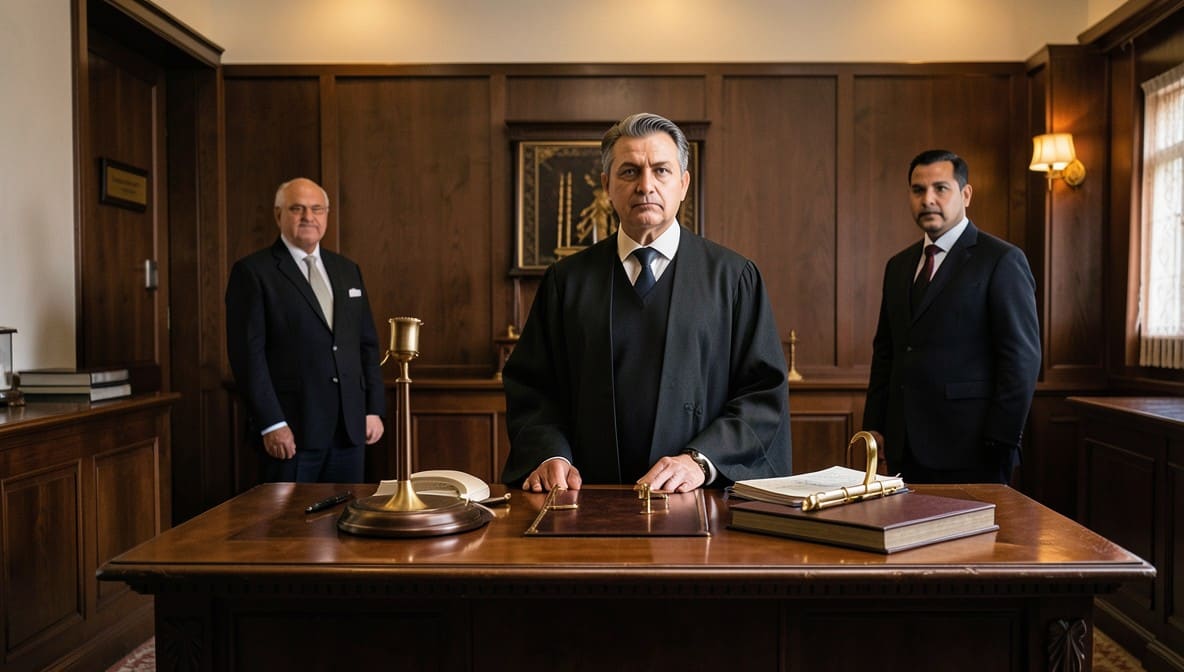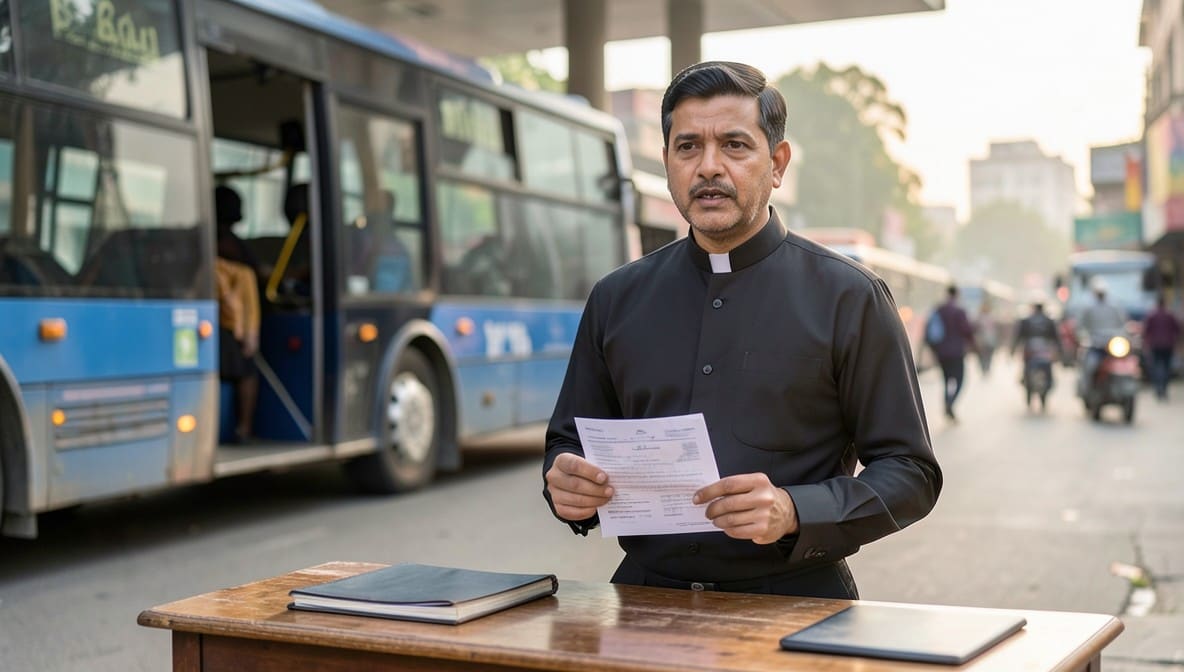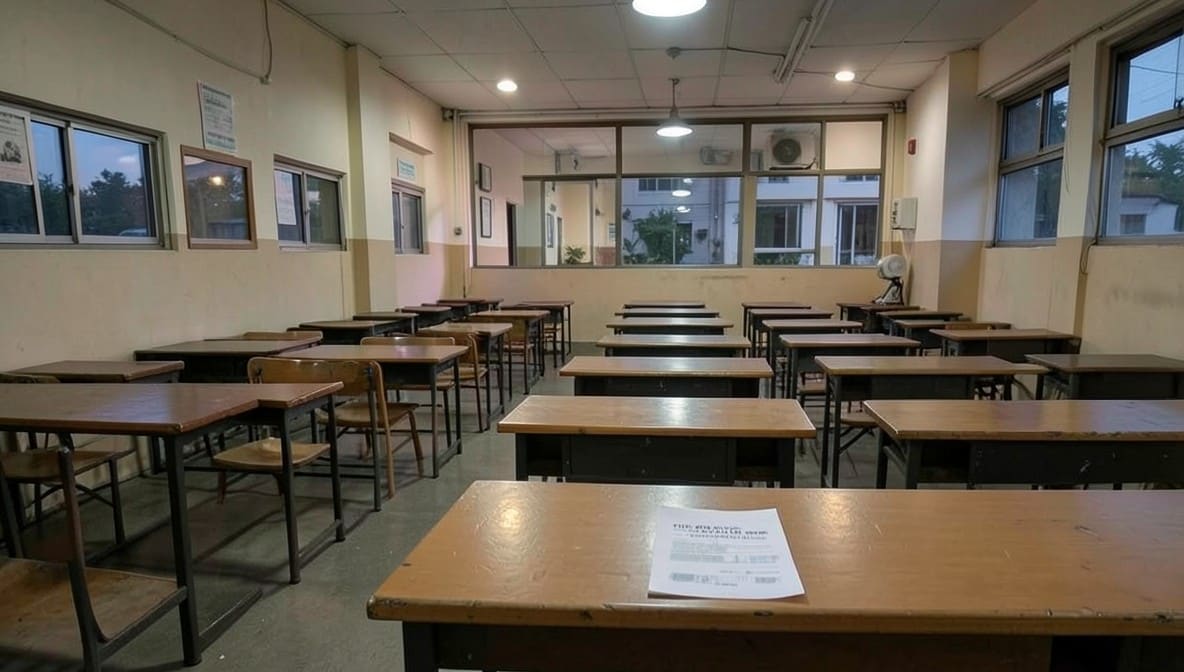
The Bombay High Court has clarified that a violation of natural justice in disciplinary proceedings cannot be inferred merely because an employee later seeks to recall witnesses. Where an opportunity to cross-examine is offered and declined, the subsequent request for recall cannot be treated as a denial of procedural rights. This judgment reinforces the principle that procedural fairness requires actual denial, not perceived inadequacy.
Background & Facts
The Dispute
The dispute arose from allegations of inappropriate physical contact by Respondent No. 1, an Assistant Professor appointed on probation, against a female T.Y. B.Sc. student during an invigilation duty on 14.10.2016. The student and her father filed separate complaints on 25.10.2016. The Respondent submitted an apology on the same day, acknowledging possible accidental contact and attributing it to a lapse in verifying the student’s hall ticket.
Key Facts
- Respondent No. 1 was appointed as Assistant Professor on 16.04.2016, with effect from 20.04.2016, on a one-year probation.
- He joined duties on 22.04.2016.
- On 14.10.2016, he was assigned as Junior Invigilator for University examinations.
- On the same day, Senior Supervisor Dr. Bhagwat Chaware observed the Respondent’s absence from the hall and noted the victim’s distress.
- Dr. Chaware’s letter dated 14.10.2016 detailed the incident: the victim expressed fear of being alone with the Respondent and requested his removal.
- The Principal reported the matter to the management on 25.10.2016.
- A show-cause notice was issued on 05.11.2016; the Respondent’s reply was deemed unsatisfactory.
- A charge sheet was issued on 15.12.2016 under Statute 431(i) and 431(ii) for misconduct and moral turpitude.
- The Inquiry Officer was appointed and conducted proceedings from 03.01.2017 onwards.
- Victim girl deposed on 03.01.2017; she was offered for cross-examination, but the Respondent, who was representing himself, declined.
- Dr. Bhagwat Chaware (Witness No. 2) was examined on 03.01.2017; the Respondent cross-examined him with two questions and closed the examination.
- Witness No. 3 (Principal Dr. P.R. Bhabad) was examined and cross-examined.
- The Inquiry Officer recorded findings of guilt on 15.05.2017.
- Final show-cause notice issued on 22.05.2017; Respondent’s reply rejected.
- Termination order issued on 26.05.2017, effective 31.05.2017.
Procedural History
- 14.10.2016: Alleged incident occurs during university examination.
- 25.10.2016: Complaints filed by victim and father; Respondent submits apology.
- 05.11.2016: Show-cause notice issued.
- 15.12.2016: Charge sheet issued under Statute 431(i) and 431(ii).
- 03.01.2017: Victim girl and Dr. Chaware examined; Respondent declines cross-examination of victim and limits cross-examination of Dr. Chaware.
- 11.01.2017: Advocate enters appearance for Respondent.
- 02.03.2017: Application filed for recall of victim and Dr. Chaware for cross-examination.
- 02.03.2017: Inquiry Officer rejects recall application, noting no re-examination and witnesses already discharged.
- 15.05.2017: Inquiry report concludes guilt.
- 26.05.2017: Termination order issued.
- 2017: Appeal No. 8 of 2017 filed before Savitribai Phule Pune University and College Tribunal.
- 25.01.2024: Tribunal sets aside termination, citing violation of natural justice and orders fresh inquiry with continuation of suspension.
- 12.06.2026: Writ Petition No. 6628 of 2024 reserved for judgment.
- 19.06.2026: Judgment pronounced.
The Parties' Positions
For the Petitioner (Management)
- Argued that the Respondent was given full opportunity to cross-examine both witnesses.
- Emphasized that the Respondent, acting in person, declined to cross-examine the victim girl on 03.01.2017.
- Stated that the two questions posed to Dr. Chaware were sufficient and voluntarily concluded.
- Contended that the application for recall filed on 02.03.2017 was made only after legal representation and was rightly rejected as there was no re-examination.
- Relied on Ulhasnagar Teachers Education Society v. P.B. Patil to argue that procedural flexibility must be balanced with institutional dignity.
For the Respondent (Employee)
- Argued that the Inquiry Officer denied him the right to cross-examine the victim girl and Dr. Chaware.
- Claimed that the word "आता" in the proceedings indicated a deferral, not a refusal.
- Asserted that documents submitted during inquiry were not furnished to him.
- Relied on Chitra Anant Salunkhe, S.C. Girotra, Anantdeep Singh, and Ajay Kumar Choudhary to argue that suspension cannot continue indefinitely and reinstatement should follow quashing of termination.
Relief Sought
The Petitioner sought quashing of the Tribunal’s order dated 25.01.2024 and reinstatement of the termination order. The Respondent sought setting aside of the termination, reinstatement in service, and cessation of suspension.
The Legal Issue
The central question was whether the principles of natural justice were violated when the Respondent declined to cross-examine witnesses during inquiry proceedings, and whether a subsequent application for recall of witnesses, filed after engaging counsel, could be treated as a denial of opportunity.
Arguments Presented
For the Petitioner
The Petitioner argued that the Respondent was offered cross-examination of the victim girl and Dr. Chaware on 03.01.2017 and explicitly declined. The record clearly states that the witnesses were discharged. The Inquiry Officer did not restrict the scope of cross-examination. The application for recall filed on 02.03.2017 was made only after legal representation and sought to re-open evidence without any re-examination, which is impermissible under inquiry rules. The Tribunal erred in interpreting "आता" as a deferral rather than a refusal. The Petitioner relied on Ulhasnagar Teachers Education Society v. P.B. Patil to emphasize that procedural fairness does not require re-opening proceedings after voluntary waiver.
For the Respondent
The Respondent contended that the word "आता" in the inquiry transcript meant "later" and not "never," indicating a postponement, not a waiver. He argued that the Inquiry Officer’s rejection of the recall application violated his right to a fair hearing. He further claimed that documents submitted during inquiry were not provided to him, depriving him of the chance to rebut them. He cited Chitra Anant Salunkhe and S.C. Girotra to argue that even partial denial of cross-examination invalidates proceedings, and Anantdeep Singh to assert that termination quashed must lead to reinstatement.
The Court's Analysis
The Court undertook a meticulous review of the inquiry proceedings and found no basis for the Tribunal’s conclusion that natural justice was violated. The record explicitly states that on 03.01.2017, the victim girl was offered for cross-examination and the Respondent, who was representing himself, declined. The Inquiry Officer recorded: "Witness stands discharged." There is no notation of deferral, postponement, or conditional refusal.
"The inquiry proceedings do not record that cross-examination of victim girl is deferred to a later stage and instead records that witness stands discharged. It also records that Respondent No. 1 has declined to cross-examine the victim girl."
The Court rejected the Tribunal’s interpretation of "आता" as a deferral, noting that if the Respondent intended to defer cross-examination, he could have sought a formal adjournment or recorded his intent. His failure to do so, and his subsequent silence on correcting the record, amounted to a clear waiver.
Regarding Dr. Chaware, the Court held that the quality of cross-examination cannot be a ground to invalidate proceedings. The Respondent was permitted to ask questions, chose to ask only two, and closed his examination. The Inquiry Officer did not impose any restriction. The Tribunal’s critique of "lack of thoroughness" was legally untenable.
The Court further noted that the Respondent never raised any objection during the inquiry regarding non-furnishing of documents. The ground was raised for the first time before the Tribunal and was not mentioned in the appeal memo. The Court held that such belated objections cannot be entertained.
The Court distinguished Chitra Anant Salunkhe and S.C. Girotra on facts: in those cases, cross-examination was outright denied or witnesses were not made available. Here, opportunity was given and declined. The Court also noted that Ulhasnagar Teachers Education Society supports the view that in sensitive cases, procedural flexibility must not be misused to re-open proceedings after voluntary waiver.
The Court concluded that the Inquiry Officer acted within bounds, the findings of guilt were not challenged on merits, and the termination order was legally sound.
The Verdict
The Petitioner succeeded. The Bombay High Court quashed and set aside the Tribunal’s order dated 25.01.2024. The termination of Respondent No. 1, effective 31.05.2017, is upheld. Writ Petition No. 7039 of 2025 is disposed of as non-maintainable. All pending applications in both petitions are dismissed.
What This Means For Similar Cases
Opportunity Must Be Actively Waived, Not Passively Ignored
- Practitioners must ensure that any refusal to cross-examine is clearly recorded in writing or on transcript.
- If a party intends to defer cross-examination, they must formally request an adjournment and obtain the Inquiry Officer’s consent.
- A silent or ambiguous response cannot later be converted into a denial of natural justice.
Documents Not Furnished: Burden Lies on the Party to Object
- In disciplinary proceedings, failure to object to non-furnishing of documents during the inquiry bars raising the issue later.
- Any claim of procedural unfairness must be raised at the earliest opportunity; belated objections are not entertained.
Quality of Cross-Examination Is Irrelevant to Procedural Fairness
- The law does not mandate exhaustive or aggressive cross-examination.
- The right to cross-examine is satisfied if the party is permitted to ask questions and chooses not to use the full opportunity.
- Tribunals and courts cannot substitute their judgment on the adequacy of cross-examination for the party’s own tactical decision.