Bombay High Court judgments

2128 Bombay High Court judgments explained in plain English: what was decided, the law applied and why it matters. Page 15 of 89.

Legitimate Expectation Doctrine | Bombay HC Protects Employees from Arbitrary Cancellation of Near-Complete Promotion Process Under PMC Service Rules 2014
Case Law Analysis
|Bombay High Court

Legitimate Expectation Doctrine | Bombay HC Protects Employees from Arbitrary Cancellation of Near-Complete Promotion Process Under PMC Service Rules 2014

Bombay High Court ruled that employees acquire a legitimate expectation under Articles 14 and 16 when a promotion process governed by extant rules nears completion. The Court directed Pune Municipal Corporation to finalize the promotions within three weeks, reinforcing that administrative arbitrariness cannot override procedural fairness in service law.

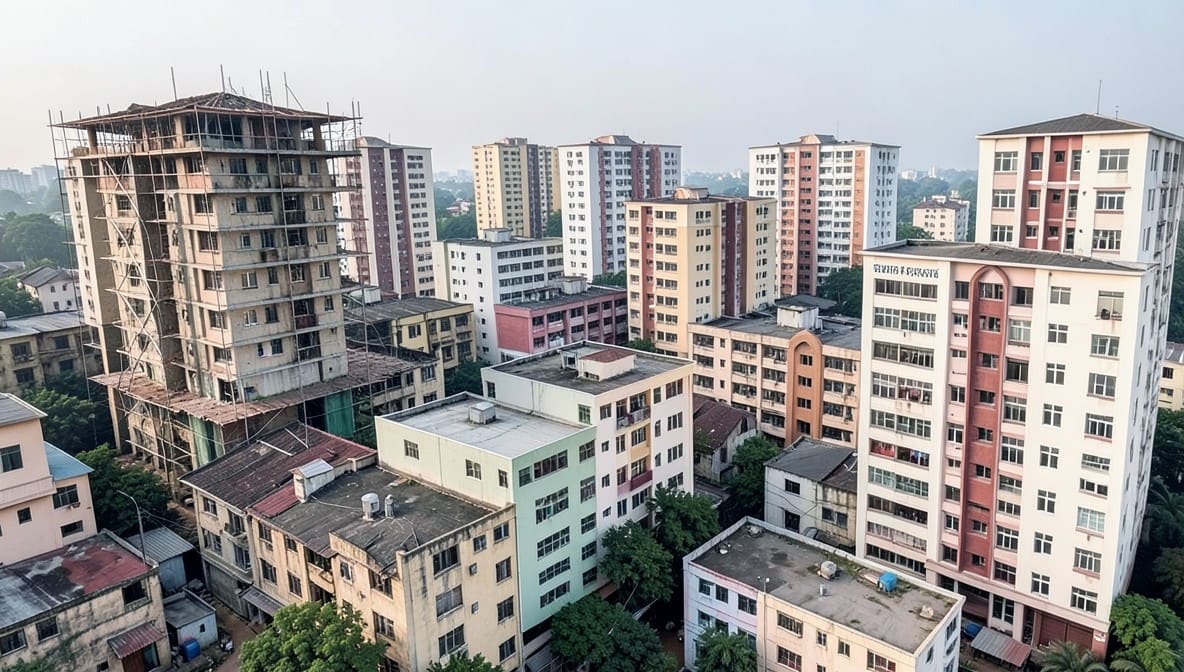
Article 300A & DCPR 33(9) | MHADA Cannot Force Cluster Redevelopment on Co-operative Societies Without Consent : Bombay HC
Case Law Analysis
|Bombay High Court

Article 300A & DCPR 33(9) | MHADA Cannot Force Cluster Redevelopment on Co-operative Societies Without Consent : Bombay HC

Bombay High Court holds that MHADA lacks statutory authority to include co-operative housing societies in cluster redevelopment under DCPR 33(9) without their consent, as it violates lease rights and constitutional protections under Article 300A. The ruling reinforces that state agencies cannot override property rights without explicit legal backing.

Presidency Towns Insolvency Act | Creditors Can Lodge Claims Without Decree : Bombay HC
|Bombay High Court

Presidency Towns Insolvency Act | Creditors Can Lodge Claims Without Decree : Bombay HC

Bombay High Court clarifies that under the Presidency Towns Insolvency Act, 1909, creditors need not hold a decree to lodge claims with the official assignee. The official assignee must independently examine claims, and creditors with pending proceedings must secure final adjudication orders for dividend distribution, ensuring broader access to insolvency proceedings.

Legitimate Expectation & Article 14 | Bombay HC Bars Mid-Process Change in PMC Promotion Rules : Bombay HC
Case Law Analysis
|Bombay High Court

Legitimate Expectation & Article 14 | Bombay HC Bars Mid-Process Change in PMC Promotion Rules : Bombay HC

Bombay High Court rules that altering promotion rules after the selection process has commenced violates employees' legitimate expectation and constitutional rights under Articles 14 and 16. The court directed Pune Municipal Corporation to complete promotions under the original 2014 Rules, reinforcing procedural fairness in administrative actions affecting service law.

Section 11 Arbitration Act | Referral Court’s Role Confined to Prima Facie Arbitration Agreement Existence : Bombay HC
Case Law Analysis
|Bombay High Court

Section 11 Arbitration Act | Referral Court’s Role Confined to Prima Facie Arbitration Agreement Existence : Bombay HC

Bombay High Court clarifies that under Section 11 of the Arbitration Act, the referral court’s jurisdiction is strictly limited to verifying the prima facie existence of an arbitration agreement. Issues like limitation, abandonment, or merits of the dispute must be left to the arbitral tribunal, reinforcing minimal judicial intervention in arbitration referrals.

Section 32G Maharashtra Tenancy Act | Civil Courts Retain Exclusive Jurisdiction Over Joint Family Property Disputes : Bombay HC
Case Law Analysis
|Bombay High Court

Section 32G Maharashtra Tenancy Act | Civil Courts Retain Exclusive Jurisdiction Over Joint Family Property Disputes : Bombay HC

Bombay High Court rules that tenancy authorities under the Maharashtra Tenancy Act cannot adjudicate disputes involving joint family property, reinforcing civil courts' exclusive jurisdiction. The judgment clarifies that Section 32G orders do not override the civil court's authority in partition suits or ownership disputes under Hindu Law.

Possessory Rights in Redevelopment | Petitioners Entitled to Alternate Accommodation & Transit Rent Pending Title Adjudication Under MCS Act : Bombay HC
Case Law Analysis
|Bombay High Court

Possessory Rights in Redevelopment | Petitioners Entitled to Alternate Accommodation & Transit Rent Pending Title Adjudication Under MCS Act : Bombay HC

The Bombay High Court has ruled that individuals in lawful possession of flats under redevelopment, even without registered title, are entitled to interim possession of alternate accommodation and transit rent while title disputes are resolved. This protects vulnerable occupants from displacement during prolonged litigation, reinforcing possessory rights as provisional ownership under the Maharashtra Co-operative Societies Act.

Section 9 Arbitration Act | Prima Facie Default + Asset Dissipation Risk Justifies Interim Relief Before Tribunal Constitution : Bombay HC
Case Law Analysis
|Bombay High Court

Section 9 Arbitration Act | Prima Facie Default + Asset Dissipation Risk Justifies Interim Relief Before Tribunal Constitution : Bombay HC

The Bombay High Court has ruled that a petitioner need not wait for the arbitral tribunal to be constituted to seek interim relief under Section 9 - showing a prima facie breach and credible risk of asset dissipation is sufficient. This empowers lenders and creditors to act swiftly in commercial disputes, preventing irreparable harm before arbitration even begins.

Delayed FIR + Civil Investment Dispute | Anticipatory Bail Warranted When Criminal Proceedings Used for Recovery: Bombay HC Aurangabad
Case Law Analysis
|Bombay High Court

Delayed FIR + Civil Investment Dispute | Anticipatory Bail Warranted When Criminal Proceedings Used for Recovery: Bombay HC Aurangabad

The Bombay High Court granted anticipatory bail where a two-year delay in filing the FIR and the existence of prior civil remedies under the NI Act undermined the criminal allegations of cheating. The ruling reinforces that criminal law cannot be weaponized to enforce civil debt recovery, especially when initial returns were paid and no other victims are identified, setting a critical boundary for misuse of IPC Sections 420 and 406.

Section 37 NDPS Act | Mere Driving Role Without Nexus to Contraband Justifies Bail Despite Statutory Bar : Bombay HC Aurangabad
Case Law Analysis
|Bombay High Court

Section 37 NDPS Act | Mere Driving Role Without Nexus to Contraband Justifies Bail Despite Statutory Bar : Bombay HC Aurangabad

The Bombay High Court Aurangabad Bench granted bail to a truck driver under the NDPS Act, holding that mere operation of a vehicle containing contraband, without evidence of knowledge, intent, or benefit, fails to satisfy the stringent twin conditions of Section 37. This ruling clarifies that drivers cannot be automatically equated with offenders - protecting innocent transporters from prolonged detention in drug cases lacking substantive linkage.

Presidency-Towns Insolvency Act, 1909 | Claim Valid Without Court Decree: Affidavit & Documents Suffice for Official Assignee : Bombay HC
|Bombay High Court

Presidency-Towns Insolvency Act, 1909 | Claim Valid Without Court Decree: Affidavit & Documents Suffice for Official Assignee : Bombay HC

The Bombay High Court has ruled that creditors need not obtain a court decree to file claims with the Official Assignee under the Presidency-Towns Insolvency Act, 1909. Proof of debt through sworn affidavit and supporting documents is sufficient, streamlining insolvency proceedings and empowering unsecured creditors who lack the resources for litigation. This clarifies a long-standing ambiguity and aligns procedural fairness with the Act’s rehabilitative intent.

Section 32G Maharashtra Tenancy Act | Tenancy Rights Do Not Automatically Vest in Karta; Civil Courts Retain Jurisdiction to Determine Joint Family Status : Bombay HC
Case Law Analysis
|Bombay High Court

Section 32G Maharashtra Tenancy Act | Tenancy Rights Do Not Automatically Vest in Karta; Civil Courts Retain Jurisdiction to Determine Joint Family Status : Bombay HC

The Bombay High Court has ruled that even when tenancy rights are claimed under Section 32G of the Maharashtra Tenancy Act, civil courts retain the authority to determine whether those rights vest in an individual or as Karta of a Hindu joint family. This clarifies that statutory tenancy protections do not override fundamental property rights under Hindu law, impacting partition suits and inheritance claims in rural Maharashtra.

Section 9 Arbitration Act | Injunction to Restrain Asset Disposal Does Not Authorize Bank Account Freezing : Bombay HC
Case Law Analysis
|Bombay High Court

Section 9 Arbitration Act | Injunction to Restrain Asset Disposal Does Not Authorize Bank Account Freezing : Bombay HC

The Bombay High Court clarifies that an injunction under Section 9 of the Arbitration Act is a negative restraint on disposal, not an order for attachment or freezing of bank accounts. Misinterpreting such orders as authority to freeze accounts invites contempt, as it disrupts legitimate business operations and exceeds the statutory purpose of asset preservation.

Section 109(1) BNS | Delayed FIR + Independent Witness Testimony Justifies Anticipatory Bail in Marital Dispute: Bombay HC Aurangabad
Case Law Analysis
|Bombay High Court

Section 109(1) BNS | Delayed FIR + Independent Witness Testimony Justifies Anticipatory Bail in Marital Dispute: Bombay HC Aurangabad

The Bombay High Court granted anticipatory bail to a wife accused of pushing her husband from a balcony, holding that a delayed FIR combined with corroborating testimony from police and neighbors that the husband jumped while intoxicated creates a credible risk of false implication. This ruling reinforces that marital discord alone, when paired with procedural irregularities, cannot justify pre-arrest detention under the Bharatiya Nyaya Sanhita.

Section 9 Arbitration Act | Prima Facie Case Requires Proven Readiness to Perform, Not Just Registered Agreement : Bombay HC
|Bombay High Court

Section 9 Arbitration Act | Prima Facie Case Requires Proven Readiness to Perform, Not Just Registered Agreement : Bombay HC

The Bombay High Court ruled that registering a development agreement alone is insufficient to establish a prima facie case for interim relief under Section 9. The petitioner must demonstrate concrete readiness and willingness to fulfill contractual obligations, reinforcing that procedural formality cannot substitute for substantive performance capacity. This sets a critical precedent for developers and cooperative societies in redevelopment disputes.

No Dishonest Intent Under MPID Act | Bail Granted Despite Economic Offence Charges When Investor Voluntarily Participated : Bombay HC Aurangabad
Case Law Analysis
|Bombay High Court

No Dishonest Intent Under MPID Act | Bail Granted Despite Economic Offence Charges When Investor Voluntarily Participated : Bombay HC Aurangabad

The Bombay High Court granted bail to an accused under the MPID Act and IPC, holding that voluntary investment by depositors and absence of fraudulent intent negate the essential ingredients of cheating. This clarifies that mere business losses, even in investment schemes, do not automatically constitute criminal dishonesty under the MPID Act - protecting first-time entrepreneurs from overcriminalization.

Anticipatory Bail Granted Where Spousal Association Alone Lacks Prima Facie Criminal Link | Section 438 BNSS : Bombay HC Aurangabad
Case Law Analysis
|Bombay High Court

Anticipatory Bail Granted Where Spousal Association Alone Lacks Prima Facie Criminal Link | Section 438 BNSS : Bombay HC Aurangabad

The Bombay High Court granted anticipatory bail to a wife not named in the FIR as a recipient of funds, holding that mere marital connection to an accused cannot substitute for direct evidence of criminal participation. This reinforces that liberty cannot be curtailed based on association alone under the Bharatiya Nyaya Sanhita, setting a critical safeguard for non-involved family members in financial crime cases.

Pre-Constitution Caste Document Warrants Fresh Scrutiny Under Natural Justice | Bombay HC
Case Law Analysis
|Bombay High Court

Pre-Constitution Caste Document Warrants Fresh Scrutiny Under Natural Justice | Bombay HC

The Bombay High Court has ruled that the unavailability of a pre-constitutional document at the time of initial caste verification cannot justify denial of justice. When such evidence emerges later, the Scrutiny Committee must reconsider the claim afresh, ensuring that procedural technicalities do not override substantive rights under affirmative action frameworks. This sets a critical precedent for Scheduled Tribe applicants relying on historical records.

Anticipatory Bail Under BNSS | Sole Reliance on Co-Accused Statement Without Corroboration or Direct Evidence Insufficient : Bombay HC
Case Law Analysis
|Bombay High Court

Anticipatory Bail Under BNSS | Sole Reliance on Co-Accused Statement Without Corroboration or Direct Evidence Insufficient : Bombay HC

The Bombay High Court granted anticipatory bail where the prosecution’s case rested entirely on an uncorroborated statement by a co-accused, with no evidence linking the applicant to the crime scene or the alleged malpractice. This reinforces that mere suspicion or hearsay from another accused cannot override the constitutional guarantee of personal liberty under Article 21 and Section 438 BNSS, especially when the applicant cooperates fully with investigation.

Section 47 Persons with Disabilities Act | Termination Without Suitable Alternative Posting Violates Disability Rights : Bombay HC Orders Compassionate Appointment
|Bombay High Court

Section 47 Persons with Disabilities Act | Termination Without Suitable Alternative Posting Violates Disability Rights : Bombay HC Orders Compassionate Appointment

Bombay High Court rules that terminating a disabled employee without offering a suitable alternative posting breaches Section 47 of the Persons with Disabilities Act, 1995. The Court directed compassionate appointment for the deceased employee’s son and release of leave encashment benefits, reinforcing disability rights in employment.

RTE Act Section 12(2) | Bombay HC Mandates 12-Week Reimbursement Timeline for Private Schools : Bombay HC
Case Law Analysis
|Bombay High Court

RTE Act Section 12(2) | Bombay HC Mandates 12-Week Reimbursement Timeline for Private Schools : Bombay HC

The Bombay High Court has imposed a strict 12-week timeline for state reimbursement to private schools under RTE Section 12(2), requiring recommendations within two weeks, eligibility determination within eight weeks, and disbursement within two weeks thereafter. This enforces a binding procedural framework to prevent chronic delays in statutory payments, directly impacting hundreds of unaided schools across Maharashtra.

Anticipatory Bail | Breach of Consent Terms Not a Ground for Cancellation Under Section 438 CrPC : Bombay HC
Case Law Analysis
|Bombay High Court

Anticipatory Bail | Breach of Consent Terms Not a Ground for Cancellation Under Section 438 CrPC : Bombay HC

The Bombay High Court has ruled that anticipatory bail granted on the basis of settlement or consent terms cannot be cancelled merely due to alleged breach of those terms. This clarifies that bail under Section 438 CrPC is a statutory right tied to the risk of arrest, not contractual compliance, protecting accused persons from being penalized for post-bail negotiations.

MCS Act Section 73(1) | Majority Vote of Co-operative Housing Society Binding on Minority for Redevelopment: Bombay HC
Case Law Analysis
|Bombay High Court

MCS Act Section 73(1) | Majority Vote of Co-operative Housing Society Binding on Minority for Redevelopment: Bombay HC

The Bombay High Court has ruled that when a co-operative housing society approves redevelopment by a valid majority under Section 73(1) of the Maharashtra Co-operative Societies Act, dissenting members cannot block the project over disputes about transfer of development rights or area allocation. This sets a critical precedent for urban renewal, ensuring that procedural democracy within societies overrides individual obstructionism.