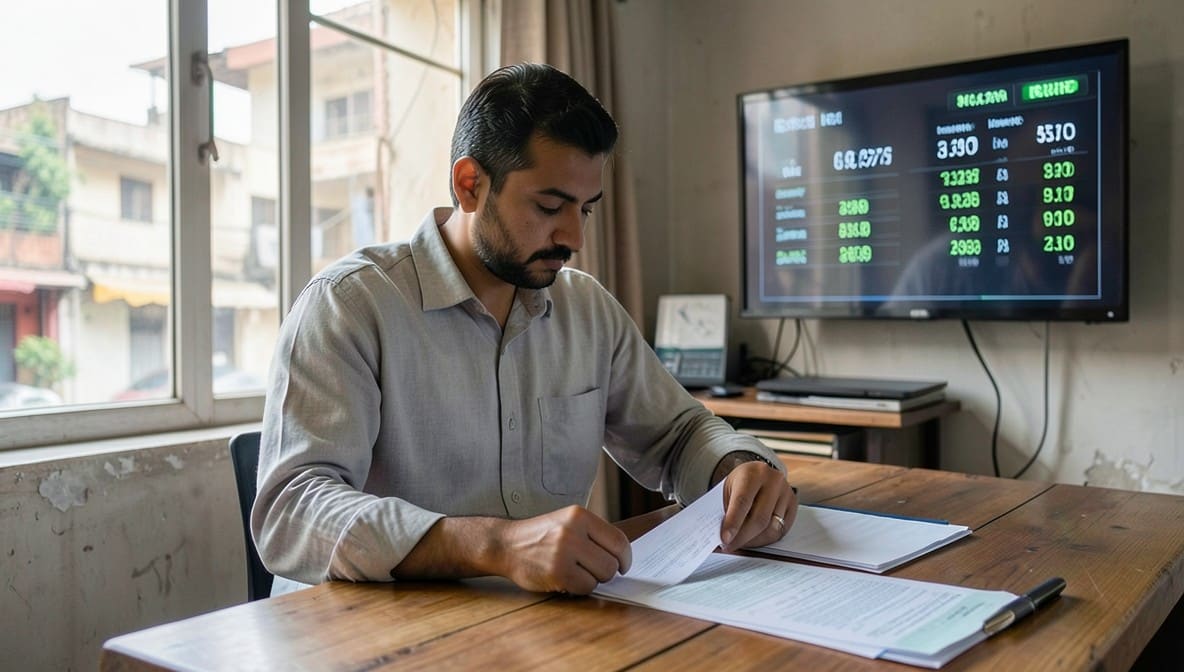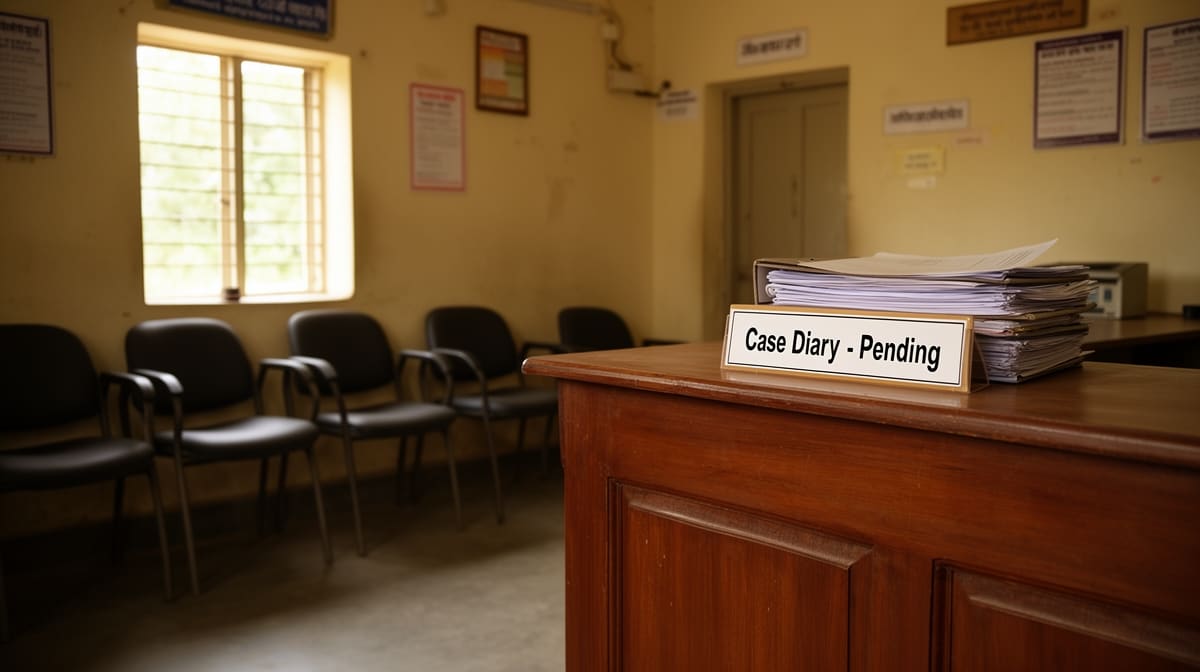
The Bombay High Court has granted regular bail to an accused in a high-stakes economic offence under the Maharashtra Protection of Interest of Depositors Act and multiple IPC sections, emphasizing that absence of dishonest intent and voluntary investment by complainants negate the essential ingredients of cheating. The judgment reinforces that prolonged pre-trial incarceration cannot be sustained where investigation is complete and no evidence suggests criminal mens rea.
Background & Facts
The Dispute
The applicant, Aniruddha Mukund Dhas, a 23-year-old agriculturalist from Erandgaon Dhas, Ahmednagar, was arrested in connection with Crime No. 0618 of 2024 registered at Shevgaon Police Station. The case involves allegations of cheating, criminal breach of trust, and violation of the Maharashtra Protection of Interest of Depositors Act, 1999, arising from his purported operation of a share market investment business.
Key Facts
- The complainant voluntarily visited the applicant’s office on 25.01.2024 and invested a total of Rs. 7,00,000 in multiple installments for share market trading.
- The applicant claimed to be conducting business through Angel One Ltd., a registered trading agency.
- The complainant alleged that after one month, when returns were demanded, the applicant avoided contact and the office was found locked.
- The complainant filed the FIR on 26.02.2024.
- Investigating officers recorded statements of multiple investors including Deepak Mhaske, Ramnath Kalamkar, Chandrakant Shankar Nalwade, and Vaibhav Ramesh Gosavi.
- These investors confirmed they had invested amounts voluntarily and some had received partial returns.
- No Demat account was opened in the name of any investor.
- The applicant’s business lacked formal registration as a trading company.
- The applicant’s mother deposited Rs. 5,00,000 as bail security.
- The chargesheet was filed on 29.05.2025.
- The applicant has been in custody since 02.03.2025 - a period of 15 months.
- No charges have yet been framed by the trial court.
Procedural History
- 25.01.2024: Complainant voluntarily invested Rs. 7,00,000 in applicant’s office.
- 26.02.2024: FIR registered at Shevgaon Police Station.
- 02.03.2025: Applicant arrested and taken into custody.
- 29.05.2025: Chargesheet filed by Investigating Officer.
- 21.02.2026: Co-accused granted bail by Additional Sessions Judge, Ahmednagar.
- 24.06.2026: Bail application heard and reserved.
- 02.07.2026: Judgment pronounced granting bail.
The Parties' Positions
The applicant contends that the transaction was voluntary, no false assurances were made, and losses resulted from market collapse, not fraud. He argues that the absence of intent to defraud and the fact that some investors received partial returns refute the charge of cheating.
The State contends that the applicant operated an unregistered business, diverted funds to personal accounts, and created a false impression of legitimate trading, thereby committing criminal breach of trust and cheating under IPC and MPID Act.
Relief Sought
The applicant seeks regular bail on grounds of prolonged custody, completion of investigation, absence of risk of evidence tampering, and lack of mens rea. He also cites judicial precedents granting bail in similar circumstances.
The Legal Issue
The central question was whether prolonged pre-trial detention in an economic offence under Sections 420, 406, 409 r/w 34 IPC and Section 3 of the MPID Act can be sustained where the investigation is complete, chargesheet filed, no charges framed, and evidence suggests voluntary investment without dishonest intent.
Arguments Presented
For the Appellant/Petitioner
Counsel for the applicant relied on Manik Madhukar Sarve and Others v. Vitthal Damuji Meher and Others (2024) 10 SCC 753, arguing that mere failure to return money does not equate to criminal dishonesty. He emphasized that the complainant approached the applicant voluntarily, and several investors received partial returns - a fact acknowledged even by the prosecution. He cited multiple bail orders from the same court granting relief in factually similar cases and highlighted that the applicant’s mother had already deposited Rs. 5,00,000 as security. He argued that with the chargesheet filed and no trial imminent, continued detention served no purpose.
For the Respondent/State
The Public Prosecutor contended that the offence was serious and involved multiple victims, diversion of funds, and lack of regulatory compliance. He argued that the absence of Demat accounts and unregistered business operations indicated a fraudulent scheme designed to mislead depositors. He maintained that the gravity of the offence under MPID Act warranted denial of bail, regardless of partial repayments.
The Court's Analysis
The Court examined the nature of the transactions and the evidentiary record. It noted that the complainant himself initiated contact with the applicant and invested voluntarily. The Court observed that the statements of other investors, even those relied upon by the prosecution, confirm that some received partial returns - a fact inconsistent with a scheme of fraudulent intent.
"The fact that some investors have received part amounts of their investment clearly indicates absence of a common intention to cheat or dishonestly induce investment."
The Court distinguished this case from typical MPID Act violations where funds are collected without any underlying business or genuine intent to trade. Here, the applicant operated an office, engaged in market activity, and had a connection with Angel One Ltd. The Court held that market losses, however severe, cannot be criminalized absent proof of premeditated deceit.
The Court further emphasized that the applicant had been in custody for 15 months, with the chargesheet filed and no trial scheduled. The Court noted that the co-accused had already been granted bail, and there was no indication of risk of evidence tampering or flight. The Court held that the right to liberty under Article 21 of the Constitution must prevail where the prosecution’s case lacks the essential ingredient of dishonest intent.
The Verdict
The applicant succeeded. The Court granted regular bail on the following terms: the applicant shall be released on a personal bond of Rs. 20,000 with one surety of like amount; he shall not tamper with prosecution evidence; and he shall attend all court dates unless exempted by the trial court. The Court explicitly noted that the chargesheet is filed, investigation is complete, and no charges have been framed - making continued detention unjustified.
What This Means For Similar Cases
Voluntary Investment Undermines Cheating Allegations
- Practitioners must highlight voluntary participation by complainants as a decisive factor negating mens rea under Section 420 IPC.
- Where investors initiate contact and invest without coercion, courts are likely to reject the charge of cheating absent clear evidence of false representation.
Partial Repayments Are Material to Dishonest Intent
- Even partial returns to investors can be pivotal in rebutting allegations of criminal dishonesty.
- Prosecution cannot rely solely on non-repayment; the burden shifts to prove intent to defraud at the time of receipt.
Prolonged Custody After Chargesheet Filing Demands Bail
- Courts will not sustain pre-trial detention beyond 12 - 15 months where investigation is closed and trial is not imminent.
- Bail should be the norm, not the exception, in economic offences once chargesheet is filed and no risk of evidence destruction is shown.
MPID Act Does Not Automatically Bar Bail
- The mere invocation of the MPID Act does not justify denial of bail.
- Courts must examine the factual matrix - including business operations, investor awareness, and fund usage - before applying the Act’s stringent provisions.
Judicial Consistency in Similar Cases Is Binding
- When courts in the same jurisdiction have granted bail in factually analogous cases, refusal without distinction violates the principle of equal treatment.
- Counsel should cite prior bail orders from the same bench as persuasive authority.