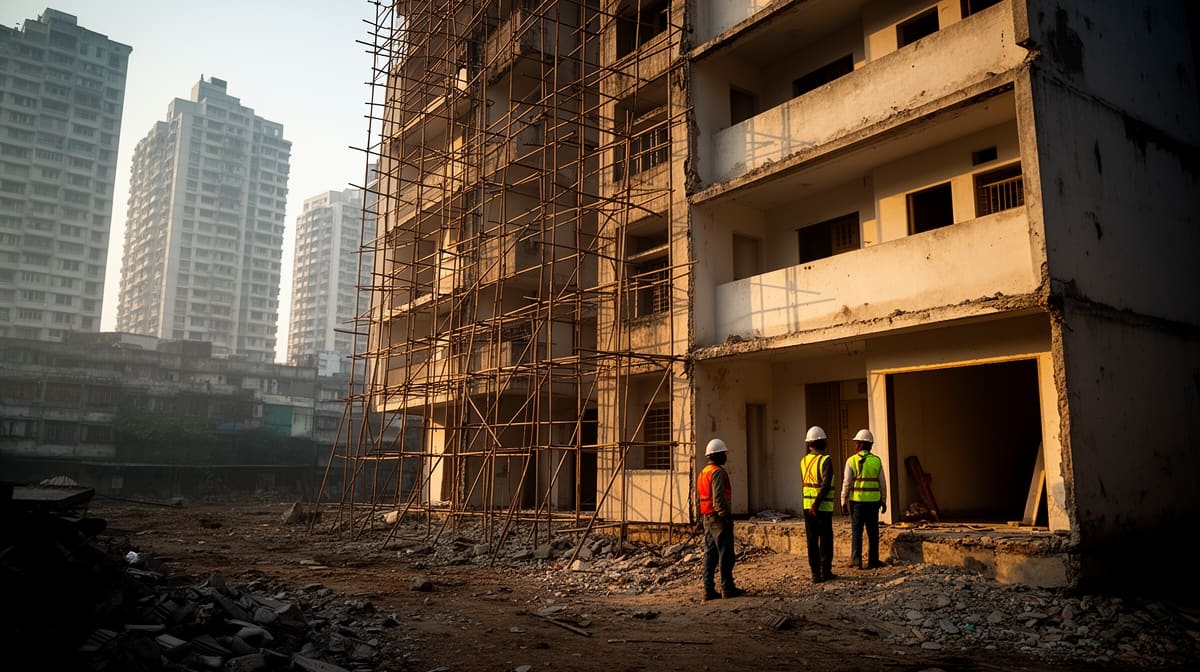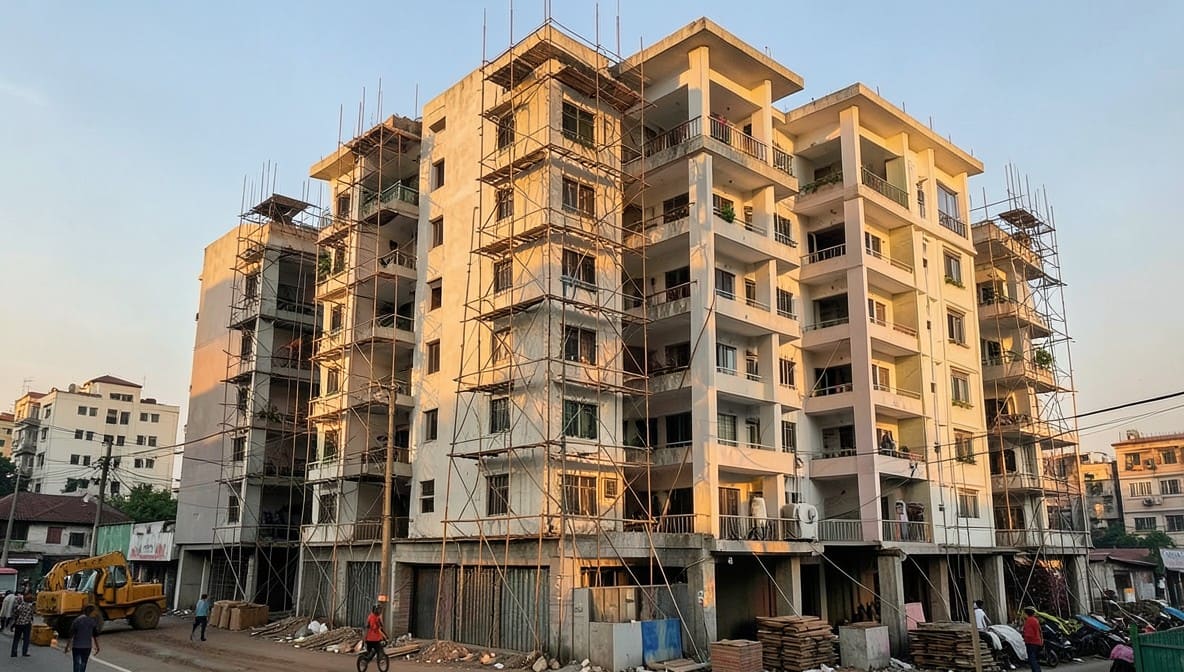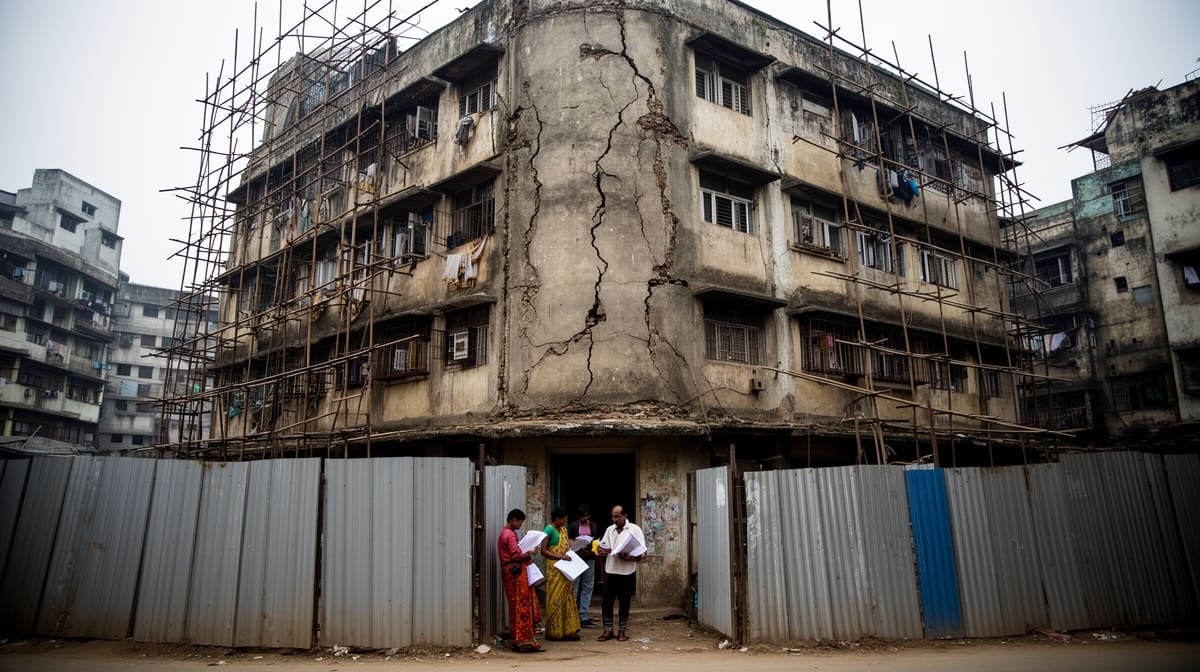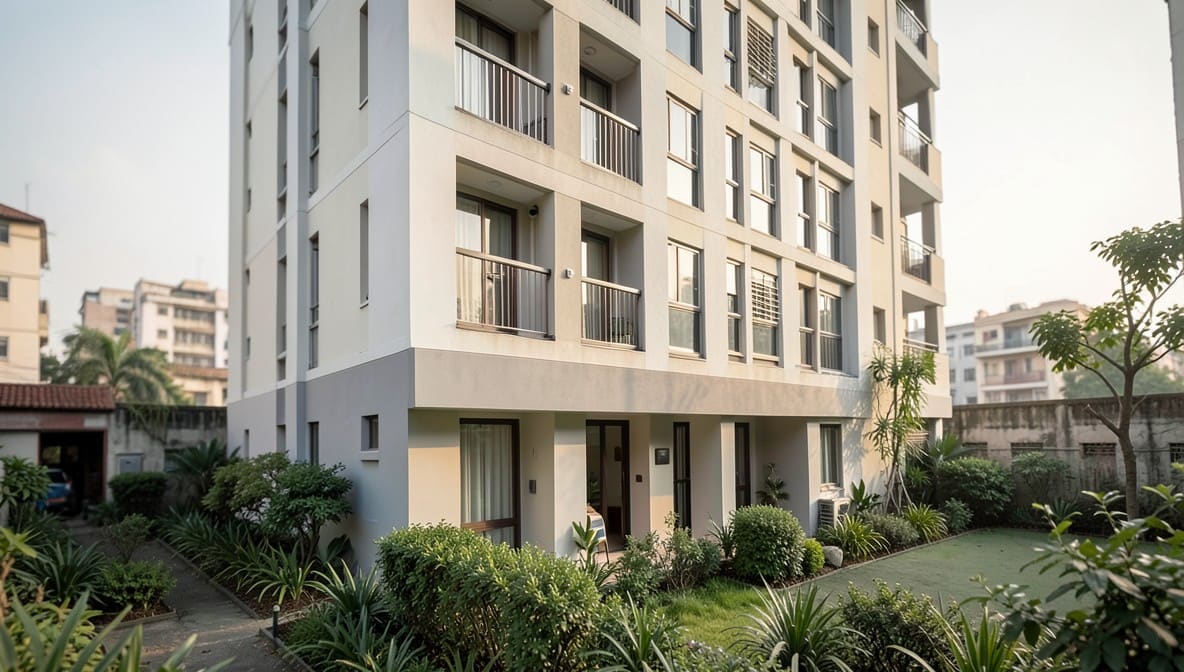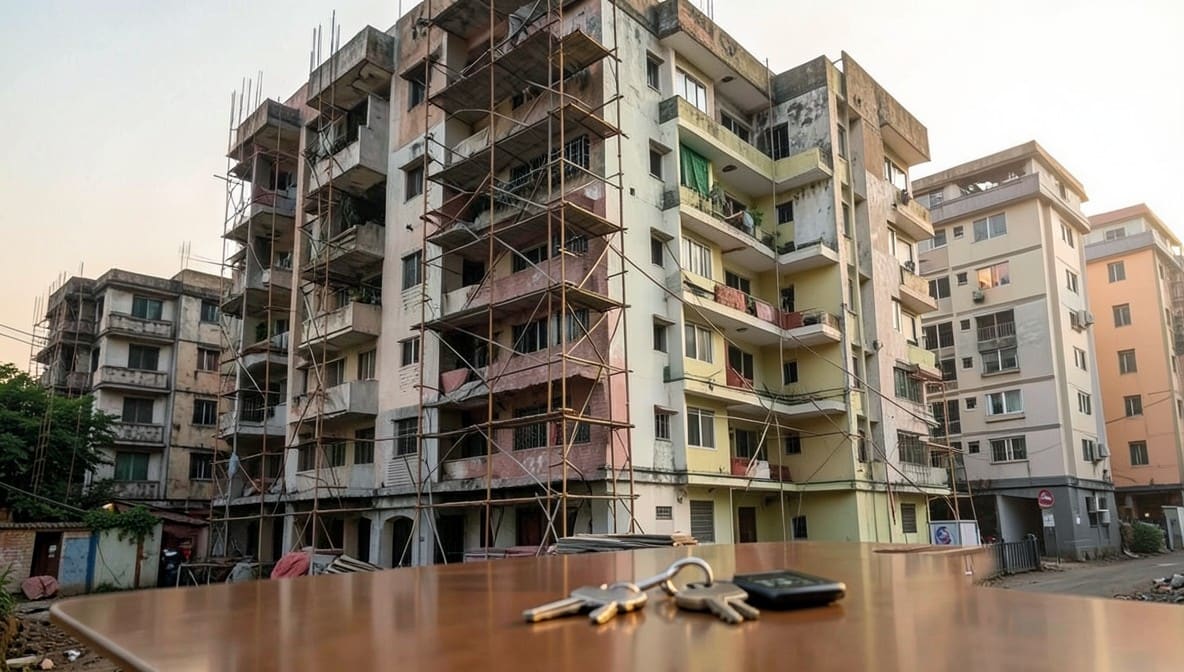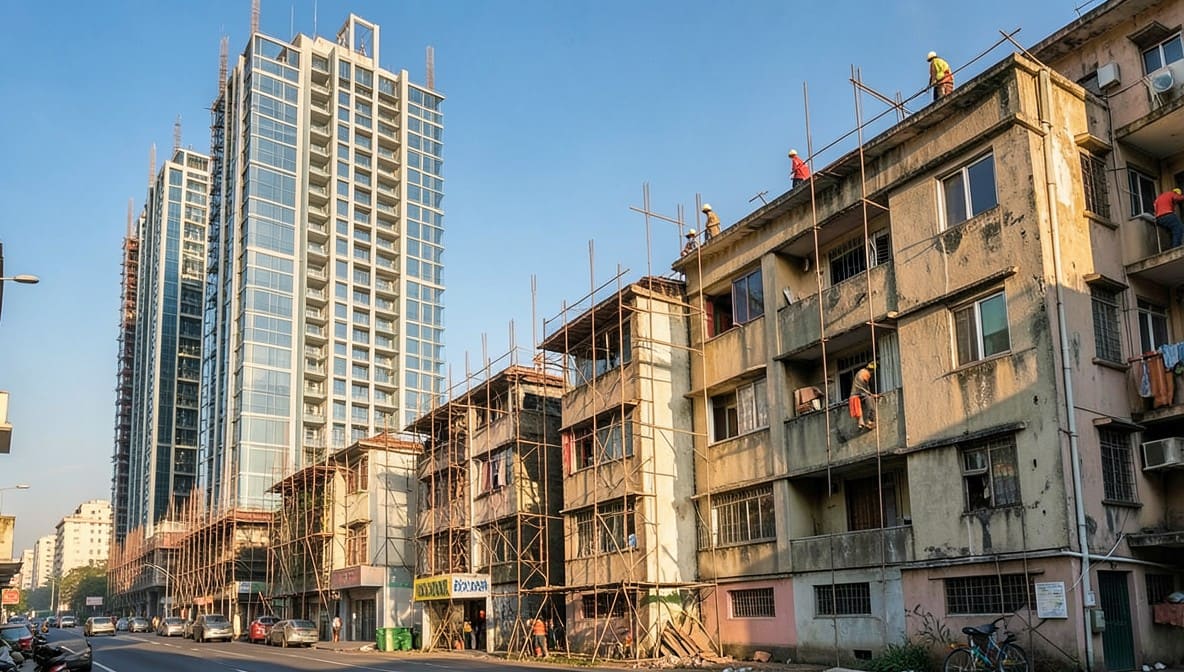
The Bombay High Court has affirmed that when a co-operative housing society’s redevelopment plan is approved by an overwhelming majority of members, the objections of a few cannot indefinitely stall the entire project. The judgment underscores the collective nature of redevelopment rights and the limits of individual resistance in such communal undertakings.
Background & Facts
The Dispute
The petitioner, N Mehta Infra Realty LLP, is a registered real estate development firm seeking possession of Flat No. 102 and Shop No. 5 from respondent Nos. 2 to 4, members of Deepa Co-operative Housing Society Limited (respondent No. 1). The Society, established in a building constructed in 1980, comprises 17 units - 9 residential and 8 commercial. Due to the building’s age and structural deterioration, all members agreed in 2023 to explore redevelopment options without engaging public consultants or issuing tenders. Each member was permitted to approach developers directly.
Key Facts
- The petitioner submitted its initial redevelopment proposal under the name M/s. N.M. Realty on 06.01.2024.
- A revised proposal was submitted in mid-January 2024.
- The General Body of the Society resolved to appoint the petitioner as developer following evaluation of proposals.
- On 07.06.2024, the petitioner notified the Society that the project would proceed under the name N Mehta Infra Realty LLP.
- Revised terms were circulated on 15.04.2025, including drafts of the Development Agreement and Power of Attorney.
- A Special General Body Meeting was held on 20.04.2025 to approve the documents.
- On 15.07.2025, 15 members (representing 15 units) executed and registered the Development Agreement and Power of Attorney.
- On 09.09.2025, the petitioner applied to the Municipal Corporation for building plan approval.
- On 30.03.2026, the Municipal Corporation granted Intimation of Disapproval and approved the redevelopment plans.
- On 05.04.2026, the petitioner emailed all members requesting vacant possession by 05.05.2026.
- Permanent Alternate Accommodation Agreements were executed and registered by 15 members.
- Reminder emails were sent on 04.05.2026 and 15.05.2026 to respondent Nos. 2 to 4.
- On 08.05.2026, the Society itself emailed all members requesting possession by 20.05.2026.
- Respondent Nos. 2 to 4 refused to vacate, citing unresolved issues: (i) transfer of liquor licence under the Bombay Prohibition Act, 1949 (respondents 3 and 4), and (ii) disputed area of alternate accommodation (respondent No. 2).
Procedural History
- 05.04.2026: Petitioner issued notice for possession by 05.05.2026.
- 04.05.2026: First reminder email sent to respondents 2 to 4.
- 15.05.2026: Second communication requesting acceptance of alternate accommodation terms or proposed changes.
- 16 - 17.05.2026: Invited respondents to execute agreements at petitioner’s office.
- 20.05.2026: Society’s deadline for possession expired without compliance.
- 20310 of 2026: Commercial Arbitration Petition filed before Bombay High Court on an unspecified date prior to 01.07.2026.
- 01.07.2026: Judgment delivered by Justice Amit Borkar.
The Parties' Positions
For the Petitioner
The petitioner argued that the Development Agreement, executed and registered by 15 of 17 members, binds all members of the Society. It relied on Pranav Constructions Limited v. Priyadarshini Co-operative Housing Society Limited & Others (2025 SCC OnLine Bom 6498) to assert that courts must protect majority-driven redevelopment from being held hostage by minority dissent. The petitioner emphasized that municipal approvals are in place, 15 members have vacated, and the project is at risk of financial and temporal collapse.
For Respondent No. 1 (Society)
The Society supported the petitioner, stating that its obligation to pay transit rent under the Development Agreement is triggered only after all members vacate. Hence, the delay caused by respondents 2 to 4 has paralyzed the entire project.
For Respondent Nos. 3 and 4
They contended that their liquor business, operated under the name Priyanka Wines, requires transfer of a licence under the Bombay Prohibition Act, 1949, a process they claimed takes considerable time. They argued they cannot be compelled to vacate until this statutory process is completed.
For Respondent No. 2
Respondent No. 2 disputed the area of the permanent alternate accommodation proposed under the Development Agreement, asserting that this unresolved issue precludes vacating the existing premises.
Relief Sought
The petitioner sought an order directing respondent Nos. 2 to 4 to immediately vacate and hand over vacant and peaceful possession of their premises. In the alternative, it sought appointment of a Court Receiver to take possession with police assistance if non-compliance persisted.
The Legal Issue
The central question was whether the Development Agreement, executed and registered by a clear majority of members of a co-operative housing society, binds dissenting members, and whether objections relating to statutory licence transfer or disputed area of alternate accommodation can justify withholding possession and stalling an entire redevelopment project.
Arguments Presented
For the Appellant/Petitioner
The petitioner relied on Pranav Constructions Limited v. Priyadarshini Co-operative Housing Society Limited & Others to argue that redevelopment of housing societies is a collective endeavor governed by the principle of majority rule under the Maharashtra Co-operative Societies Act, 1960. It submitted that once 15 of 17 members have executed binding agreements, obtained municipal approvals, and expressed willingness to vacate, the rights of the minority cannot override the collective interest. The petitioner emphasized that delay increases costs, erodes investor confidence, and violates the legitimate expectations of the majority.
For the Respondent/State
Respondent Nos. 3 and 4 argued that the Bombay Prohibition Act, 1949, imposes mandatory procedural requirements for transfer of liquor licences, which cannot be bypassed. Respondent No. 2 contended that the area of the proposed alternate accommodation is not clearly defined in the agreement and that this ambiguity must be resolved before vacating. The respondents collectively asserted that their rights under property law and statutory licensing regimes cannot be overridden by majority decision.
The Court's Analysis
The Court examined the nature of co-operative housing societies and the legal effect of agreements executed by a majority of members. It noted that redevelopment is not merely a private contractual matter but a collective social and economic undertaking affecting the entire society’s future.
"Redevelopment of a housing society concerns every member collectively. Delay by only a few members may not remain confined to their own premises. It may affect the rights and expectations of all remaining members and may also cause financial difficulties and uncertainty to the entire redevelopment project."
The Court rejected the argument that statutory licence transfer under the Bombay Prohibition Act, 1949, justified indefinite delay. It observed that no evidence was presented regarding the timeline for completion of the transfer process or steps taken to initiate it after the redevelopment decision. The Court held that such procedural requirements, while valid, are not absolute barriers to possession and can be addressed concurrently with relocation.
Regarding respondent No. 2’s claim of disputed area, the Court found no evidence that the dispute rendered the Development Agreement unenforceable. It held that such grievances are remediable through separate proceedings for specific performance, compensation, or adjustment, and cannot serve as a ground to block the entire project.
The Court emphasized the balance of convenience: refusal of interim relief would cause irreparable harm to the petitioner and the 15 compliant members, while compliance would not extinguish respondents’ rights - they remain free to pursue remedies for licence transfer or area disputes in appropriate forums.
"The objections raised by respondent Nos. 2 to 4 are matters which can be independently considered and decided in accordance with law. Those objections, in the facts of the present case, are not sufficient to justify withholding possession and delaying the redevelopment project any further."
The Court also noted the Society’s unanimous support for the petitioner and the fact that municipal approvals had been secured, reinforcing the legitimacy and momentum of the project.
The Verdict
The petition was allowed. Respondent Nos. 2 to 4 shall vacate and hand over vacant and peaceful possession of their respective premises within two weeks from 01.07.2026. If they fail to comply, the Court Receiver shall take possession with assistance from jurisdictional police authorities. The order is enforceable immediately.
What This Means For Similar Cases
Majority Redevelopment Decisions Are Binding
- Practitioners must now argue that once a redevelopment plan is approved by a clear majority under the society’s bylaws and registered agreements, dissenting members cannot unilaterally halt the project.
- Courts will prioritize collective interest over individual objections unless they involve fundamental rights or impossibility of compliance.
Statutory Licensing Delays Are Not Absolute Defences
- Objections based on transfer of liquor, trade, or municipal licences must be accompanied by concrete timelines and proof of proactive steps.
- Courts will not accept vague assertions of procedural delay as justification for indefinite possession retention.
Area Disputes Are Remediable Separately
-
Disputes over area, quality, or location of alternate accommodation do not invalidate the Development Agreement.
-
Members may seek specific performance, compensation, or adjustment in civil or arbitration proceedings without blocking redevelopment.
-
Always document all communications and approvals to establish majority consensus.
-
Ensure Development Agreements explicitly state that they bind all members, regardless of individual dissent.
-
Initiate statutory licence transfer procedures immediately upon approval of redevelopment to avoid claims of delay.