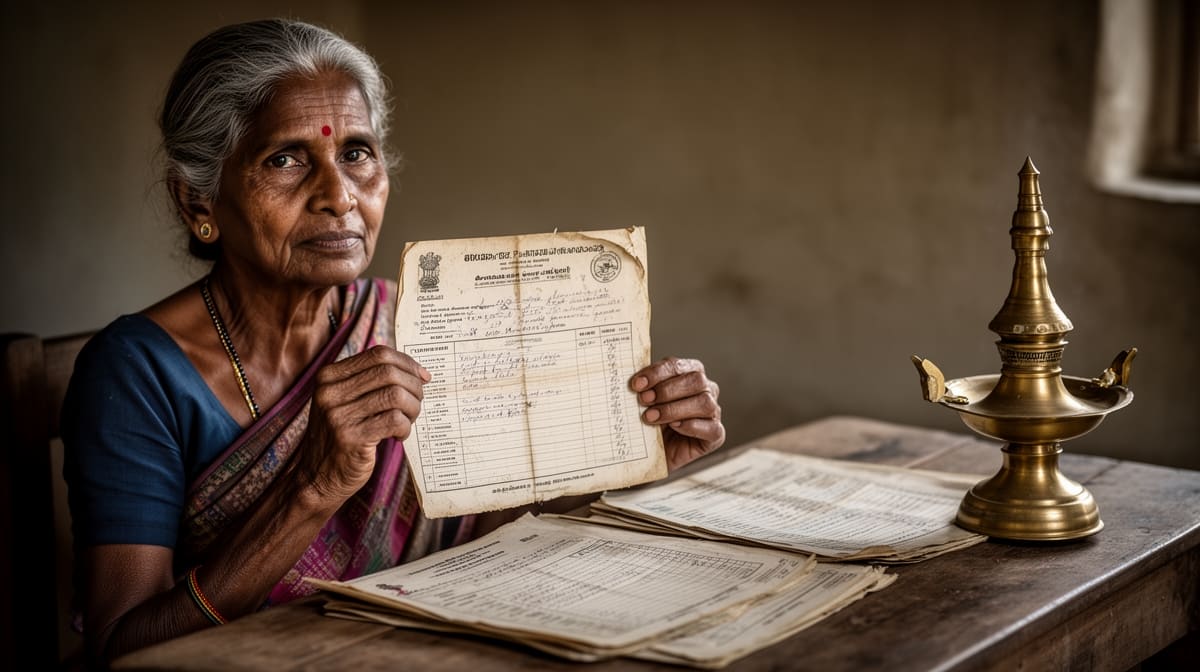
The Bombay High Court has clarified that a tenancy order under Section 32G of the Maharashtra Tenancy and Agricultural Lands Act, 1948, in the name of a Karta does not automatically confer exclusive ownership, and civil courts retain jurisdiction to determine whether such rights accrue to an individual or to a Hindu joint family. This ruling reinforces the primacy of family status over revenue records in partition disputes.
Background & Facts
The Dispute
The dispute arose from a suit for partition and separate possession of agricultural land in Village Nagargaon, Taluka Shirur, District Pune. The plaintiff, Shri Maruti Laxman Shelar, claimed a 1/5th share in the suit properties, including Gat No. 354, as a son of Laxman, one of two sons of the original holder, Sahadu. The defendants, including defendant no. 1 (now deceased, represented by heirs), contested the claim, asserting that Gat No. 354 was not part of the joint family property but was exclusively owned by defendant no. 1 as a protected tenant under the Maharashtra Tenancy and Agricultural Lands Act, 1948.
Key Facts
- Sahadu, the original holder, had two sons: Ramu and Laxman.
- A partition between Ramu and Laxman occurred prior to 1953, with Laxman receiving the suit properties.
- Laxman died in 1961.
- Defendant no. 1, son of Laxman, became Karta of the joint family after Laxman’s death.
- Gat No. 354 was cultivated by Laxman and his family prior to 1972.
- On 20.02.1972, the Agricultural Lands Tribunal (ALT) passed an order in favor of defendant no. 1 under Section 32G of the Tenancy Act, fixing the purchase price in his name.
- The Sub-Divisional Officer reversed the ALT order on appeal, but the Maharashtra Revenue Tribunal (MRT) restored it in revision.
- Revenue records (Exhibit 42) showed Laxman’s name in the cultivation column for Gat No. 354.
- Defendant no. 1’s name was entered as Karta in revenue records for all other joint family properties.
- No evidence was produced by defendant no. 1 to show that the purchase price under Section 32G was paid from his independent income.
Procedural History
- 1972: Order under Section 32G passed in favor of defendant no. 1 by ALT, confirmed by MRT.
- 2001: Suit for partition filed by plaintiff in the Court of Civil Judge (Junior Division), Pune.
- 2005: Trial Court decreed the suit, holding all properties including Gat No. 354 as joint family property, granting plaintiff 1/5th share.
- 2008: First Appeal dismissed by District Court, confirming trial court’s findings.
- 10.08.2001: Second Appeal admitted by Bombay High Court on the substantial question of law regarding civil court jurisdiction.
- 02.04.2026: Judgment reserved.
- 02.07.2026: Judgment pronounced.
The Parties' Positions
Appellants (Defendant no. 1’s heirs): Argued that the Section 32G order conferred exclusive ownership over Gat No. 354, and the civil court had no jurisdiction to re-examine tenancy status. Relied on Krishnabai Babya Navale v. Shankar Lahu Gharat, Ramakant Ganesh Naik v. Anusaya Shantaram Naik, and Suman Vishnu Pathak v. Usha w/o Prabhakarrao Koparkar.
Respondent (Plaintiff): Contended that defendant no. 1 acted as Karta, and the Section 32G order was issued in his representative capacity. The civil court was competent to determine joint family status. Relied on Shri Rajaram Bandu Gadade v. Shri Govind Sonba Gadade.
Relief Sought
The appellants sought to set aside the partition decree concerning Gat No. 354, arguing that the civil court lacked jurisdiction. The respondent sought confirmation of the 1/5th share in all suit properties, including Gat No. 354, as part of the joint family estate.
The Legal Issue
The central question was whether the civil court had jurisdiction to determine whether Gat No. 354 belonged to the Hindu joint family or was the exclusive property of defendant no. 1, notwithstanding the Section 32G order passed in his name.
Arguments Presented
For the Appellant
Counsel argued that the Section 32G order, confirmed by the MRT, conferred absolute ownership on defendant no. 1 as a protected tenant. Once tenancy rights were determined by statutory authorities under the Tenancy Act, the civil court was barred from re-adjudicating the nature of ownership. The burden, they contended, shifted to the plaintiff to prove joint family status after the tenancy order. Reliance was placed on Suman Pathak to assert that ownership in an individual’s name creates a presumption of exclusivity.
For the Respondent
Counsel countered that the Section 32G order was issued in defendant no. 1’s capacity as Karta, not as an individual. The civil court’s jurisdiction to determine joint family status is not ousted by tenancy proceedings unless the tenancy authority explicitly adjudicates ownership among family members. The plaintiff produced revenue records showing ancestral cultivation and no proof of independent income for the purchase price. Reliance was placed on Rajaram Gadade to affirm that civil courts alone can decide whether tenancy rights vest in a joint family or an individual.
The Court's Analysis
The Court examined the interplay between the Maharashtra Tenancy and Agricultural Lands Act, 1948, and the civil court’s inherent jurisdiction under the Code of Civil Procedure. It emphasized that tenancy authorities are empowered only to determine tenancy status, not proprietary rights among family members.
"The controversy regarding existence of the joint family and whether the certificate issued under Section 32G was issued on behalf of the joint family or in individual capacity cannot be decided by the tenancy court as it would be exclusive province of the civil court to decide the said controversy."
The Court noted that defendant no. 1 was undisputedly the Karta of the joint family, and his name was entered as such in revenue records for all other properties. The Section 32G order, while fixing the purchase price in his name, did not contain any finding that the tenancy was personal or that the purchase price was paid from his separate income. The plaintiff’s evidence, including the 7/12 extract showing Laxman’s cultivation, supported the joint family character of Gat No. 354.
The Court distinguished Krishnabai Navale and Suman Pathak, clarifying that those cases applied only where the property was clearly held in an individual’s name without any nexus to joint family status. Here, the Karta’s role and the ancestral cultivation pattern created a rebuttable presumption of joint ownership. The burden remained on the appellant to prove independent acquisition, which was not discharged.
The Court held that the civil court did not encroach upon the jurisdiction of the tenancy authority. It merely assessed whether the tenancy order was issued in a representative capacity, a question squarely within its domain. The concurrent findings of the trial and appellate courts were therefore sustainable.
The Verdict
The second appeal was dismissed. The Bombay High Court upheld the concurrent findings of the lower courts that Gat No. 354 formed part of the joint family property. The decree for partition granting the plaintiff a 1/5th share in all suit properties, including Gat No. 354, was confirmed. No monetary relief was modified, but the legal status of the property was definitively settled in favor of the joint family.
What This Means For Similar Cases
Tenancy Orders Do Not Confer Exclusive Title Against Joint Family Claims
- Practitioners must now prove independent acquisition and source of funds when a Karta holds tenancy rights under Section 32G.
- A mere mutation or Section 32G order in the Karta’s name is insufficient to rebut the presumption of joint family ownership.
- Revenue records showing ancestral cultivation remain critical evidence in partition suits.
Civil Courts Retain Jurisdiction Over Family Status Disputes
- Tenancy authorities cannot adjudicate proprietary rights among coparceners.
- Any challenge to joint family status must be raised before a civil court, not through objections to tenancy orders.
- Courts will examine the totality of evidence - family structure, cultivation history, and income source - to determine true ownership.
Burden of Proof Shifts to the Claimant of Exclusive Ownership
- When a Karta claims exclusive ownership of tenanted land, the burden lies on him to show the purchase price was paid from personal funds.
- Absent such proof, courts will presume the tenancy right was acquired for the benefit of the joint family.
- This principle applies equally to other statutory tenancy regimes where family status is involved.