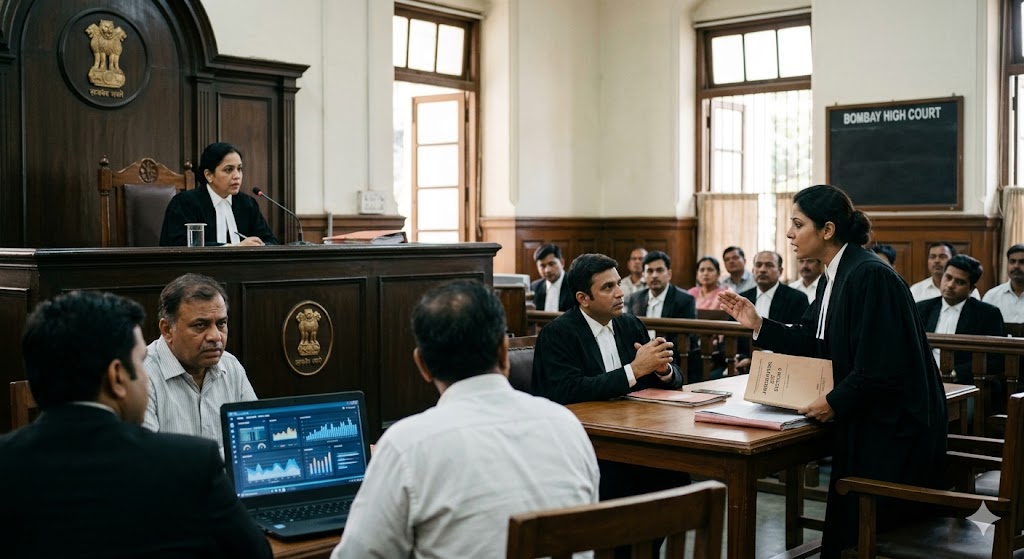
The Bombay High Court has clarified that a registered development agreement alone does not establish a prima facie case for interim relief under Section 9 of the Arbitration and Conciliation Act, 1996. The Court emphasized that the petitioner’s readiness and ability to perform contractual obligations are indispensable to securing interim protection, particularly when the project has languished for over a decade.
Background & Facts
The Dispute
The petitioner, Jaycee Homes Private Limited, a construction and redevelopment company, sought interim relief under Section 9 of the Arbitration and Conciliation Act, 1996, to restrain the respondent, Kurla Moon Rock Municipal Employee Cooperative Housing Society Limited, from appointing another developer and to appoint a Court Receiver over property bearing Survey No. 187, Hissa No. 2, CTS No. 823, measuring 826.50 square metres at Kurla West, Mumbai. The dispute arose from a Development Agreement dated 16 August 2014, under which the respondent granted development rights to the petitioner for redevelopment of the existing dilapidated building.
Key Facts
- The Development Agreement was registered on 16 August 2014
- The petitioner was required to complete redevelopment within two years of the Commencement Certificate, with a six-month grace period
- The petitioner paid Rs. 12,64,375/- as corpus to the society members, a sum disputed by the respondent
- Municipal Corporation issued Intimation of Disapproval (IOD) on 22 June 2015 in the name of the petitioner’s attorney
- The petitioner never called upon society members to vacate premises, nor paid transit rent, brokerage, or shifting charges as required under Clause 18 of the Agreement
- No construction commenced despite IOD issuance in 2015
- In 2016, the petitioner proposed assignment of its rights to M/s. Bhatia & Rahat Realty LLP
- The respondent granted consent via Special General Body Meeting on 3 April 2016
- The petitioner acknowledged the assignment in a letter dated 27 October 2016
- The respondent terminated the Development Agreement by letter dated 14 February 2018, citing non-performance and abandonment
- The petitioner did not challenge the termination, respond to it, or initiate arbitration until 1 August 2023
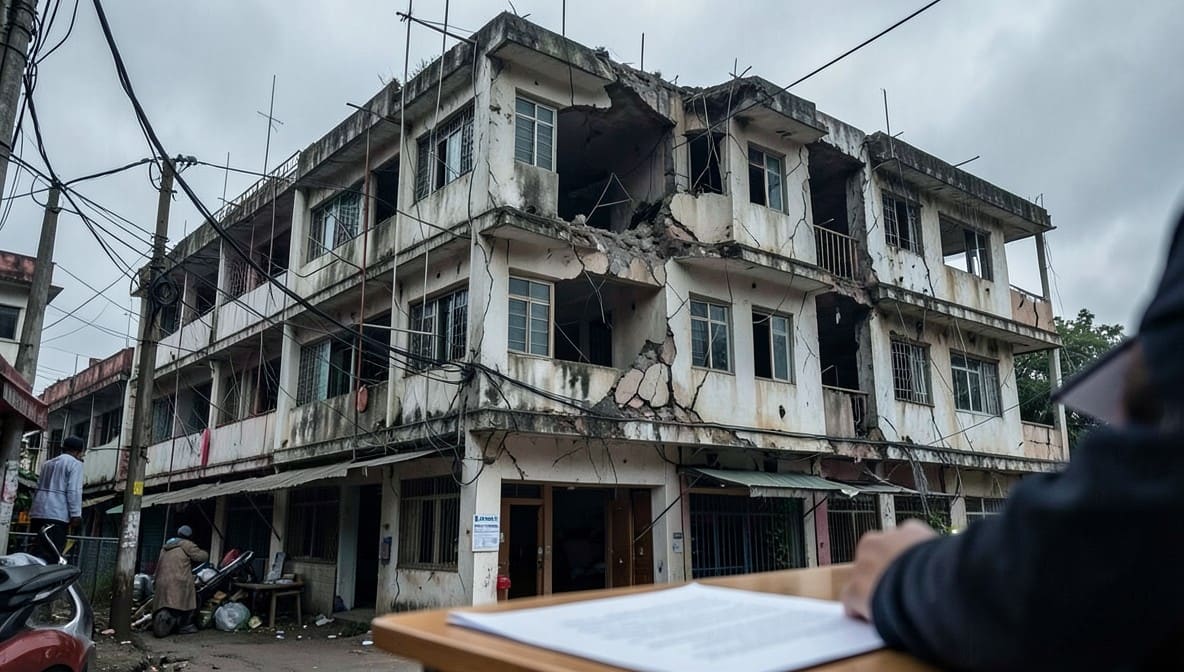
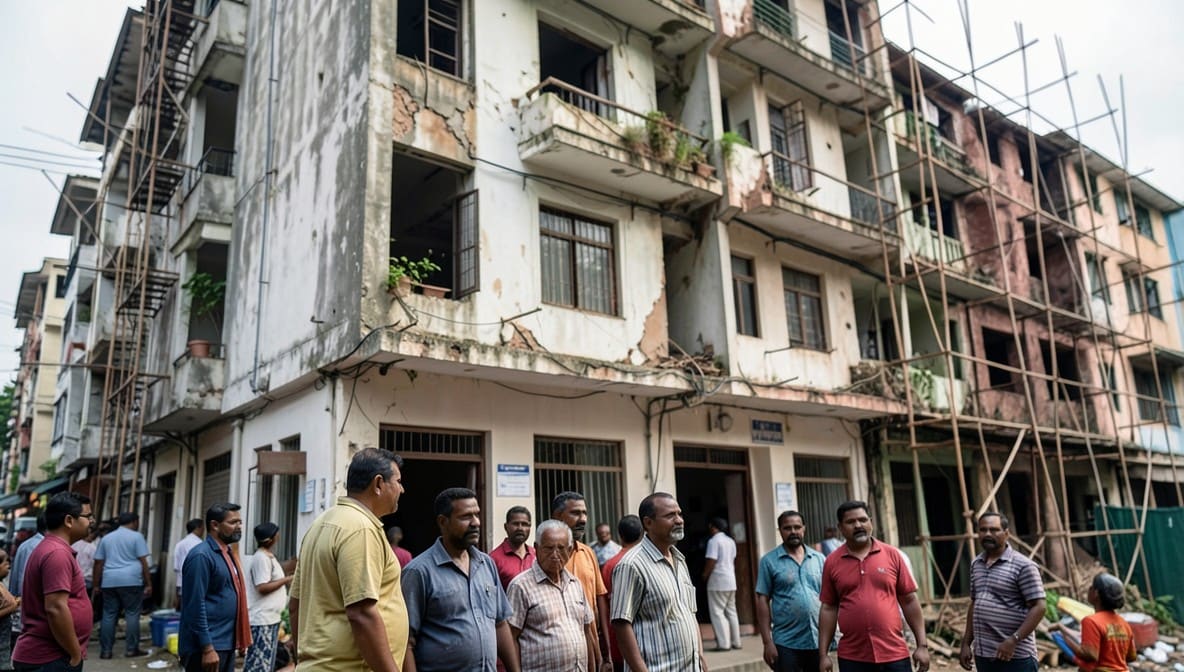
- The building, constructed in 1981, remains occupied by society members in deteriorating conditions
Procedural History
- 16 August 2014: Development Agreement executed and registered
- 22 June 2015: IOD issued by Municipal Corporation
- 3 April 2016: Respondent’s General Body Meeting approves assignment of rights to M/s. Bhatia & Rahat Realty LLP
- 27 October 2016: Petitioner acknowledges assignment of rights
- 14 February 2018: Respondent terminates Development Agreement
- 1 August 2023: Petitioner issues arbitration notice without disclosing termination
- 2026: Arbitration Petition No. 106 of 2026 filed under Section 9 seeking injunction and receiver appointment
- 2 July 2026: Bombay High Court dismisses petition
The Parties' Positions
The petitioner contended that it had acquired enforceable rights under the registered Development Agreement, obtained municipal approvals, and invested funds, thereby entitling it to interim protection. It alleged that the respondent’s failure to hand over possession prevented progress.
The respondent countered that the petitioner never fulfilled its obligations under the Agreement, including payment of transit rent and calling for vacating premises. It further asserted that the petitioner had voluntarily assigned its rights in 2016 and that the Agreement was lawfully terminated in 2018, which the petitioner deliberately concealed.
Relief Sought
The petitioner sought:
- Appointment of a Court Receiver over the property with powers under Order XL Rule 1 CPC
- Temporary injunction restraining the respondent from selling, transferring, alienating, or creating third-party rights over the property
- Preservation of the petitioner’s contractual rights pending arbitration
The Legal Issue
The central question was whether a petitioner seeking interim relief under Section 9 of the Arbitration and Conciliation Act, 1996 can establish a prima facie case merely by producing a registered development agreement and municipal approvals, without demonstrating readiness, willingness, and actual performance of its contractual obligations.
Arguments Presented
For the Petitioner
Counsel relied on Jankalyan Sahakari Bank Limited v. State of Maharashtra to argue that a registered development agreement creates a proprietary interest in the property, which cannot be unilaterally terminated. He contended that the IOD issuance and corpus payment demonstrated substantial performance and that the respondent’s refusal to hand over possession constituted breach. He asserted that the petitioner’s rights were at risk of being extinguished if another developer was appointed.
For the Respondent
Counsel relied on Ison Builders LLP v. Om Sairam Co-operative Housing Society to argue that a developer who fails to perform within the stipulated time, especially when the building is unsafe, cannot claim interim protection. He submitted that the petitioner’s inaction for over five years after termination, coupled with its own assignment of rights, demonstrated abandonment. He emphasized that the society’s members, residing in a dilapidated 1981 structure, faced greater hardship if redevelopment remained stalled.
The Court's Analysis
The Court acknowledged that a registered development agreement creates rights deserving protection. However, it held that such protection is not automatic. The Court emphasized that Section 9 relief requires a three-pronged assessment: prima facie case, balance of convenience, and irreparable injury.
"Only because there is a Development Agreement and municipal approvals are obtained, it does not mean that the petitioner becomes entitled to all interim reliefs claimed in the petition. The Court is also required to examine whether the petitioner was ready and capable of performing the obligations undertaken under the agreement."
The Court found no evidence that the petitioner had fulfilled its obligations under Clause 18 of the Agreement, including payment of transit rent or calling upon members to vacate. The absence of any construction activity for over a decade, despite IOD issuance in 2015, indicated inaction, not readiness.
The Court further noted that the petitioner’s own conduct - assigning its rights in 2016 and remaining silent for five years after termination in 2018 - undermined its claim of being a diligent party. The Court held that such prolonged silence, especially after termination, cannot be overlooked when assessing the balance of convenience.
"If redevelopment projects remain pending for years because of disputes between the developer and the society, greater hardship is caused to the persons residing in such buildings. Therefore, while protecting contractual rights, the Court also cannot ignore the larger interest of the members who have been waiting for redevelopment."
The Court rejected the request for a Court Receiver as an extraordinary remedy, noting that the property remained occupied by the society and no evidence suggested waste or alienation. It also held that granting an injunction against appointing another developer would effectively grant final relief at the interim stage, which is impermissible under Section 9.
The Verdict
The petition was dismissed. The Court held that the petitioner failed to establish a prima facie case, the balance of convenience favoured the respondent, and no irreparable injury was demonstrated. No interim relief was granted. The Court clarified that its observations were confined to the interim stage and did not prejudge the merits of the arbitration.
What This Means For Similar Cases
Prima Facie Case Requires Performance, Not Just Paper Rights
- Practitioners must demonstrate active, tangible steps toward performance under development agreements to secure Section 9 relief
- Mere registration of agreements or receipt of municipal approvals is insufficient without proof of financial readiness, compliance with conditions, and timely action
- Delay of more than five years in challenging termination will weigh heavily against the petitioner’s credibility
Courts Will Prioritize Public Interest in Redevelopment Projects
- In housing society redevelopment matters, courts will weigh the welfare of residents living in unsafe structures against contractual claims of developers
- Prolonged inactivity by developers will be viewed as abandonment, especially when society members are adversely affected
- Courts will not allow developers to freeze redevelopment indefinitely through interim injunctions when they have failed to perform
Assignment of Rights May Undermine Claims of Non-Breach
- Voluntary assignment of development rights to a third party may be interpreted as acknowledgment of inability to perform
- Failure to disclose such assignment or termination in Section 9 petitions may lead to dismissal on grounds of suppression of material facts
- Courts will treat silence after termination as acquiescence unless challenged within a reasonable time