A significant precedent has been set by the Bombay High Court in recognizing that the discovery of a pre-Constitution document proving ancestral membership in a Scheduled Tribe must not be barred by procedural technicalities. The Court has directed a fresh adjudication of a caste claim, emphasizing that justice cannot be denied merely because critical evidence was unavailable at the time of the original decision.
Background & Facts
The Dispute
The petitioner, Ku. Seema d/o Ramkrushna Kinhekar (Mrs. Seema w/o Chhotu Tajne), applied for a Scheduled Tribe certificate claiming membership in the 'Dhoba Scheduled Tribe'. Her application was rejected by the Scrutiny Committee under the Tribal Development and Social Justice Department on 06.03.2018, on the ground that she failed to establish her ancestral connection to the Dhoba community.
Key Facts
- The petitioner’s caste claim was initially examined and rejected by the Scrutiny Committee on 06.03.2018
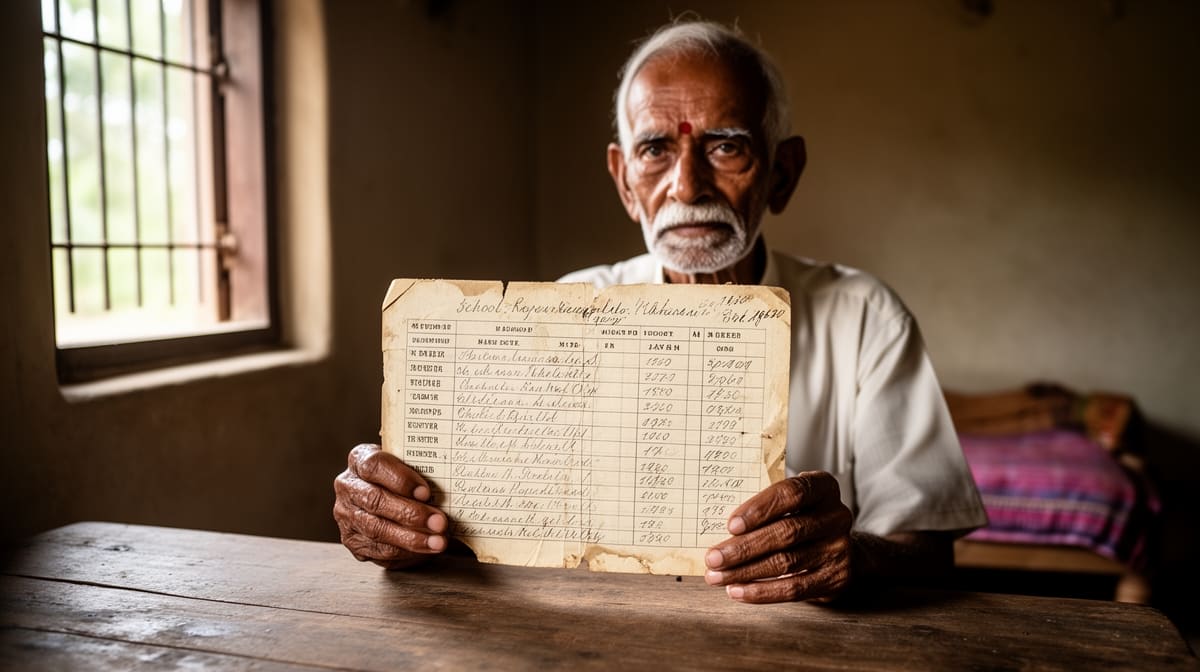
- During the pendency of the writ petition, the petitioner obtained a document dated 27.04.1939, which records her great-grandfather as a member of the 'Dhoba Scheduled Tribe'
- This document predates the Indian Constitution and was not available or accessible at the time of the original application or adjudication
- The petitioner had no opportunity to produce this document before the Scrutiny Committee due to its prior unavailability
- The petitioner’s service was under threat due to the invalidation of her caste certificate, prompting the filing of this writ petition
Procedural History
- 06.03.2018: Scrutiny Committee rejected petitioner’s caste claim
- 28.04.2018: Writ Petition No. 2822 of 2018 filed before the Bombay High Court, Nagpur Bench
- 15.05.2018: Court granted interim protection to the petitioner’s service pending final adjudication
- 27.04.1939: Date of the newly discovered ancestral document (produced during pendency of petition)
- 02.07.2026: Oral order delivered by the Division Bench
Relief Sought
The petitioner sought: (1) quashing of the order dated 06.03.2018 rejecting her caste claim; (2) direction to the Scrutiny Committee to reconsider her claim in light of the newly discovered 1939 document; and (3) continuation of interim protection to her service.
The Legal Issue
The central question was whether a petitioner who produces a credible pre-Constitution document proving ancestral membership in a Scheduled Tribe, which was genuinely unavailable during the original adjudication, is entitled to a fresh opportunity for reconsideration by the Scrutiny Committee.
Arguments Presented
For the Petitioner
The petitioner’s counsel argued that the 1939 document is a primary, contemporaneous record that establishes lineage with the Dhoba Scheduled Tribe. Since it was not accessible at the time of the original application, its non-production was not due to negligence or suppression. Reliance was placed on the principle of natural justice and the duty of the State to ensure substantive equality under Article 15(4) and Article 17 of the Constitution. The counsel emphasized that caste certificates are not mere formalities but gateways to constitutionally protected affirmative action.
For the Respondent/State
The Additional Government Pleader did not contest the petitioner’s submissions. The State acknowledged the authenticity and relevance of the 1939 document and conceded that denying the petitioner an opportunity to present it would amount to a denial of fair procedure.
The Court's Analysis
The Court observed that the purpose of caste certification is not to impose procedural hurdles but to enable historically marginalized communities to access constitutional safeguards. The Court noted that the 1939 document is not a post-facto fabrication but a pre-Constitution record, which carries significant evidentiary weight under established guidelines for Scheduled Tribe verification.
"This Court is of the opinion that the Petitioner should not be denied an opportunity to rely upon such material merely because it was unavailable earlier."
The Court rejected the notion that procedural lapses should defeat substantive rights, particularly where the evidence is both credible and historically rooted. It emphasized that the Scrutiny Committee’s role is not to act as a gatekeeper of exclusion but as an impartial adjudicator of claims based on available evidence. The Court further held that the principle of audi alteram partem requires that when new, material evidence emerges, the affected person must be given a fair chance to present it.
The Verdict
The petition was disposed of with the direction that the matter be relegated to Respondent No. 2 - the Scrutiny Committee - for fresh adjudication. The petitioner is permitted to produce the document dated 27.04.1939 before the Committee. The Committee must reconsider the caste claim afresh in accordance with law, preferably within six months of the document’s production. The interim protection granted on 15.05.2018, safeguarding the petitioner’s service, shall continue until the Committee renders its final decision.
What This Means For Similar Cases
Pre-Constitution Documents Are Legally Significant
- Practitioners must now treat pre-1950 documents (e.g., land records, village registers, missionary reports) as prima facie valid evidence for Scheduled Tribe claims
- The burden shifts to the State to disprove authenticity if the document is dated, legible, and consistent with community nomenclature
- Delay in production is not fatal if the petitioner demonstrates genuine unavailability
Fresh Adjudication Is a Right, Not a Discretion
- When credible evidence emerges post-adjudication, the Scrutiny Committee is legally obligated to reconsider
- Courts will not uphold rejections based on technical non-production of evidence that was genuinely inaccessible
- This judgment reinforces that caste certification is a constitutional entitlement, not a bureaucratic privilege
Procedural Fairness Trumps Finality in Identity Claims
- The doctrine of res judicata does not apply to caste claims where new evidence of ancestral identity surfaces
- The State must adopt a liberal, not restrictive, approach to verifying tribal identity
- Legal aid clinics and tribal welfare bodies should proactively assist claimants in locating and verifying historical documents