Allahabad High Court judgments

902 Allahabad High Court judgments explained in plain English: what was decided, the law applied and why it matters. Page 35 of 38.

DV Act Section 12 | Proceedings Quashable Only for Gross Illegality or Abuse of Process: Allahabad HC
Case Law Analysis
|Allahabad High Court

DV Act Section 12 | Proceedings Quashable Only for Gross Illegality or Abuse of Process: Allahabad HC

The Allahabad High Court has reaffirmed that proceedings under Section 12 of the Domestic Violence Act, 2005 cannot be quashed under BNSS Section 528 unless there is clear gross illegality or abuse of process. This upholds the welfare-oriented intent of the law and ensures survivors are not denied recourse through procedural manipulation by accused parties.


Section 50 NDPS Act | Failure to Produce Gazetted Officer During Recovery Vitiates Prosecution, Warrants Bail Even for 330g Heroin : Allahabad HC
Case Law Analysis
|Allahabad High Court

Section 50 NDPS Act | Failure to Produce Gazetted Officer During Recovery Vitiates Prosecution, Warrants Bail Even for 330g Heroin : Allahabad HC

The Allahabad High Court granted bail in an NDPS case where police failed to comply with Section 50’s mandatory requirement of conducting recovery in the presence of a gazetted officer, affirming that procedural safeguards are non-negotiable even in serious drug offences. This ruling reinforces that technical breaches of statutory procedure can override the gravity of quantity, protecting accused persons from unlawful detention.

Section 13B(2) HMA | Cooling-Off Period Waived After Mediation Failure and Irretrievable Breakdown: Allahabad HC
Case Law Analysis
|Allahabad High Court

Section 13B(2) HMA | Cooling-Off Period Waived After Mediation Failure and Irretrievable Breakdown: Allahabad HC

The Allahabad High Court has ruled that the mandatory six-month cooling-off period under Section 13B(2) of the Hindu Marriage Act can be waived when mediation has conclusively failed and the marriage is irretrievably broken, aligning with the Supreme Court’s precedent in Amit Kumar v. Suman Beniwal. This sets a clear precedent for family courts to prioritize judicial efficiency and当事人的实际困境 over rigid procedural timelines in mutual consent divorces.

Satender Kumar Antil Guidelines Mandate Non-Arbitrary Bail Review | Allahabad HC Directs Lower Courts to Apply Strict Procedural Safeguards : Allahabad HC
Case Law Analysis
|Allahabad High Court

Satender Kumar Antil Guidelines Mandate Non-Arbitrary Bail Review | Allahabad HC Directs Lower Courts to Apply Strict Procedural Safeguards : Allahabad HC

The Allahabad High Court has directed trial courts to decide all future bail applications through the strict lens of the Supreme Court's Satender Kumar Antil judgment, requiring concrete reasoning to deny bail and rejecting mechanical or gravity-based rejections. This binding directive transforms Antil from a persuasive precedent into a procedural imperative for lower courts, significantly strengthening the presumption of bail in non-heinous offences.

Domestic Violence Act, Section 12 | Video Conferencing Under UP 2020 Rules Eliminates Grounds for Jurisdictional Transfer : Allahabad HC
Case Law Analysis
|Allahabad High Court

Domestic Violence Act, Section 12 | Video Conferencing Under UP 2020 Rules Eliminates Grounds for Jurisdictional Transfer : Allahabad HC

The Allahabad High Court has ruled that the availability of video conferencing under Uttar Pradesh's 2020 Court Rules removes any legitimate claim of inconvenience as a basis for transferring Domestic Violence Act cases between districts. This affirms that digital access is a constitutionally sufficient substitute for physical presence, reshaping how litigants across Uttar Pradesh can pursue justice without relocating proceedings.

Ad Hoc Service Must Be Counted in Pension Calculation | Allahabad HC Affirms Nand Lal Precedent for Government Employees : Allahabad HC
Case Law Analysis
|Allahabad High Court

Ad Hoc Service Must Be Counted in Pension Calculation | Allahabad HC Affirms Nand Lal Precedent for Government Employees : Allahabad HC

The Allahabad High Court has ruled that ad hoc service prior to regularization must be included when calculating qualifying service for pension, reinforcing the precedent set in Nand Lal. This decision directly impacts thousands of government employees whose prior contractual or temporary service was previously excluded, ensuring fair pension benefits based on total tenure.

Essential Commodities Act, Section 3/7 | Conviction Requires Proof of Control Order Violation and Mens Rea, Not Just Excess Stock : Allahabad HC
Case Law Analysis
|Allahabad High Court

Essential Commodities Act, Section 3/7 | Conviction Requires Proof of Control Order Violation and Mens Rea, Not Just Excess Stock : Allahabad HC

The Allahabad High Court has ruled that conviction under the Essential Commodities Act cannot rest on mere possession of excess stock; the prosecution must prove a specific violation of a notified control order and establish mens rea. This sets a vital precedent for economic offense prosecutions, shielding innocent custodians and traders from arbitrary liability without evidence of intent or regulatory breach.

Section 17 SARFAESI Act | Writ Petition Under Article 226 Barred Where Effective Statutory Remedy Exists : Allahabad HC
Case Law Analysis
|Allahabad High Court

Section 17 SARFAESI Act | Writ Petition Under Article 226 Barred Where Effective Statutory Remedy Exists : Allahabad HC

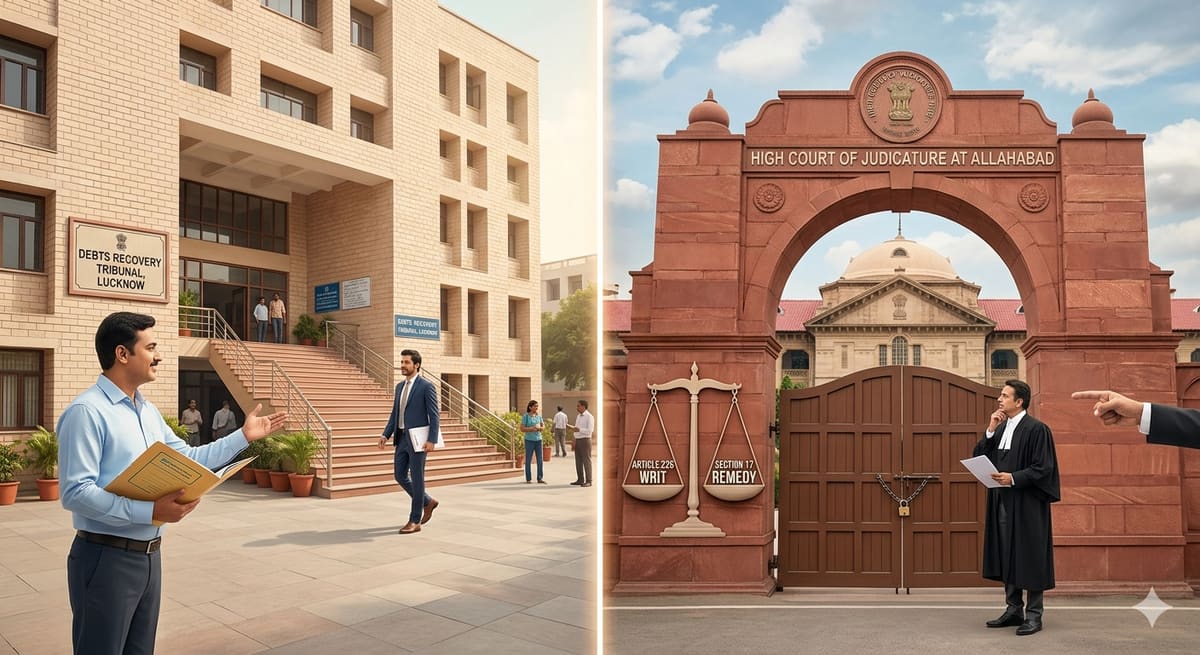
The Allahabad High Court has held that borrowers cannot bypass the Debt Recovery Tribunal’s statutory remedy under Section 17 of the SARFAESI Act by filing writ petitions under Article 226. This reinforces that writ jurisdiction is not a substitute for statutory appeals, protecting the legislative intent behind the SARFAESI framework and binding all secured creditors and borrowers in Uttar Pradesh.

Right to Education Under Article 21 | SARFAESI Enforcement Paused to Allow School Exams : Allahabad HC
Case Law Analysis
|Allahabad High Court

Right to Education Under Article 21 | SARFAESI Enforcement Paused to Allow School Exams : Allahabad HC

The Allahabad High Court has ruled that pending SARFAESI proceedings cannot disrupt school examinations when children's right to education is at stake. This sets a critical precedent that fundamental rights override asset recovery processes in educational settings, protecting over a hundred students and their teachers from abrupt institutional disruption.

Proforma Summoning Orders Void Under SC/ST Act | Judicial Mind Required at Cognizance Stage : Allahabad HC
Case Law Analysis
|Allahabad High Court

Proforma Summoning Orders Void Under SC/ST Act | Judicial Mind Required at Cognizance Stage : Allahabad HC

The Allahabad High Court has struck down summoning orders under the SC/ST Act that were mechanically filled out on printed proformas, ruling that even preliminary judicial decisions demand independent application of mind. This sets a critical precedent for magistrates handling atrocities cases, ensuring that procedural shortcuts cannot substitute legal reasoning at the threshold of criminal proceedings.

Arms Act Section 25 | Bail Granted When CCTV Contradicts Case Diary’s Claim of Armed Firing : Allahabad HC
Case Law Analysis
|Allahabad High Court

Arms Act Section 25 | Bail Granted When CCTV Contradicts Case Diary’s Claim of Armed Firing : Allahabad HC

The Allahabad High Court granted bail to Pawan Kumar after CCTV footage disproved the case diary’s assertion that he fired a firearm, underscoring that speculative allegations cannot justify pre-trial detention. This ruling reinforces the primacy of digital evidence over investigative narratives and pressures law enforcement to align official records with objective footage, especially in overcrowded jail contexts.

Section 31 IBC | Pre-CIRP Electricity Dues Extinguished from Effective Date of Resolution Plan, Not NCLT Approval Date : Allahabad HC
Case Law Analysis
|Allahabad High Court

Section 31 IBC | Pre-CIRP Electricity Dues Extinguished from Effective Date of Resolution Plan, Not NCLT Approval Date : Allahabad HC

The Allahabad High Court has ruled that under Section 31 of the IBC, statutory electricity dues arising before the Corporate Insolvency Resolution Process are extinguished as of the Effective Date specified in the approved resolution plan - not the date of NCLT approval. This clarifies that resolution applicants inherit liability only prospectively, reinforcing the clean slate principle and shielding them from legacy dues improperly revived post-resolution.

Section 149 IPC | Presence with Firearm and Threats to Block Rescue Constitutes Active Participation in Unlawful Assembly : Allahabad HC
Case Law Analysis
|Allahabad High Court

Section 149 IPC | Presence with Firearm and Threats to Block Rescue Constitutes Active Participation in Unlawful Assembly : Allahabad HC

The Allahabad High Court has ruled that mere presence in an unlawful assembly, when coupled with carrying a firearm and actively threatening bystanders to prevent rescue, amounts to constructive participation under Section 149 IPC - even without physical assault. This clarifies the scope of vicarious liability and strengthens accountability for enablers of mob violence, impacting how prosecutors build cases against bystanders in communal or land-related riots.

Order VII Rule 11 CPC | Plaint Cannot Be Rejected at Threshold for Bar Under Order II Rule 2 CPC - Issue Must Be Decided After Framing of Issues : Allahabad HC
Case Law Analysis
|Allahabad High Court

Order VII Rule 11 CPC | Plaint Cannot Be Rejected at Threshold for Bar Under Order II Rule 2 CPC - Issue Must Be Decided After Framing of Issues : Allahabad HC

The Allahabad High Court has clarified that a plaint cannot be dismissed under Order VII Rule 11 CPC merely because the suit is allegedly barred by Order II Rule 2 CPC. Such a bar is a merits-based defense requiring full adjudication after issues are framed, not a ground for early rejection. This protects litigants from premature dismissal of valid claims and reinforces procedural fairness in civil litigation.

UP Prohibition of Unlawful Conversion Act, Sections 3 & 5(1) | Prima Facie Allurement via Victim Testimony & CCTV Mandates Full Investigation, Not FIR Quashing : Allahabad HC
Case Law Analysis
|Allahabad High Court

UP Prohibition of Unlawful Conversion Act, Sections 3 & 5(1) | Prima Facie Allurement via Victim Testimony & CCTV Mandates Full Investigation, Not FIR Quashing : Allahabad HC

The Allahabad High Court ruled that when victim testimony and CCTV footage collectively establish prima facie evidence of allurement under the UP Unlawful Conversion Act, courts cannot quash the FIR at the threshold - investigation is mandatory to determine intent and legality. This sets a critical precedent for protecting investigative integrity in religious conversion cases where claims of mala fide intent cannot override evidentiary triggers.

Section 319 CrPC | Only Trial Evidence, Not FIR or Police Statements, Justifies Summoning Additional Accused: Allahabad HC
Case Law Analysis
|Allahabad High Court

Section 319 CrPC | Only Trial Evidence, Not FIR or Police Statements, Justifies Summoning Additional Accused: Allahabad HC

The Allahabad High Court held that summoning additional accused under Section 319 CrPC requires evidence adduced during trial, excluding FIRs or investigative statements. The ruling reinforces that dying declarations and investigator-led exoneration are decisive, protecting innocent parties from speculative prosecution in dowry death cases.

Natural Justice in Departmental Proceedings | Handwriting Expert Report Inadmissible Without Cross-Examination or Corroboration : Allahabad HC
Case Law Analysis
|Allahabad High Court

Natural Justice in Departmental Proceedings | Handwriting Expert Report Inadmissible Without Cross-Examination or Corroboration : Allahabad HC

The Allahabad High Court has ruled that a handwriting expert’s report cannot form the sole basis for dismissing public employees, as it violates natural justice unless subjected to cross-examination and corroborated by independent evidence such as invigilator certifications. This sets a critical precedent for fairness in departmental inquiries where forensic evidence is pivotal but untested.

Directors Liable Under Air Act Even After Resignation | Burden of Non-Involvement Shifts to Accused at Trial : Allahabad HC
Case Law Analysis
|Allahabad High Court

Directors Liable Under Air Act Even After Resignation | Burden of Non-Involvement Shifts to Accused at Trial : Allahabad HC

The Allahabad High Court ruled that directors can be prosecuted under the Air Act if named in the complaint, even if they had resigned before the environmental violation occurred. The burden now shifts to them to prove they had no role in the company’s conduct at the time of the offence, significantly expanding personal liability for corporate environmental breaches.

Dying Declaration Sufficient for Conviction Despite Identity Dispute in Burn Murder Case | Allahabad HC Upholds Life Sentence Under Section 304 IPC
Case Law Analysis
|Allahabad High Court

Dying Declaration Sufficient for Conviction Despite Identity Dispute in Burn Murder Case | Allahabad HC Upholds Life Sentence Under Section 304 IPC

The Allahabad High Court upheld a life sentence based solely on a dying declaration where the victim identified her attacker as Ashiq alias Ashish, rejecting the defence of mistaken identity. This reinforces that a credible dying declaration, even without corroboration, can sustain a conviction for murder by burning - setting a critical precedent for cases involving severe burn injuries and disputed identity.

Strict Liability Applies to Electricity Boards for Unfenced Transformers Near Schools | Child Electrocution Case : Allahabad HC
Case Law Analysis
|Allahabad High Court

Strict Liability Applies to Electricity Boards for Unfenced Transformers Near Schools | Child Electrocution Case : Allahabad HC

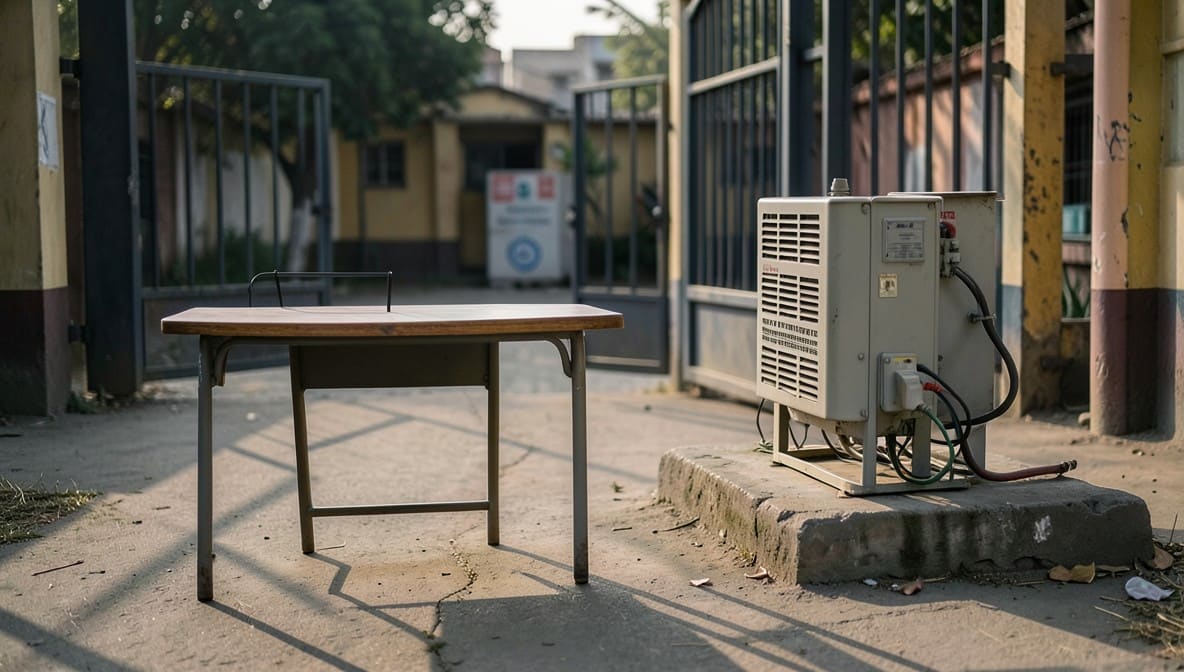
The Allahabad High Court ruled that electricity boards are strictly liable for electrocution injuries caused by unfenced transformers near schools, regardless of negligence. The ruling eliminates the burden of proving fault and recognizes children’s age as negating contributory negligence, setting a vital safety standard for public infrastructure near educational institutions.

Natural Justice & Service Finality | Arbitrary Cancellation of Teacher Appointments After 18 Years Violates U.P. Basic Education Act : Allahabad HC
Case Law Analysis
|Allahabad High Court

Natural Justice & Service Finality | Arbitrary Cancellation of Teacher Appointments After 18 Years Violates U.P. Basic Education Act : Allahabad HC

Allahabad High Court quashes orders cancelling teacher appointments after 18 years of service, holding that arbitrary revocation violates natural justice and the finality of administrative approvals under the U.P. Basic Education Act. The ruling reinforces protection for long-standing employees against retrospective administrative actions.

Section 68 IT Act | Cash Deposits During Demonetisation Not Taxable If Source Proven as Pre-Existing Cash: Allahabad HC
Case Law Analysis
|Allahabad High Court

Section 68 IT Act | Cash Deposits During Demonetisation Not Taxable If Source Proven as Pre-Existing Cash: Allahabad HC

Allahabad High Court rules that cash deposits during demonetisation cannot be taxed under Section 68 if the assessee proves the source as pre-existing cash in hand, and the Assessing Officer fails to rebut with evidence. The judgment reinforces the burden of proof on tax authorities to disprove the assessee's explanation, even during extraordinary periods like demonetisation.

Section 8(b) Family Courts Act | Gram Nyayalaya Lacks Jurisdiction to Modify Family Court Maintenance Orders: Allahabad HC
Case Law Analysis
|Allahabad High Court

Section 8(b) Family Courts Act | Gram Nyayalaya Lacks Jurisdiction to Modify Family Court Maintenance Orders: Allahabad HC

Allahabad High Court reinforces jurisdictional boundaries by holding that Gram Nyayalayas cannot review or overturn maintenance orders passed by Family Courts under Section 125 CrPC. The ruling clarifies that Section 8(b) of the Family Courts Act, 1984, exclusively vests such powers with Family Courts, preventing parallel adjudication by magistrates.