The Allahabad High Court has unequivocally affirmed that electricity boards are strictly liable for injuries caused by inadequately protected high-voltage infrastructure, particularly when located near public spaces frequented by children. In a landmark ruling, the Court set aside a trial court’s dismissal of a child’s electrocution claim and awarded substantial compensation, reinforcing that negligence need not be proven where hazardous activities result in harm.
Background & Facts
The Dispute
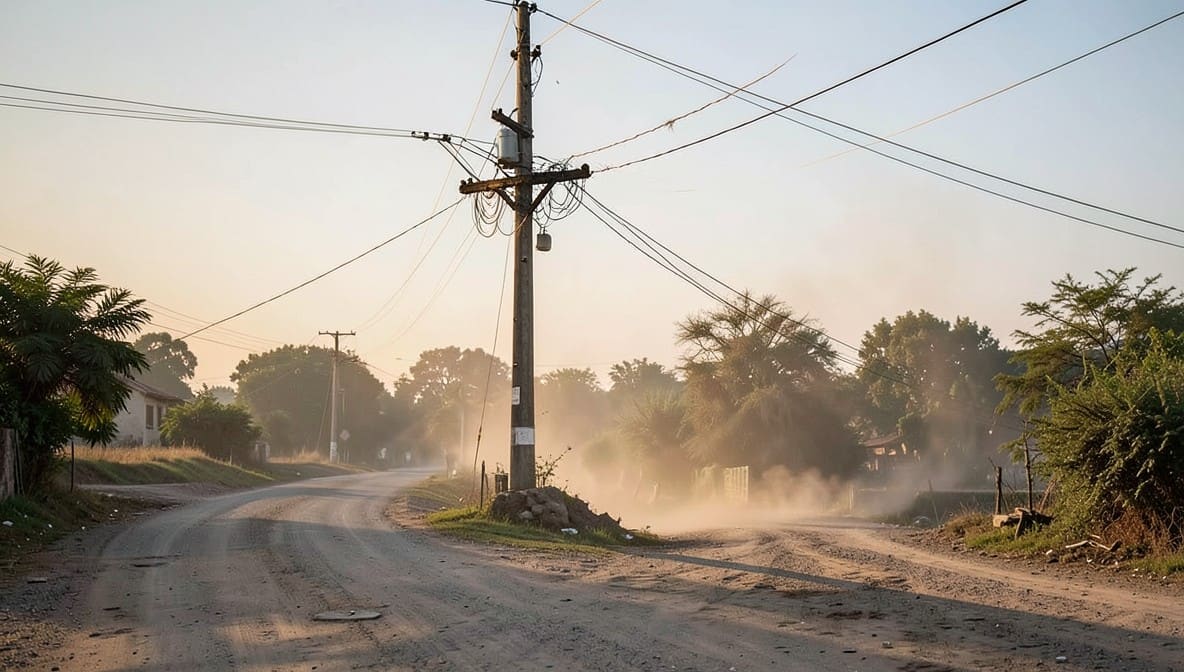
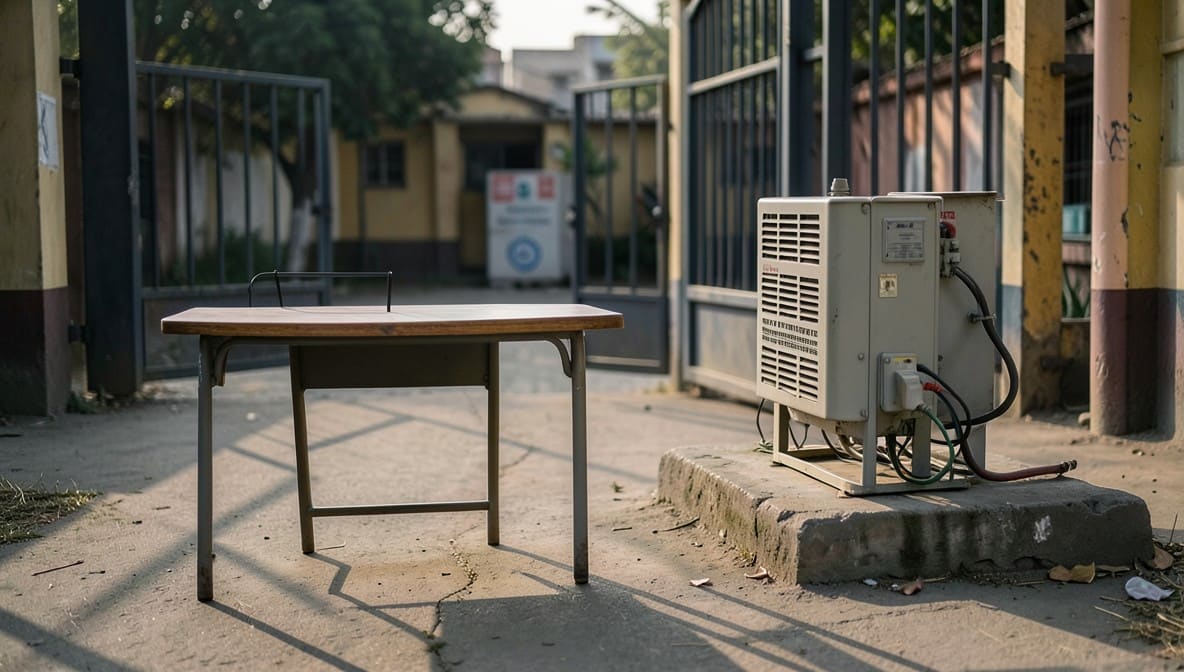
The appellant, Pappu, was a seven-year-old student studying in Class II at the Primary School in Nangla Padi, Agra, when he suffered catastrophic injuries on 01.03.1997 after coming into accidental contact with an 11,000/400 Volt, 100 KVA transformer installed by the Uttar Pradesh State Electricity Board. The transformer was situated just three feet from the school gate, on a cemented brick platform by the roadside, with no fencing, barricading, or protective enclosure. The Board had not installed any safety measures despite repeated complaints from local residents and municipal officials.
Key Facts
- The transformer was installed approximately one to one-and-a-half years prior to the accident.
- The site was adjacent to a public school managed by the Nagar Nigam, Agra, with children frequently playing in the vicinity.
- No warning signs, barriers, or enclosures were present around the transformer.
- On 01.03.1997 at approximately 5:00 PM, Pappu, while playing with other children, touched the exposed transformer, resulting in severe electrocution.
- Emergency medical treatment at S.N. Medical College, Agra, led to bilateral upper limb amputations: right above the elbow and left below the elbow.
- Pappu was hospitalized from 01.03.1997 to 19.03.1997 and again from 03.04.1997 to 12.05.1997.
- A medical certificate dated 11.09.1997 from Dr. A.K. Ambesh, Ortho Surgeon, confirmed permanent disability due to below-shoulder amputation of both upper extremities.
- The Board admitted the incident in its written statement but claimed it resulted from Pappu’s own negligence.
- The Board paid ₹1,25,000 as humanitarian compensation on 04.07.2000, following a National Human Rights Commission order.
- The transformer remained unsecured even after the accident.
Procedural History
- 01.03.1997: Accident occurs at 5:00 PM near Nangla Padi Primary School.
- 14.03.1997: FIR lodged at Police Station New Agra.
- 05.05.1997: Application filed by Pappu’s father with police.
- 30.05.1997: Application filed for permission to sue as an indigent person.
- 23.05.1998: Pappu’s father, Hari Singh, dies.
- 21.02.2003: Trial court grants indigent status; mother Smt. Shanti Devi becomes guardian.
- 17.02.2003: Suit filed as O.S. No. 171 of 2003.
- 29.10.2005: Trial court dismisses suit, holding plaintiff negligent and barring relief under Section 33 of the Indian Electricity Act.
- 09.09.2021: High Court grants leave to appeal as an indigent person under Section 96 CPC.
- 15.04.2026: Division Bench of Allahabad High Court delivers judgment.
The Parties' Positions
For the Appellant (Pappu)
- Argued that the transformer was installed in a hazardous location near a school without mandatory safety fencing.
- Contended that as a seven-year-old child, he could not be held to the standard of care expected of an adult.
- Invoked the doctrine of strict liability under tort law and the Public Liability Insurance Act, 1991, asserting that electricity is a hazardous substance.
- Cited Parvati Devi v. Commissioner of Police, MP Electricity Board v. Shail Kumari, and Yashpal Singh v. State of UP to establish that proof of negligence is unnecessary when injury results from high-voltage infrastructure.
- Emphasized that the Board failed to produce any rules or evidence proving compliance with safety standards.
- Highlighted that the Board did not examine any witness or offer itself for cross-examination, inviting adverse inference under Section 114(g) of the Evidence Act.
For the Respondent (U.P. State Electricity Board)
- Denied negligence, claiming the transformer was installed as per regulations on a cemented platform.
- Alleged that Pappu climbed the platform and deliberately touched the transformer, constituting contributory negligence.
- Asserted that the suit was barred under Section 33 of the Indian Electricity Act, 1910, due to non-filing of notice.
- Argued that the plaintiff’s documentary evidence was inadmissible as photocopies.
- Claimed that humanitarian payments of ₹1,25,000 discharged liability.
Relief Sought
Pappu sought:
- Compensation of ₹58.47 lakhs for loss of earning capacity, attendant care, medical expenses, pain and suffering, loss of amenities, and loss of marriage prospects.
- Interest at 2% per month from the date of accident.
- Costs of the suit and appeal.
The Legal Issue
The central question was whether the doctrine of strict liability applies to electrocution injuries caused by an electricity board’s inadequately protected high-voltage transformer located near a school, and whether a child of seven years can be held contributorily negligent under such circumstances.
Arguments Presented
For the Appellant
The appellant relied on Parvati Devi v. Commissioner of Police (2000) and MP Electricity Board v. Shail Kumari (2002) to argue that electricity is an inherently hazardous activity, and the supplier bears strict liability for injuries caused by its infrastructure. The Board’s failure to install fencing, despite proximity to a school and prior complaints, constituted a breach of its statutory and common law duty of care. The appellant emphasized that the Board’s silence and failure to lead evidence invited an adverse inference under Section 114(g) of the Evidence Act. The child’s age rendered him incapable of appreciating danger, making contributory negligence inapplicable, as affirmed in Anshu v. State of Haryana and M.P. State RTC v. Abdul Rahaman. The Board’s payment of ₹1,25,000 was acknowledged as humanitarian, not an admission of legal liability.
For the Respondent
The Board contended that the transformer was installed on a raised platform, and the child’s act of climbing and touching it was voluntary and negligent. It argued that Section 33 of the Indian Electricity Act required prior notice to the Electrical Inspector, and its absence barred the suit. The Board also challenged the admissibility of photocopies and claimed the compensation claim was inflated. It did not produce any rules, standards, or witnesses to substantiate its defense.
The Court's Analysis
The Court conducted a rigorous analysis of tort law principles, statutory obligations, and precedent. It held that the doctrine of strict liability, as articulated in MP Electricity Board v. Shail Kumari, applies unequivocally to cases involving high-voltage electricity. The Court observed:
"The managers of such dangerous commodities have extra duty to chalk out measures to prevent such mishaps. At any rate, if any live wire got snapped and fell on the public road the electric current thereon should automatically have been disrupted."
The Court rejected the Board’s argument that the transformer was installed in compliance with regulations, noting that the Board failed to produce any rule, standard, or document to substantiate its claim. The absence of any witness from the Board, coupled with its failure to cross-examine the plaintiff’s witnesses on the absence of fencing, triggered an adverse inference under Section 114(g) of the Evidence Act:
"Having not entered into the witness box and having not presented himself for cross-examination, an adverse presumption has to be drawn against him..."
The Court further held that the trial court erred in applying the concept of contributory negligence to a seven-year-old child. Citing Anshu v. State of Haryana, the Court emphasized:
"A child functions according to his own reasoning and his intelligence. Logicality and rationality are not expected from a child as a child of tender age has no continuous thinking process and is governed by his impulse, instinct and innocence."
The Court dismissed the applicability of Section 33 of the Indian Electricity Act, noting that it prescribes notice requirements for reporting accidents to authorities, but does not bar civil suits for compensation. The Court also rejected the trial court’s reliance on delayed FIR filing, observing that this was irrelevant in a civil claim.
Regarding compensation, the Court adopted the methodology used in motor accident claims, applying the minimum wage for skilled labor in Uttar Pradesh (₹3,000/month) as the baseline. It awarded:
- 100% loss of earning capacity due to bilateral amputation;
- 40% future prospects as per Pranay Sethi;
- 18-year multiplier for a child under 15;
- ₹3,500/month for attendant care with 40% future prospects;
- ₹5,00,000 for pain and suffering;
- ₹3,00,000 for loss of marriage prospects;
- ₹3,00,000 for future medical expenses including prosthetics;
- ₹10,000 for diet and transport;
- ₹5,000 for treatment expenses;
- ₹12,000 for family income loss during hospitalization.
The total compensation was calculated at ₹27,90,000, reduced by the ₹1,25,000 already paid, resulting in a net award of ₹26,65,000.
The Verdict
The appellant succeeded. The Allahabad High Court set aside the trial court’s judgment dated 29.10.2005 and decreed the suit in favor of Pappu. The Court awarded a net compensation of ₹26,65,000, with 6% per annum interest from 30.05.1997 (date of indigent application) until realization. The Board was directed to pay the amount within one month. The compensation, along with interest, shall be deposited in a fixed deposit account in a nationalized bank or post office, from which Pappu may draw monthly for livelihood. Withdrawals for medical or special needs require court permission. The District Legal Services Authority shall assist Pappu in executing the decree. Costs of the suit and appeal are awarded to the appellant.
What This Means For Similar Cases
Strict Liability Applies Even Without Proving Negligence
- Practitioners must now argue that in electrocution cases involving public infrastructure, the burden shifts to the electricity board to prove compliance with safety norms.
- Failure to produce rules, standards, or witnesses invites adverse inference under Section 114(g) of the Evidence Act.
- Compensation claims need not hinge on proving carelessness; proof of injury from the board’s equipment suffices.
Children Cannot Be Held Contributorily Negligent
- In cases involving children under 12, courts will not apply contributory negligence, regardless of the nature of the hazard.
- The doctrine of in loco parentis and the child’s inherent innocence override any assumption of risk.
- Legal arguments must cite Anshu v. State of Haryana and M.P. RTC v. Abdul Rahaman to preclude this defense.
Compensation Must Reflect Real Economic Loss, Not Notional Estimates
- Use minimum wage as baseline for loss of earning capacity when no income proof exists.
- Apply 40% future prospects for minors under 40, per Pranay Sethi.
- Use 18x multiplier for claimants under 15.
- Include attendant care, future prosthetics, loss of marriage prospects, and pain and suffering as distinct heads.
- Always request fixed deposit for long-term disbursement to ensure sustained livelihood.
Procedural Compliance Is Not a Barrier to Civil Claims
- Section 33 of the Indian Electricity Act is a reporting requirement, not a jurisdictional bar.
- Delayed FIRs are irrelevant in civil suits.
- Photocopies of medical records are admissible if supported by oral testimony and no objection is raised.