The Allahabad High Court has clarified a critical jurisdictional conflict between Family Courts and Gram Nyayalayas in maintenance matters under Chapter IX of the CrPC. The judgment resolves a growing inconsistency in judicial administration by holding that once a Family Court issues a maintenance order, a Gram Nyayalaya cannot review, modify, or enforce it - even if the latter is statutorily empowered to hear such cases. This decision has immediate implications for practitioners handling post-divorce maintenance enforcement and transfer of pending cases.
Background & Facts
The Dispute
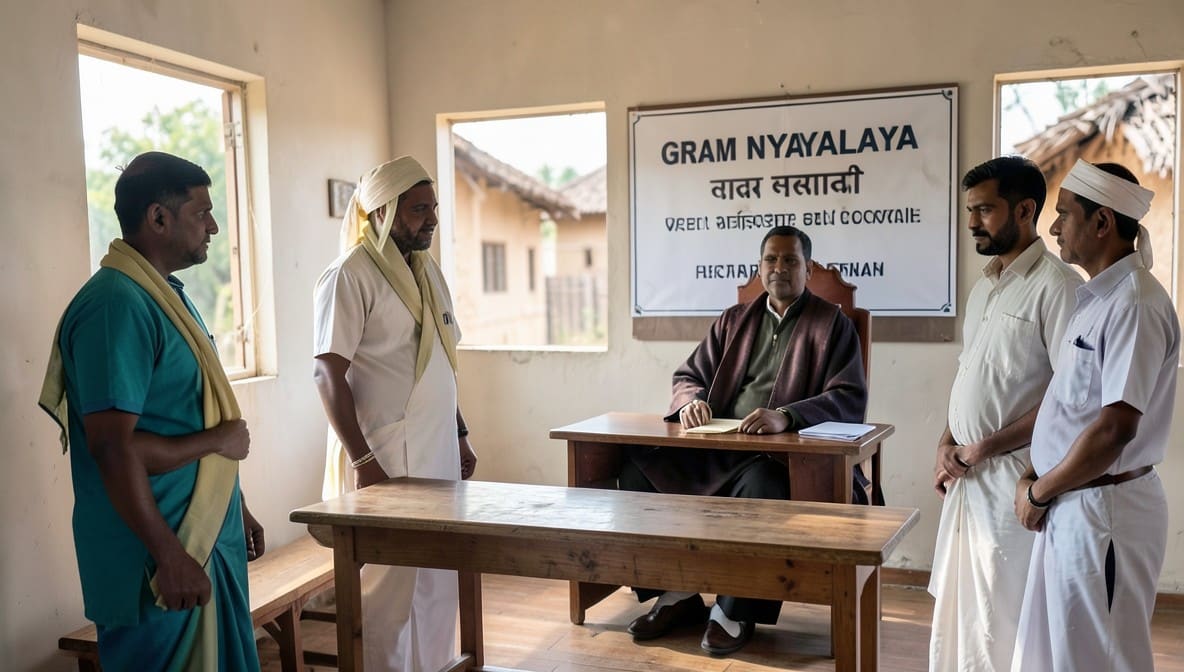
The petitioner, Amit Kumar Rana, challenged orders dated 1.10.2024 and 25.3.2025 passed by the Gram Nyayalaya at Dhampur, Bijnor, which directed him to comply with a maintenance order dated 6.3.2019 issued by the Principal Judge, Family Court, Bijnor. The Family Court had awarded Rs. 3,000 per month to respondent No. 2 (his wife) under Section 125 of the Code of Criminal Procedure, 1973 (now Section 144 of Bharatiya Nagarik Suraksha Sanhita, 2023), effective from the date of application, 28.4.2016. The petitioner contended that the wife’s remarriage on 26.1.2020 extinguished her right to maintenance, and he filed a Miscellaneous Application No. 375 of 2021 under Section 127 CrPC seeking cancellation of the order.
Key Facts
- The maintenance order dated 6.3.2019 was passed by the Principal Judge, Family Court, Bijnor, a judicial officer of the Higher Judicial Service cadre.
- The petitioner filed an application under Section 127 CrPC on 15.7.2021 seeking modification due to the wife’s remarriage.
- The wife remarried on 26.1.2020, prior to the filing of the Section 127 application.
- On 15.2.2024, the State Government issued Notification Nyay Anubhag-2 (Subordinate Courts) No. 4/2024/89/VII-Nyay-2-2024-216 G/2007 T.C.-II, Lucknow, empowering Gram Nyayalayas to hear maintenance cases under Part II of the First Schedule of the Gram Nyayalaya Act, 2008.
- On 22.2.2024, the District Judge, Bijnor, issued Administrative Order No. 821/2024 transferring all pending Chapter IX CrPC matters from Family Courts to Gram Nyayalayas in T. Ehsil Dhampur.
- The pending Section 127 application was transferred to the Gram Nyayalaya, Dhampur.
- The Gram Nyayalaya, presided over by a Civil Judge (Junior Division), passed orders on 1.10.2024 and 25.3.2025 directing compliance with the Family Court’s 6.3.2019 order and issuing a recovery warrant.
Procedural History
- 28.04.2016: Respondent No. 2 filed application under Section 125 CrPC.
- 06.03.2019: Family Court awarded Rs. 3,000/month maintenance from date of application.
- 03.05.2019: High Court stayed enforcement of arrears but directed monthly payment of Rs. 3,000 during pendency.
- 15.07.2021: Petitioner filed Miscellaneous Application No. 375 of 2021 under Section 127 CrPC seeking cancellation due to remarriage.
- 14.02.2024: State Government notification issued empowering Gram Nyayalayas to hear maintenance cases.
- 22.02.2024: District Judge, Bijnor, transferred pending Chapter IX CrPC matters to Gram Nyayalaya, Dhampur.
- 01.10.2024: Gram Nyayalaya issued order permitting execution of Family Court’s maintenance order.
- 25.03.2025: Gram Nyayalaya issued recovery warrant against petitioner.
- 28.03.2025: Writ petition under Article 227 filed before Allahabad High Court.
- 17.02.2026: Judgment reserved.
- 10.04.2026: Judgment delivered.
The Parties' Positions
Petitioner: Argued that Gram Nyayalaya, headed by a Civil Judge (Junior Division), lacks hierarchical authority to review, modify, or enforce an order passed by a Family Court Judge of the Higher Judicial Service cadre. He contended that Section 8(b) of the Family Courts Act, 1984, excludes all magistrates from exercising jurisdiction over Chapter IX CrPC matters once a Family Court is established, and Gram Nyayalaya, being a First Class Magistrate court under the Gram Nyayalaya Act, 2008, cannot override this exclusion.
Respondent No. 2: Contended that the Gram Nyayalaya Act, 2008, being a later enactment, overrides the Family Courts Act, 1984, under Section 18 of the former. She argued that the legislature intended to expand access to justice and that Gram Nyayalaya’s jurisdiction under Part II of the First Schedule is valid and enforceable.
Relief Sought
The petitioner sought quashing of the Gram Nyayalaya’s orders dated 1.10.2024 and 25.3.2025, and a declaration that Gram Nyayalayas cannot entertain applications under Sections 127 or 128 CrPC where a Family Court has already passed a maintenance order. He also sought clarification on the legal status of the 6.3.2019 order.
The Legal Issue
Can a Gram Nyayalaya, presided over by a Civil Judge (Junior Division), review, enforce, or modify a maintenance order previously passed by a Family Court under Section 125 CrPC, when the Family Court is a court of the Higher Judicial Service cadre and Section 8(b) of the Family Courts Act, 1984, explicitly bars magistrates from exercising such jurisdiction?
Arguments Presented
For the Petitioner
The petitioner relied on Section 8(b) of the Family Courts Act, 1984, which states that once a Family Court is established, no magistrate shall exercise jurisdiction under Chapter IX CrPC. He argued that the Gram Nyayalaya, though created under a separate statute, functions as a Court of Judicial Magistrate of the First Class under Section 18 of the Gram Nyayalaya Act, 2008, and thus falls squarely within the category of magistrates barred by Section 8(b). He further cited the hierarchy of judicial officers: Family Court Judges are of the Higher Judicial Service, while Gram Nyayalaya Adhikaris are of the Civil Judge (Junior Division) cadre, making any review or enforcement by the latter legally impermissible. He emphasized that the 2024 transfer of pending Section 127 applications violated the principle of judicial comity and created an untenable hierarchy conflict.
For the Respondent
The respondent relied on Section 18 of the Gram Nyayalaya Act, 2008, which grants the Act overriding effect over other laws, including the Family Courts Act, 1984. She argued that the legislature, by including maintenance matters under Part II of the First Schedule, intended to extend jurisdiction to Gram Nyayalayas as part of a broader access-to-justice initiative. She cited the High Court’s circular dated 16.12.2021, which stated that the Gram Nyayalaya Act overrides conflicting provisions of the Family Courts Act. She contended that the two statutes operate concurrently and that the Gram Nyayalaya’s orders were valid exercises of statutory power.
The Court's Analysis
The Court undertook a detailed statutory interpretation of both the Family Courts Act, 1984, and the Gram Nyayalaya Act, 2008. It acknowledged that while Section 18 of the Gram Nyayalaya Act provides for overriding effect, such override is limited to provisions that are inconsistent with the Act itself. The Court held that Section 8(b) of the Family Courts Act is not merely procedural but substantive: it creates a legislative exclusion of magistrates from Chapter IX CrPC matters in areas where Family Courts exist. The Court observed:
"The Family Courts Act, 1984, was enacted with the specific intent to centralize and professionalize adjudication of family disputes, including maintenance, by judges of the Higher Judicial Service. To permit a court of a lower cadre to review or enforce an order passed by such a judge would undermine the legislative intent and create a hierarchy of judicial authority that is legally untenable."
The Court distinguished between original jurisdiction and review jurisdiction. While a Gram Nyayalaya may entertain a fresh application under Section 125 CrPC, it cannot revisit or enforce an order already passed by a Family Court. The Court noted that the 2024 transfer order violated the principle of res judicata in a quasi-judicial sense, as the Family Court’s order was not merely pending but final and enforceable. The circular dated 16.12.2021 was held to be an administrative direction that could not override the clear statutory bar under Section 8(b). The Court emphasized that statutory override under Section 18 does not permit a lower court to annul or supervise the orders of a superior court within the same subject matter.
The Verdict
The petition succeeded. The Allahabad High Court quashed the Gram Nyayalaya’s orders dated 1.10.2024 and 25.3.2025. The Family Court’s maintenance order dated 6.3.2019 remains in force until the date of the wife’s remarriage on 26.1.2020, after which maintenance ceased. The Court held that no pending application under Sections 127 or 128 CrPC, where a Family Court has already passed a substantive order, may be transferred to a Gram Nyayalaya. Parties may, however, file fresh applications under Section 125 CrPC before a Gram Nyayalaya if no prior order exists.
What This Means For Similar Cases
Family Court Orders Are Final Within Their Domain
- Practitioners must treat maintenance orders issued by Family Courts as immune from review or enforcement by Gram Nyayalayas, even if the latter are statutorily empowered to hear such cases.
- Any attempt to execute, modify, or cancel a Family Court order through a Gram Nyayalaya is legally void and subject to quashing under Article 227.
Transfer of Pending Section 127/128 Applications Is Prohibited
- Applications under Sections 127 (modification) and 128 (enforcement) of CrPC, filed after a Family Court has issued a maintenance order, cannot be transferred to Gram Nyayalayas.
- Such applications must be disposed of by the Family Court that passed the original order.
Fresh Applications May Still Be Filed Before Gram Nyayalayas
- A person may file a fresh application under Section 125 CrPC before a Gram Nyayalaya if no prior order exists.
- However, if a Family Court has already adjudicated the matter, the Gram Nyayalaya lacks jurisdiction to intervene.
Legislative Conflict Requires Parliamentary Resolution
- The Court explicitly noted that the conflict between the two statutes is a legislative oversight, not a judicial one.
- Practitioners should anticipate legislative amendment to resolve this jurisdictional overlap, but until then, the hierarchy and statutory bar under Section 8(b) prevail.
Judicial Hierarchy Cannot Be Ignored
- The judgment reinforces that judicial hierarchy is not merely administrative but jurisdictional.
- A Civil Judge (Junior Division) cannot review or supervise the orders of a Principal Judge, Family Court, even if both courts are technically empowered under different statutes.