The Allahabad High Court has affirmed that non-compliance with mandatory procedural safeguards under the NDPS Act, particularly Section 50, warrants the grant of bail even in cases involving substantial quantities of narcotics. This ruling reinforces that procedural fairness is not a mere technicality but a constitutional imperative that directly affects the right to liberty.
Background & Facts
The Dispute
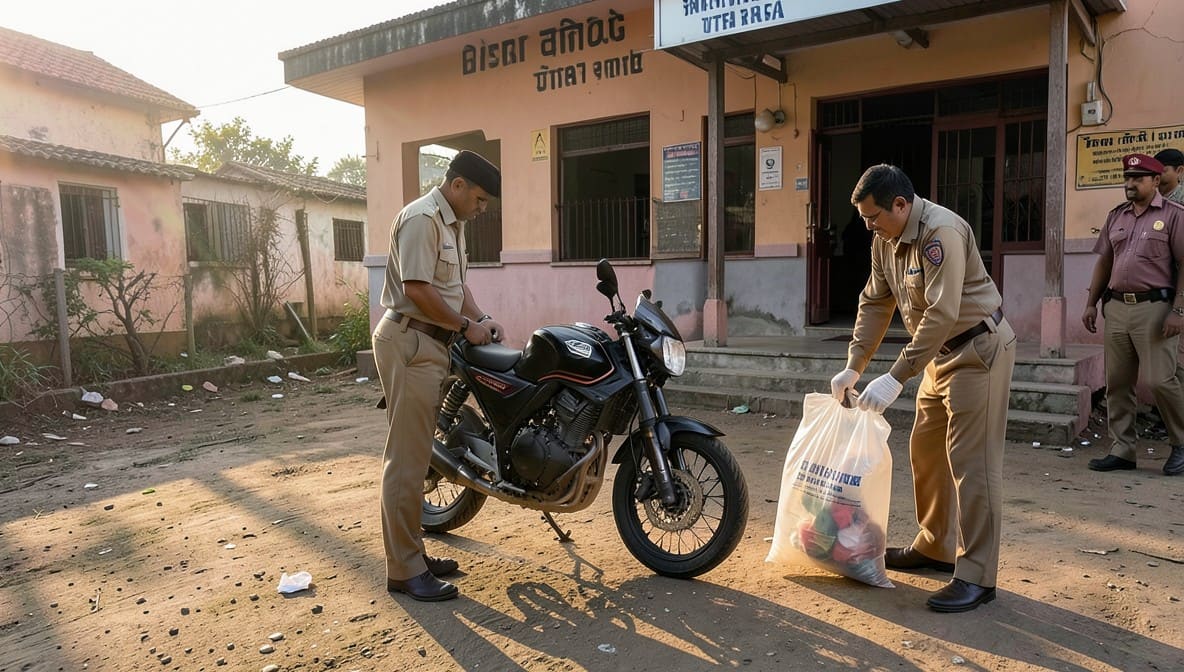
The applicant, Musa, was arrested and charged in connection with Case Crime No. 81 of 2026, registered at Police Station Chilkana, District Saharanpur, under Sections 8, 21, and 29 of the Narcotic Drugs and Psychotropic Substances (NDPS) Act, 1985. The case stems from the alleged recovery of 330 grams of smack (heroin) from his possession. The applicant has been in judicial custody since 07.03.2026 and seeks bail during the pendency of trial.
Key Facts
- The recovery of 330 grams of smack was recorded in the FIR, but no gazetted officer was present at the time of search or seizure.
- Section 50 of the NDPS Act mandates that a person suspected of possessing narcotic drugs must be given the option to be searched in the presence of a gazetted officer or a magistrate, and the search must be conducted in the presence of at least one witness.
- The FIR does not mention the presence of any gazetted officer or independent witness during the recovery.
- The applicant has a prior criminal record involving three previous cases, which he has explained in his bail application memo.
- The applicant has undertaken not to misuse liberty if granted and has no history of absconding.
- The trial is expected to be protracted due to heavy pendency in the courts.
Procedural History
- 07.03.2026: Applicant arrested and taken into custody.
- 10.03.2026: FIR registered at Police Station Chilkana, District Saharanpur.
- 25.04.2026: Criminal Misc. Bail Application No. 13802 of 2026 filed under Section 483 of the Bharatiya Nagarik Suraksha Sanhita, 2023.
- 27.04.2026: Hearing before the High Court of Judicature at Allahabad.
The Parties' Positions
For the Applicant
The applicant’s counsel, Sri Shivam Tiwari, contended that:
- The recovery of narcotics was conducted in violation of Section 50 of the NDPS Act, rendering the evidence suspect and the arrest procedurally flawed.
- The absence of a gazetted officer during the search invalidates the chain of custody and undermines the prosecution’s case.
- The applicant has no history of violence or flight risk.
- The applicant has undertaken to comply with all bail conditions.
- The trial is unlikely to conclude soon due to systemic delays.
For the Respondent
The Additional Government Advocate, Sri B.P. Maurya, opposed the bail application on the grounds that:
- The quantity of smack recovered (330 grams) is substantial and falls under the purview of commercial quantity under Section 29 of the NDPS Act.
- The applicant has a prior criminal record involving three cases.
- NDPS offences are grave and warrant strict judicial scrutiny.
Relief Sought
The applicant sought release on bail with appropriate conditions, pending trial, arguing that the violation of Section 50 of the NDPS Act substantially weakens the prosecution’s case and that continued detention would violate his right to personal liberty under Article 21 of the Constitution.
The Legal Issue
The central question was whether the failure to comply with the mandatory procedural requirements of Section 50 of the NDPS Act - specifically, the absence of a gazetted officer during the recovery of narcotics - renders the case eligible for bail despite the large quantity of drugs involved and the applicant’s prior criminal record.
Arguments Presented
For the Applicant
The applicant’s counsel relied on State of Punjab v. Baldev Singh and Kalsan Singh v. State of Punjab, where the Supreme Court held that non-compliance with Section 50 is a serious procedural defect that casts doubt on the authenticity of the recovery. It was argued that such a defect is not curable by subsequent testimony and that the prosecution’s case is inherently tainted. The applicant’s counsel emphasized that the burden under Section 37 of the NDPS Act is not absolute and must yield to constitutional rights when procedural safeguards are breached.
For the Respondent
The State contended that the quantity of 330 grams of smack constitutes a commercial quantity under Section 29 of the NDPS Act, triggering the stringent bail conditions under Section 37. It was argued that prior criminal history and the seriousness of the offence outweigh any procedural irregularity, and that granting bail would set a dangerous precedent.
The Court's Analysis
The Court examined the record and noted that the FIR explicitly does not mention the presence of any gazetted officer or independent witness during the recovery of the narcotic substance. The Court observed that Section 50 of the NDPS Act is not a mere formality but a substantive safeguard designed to prevent false implication and ensure the integrity of evidence. The Court cited Kalsan Singh v. State of Punjab to affirm that non-compliance with Section 50 renders the recovery suspect and undermines the prosecution’s case at the threshold.
"The mandatory nature of Section 50 is not a procedural technicality but a constitutional imperative to protect the accused from arbitrary or fabricated recoveries."
The Court further held that while Section 37 of the NDPS Act imposes a heavy burden on the accused seeking bail, it does not extinguish the right to liberty where the prosecution’s case is fundamentally compromised by procedural failure. The Court rejected the argument that quantity alone justifies denial of bail, noting that the law requires a balance between the seriousness of the offence and the integrity of the investigation.
The Court also considered the applicant’s undertaking to comply with bail conditions, his lack of history of absconding, and the prolonged nature of trial proceedings. It emphasized that bail is the rule and jail the exception, particularly where the prosecution’s evidence is vulnerable to challenge.
The Verdict
The bail application was allowed. The applicant, Musa, is directed to be released on bail upon furnishing a personal bond of Rs. 50,000 with two sureties each in the like amount. The applicant must comply with five conditions: (i) no intimidation of witnesses or tampering with evidence; (ii) no pressure on prosecution witnesses; (iii) personal appearance before the trial court on key dates (opening of case, framing of charge, statement under Section 351 B.N.S.S.); (iv) no adjournment requests when witnesses are present; and (v) presence before the court on all dates, personally or through counsel. Breach of any condition shall result in cancellation of bail. The Court clarified that this order does not prejudge the merits of the case.
What This Means For Similar Cases
Procedural Compliance Overrides Quantity in Bail Decisions
- Practitioners must now argue that non-compliance with Section 50 NDPS Act is a dispositive factor in bail applications, even where commercial quantities are involved.
- Courts cannot rely solely on the quantity of drugs to deny bail when the recovery process is legally defective.
- The burden under Section 37 is not absolute; it must be balanced against constitutional rights and procedural fairness.
Bail Conditions Must Be Specific and Enforceable
- Courts are expected to impose clear, tailored conditions to prevent abuse of liberty, including mandatory court appearances and no-contact orders.
- Undertakings against adjournments and witness tampering are now standard in NDPS bail orders.
- Breach of bail conditions must be treated as grounds for immediate cancellation, reinforcing accountability.
Trial Delays Are a Legitimate Factor in Bail Consideration
- Pendency of cases and delayed trials are now recognized as valid considerations in bail applications under Section 483 B.N.S.S.
- Applicants can cite systemic delays to argue against prolonged pre-trial detention.
- This reinforces the principle that liberty cannot be indefinitely suspended due to administrative inefficiency.