The Allahabad High Court has reaffirmed that disciplinary proceedings against public sector employees cannot rest on a single, unchallenged expert opinion without corroboration or procedural fairness. In a significant ruling, the Court set aside the dismissal of three bank clerks whose services were terminated based exclusively on a forensic handwriting report, emphasizing that natural justice demands full opportunity for defense.
Background & Facts
The Dispute
The petitioners - Sachin Kumar, Sanjeev Kumar, and Vipin Kumar - were selected as Clerks in State Bank of India following a recruitment drive initiated by the Bank’s recruitment department. They appeared for a written examination held on 18.11.2009, were declared successful on 03.03.2010, cleared interviews, and were finally selected on 29.09.2010. They joined service in December 2010 and were confirmed after completing a six-month probation period by order dated 09.05.2011.
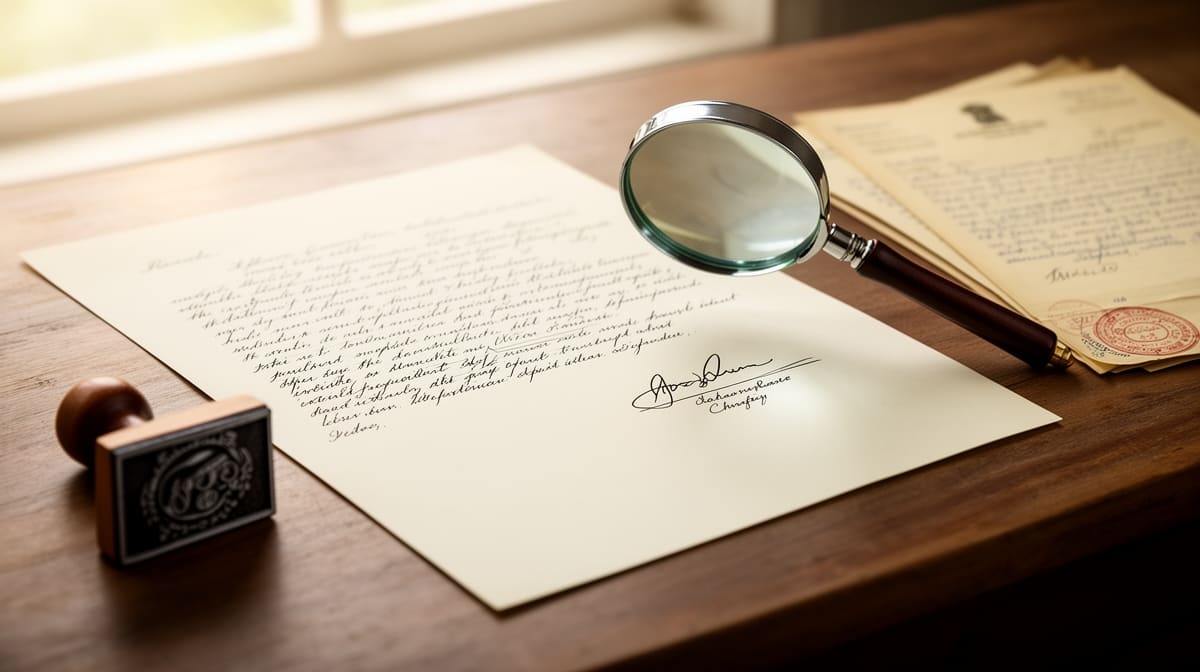
On 09.10.2013, the Bank received a complaint alleging fraudulent appointment through impersonation in the 2009 examination. Based on this, disciplinary proceedings were initiated against the petitioners. The sole evidence relied upon was a handwriting expert report dated 19.11.2012 from the Forensic Science Laboratory, which concluded that the petitioners’ signatures on their call letters did not match their known signatures.
Key Facts
- Written examination conducted on 18.11.2009
- Call letters (Annexures 2A, 2B, 2C) issued to petitioners contained:
- Their signatures
- Their thumb impressions
- Their photographs
- Certification by the invigilator that all three were verified in his presence
- Petitioners were confirmed in service on 09.05.2011 after probation
- Suspension orders issued: Sachin Kumar and Vipin Kumar on 16.01.2013; Sanjeev Kumar on 15.05.2012
- Charge sheet issued on 11.07.2013 alleging impersonation and unfair means
- Handwriting expert report submitted as the only evidence
- No departmental witness examined, including the invigilator
- Petitioners requested cross-examination of the handwriting expert and the invigilator; both requests denied
- Dismissal order passed on 17.01.2014
- Appeal dismissed on 11.03.2015
Procedural History
- 18.11.2009: Written examination conducted by SBI Recruitment Department
- 03.03.2010: Result of written examination declared; petitioners qualified
- 29.09.2010: Final selection list published; petitioners selected
- 18.12.2010: Sachin Kumar joined service
- 18.12.2010: Sanjeev Kumar joined service
- 18.12.2010: Vipin Kumar joined service
- 09.05.2011: Confirmation order issued for all three petitioners
- 09.10.2013: Complaint received by Bank regarding fraudulent appointment
- 16.01.2013: Suspension order issued against Sachin Kumar and Vipin Kumar
- 15.05.2012: Suspension order issued against Sanjeev Kumar
- 11.07.2013: Charge sheet issued
- 19.11.2012: Handwriting expert report prepared (retrospectively relied upon)
- 17.01.2014: Dismissal order passed by Regional Manager, SBI, Meerut
- 11.03.2015: Appeal dismissed by Deputy General Manager, Noida
- 15.12.2015: Writ Petition filed before Allahabad High Court
- 13.03.2026: Arguments heard
- 15.04.2026: Judgment delivered
The Parties' Positions
For the Petitioners
- The handwriting expert report was an opinion, not conclusive proof
- The invigilator, who verified their identity at the examination center, was never examined
- Thumb impressions and photographs on the call letters were verified by the invigilator and remained unchallenged
- The Bank’s own recruitment process had already confirmed their identity
- Denial of cross-examination violated principles of natural justice
- Reliance on a single, untested expert opinion without corroboration was legally unsustainable
For the Respondent-Bank
- The handwriting expert report was the only material evidence of impersonation
- Petitioners admitted the authenticity of the report, negating the need for cross-examination
- The report was sufficient to establish misconduct under preponderance of probability
- No other evidence was available
Relief Sought
The petitioners sought:
- Setting aside of the dismissal order dated 17.01.2014 and appeal order dated 11.03.2015
- Restoration of service with full back wages and benefits
- Payment of arrears from date of dismissal
- Costs of litigation
The Legal Issue
Can a disciplinary authority lawfully dismiss an employee based solely on an unexamined handwriting expert report, when other corroborative evidence - such as verified photographs, thumb impressions, and invigilator certification - is available but ignored, and when the employee is denied the opportunity to cross-examine the expert?
Arguments Presented
For the Petitioner
The petitioners’ counsel relied on Murari Lal v. State of Madhya Pradesh to argue that handwriting expert opinions are inherently opinion-based and imperfect. They emphasized that the report was never subjected to cross-examination, violating the fundamental right to be heard under Article 14 and principles of natural justice. They further contended that the call letters contained multiple, contemporaneous, and independently verified identifiers - photograph, thumb impression, and invigilator certification - that were never considered by the disciplinary authority. The denial of the request to examine the invigilator, who was a Bank employee and directly witnessed the petitioners’ presence, rendered the proceedings fundamentally flawed. They cited Ran Vijay Singh v. Union of India and Lalit Popli v. Canara Bank to show that reliance on expert reports without corroboration or independent reasoning is impermissible.
For the Respondent
The Bank’s counsel argued that the petitioners had admitted the authenticity of the handwriting expert report, thereby waiving the need for cross-examination. They contended that the report was sufficient to establish misconduct under the preponderance of probability standard. They maintained that the invigilator’s testimony was not essential since the expert report was conclusive and the petitioners had not challenged the document’s execution.
The Court's Analysis
The Court undertook a rigorous analysis of the nature of expert evidence in departmental proceedings. It observed that while Murari Lal permits reliance on uncorroborated handwriting expert opinions in exceptional cases, such reliance must be cautious and must account for all available evidence. The Court held that the report in this case was not merely uncorroborated - it was actively contradicted by the Bank’s own documentation.
"The call letter on which the disputed signature of petitioners was examined by the handwriting expert also contained the photograph, thumb impression of petitioners... and was certified by the invigilator."
The Court emphasized that the invigilator was not just a witness but a critical part of the Bank’s own verification mechanism. The fact that the Bank’s recruitment department had accepted the petitioners’ identity at the time of examination, and that no complaint was raised by the recruitment unit, undermined the credibility of the later allegation.
The Court rejected the Bank’s argument that admission of the report’s authenticity equated to acceptance of its conclusions. It cited settled law that admission of a document’s genuineness does not imply admission of its contents. The Court held:
"The acceptance of the authenticity and genuineness of the handwriting expert report would not have the effect that the department would not give opportunity to delinquent employee to cross examine the handwriting expert."
The Court further noted that the disciplinary authority failed to record any independent reasoning for rejecting the invigilator’s certification or the photograph and thumb impression. The order mechanically accepted the expert’s opinion without analysis, violating the requirement of reasoned decision-making.
The Court concluded that the denial of cross-examination, combined with the disregard of multiple corroborative identifiers, rendered the proceedings arbitrary and violative of natural justice. The disciplinary authority’s failure to examine the invigilator, who was readily available and employed by the Bank, was particularly egregious.
The Verdict
The writ petition is allowed. The dismissal order dated 17.01.2014 and the appeal order dated 11.03.2015 are set aside. The petitioners are reinstated in service with all consequential benefits, including back wages from the date of dismissal until reinstatement. The Bank is directed to compute and pay arrears of salary, allowances, and pension contributions within eight weeks of the judgment. The Bank is granted liberty to initiate fresh disciplinary proceedings, provided it examines the invigilator, permits cross-examination of the handwriting expert, and considers all available evidence including photograph, thumb impression, and signature. The petitioners may be suspended pending fresh proceedings, but only after reinstatement.
What This Means For Similar Cases
Cross-Examination Cannot Be Denied on Grounds of Document Authenticity
- Practitioners must argue that admission of a document’s execution does not waive the right to challenge its contents
- Any expert report forming the basis of dismissal must be subject to cross-examination, regardless of whether the employee accepts the document’s authenticity
- Failure to permit cross-examination renders proceedings void under Article 14 and principles of natural justice
Corroborative Evidence Must Be Considered, Not Ignored
- When multiple forms of identification (photograph, thumb impression, invigilator certification) are available and unchallenged, reliance on a single expert opinion is legally unsustainable
- Disciplinary authorities must record reasons for rejecting corroborative evidence
- Ignoring contemporaneous, verified documentation in favor of retrospective expert analysis constitutes arbitrariness
Invigilators and First-Hand Witnesses Are Critical in Recruitment Cases
- Invigilators are not peripheral witnesses - they are integral to the recruitment process
- Their testimony must be sought before initiating disciplinary action based on identity fraud
- Failure to examine such witnesses, especially when they are employees of the same organization, raises serious questions about procedural fairness