The Allahabad High Court has reaffirmed that active facilitation of an unlawful assembly, even without direct physical assault, is sufficient to attract liability under Section 149 of the Indian Penal Code. The judgment clarifies the threshold for collective criminal responsibility when one member arms themselves and intimidates witnesses to enable the commission of violence.
Background & Facts
The Dispute
The dispute arose from a land conflict between the deceased, Chandra Prakash Tiwari, and several accused persons from the same village in Pratapgarh, Uttar Pradesh. The enmity stemmed from prior litigation involving property rights, including a civil suit filed by Satya Prakash against Ramapati Misra and others, which had resulted in a decree against the accused. This pre-existing hostility formed the backdrop to the fatal incident.
Key Facts
- The deceased, Chandra Prakash Tiwari, was attacked on 05.09.1982 at approximately 6:00 P.M. near the house of accused Ram Khelawan (A2)
- The deceased was lured away from his doorstep by Radhey Krishna (A13), who falsely claimed a Tehsil peon was seeking him
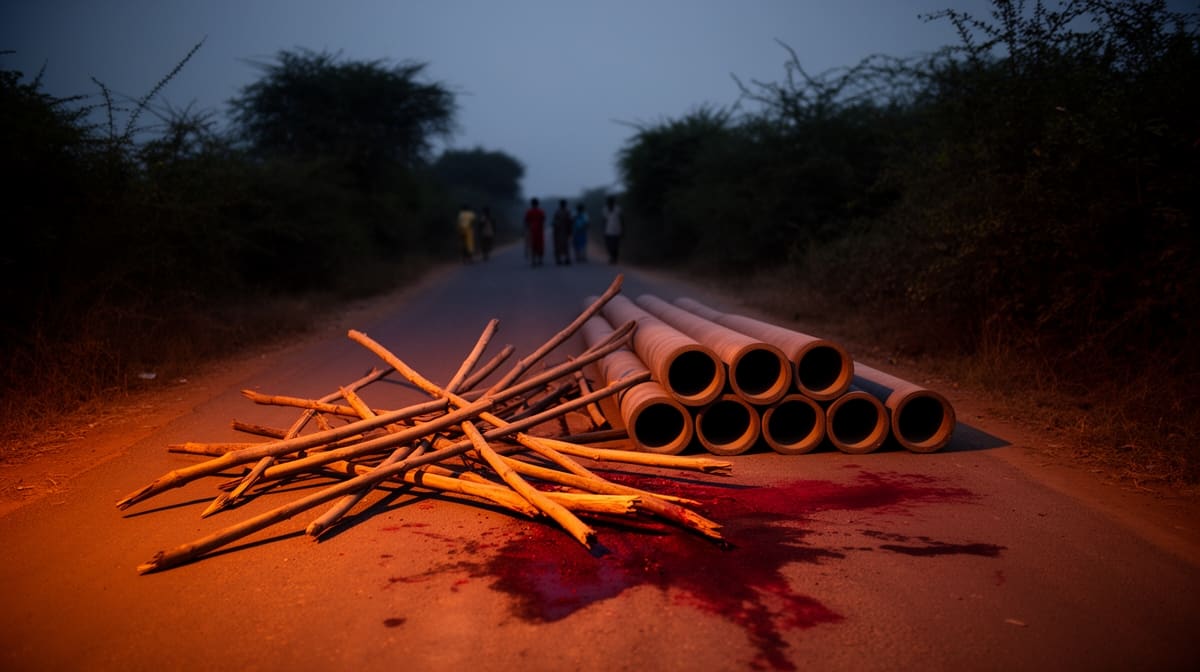
- Upon reaching the southern road near A2’s house, the deceased was surrounded by 12 - 13 accused persons, including Ram Pratap (A1), Ramapati Misra (A4), Salik Ram Misra (A5), Triveni Prasad Misra (A6), Ram Khelawan (A2), Rakesh Kumar (A3), Mithilesh Kumar (A7), Dhirendra Kumar (A8), Om Prakash (A9), Ram Asrey (A10), Radhey Shyam (A11), Radhey Mohan (A12), and Radhey Krishna (A13)
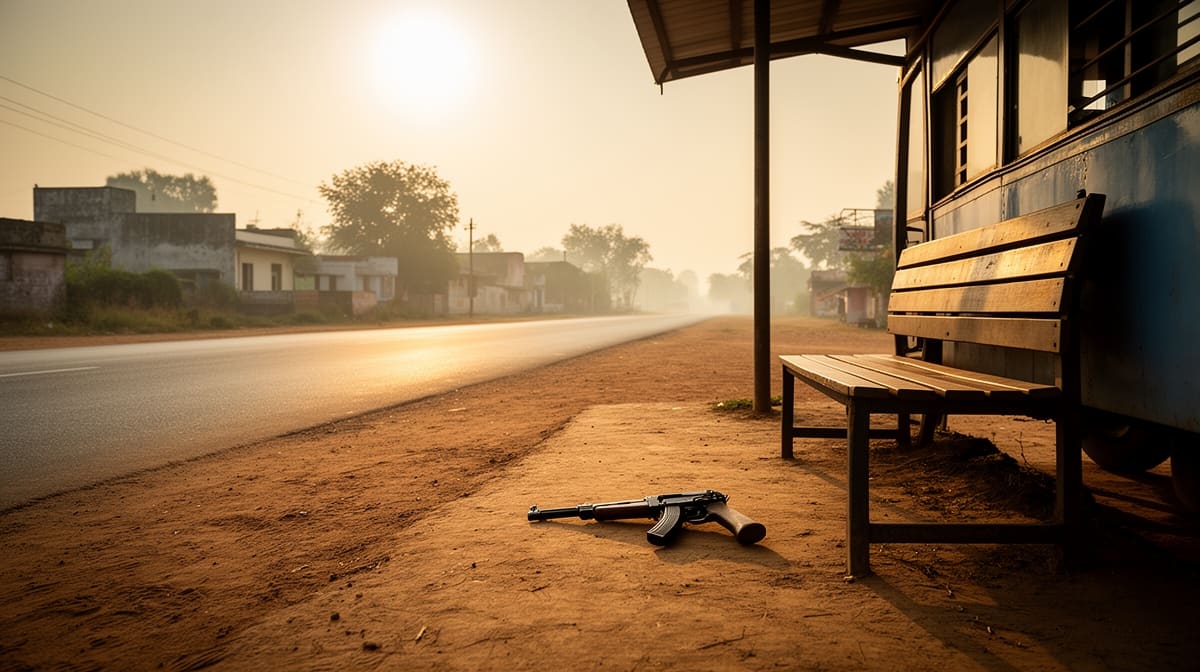
- The accused assaulted the deceased with lathis while Ram Pratap (A1) stood armed with a country-made pistol, threatening bystanders from intervening
- The complainant, Shyam Shankar Tripathi (PW-1), and other villagers including Jagannath (PW-2) and Smt. Sushila Devi (PW-3) arrived at the scene but were prevented from rescuing the deceased due to threats from A1
- Smt. Sushila Devi sustained a fractured wrist when accused Salik Ram Misra (A5) forcibly twisted her hand while she attempted to shield the deceased
- The deceased succumbed to multiple head injuries and died on the spot
- The accused allegedly dragged the body to the field of Gaya Prasad, where it was recovered at approximately 1:45 A.M. on 06.09.1982
- The body was sealed and sent for post-mortem to District Hospital, Pratapgarh
- A First Information Report (FIR) was registered on 05.09.1982 under Crime No. 146 of 1982 at Police Station Badhrai
- The Investigating Officer recovered a country-made pistol from Ram Asrey (A10) and a licensed BSA rifle with 10 cartridges from the house of Ram Pratap (A1)
- Blood-stained soil, grass, doorframe, and a blood-stained shirt were recovered from the scene and the houses of accused persons
- The post-mortem report (Ext. Ka-2) recorded 17 injuries, including multiple lacerated wounds to the head and skull fractures, sufficient to cause death in the ordinary course of nature
- The prosecution examined nine witnesses, including two doctors and three constables
- The defence examined one medical witness and submitted injury reports of several accused, claiming they were assaulted during arrest
Procedural History
- 05.09.1982: Incident occurred at approximately 6:00 P.M.
- 05.09.1982: FIR registered at Police Station Badhrai, Crime No. 146 of 1982
- 06.09.1982 at 1:45 A.M.: Dead body recovered from field of Gaya Prasad
- 06.09.1982 at 6:00 A.M.: Inquest conducted; panchayatnama (Ext. Ka-18) prepared
- 07.09.1982: Post-mortem conducted by Dr. D.C. Srivastava
- 07.09.1982: Medical examination of Smt. Sushila Devi by Dr. Sampurnanand
- 20.10.1982: Recovery of material exhibits sent to Sadar Hospital for chemical testing
- 14.02.1983: Exhibits deposited in Sadar Malkhana, Pratapgarh
- 18.07.1983: Judgment and order passed by IIIrd Additional District & Sessions Judge, Pratapgarh in Session Trial No. 227 of 1982
- 18.07.1983: Conviction and sentencing under Sections 302/149, 325/149, 323/149, 201/149, and 148 IPC
- 09.02.2026: Appeals reserved
- 20.04.2026: Judgment delivered by Division Bench of Allahabad High Court
The Parties' Positions
For the Appellants
- Contended that Ram Pratap (A1) had no direct role in the assault and his presence with a firearm did not constitute participation in the unlawful assembly
- Argued that the prosecution failed to prove the accused caused disappearance of evidence under Section 201 IPC, as no witness saw the body being moved
- Claimed material contradictions between ocular testimony and medical evidence, particularly regarding the injury to Smt. Sushila Devi
- Asserted that the F.I.R. was ante-timed and inconsistent with witness statements
- Contended that the testimony of PW-2 Jagannath was unreliable due to obstructed view
- Argued that the conviction under Section 149 IPC was unsustainable against A1 due to absence of overt act
- Raised juvenility of A3 (Rakesh Kumar), who was 14 years old at the time of occurrence
For the Respondent
- Maintained that the prosecution established guilt beyond reasonable doubt through consistent ocular testimony
- Argued that the presence of A1 with a firearm and his threats to prevent intervention made him an integral part of the unlawful assembly
- Stated that the delay in recovery of the body and minor inconsistencies were natural and did not affect the core of the prosecution case
- Contended that the medical evidence corroborated the ocular testimony, particularly regarding the wrist injury
- Asserted that the existence of an unlawful assembly was clearly established by the number of accused, their collective conduct, and use of weapons
Relief Sought
The appellants sought:
- Quashing of conviction under Section 201 IPC
- Acquittal of Ram Pratap (A1) under Section 149 IPC for lack of direct participation
- Setting aside of conviction under Section 148 IPC against A1
- Declaration of A3 (Rakesh Kumar) as a juvenile and exemption from adult punishment
- Reduction or remission of sentence in light of prolonged incarceration
The Legal Issue
The central questions were: (1) Whether the presence and active facilitation of an unlawful assembly by an accused armed with a firearm, without direct assault, is sufficient to attract liability under Section 149 IPC; and (2) Whether the prosecution established the essential ingredients of Section 201 IPC, particularly the intention to cause disappearance of evidence with the purpose of screening offenders.
Arguments Presented
For the Appellant
The appellants relied on Sukhram v. State of Maharashtra and Palvinder Kaur v. State of Punjab to argue that Section 201 IPC requires proof of intentional concealment of evidence with the specific purpose of screening the offender, which was absent here. They contended that mere discovery of the body at a different location, without eyewitness testimony of removal, could not sustain the charge. Regarding Section 149 IPC, they cited Vinubhai Ranchhodbhai Patel v. Rajivbhai Dudabhai Patel to argue that vicarious liability requires either commission of the offence by a member or knowledge of likelihood of its commission. Since A1 did not inflict any injury and no evidence showed he shared the intent to kill, his conviction was unsustainable. They further argued that the ocular testimony of PW-1 and PW-2 was unreliable due to inconsistencies in timing and visibility, and that the medical evidence contradicted the prosecution’s version of the wrist injury.
For the Respondent
The State contended that the prosecution established the existence of an unlawful assembly of more than five persons with a common object to assault the deceased. It relied on Vinubhai to argue that presence with a weapon and active intimidation to prevent rescue constitutes participation in the common object. The State emphasized that the testimony of PW-1, PW-2, and PW-3 was consistent, natural, and corroborated by medical evidence. It further argued that the absence of visible external injury on Smt. Sushila Devi’s wrist did not negate the fracture confirmed by X-ray, and that the delay in body recovery was explainable by darkness and logistical constraints. The State maintained that the conviction under Section 201 IPC was not essential to the case and that the core charges under Sections 302/149, 325/149, and 323/149 were fully proven.
The Court's Analysis
The Court undertook a comprehensive review of the ocular, medical, and circumstantial evidence. It emphasized that conviction under Section 149 IPC does not require proof that every member inflicted injuries. The Court held that the presence of 12 - 13 accused persons, their collective assault with lathis, and the armed presence of Ram Pratap (A1) who threatened bystanders established a clear common object to commit violence. The Court quoted Vinubhai v. Rajivbhai to affirm: "Mere knowledge of the likelihood of commission of such an offence by the members of the assembly is sufficient."
"The evidence of PW-1, PW-2 and PW-3, therefore, forms a reliable and credible foundation for the prosecution case."
The Court rejected the defence’s argument that A1’s role was merely that of an instigator. It held that his armed presence and threats to prevent intervention were not passive but active facilitation of the offence. The Court observed that the firearm was not merely carried but used as a tool of coercion, thereby making A1 an integral part of the unlawful assembly.
Regarding Section 201 IPC, the Court applied the test laid down in Sukhram and Palvinder Kaur. It noted that while the body was found at a different location, no witness saw the accused moving it. The Court stated:
"The mere fact that the dead body was found at a place different from the alleged place of occurrence is not sufficient to hold that the accused had caused disappearance of evidence, in the absence of proof of such act and the requisite intention to screen themselves."
The Court concluded that suspicion, however strong, cannot substitute proof. Since the prosecution failed to establish that the accused caused the disappearance of evidence with the intention to screen themselves, the conviction under Section 201 IPC was set aside.
On the issue of the wrist injury, the Court found no contradiction between ocular and medical evidence. It noted that Dr. Sampurnanand had opined that a fracture could result from forceful twisting, even without visible external marks. The X-ray confirmation of fracture validated PW-3’s testimony.
Regarding juvenility of A3 (Rakesh Kumar), the Court acknowledged his status as a juvenile on the date of occurrence. However, it noted that over four decades had passed, and A3 was now an adult. The Court held that sending him to a juvenile facility at this stage would be impractical and contrary to the object of the Juvenile Justice Act. It further noted that A3 had already undergone approximately eleven months of incarceration.
The Verdict
The appeals were partly allowed. The convictions of appellants A1 (Ram Pratap), A3 (Rakesh Kumar), A4 (Ramapati Misra), A7 (Mithilesh Kumar), A8 (Dhirendra Kumar), A11 (Radhey Shyam), and A12 (Radhey Mohan) under Sections 302/149, 325/149, 323/149, and 147 IPC were affirmed. The conviction of A1 under Section 148 IPC was also affirmed. However, the conviction of all appellants under Section 201/149 IPC was set aside. A3, having been a juvenile at the time of the offence, was directed that the period of detention already undergone (approximately eleven months) shall be treated as sufficient. A1, A4, A7, A8, A11, and A12, who were on bail, were directed to surrender within 15 days to serve their sentences. The bail bonds were cancelled and sureties discharged. A copy of the judgment was to be transmitted to the trial court within one week for compliance.
What This Means For Similar Cases
Presence With Weapon Can Establish Common Object
- Practitioners must now argue that presence with a lethal weapon during an unlawful assembly, coupled with threats to prevent intervention, constitutes active participation under Section 149 IPC
- Mere non-participation in physical assault does not absolve liability if the accused facilitates the offence through intimidation
- Defence counsel must challenge the prosecution’s claim of common object by proving absence of concert or independent motive among members
Section 201 IPC Requires Direct Proof of Concealment
- Prosecution must adduce direct or cogent circumstantial evidence showing the accused caused disappearance of evidence with intent to screen offenders
- Mere relocation of a body, without eyewitness testimony or forensic link to the accused, is insufficient for conviction under Section 201 IPC
- Courts will not infer intent from speculative circumstances; the burden remains on the prosecution to prove the specific mens rea
Juvenility Must Be Determined at Time of Offence, Not Trial
- Even if decades have passed, the age of the accused at the time of the offence governs applicability of juvenile justice provisions
- Courts may decline to impose any further sentence on a now-adult accused who was a juvenile at the time, if they have already undergone substantial incarceration
- Legal teams must proactively raise juvenility at the earliest stage and preserve age proof (school records, birth certificates, medical reports)