The Allahabad High Court has affirmed that the availability of video conferencing under state-mandated digital access rules negates the need to transfer domestic violence cases on grounds of inconvenience. This ruling reinforces the principle that technological access can satisfy procedural fairness without altering territorial jurisdiction.
Background & Facts
The Dispute
The applicant, Sneh Lata Srivastava, is the opposite party in a case filed under Section 12 of the Protection of Women from Domestic Violence Act, 2005. The case, numbered 4013 of 2025, is titled Sukriti Srivastava vs. Shubham Srivastava, and is pending before the Court of Judicial Magistrate-II in Varanasi. The applicant seeks transfer of this proceeding to a court of equivalent jurisdiction in Lucknow or another nearby district.
Key Facts
- The applicant is not the complainant but the respondent in the domestic violence proceeding
- The application for transfer was filed on grounds of personal inconvenience
- No allegation of threat, safety risk, or systemic bias against the applicant was raised
- The applicant did not claim inability to participate in proceedings due to physical disability, illness, or threat
- The dispute arises from a personal relationship within the same state, with no cross-border jurisdictional conflict
Procedural History
- 2025: Case No. 4013 of 2025 filed under Section 12 of the Domestic Violence Act at Police Station Sarnath, Varanasi
- 2026: Transfer Application (Criminal) No. 252 of 2026 filed before the Allahabad High Court
- 24.04.2026: Hearing conducted before Justice Vikram D. Chauhan
Relief Sought
The applicant sought transfer of the domestic violence case from Varanasi to Lucknow or another nearby district, citing inconvenience as the sole ground.
The Legal Issue
The central question was whether inconvenience arising from the location of the court in a domestic violence proceeding constitutes a valid ground for transfer when video conferencing facilities are legally available under state rules.
Arguments Presented
For the Appellant
Learned counsel for the applicant submitted that the applicant faces significant hardship in attending proceedings in Varanasi, which is geographically distant from her residence. He argued that transfer to a nearby district would ensure meaningful participation and reduce personal and financial burden. He relied on the spirit of access to justice and equitable treatment under the Domestic Violence Act.
For the Respondent
The Additional Government Advocate for the State contended that no legal provision permits transfer of a domestic violence case merely on grounds of inconvenience. He emphasized that the applicant had not demonstrated any threat, prejudice, or procedural impossibility. He pointed to the existence of the Rules for Video Conferencing for Courts in the State of Uttar Pradesh, 2020, which provide a ready and lawful alternative.
The Court's Analysis
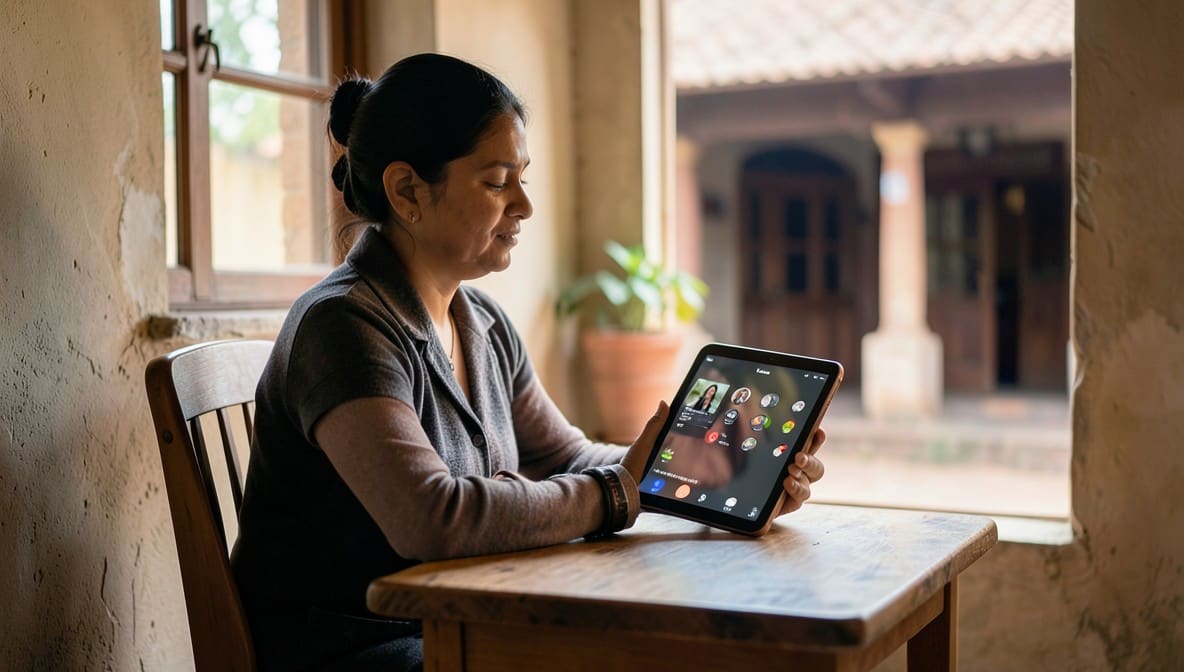
The Court examined the legal framework governing video conferencing in Uttar Pradesh courts, particularly the Rules for Video Conferencing for Courts in the State of Uttar Pradesh, 2020, framed under Articles 225 and 227 of the Constitution. The Court noted that these rules were specifically designed to overcome barriers of distance, cost, and accessibility in judicial proceedings.
"Comprehensive rules have been put in place to adopt the technology in judicial proceedings in order to enable the litigants to approach the court through digital mode."
The Court reaffirmed its earlier decision in Smt. Sunita Devi v. State of U.P., where it held that video conferencing is not merely an optional facility but a constitutionally supported mechanism to ensure participation. The Court observed that the Rules of 2020 contain sufficient safeguards to preserve the integrity of the judicial process while enabling remote attendance.
The Court rejected the notion that inconvenience alone justifies transfer of a case across districts. It held that the availability of a lawful, accessible, and constitutionally recognized alternative renders such a request redundant. The Court emphasized that territorial jurisdiction under the Domestic Violence Act is not a mere procedural formality but a substantive legal framework designed to ensure proximity to the place of occurrence of domestic violence.
The Court further noted that allowing transfers on grounds of convenience would open the floodgates to forum shopping and undermine the statutory intent of the Act, which prioritizes the complainant’s location and the site of the alleged abuse.
The Verdict
The transfer application was dismissed. The Court granted the applicant liberty to apply for video conferencing under the Rules for Video Conferencing for Courts in the State of Uttar Pradesh, 2020. The Court directed that any such application must be decided expeditiously by the concerned court. All courts and authorities in Uttar Pradesh were directed to act in aid of the Rules of 2020 to ensure compliance.
What This Means For Similar Cases
Video Conferencing Eliminates Convenience-Based Transfer Requests
- Practitioners must now advise clients that mere inconvenience is insufficient to seek transfer of domestic violence cases
- Applications for transfer must demonstrate threat, bias, or physical impossibility to appear - not logistical difficulty
- The burden shifts to the applicant to prove that video conferencing is unworkable in their specific circumstances
Jurisdictional Integrity Under Domestic Violence Act Is Preserved
- Courts will not entertain requests to shift proceedings away from the place where the domestic violence occurred
- The statutory framework prioritizes proximity to the incident site, not the convenience of the respondent
- Transfer applications under Section 12 of the DV Act must now be supported by evidence of systemic barriers, not personal preference
Digital Access Is Now a Legal Right, Not a Privilege
- Litigants have a right to participate via video conferencing under the 2020 Rules
- Courts are legally obligated to grant video conferencing upon request
- Failure to facilitate video attendance may now constitute a denial of fair hearing