High Courts judgments

10232 High Courts judgments explained in plain English: what was decided, the law applied and why it matters. Page 79 of 427.

Section 65B Evidence Act & Chain of Custody | Inadmissible Electronic Records Break Circumstantial Evidence Chain: Kerala HC Acquits in Murder Case
Case Law Analysis
|Kerala High Court

Section 65B Evidence Act & Chain of Custody | Inadmissible Electronic Records Break Circumstantial Evidence Chain: Kerala HC Acquits in Murder Case

Kerala High Court acquitted the accused in a murder trial, ruling that the prosecution failed to establish a complete chain of circumstantial evidence due to inadmissible electronic records under Section 65B of the Indian Evidence Act. The judgment underscores the critical role of forensic integrity and procedural compliance in criminal convictions based on circumstantial evidence.


BNSS Section 483 | Bail Granted in Non-Bailable Offences When No Criminal Record & Trial Will Be Protracted: Rajasthan HC
Case Law Analysis
|Rajasthan High Court

BNSS Section 483 | Bail Granted in Non-Bailable Offences When No Criminal Record & Trial Will Be Protracted: Rajasthan HC

The Rajasthan High Court granted bail to an accused in BNS offences triable by a magistrate, emphasizing that prolonged trial duration combined with clean antecedents and no recovery undermines the necessity of continued custody. This reinforces that procedural fairness under BNSS Section 483 must outweigh mechanical application of non-bailability, especially in non-violent, evidence-light cases.

POCSO Act Bail | Hostile Witnesses and Proven Majority of Victim Justify Bail Under BNSS Section 483 : Rajasthan HC
Case Law Analysis
|Rajasthan High Court

POCSO Act Bail | Hostile Witnesses and Proven Majority of Victim Justify Bail Under BNSS Section 483 : Rajasthan HC

Rajasthan High Court grants bail in a POCSO case where the victim and witnesses turned hostile, and the victim's majority was established through testimony and marital status. The court held that forged school records alone cannot sustain POCSO charges if the victim's age is disproven, impacting bail jurisprudence under BNSS Section 483.

Section 138 NI Act | Nominee Director Liable Only With Specific Averments of Active Role: Rajasthan HC Quashes Proceedings
Case Law Analysis
|Rajasthan High Court

Section 138 NI Act | Nominee Director Liable Only With Specific Averments of Active Role: Rajasthan HC Quashes Proceedings

Rajasthan High Court rules that a nominee director cannot be held vicariously liable under Section 138 of the Negotiable Instruments Act unless the complaint specifically alleges their active involvement or responsibility in the company’s affairs. The ruling underscores that mere nomination by a lending institution does not attract criminal liability without explicit averments.

Burden of Proof in Insurance Claims | Claimant Must Prove Ownership, Cash Transaction & Incident Under Utmost Good Faith Doctrine : Delhi State Consumer Commission
Case Law Analysis
|Delhi High Court

Burden of Proof in Insurance Claims | Claimant Must Prove Ownership, Cash Transaction & Incident Under Utmost Good Faith Doctrine : Delhi State Consumer Commission

Delhi State Consumer Commission dismisses ₹57.5 lakh insurance claim, ruling the claimant failed to establish ownership of the Breguet wristwatch, the cash transaction, or the snatching incident with credible evidence. The judgment reinforces that insurance claims under the principle of utmost good faith require strict documentary proof, shifting the burden entirely on the claimant.

Rajasthan Contractual Hiring Rules, 2022 | Contractual Employees Entitled to Retirement Age Parity with Regular Employees: Rajasthan HC Grants Interim Relief
Case Law Analysis
|Rajasthan High Court

Rajasthan Contractual Hiring Rules, 2022 | Contractual Employees Entitled to Retirement Age Parity with Regular Employees: Rajasthan HC Grants Interim Relief

The Rajasthan High Court ruled that contractual employees governed by the Rajasthan Contractual Hiring Rules, 2022, are prima facie entitled to the same retirement age extension (62 years) as regular employees, citing parity in service conditions. The interim relief restrains termination at 60 years, marking a significant precedent for contractual workforce rights in the state.

Consumer Protection Act 2019 | Expert Evidence Mandatory to Prove Manufacturing Defect in Electric Vehicles : Delhi SCDRC
Case Law Analysis
|Delhi High Court

Consumer Protection Act 2019 | Expert Evidence Mandatory to Prove Manufacturing Defect in Electric Vehicles : Delhi SCDRC

Delhi State Consumer Disputes Redressal Commission dismisses a complaint alleging battery range deficiency in a Mercedes EQC 400, ruling that mere mileage discrepancy without expert evidence fails to establish a manufacturing defect under the Consumer Protection Act 2019. The decision underscores the burden of proof on consumers to substantiate claims with technical expertise, impacting electric vehicle litigation and consumer rights enforcement.

Section 528 BNSS | Rajasthan HC Quashes Non-Compoundable Offences (Sections 467, 468, 471, 120B IPC) Upon Compromise Under Gian Singh Principles
Case Law Analysis
|Rajasthan High Court

Section 528 BNSS | Rajasthan HC Quashes Non-Compoundable Offences (Sections 467, 468, 471, 120B IPC) Upon Compromise Under Gian Singh Principles

Rajasthan High Court reinforces that even non-compoundable offences under Sections 467, 468, 471, and 120B IPC can be quashed post-compromise, applying the Supreme Court's Gian Singh precedent. The ruling underscores the High Court's inherent powers under Section 528 BNSS to prevent abuse of process where parties settle amicably, even in serious offences.

Section 528 BNSS | Rajasthan HC Quashes Non-Compoundable Offence (Section 308 IPC) Upon Compromise Under Gian Singh Principles
Case Law Analysis
|Rajasthan High Court

Section 528 BNSS | Rajasthan HC Quashes Non-Compoundable Offence (Section 308 IPC) Upon Compromise Under Gian Singh Principles

Rajasthan High Court exercises inherent powers under Section 528 BNSS to quash criminal proceedings for non-compoundable offence (Section 308 IPC) after parties reach an amicable settlement, reinforcing the Gian Singh precedent that prioritizes justice over technical rigidity. This ruling clarifies that even non-compoundable offences may be quashed if compromise serves the ends of justice, impacting criminal litigation strategy for similar cases.

Advocates Act 1961 | Absolute Right to Change Counsel Without NOC from Previous Advocate: Karnataka HC
Case Law Analysis
|Karnataka High Court

Advocates Act 1961 | Absolute Right to Change Counsel Without NOC from Previous Advocate: Karnataka HC

Karnataka High Court reaffirms that a litigant’s right to change counsel is absolute under the Advocates Act, 1961, and does not require a No Objection Certificate from the previous advocate. The ruling underscores professional ethics and the unconditional nature of the right to legal representation, ensuring litigants are not unduly restricted in choosing their counsel.

Karnataka Civil Service Rules | Pension Commutation Recovery Period Reduced from 15 to 10.8 Years Under Writ of Mandamus : Karnataka HC
Case Law Analysis
|Karnataka High Court

Karnataka Civil Service Rules | Pension Commutation Recovery Period Reduced from 15 to 10.8 Years Under Writ of Mandamus : Karnataka HC

The Karnataka High Court directed authorities to consider a pensioner's representation seeking reduction of the commutation recovery period from 15 years to 10.8 years, staying recovery proceedings until a decision is made. This ruling reinforces pensioners' rights under service law and may set a precedent for similar cases under the Karnataka Civil Service Rules.

Section 166 Motor Vehicles Act | Tribunal's Compensation Award Upheld Despite APSRTC's Challenge on Quantum Proof: Andhra Pradesh HC
Case Law Analysis
|Andhra Pradesh High Court

Section 166 Motor Vehicles Act | Tribunal's Compensation Award Upheld Despite APSRTC's Challenge on Quantum Proof: Andhra Pradesh HC

The Andhra Pradesh High Court affirmed a Rs. 15.63 lakh compensation award for a medical aspirant injured in a road accident, emphasizing that tribunals' quantum awards under Section 166 of the Motor Vehicles Act cannot be overturned without substantive evidence of negligence or error. The ruling reinforces the burden of proof on appellants challenging compensation amounts, impacting future motor accident claims and appeals.

Section 118 H.P. Tenancy Act | 'Put to Use' Requires Substantial Commencement, Not Full Operationalization : Himachal Pradesh HC
Case Law Analysis
|Himachal Pradesh High Court

Section 118 H.P. Tenancy Act | 'Put to Use' Requires Substantial Commencement, Not Full Operationalization : Himachal Pradesh HC

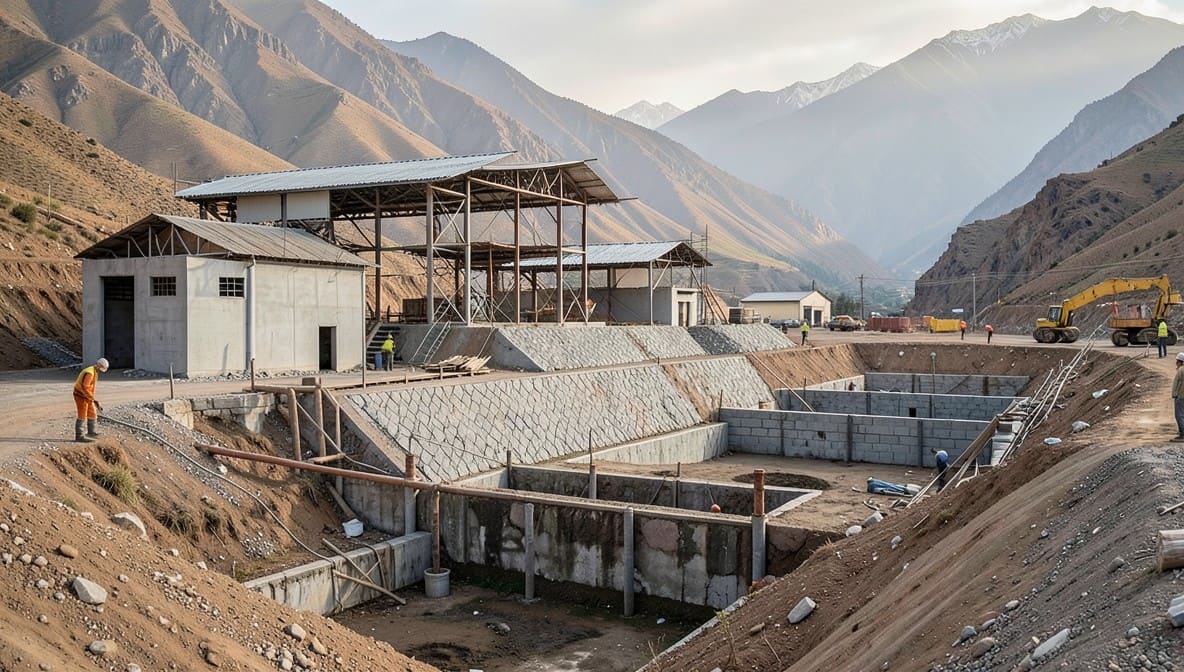
The Himachal Pradesh High Court clarified that under Section 118(2) of the H.P. Tenancy Act, land vesting is not automatic upon failure to fully operationalize a project. Demonstratable steps like land development, construction of retaining walls, and bore-well digging suffice to prove 'put to use,' preventing arbitrary land resumption by the state.

Section 29 Indian Forests Act, 1927 | Private Land Cannot Be Declared Protected Forest Without Government Ownership: Bombay HC
Case Law Analysis
|Bombay High Court

Section 29 Indian Forests Act, 1927 | Private Land Cannot Be Declared Protected Forest Without Government Ownership: Bombay HC

Bombay High Court rules that private lands cannot be notified as 'protected forests' under Section 29 of the Indian Forests Act, 1927, unless they are government-owned or subject to government proprietary rights. The judgment quashes notifications issued without prior inquiry into ownership, reinforcing landowners' rights against arbitrary state declarations.

Section 13(1)(i-a)(i-b) Hindu Marriage Act | Cruelty & Desertion Must Be Proven with Cogent Evidence, Not Mere Allegations : Jharkhand HC
|Jharkhand High Court

Section 13(1)(i-a)(i-b) Hindu Marriage Act | Cruelty & Desertion Must Be Proven with Cogent Evidence, Not Mere Allegations : Jharkhand HC

Jharkhand High Court reaffirms that divorce under Section 13(1)(i-a)(i-b) of the Hindu Marriage Act requires strict proof of cruelty or desertion, dismissing appeals based on unsubstantiated claims. The ruling underscores the high evidentiary burden in matrimonial disputes, impacting divorce litigation strategy for Hindu couples.