The Bombay High Court recently delivered a significant judgment clarifying the scope of Section 29 of the Indian Forests Act, 1927, holding that privately owned lands cannot be declared as 'protected forest' unless the government holds proprietary rights over them. The Court quashed notifications issued by the State of Maharashtra, emphasizing that the statutory provision mandates a prior inquiry into ownership rights before such declarations can be made.
Background & Facts
The Dispute
The petitioners, Lok Housing & Construction Ltd. (Petitioner No. 1) and its Vice President (Petitioner No. 2), challenged three notifications dated 05.07.2008, 18.02.2009, and 31.03.2010, issued by the State of Maharashtra. These notifications declared 5.796 hectares of CTS No. 1 (Village Turbhe), 14.57 hectares of CTS No. 2, and 20.11 hectares of CTS No. 5 (Village Mandale) as 'protected forest' under Section 29 of the Indian Forests Act, 1927. The petitioners contended that these notifications were issued in violation of the statutory provisions, as the lands were privately owned and not government property.
Key Facts
- The petitioners purchased the lands from Mr. Thanawala, who had used them as salt pans.
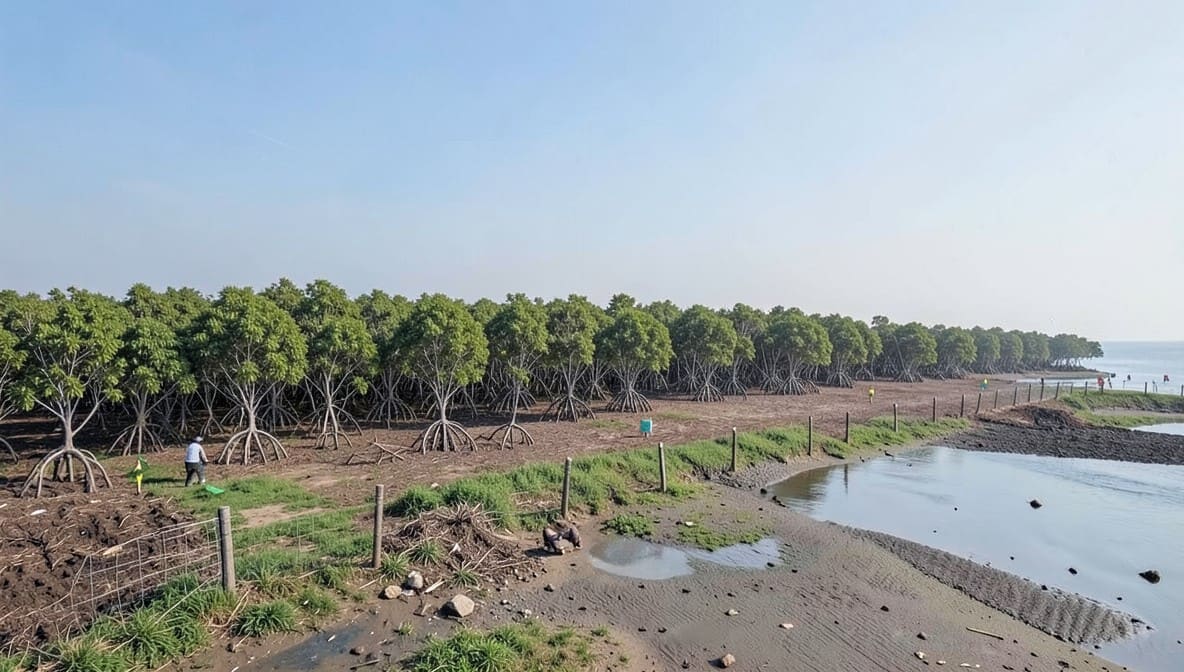
- The lands contained sparse mangroves due to soil salinity.
- The petitioners sought development permissions and filed an application under Section 6(1) of the Urban Land (Ceiling and Regulation) Act, 1976 (ULC Act).
- The Competent Authority granted permission under Section 10(3) of the ULC Act on 23.12.2004 and under Section 10(5) of the ULC Act, but the Revenue Minister stayed the order.
- The petitioners remained in possession of the lands despite the stay.
- The Divisional Commissioner, Konkan Division, issued the impugned notifications declaring the lands as 'protected forest'.
- The petitioners engaged in repeated correspondence with the authorities, requesting deletion of the forest entry from the property card, but their efforts were unsuccessful.
Procedural History
- 2011: The petitioners filed Writ Petition No. 427 of 2011 before the Bombay High Court, challenging the notifications.
- 25.06.2026: The Court issued 'Rule' and heard arguments from both parties.
- The State of Maharashtra requested deferment of the hearing due to pending civil suits (Suit Nos. 3225/1997, 3226/1997, and 3227/1997), in which it claimed ownership of the lands.
- The petitioners opposed this request, submitting that the suits were filed by the Union of India (not the State) against the erstwhile owners and the petitioners, seeking a declaration of title and injunction against construction or transfer of rights.
- The Court refused to defer the hearing, noting that the State was not the plaintiff in the suits.
The Parties' Positions
The petitioners argued that the notifications were issued in violation of Section 29 of the Indian Forests Act, 1927, as the lands were privately owned and not government property. They contended that the State had no authority to declare privately owned lands as 'protected forest' without conducting a prior inquiry into ownership rights.
The State of Maharashtra, represented by the Additional Government Pleader (AGP), contended that the lands were under mangroves and deserved to be declared as 'protected forest' irrespective of ownership disputes. The Divisional Commissioner, Konkan Division, filed an affidavit admitting that the lands were mutated in the petitioners' names but maintained that the mangrove cover justified the declaration.
Relief Sought
The petitioners sought quashing of the impugned notifications dated 05.07.2008, 18.02.2009, and 31.03.2010, and a declaration that the State had no authority to declare privately owned lands as 'protected forest' under Section 29 of the Indian Forests Act, 1927.
The Legal Issue
The central question before the Court was whether Section 29 of the Indian Forests Act, 1927 permits the State Government to declare privately owned lands as 'protected forest' without establishing its proprietary rights or conducting an inquiry into existing ownership rights.
Arguments Presented
For the Petitioners
- Statutory Violation: The petitioners argued that Section 29 of the Indian Forests Act, 1927 explicitly permits the declaration of lands as 'protected forest' only if they are the property of the Government or over which the Government has proprietary rights. The impugned notifications were issued without satisfying this precondition.
- Lack of Inquiry: The petitioners contended that sub-section (3) of Section 29 mandates an inquiry into the nature and extent of rights of the Government and private persons before issuing a notification. No such inquiry was conducted.
- Ownership Dispute: The petitioners highlighted that the State's claim of ownership was pending in civil suits (Suit Nos. 3225/1997, 3226/1997, and 3227/1997), and the State was merely a defendant in those suits. Thus, the State could not unilaterally declare the lands as 'protected forest'.
For the Respondent/State
- Mangrove Cover: The State argued that the lands were under mangroves and deserved protection as 'protected forest' irrespective of ownership disputes.
- Public Interest: The State contended that the declaration was in the public interest to preserve the ecological significance of the lands.
- Statutory Interpretation: The State relied on a broad interpretation of Section 29, arguing that the provision could be invoked to protect lands with forest-like characteristics, even if privately owned.
The Court's Analysis
The Court conducted a detailed examination of Section 29 of the Indian Forests Act, 1927, which reads as follows:
"The State Government may, by notification in the Official Gazette, declare the provisions of this Chapter to be applicable to any forest-land or waste-land which is not included in a reserved forest, but which is the property of Government, or over which the Government has proprietary rights, or to the whole or any part of the forest-produce of which the Government is entitled."
The Court observed that the provision explicitly limits the declaration of 'protected forest' to lands that are either:
- The property of the Government, or
- Lands over which the Government has proprietary rights.
The Court further noted that sub-section (3) of Section 29 mandates an inquiry into the nature and extent of rights of the Government and private persons before issuing a notification. The proviso to this sub-section clarifies that such an inquiry should not abridge or affect any existing rights of individuals or communities.
The Court held that the impugned notifications failed to satisfy these statutory requirements. The Divisional Commissioner's affidavit admitted that the lands were mutated in the petitioners' names, and the Union of India had claimed ownership in pending civil suits. The State of Maharashtra was merely a defendant in these suits and had sought an injunction against the petitioners. Thus, the State could not unilaterally declare the lands as 'protected forest' without first establishing its ownership or proprietary rights.
The Court rejected the State's argument that the mangrove cover justified the declaration, emphasizing that Section 29 does not permit such a broad interpretation. The provision is clear: only government-owned lands or lands over which the Government has proprietary rights can be declared as 'protected forest'.
"In light of the aforesaid clear provision, we find that when the Commissioner, Konkan Division himself in the Affidavit has admitted that the lands are mutated in the names of the Petitioners and now the Union of India claims that they are salt pan lands, by filing the Suits, to which the State of Maharashtra is impleaded as Defendant and even the injunction is also sought against the Defendant, we are of the clear view that the declaration by the State of Maharashtra about protected forest in respect of the privately owned land of the Petitioners cannot sustain."
The Verdict
The Bombay High Court allowed the writ petition and quashed the impugned notifications dated 05.07.2008, 18.02.2009, and 31.03.2010. The Court held that the State of Maharashtra had no authority to declare privately owned lands as 'protected forest' under Section 29 of the Indian Forests Act, 1927 without establishing its proprietary rights or conducting a prior inquiry into ownership rights.
What This Means For Similar Cases
Strict Compliance with Section 29 Is Mandatory
- Government Ownership or Proprietary Rights Required: The judgment reaffirms that Section 29 of the Indian Forests Act, 1927 can only be invoked for lands that are the property of the Government or over which the Government has proprietary rights. Private lands cannot be declared as 'protected forest' without satisfying this precondition.
- Inquiry into Rights Is Non-Negotiable: The Court emphasized that sub-section (3) of Section 29 mandates an inquiry into the nature and extent of rights of the Government and private persons before issuing a notification. This inquiry must not abridge or affect existing rights of individuals or communities.
Ownership Disputes Must Be Resolved Before Notification
- Pending Litigation Bars Unilateral Action: The judgment clarifies that if ownership of lands is disputed in pending litigation (e.g., civil suits), the State cannot unilaterally declare such lands as 'protected forest'. The State must first establish its ownership or proprietary rights.
- No Ecological Justification Without Legal Basis: The Court rejected the State's argument that ecological significance (e.g., mangrove cover) justifies the declaration of privately owned lands as 'protected forest'. The statutory provisions must be strictly complied with.
Implications for Landowners and Developers
- Protection Against Arbitrary Declarations: Landowners and developers can rely on this judgment to challenge arbitrary declarations of their lands as 'protected forest' by the State, especially if the State lacks ownership or proprietary rights.
- Due Process Is Essential: The judgment underscores the importance of due process, including inquiries into ownership rights, before issuing notifications under Section 29. Landowners must be given an opportunity to present their case.