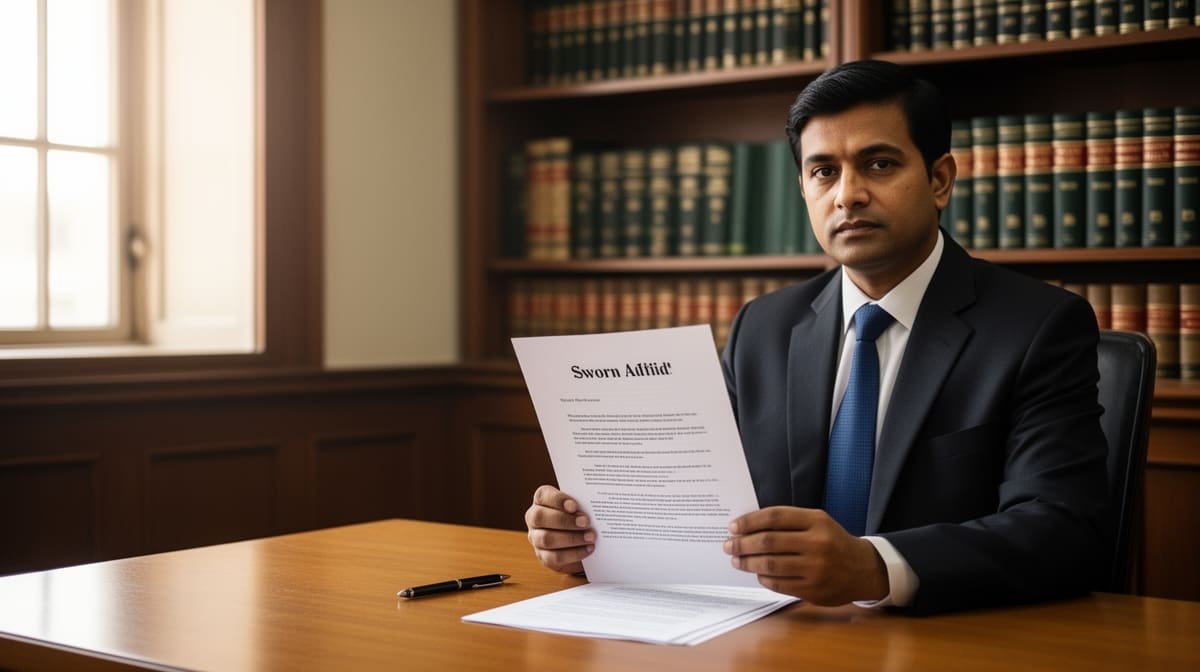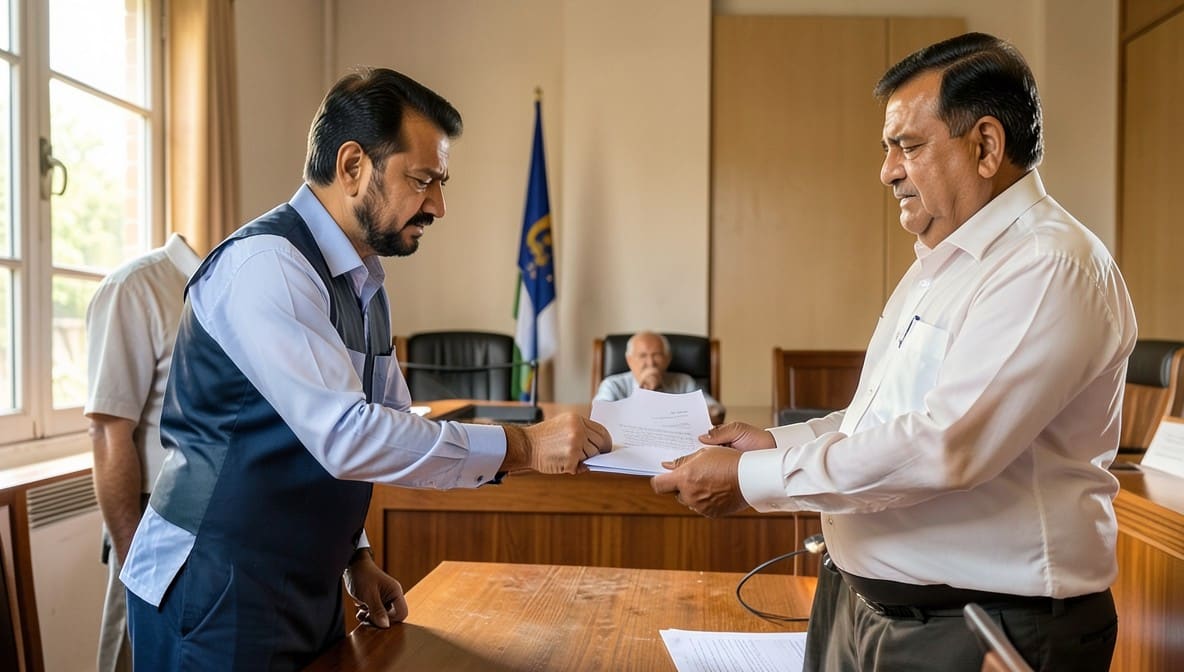
The Karnataka High Court has reaffirmed the absolute right of a litigant to change legal counsel without requiring a No Objection Certificate (NOC) from the previous advocate. This judgment clarifies that insisting on an NOC amounts to an impermissible restriction on a party's right to appoint counsel of their choice, grounding its reasoning in Supreme Court precedents and the Advocates Act, 1961.
Background & Facts
The Dispute
The petitioner, a private bank manager, had instituted execution proceedings (Ex.No.32/2025) before the Senior Civil Judge, Sindhanur, against multiple respondents, including government officials and a power distribution company. During the pendency of these proceedings, the petitioner sought to engage a new counsel after discontinuing the services of his previous advocate.
Key Facts
- The petitioner filed Execution Petition No. 32/2025 before the Senior Civil Judge and JMFC, Sindhanur, for recovery of rent
- On 02.06.2026, the petitioner filed I.A. No. 1 under Section 151 of the Code of Civil Procedure (CPC) seeking permission to engage a new counsel
- The petitioner stated in his affidavit that his previous counsel refused to issue a No Objection Certificate (NOC) despite the petitioner having paid all fees
- The petitioner relied on the judgment of the Karnataka High Court in Karnataka Power Transmission Corporation Ltd. v. M. Rajashekar to argue that an NOC is not required to change counsel
Procedural History
- 02.06.2026: Petitioner filed I.A. No. 1 under Section 151 CPC seeking permission to engage new counsel
- 02.06.2026: The Trial Court rejected I.A. No. 1, holding that an NOC from the previous counsel was necessary
- 25.06.2026: The petitioner filed Writ Petition No. 202345 of 2026 before the Karnataka High Court, Kalaburagi Bench, challenging the Trial Court's order
Relief Sought
The petitioner sought:
- Quashing of the Trial Court's order dated 02.06.2026 rejecting I.A. No. 1
- Permission to engage a new counsel without requiring an NOC from the previous counsel
- Directions to the Trial Court to proceed with the execution proceedings without insisting on an NOC
The Legal Issue
The central question before the Court was whether a litigant is required to obtain a No Objection Certificate (NOC) from their previous counsel before engaging a new advocate under Section 151 CPC.
Arguments Presented
For the Petitioner
The petitioner contended that:
- A litigant has an absolute right to change counsel under Section 32 of the Advocates Act, 1961 and Section 151 CPC
- Requiring an NOC from the previous counsel amounts to an impermissible restriction on this right
- The judgment in Karnataka Power Transmission Corporation Ltd. v. M. Rajashekar held that an NOC is not required to change counsel
- The petitioner had paid all fees to the previous counsel, who was refusing to issue an NOC out of malice or personal differences
For the Respondents
The respondents, represented by their respective advocates, did not contest the petitioner's right to change counsel but emphasized procedural compliance. However, the Trial Court had erroneously insisted on an NOC.
The Court's Analysis
The Court undertook a detailed examination of the legal principles governing a litigant's right to change counsel. It relied heavily on the Division Bench judgment of the Karnataka High Court in Karnataka Power Transmission Corporation Ltd. v. M. Rajashekar, which held that:
"A party to a litigation has an absolute right to appoint an Advocate of his choice, to terminate his services, and to appoint a new Advocate. A party has the freedom to change his Advocate any time and for whatever reason. However, fairness demands that the party should inform his Advocate already on record, though this is not a condition precedent to appoint a new Advocate."
The Court further quoted the Supreme Court's observations in R.D. Saxena v. Balaram Prasad Sharma:
"15. A litigant must have the freedom to change his advocate when he feels that the advocate engaged by him is not capable of espousing his cause efficiently or that his conduct is prejudicial to the interest involved in the lis, or for any other reason. For whatever reason, if a client does not want to continue the engagement of a particular advocate it would be a professional requirement consistent with the dignity of the profession that he should return the brief to the client. It is time to hold that such obligation is not only a legal duty but a moral imperative."
"17. If a party terminates the engagement of an advocate before the culmination of the proceedings that party must have the entire file with him to engage another advocate. But if the advocate who is changed midway adopts the stand that he would not return the file until the fees claimed by him is paid, the situation perhaps may turn to dangerous proportion. There may be cases when a party has no resource to pay the huge amount claimed by the advocate as his remuneration. A party in a litigation may have a version that he has already paid the legitimate fee to the advocate. At any rate if the litigation is pending the party has the right to get the papers from the advocate whom he has changed so that the new counsel can be briefed by him effectively. In either case it is impermissible for the erstwhile counsel to retain the case bundle on the premise that fees is yet to be paid."
The Court also referred to another Division Bench judgment of the Karnataka High Court in Sri C.V. Sudhindra v. Divine Light School for Blind, which held:
"7. We are therefore of the considered opinion that the contract of vakalathnama can be withdrawn by the client at any time. There is nothing known as irrevocable vakalathnama. Precisely the same right has been exercised by respondent No. 1 herein (defendant No.7 in the suit) who had earlier engaged the petitioners on their behalf as Advocates to represent them."
The Court synthesized these precedents to hold that:
- A litigant's right to change counsel is absolute and unconditional
- There is no legal requirement for an NOC from the previous counsel
- Insisting on an NOC amounts to a restriction on the litigant's right to appoint counsel of their choice
- An advocate who is discharged must return the case file to the client, regardless of any fee dispute
- Any refusal to return the file amounts to misconduct under Section 35 of the Advocates Act, 1961
The Court observed that the Trial Court had erroneously rejected I.A. No. 1 by insisting on an NOC, contrary to the legal principles established in the cited judgments.
The Verdict
The Court allowed the writ petition and passed the following orders:
- The impugned order dated 02.06.2026 passed by the Senior Civil Judge, Sindhanur, in I.A. No. 1 was set aside
- I.A. No. 1 filed by the petitioner under Section 151 CPC was allowed
- The petitioner was permitted to engage the services of a new counsel without requiring a No Objection Certificate from the previous counsel
- The Trial Court was directed to proceed with the execution proceedings without insisting on an NOC
What This Means For Similar Cases
Absolute Right to Change Counsel
- No NOC Required: Courts, tribunals, or other authorities cannot insist on a No Objection Certificate from the previous counsel as a condition for engaging a new advocate. Such a requirement is legally impermissible and amounts to a restriction on the litigant's right to counsel.
- Professional Duty of Advocates: An advocate who is discharged by a client must return the case file promptly. Retaining the file on the ground of unpaid fees constitutes misconduct under Section 35 of the Advocates Act, 1961.
Fee Disputes Are Separate from Case Conduct
- Fee Recovery: If an advocate has a genuine fee dispute with a client, they must return the brief and pursue their claim through appropriate legal channels, such as a civil suit for recovery of fees. They cannot hold the case file hostage to pressure the client into paying disputed fees.
- Litigant's Right to File: A litigant has the right to continue their litigation without interruption, and fee disputes cannot be used as leverage to deny this right.
Practical Implications for Litigants and Advocates
- For Litigants: If your advocate is uncooperative or refuses to issue an NOC, you have the absolute right to engage a new counsel without their consent. You may approach the court under Section 151 CPC for permission, citing this judgment.
- For Advocates: Discharged advocates must act professionally by returning the case file immediately. They may pursue fee recovery through legal proceedings but cannot retain the file or obstruct the client's right to new counsel.
- For Courts: Trial courts and appellate forums must not insist on an NOC from the previous counsel. Any such insistence is contrary to law and liable to be set aside in higher courts.