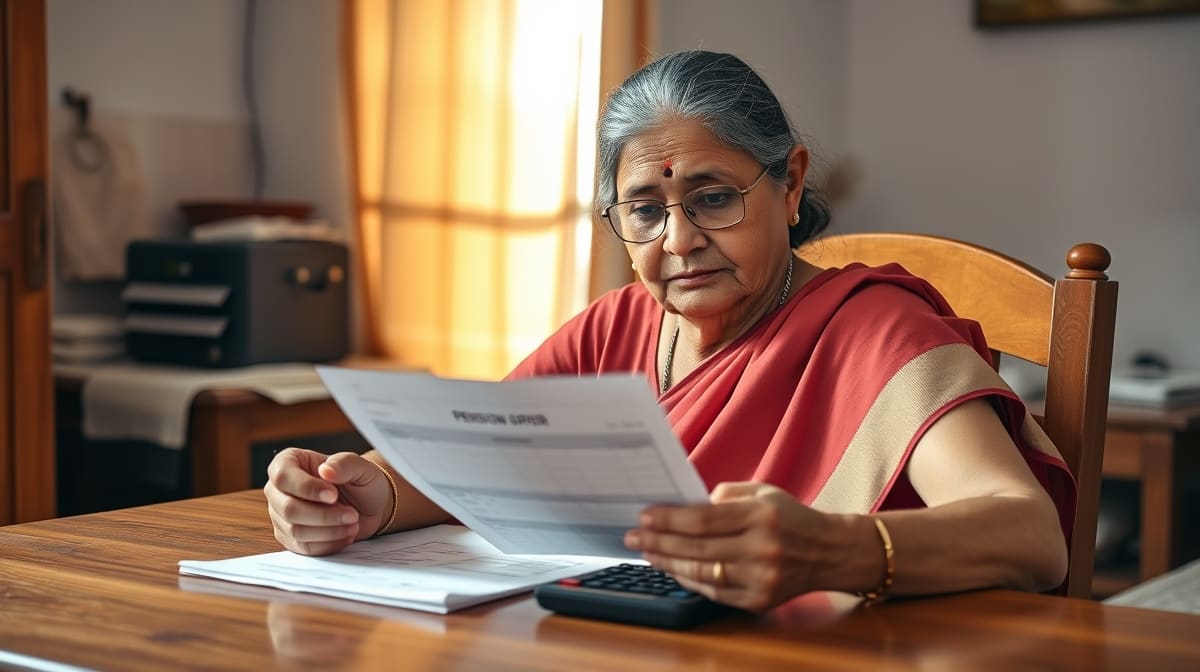
The Karnataka High Court has directed the state authorities to consider a pensioner's representation seeking reduction of the commutation recovery period from 15 years to 10 years and 8 months. The judgment reinforces earlier co-ordinate bench decisions staying recovery until representations are considered, providing relief to similarly placed pensioners under the Karnataka Civil Service Rules, 1958.
Background & Facts
The Dispute
The petitioner, Sathyamma, a 72-year-old retired Junior Health Assistant from Bidar district, challenged the recovery of commuted pension over a 15-year period. She sought modification of the recovery period to 10 years and 8 months, refund of excess deductions, and full pensionary benefits through a writ petition under Articles 226 and 227 of the Constitution of India.
Key Facts
- The petitioner retired from service and was granted pension under PPO No. 1113KCS52760
- Monthly pension set at Rs. 22,546, with commuted pension of Rs. 7,709 and reduced pension of Rs. 15,419
- Commutation recovery was scheduled from 03.02.2015 to 03.10.2025 (15 years)
- Petitioner submitted a representation dated 28.03.2026 (Annexure-C) seeking reduction of recovery period to 10 years and 8 months
- Rs. 27,330 had already been collected as excess recovery
Procedural History
- 28.03.2026: Petitioner submitted representation to authorities (Annexure-C)
- 2026: Writ Petition No. 201959/2026 filed before Karnataka High Court, Kalaburagi Bench
- 25.06.2026: Present judgment passed
The petitioner relied on earlier co-ordinate bench decisions in:
- WP No. 200096/2026 (14.01.2026)
- WP No. 108193/2025 (17.11.2025)
- WP No. 19172/2024 (Principal Bench, Bengaluru)
- WP No. 105244/2025 (Dharwad Bench)
- WP No. 23448/2024 (Principal Bench, Bengaluru)
Relief Sought
The petitioner prayed for:
- Consideration of representation dated 28.03.2026
- Refund of excess commutation recovery from 03.02.2015 to 03.10.2025
- Modification of recovery period to 10 years and 8 months
- Refund of Rs. 27,330 collected as excess recovery
- Stay on further recovery until representation is considered
- Full pension and consequential benefits
The Legal Issue
The central question was whether the authorities were bound to consider the petitioner's representation seeking reduction of the commutation recovery period under Rule 376(14) of the Karnataka Civil Service Rules, 1958, and whether recovery could be stayed pending such consideration.
Arguments Presented
For the Petitioner
- Relied on earlier co-ordinate bench decisions where similar representations were directed to be considered
- Argued that the petitioner was similarly placed to other pensioners who had obtained relief
- Contended that non-consideration of representation violated principles of natural justice
- Cited circulars and orders from other states (e.g., Punjab and Haryana) reducing recovery periods
For the Respondents
- The respondents did not dispute the legal position established by earlier co-ordinate bench decisions
- Impliedly accepted the obligation to consider the representation
The Court's Analysis
The Court examined the earlier decisions of co-ordinate benches that had addressed identical issues:
-
In WP No. 200096/2026 (14.01.2026), the Court had directed consideration of a similar representation within eight weeks and stayed recovery until decision.
-
In WP No. 108193/2025 (17.11.2025), the Court had issued a mandamus to consider the representation dated 02.09.2025 within six weeks and stayed recovery.
-
In WP No. 19172/2024, the Court had directed consideration of representations dated 11.06.2024 within three months, noting that:
"Whenever any representation is submitted to any statutory authority or a Governmental authority it is required for the said authority to consider the same and pass necessary orders within a reasonable period of time, either accepting or rejecting the same."
The Court observed that the petitioner's case was on all fours with these earlier decisions and that the authorities had failed to consider her representation dated 28.03.2026. Following the principle of judicial discipline, the Court deemed it appropriate to dispose of the petition in terms of the earlier orders.
The Verdict
The Court allowed the writ petition and issued the following directions:
-
A writ of mandamus was issued directing Respondent Nos. 2 and 3 to consider the petitioner's representation dated 28.03.2026 (Annexure-C) within eight weeks from the date of receipt of the order.
-
No recovery proceedings shall be initiated until the representation is considered and an order is passed.
-
The petitioner was granted liberty to produce additional material in support of her case before the concerned authorities.
What This Means For Similar Cases
Representations Must Be Considered Within Reasonable Time
- Statutory and governmental authorities are legally bound to consider representations submitted by pensioners or employees within a reasonable timeframe
- Failure to do so may result in writs of mandamus directing consideration, as seen in this case
- Courts may impose specific timelines (e.g., 6-8 weeks) for consideration
Recovery Proceedings Can Be Stayed Pending Consideration
- Recovery of commuted pension cannot proceed while a representation seeking modification of recovery terms is pending consideration
- This principle applies even if the recovery period is contractually agreed (e.g., 15 years)
- Pensioners have the right to seek refund of excess recoveries if the representation is ultimately allowed
Judicial Discipline Binds Authorities to Earlier Precedents
- Co-ordinate bench decisions create binding precedents for similarly placed petitioners
- Authorities cannot ignore representations merely because earlier petitions were allowed
- Practitioners should cite earlier co-ordinate bench orders to strengthen arguments for consideration and stay of recovery