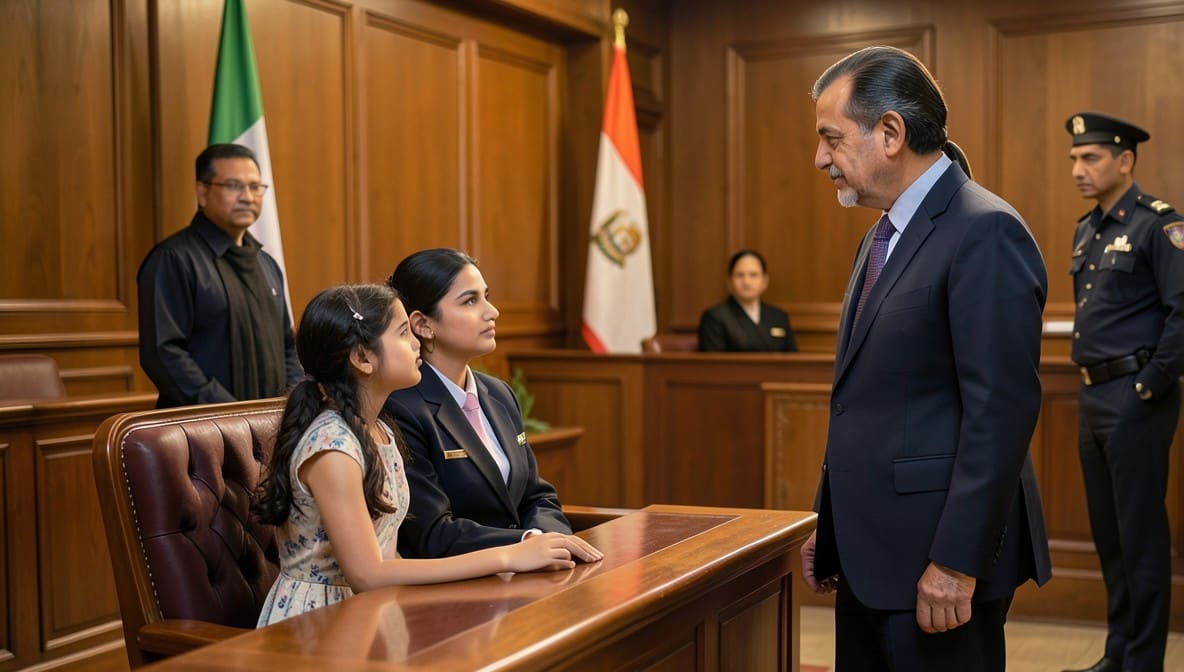
In a significant ruling on the scope of habeas corpus petitions involving minors, the Rajasthan High Court disposed of a petition after the corpus - a 17-year-old girl - unequivocally stated her desire to live with her father. The Court emphasized the minor's autonomy in custody matters while directing police authorities to ensure her safety during the transition. This judgment underscores the primacy of a minor's expressed wishes in habeas corpus proceedings.
Background & Facts
The Dispute
The petitioner, Rohitash, filed a habeas corpus petition alleging that his minor daughter (referred to as the "corpus") was illegally detained by the respondents. The corpus, aged approximately 17 years, was reportedly residing away from her father, prompting the petitioner to seek her custody through judicial intervention.
Key Facts
- The petitioner, Rohitash, is the father of the corpus, a minor girl aged about 17 years
- The corpus was allegedly under the influence or custody of Anil Kumar (Respondent No. 5), a resident of Village Ponkh, District Jhunjhunu
- The petitioner invoked the writ jurisdiction of the Rajasthan High Court under Article 226 of the Constitution of India seeking the production and custody of the corpus
- The corpus was produced before the Court on 29.06.2026 by the SHO, Police Station Sarund, District Kotputli-Behror
Procedural History
- Habeas Corpus Petition No. 194/2026 was filed before the Rajasthan High Court, Jaipur Bench
- The matter was listed before the Division Bench comprising Hon'ble Mr. Justice Inderjeet Singh and Hon'ble Mr. Justice Bhuwan Goyal
- On 29.06.2026, the Court interacted with the corpus in chambers
- The corpus expressed her desire to live with her father, Rohitash
- The Court disposed of the petition on the same day, directing the custody of the corpus to the petitioner
The Parties' Positions
For the Petitioner
The petitioner contended that the corpus was a minor and was illegally detained by Respondent No. 5. He sought her immediate production and custody, relying on the constitutional remedy of habeas corpus to protect the minor's liberty.
For the Respondents
The State, represented by the Advocate General-cum-Additional Advocate General, did not oppose the petition after the corpus was produced and expressed her willingness to live with her father. The SHO, Police Station Sarund, facilitated the production of the corpus before the Court.
Relief Sought
The petitioner sought:
- The production of the corpus before the Court
- Custody of the corpus to be handed over to him
- Directions to the police authorities to ensure the safety and well-being of the corpus
The Legal Issue
The central question before the Court was whether the custody of a minor girl, who is below 18 years of age, should be determined based on her expressed wishes in a habeas corpus proceeding, and what safeguards should be put in place to protect her interests.
Arguments Presented
For the Petitioner
The petitioner's counsel, Mr. Shyam Bihari Gautam, argued that the corpus was a minor and her detention by Respondent No. 5 was illegal. He relied on the principle that habeas corpus is a constitutional remedy to secure the liberty of individuals unlawfully detained. The counsel emphasized that the minor's welfare and best interests should guide the Court's decision.
For the Respondents
The State, through Mr. Rajesh Choudhary, GA-cum-AAG, did not contest the petition after the corpus was produced and stated her preference to live with her father. The SHO, Police Station Sarund, complied with the Court's directive to produce the corpus, enabling the Court to interact with her directly.
The Court's Analysis
The Division Bench of the Rajasthan High Court engaged in a direct interaction with the corpus to ascertain her wishes. The Court observed:
"We have interacted with the corpus and she has firmly stated before us that she wants to go with her father-Rohitash, who is present in the Court."
The Court placed significant weight on the minor's expressed desire, recognizing her autonomy while also acknowledging her vulnerable status as a minor. The judgment reflects a balance between respecting the minor's wishes and ensuring her protection under the law. The Court noted:
"Considering the statement made by the corpus before us and also considering the fact that she is minor and below 18 years of age, we permit the corpus to go and live with her father."
The Court further directed the SHO, Police Station Sarund, to ensure the corpus's safety during the transition, underscoring the State's responsibility to protect minors even when custody is determined based on their wishes.
The Verdict
The Rajasthan High Court disposed of the habeas corpus petition with the following directions:
- The custody of the corpus was handed over to her father, Rohitash, who was present in the Court and identified by the petitioner's counsel and the SHO
- The SHO, Police Station Sarund, was directed to ensure that no harm is caused to the corpus while she accompanies her father
- The petition was disposed of in light of the corpus's expressed wishes and the Court's satisfaction with the arrangements for her safety
What This Means For Similar Cases
Primacy of Minor's Wishes in Custody Disputes
This judgment reinforces the principle that in habeas corpus proceedings involving minors, the Court may prioritize the minor's expressed wishes when determining custody. Practitioners should note:
- Courts are increasingly inclined to interact directly with minors to ascertain their preferences
- The minor's statement, if unequivocal and voluntary, can be a decisive factor in custody disputes
- However, the Court retains the discretion to impose safeguards to protect the minor's well-being
Role of Police in Ensuring Minor's Safety
- The Court directed the SHO to ensure the corpus's safety during the transition, highlighting the police's role in protecting minors even after custody is determined
- Practitioners can argue for similar safeguards in cases where there are concerns about the minor's safety post-custody transfer
- This direction serves as a precedent for holding law enforcement agencies accountable for the protection of minors in custody disputes
Habeas Corpus as a Remedy for Minor Custody
- Habeas corpus is not limited to cases of illegal detention by State authorities; it can also be invoked in disputes involving private individuals
- This judgment clarifies that habeas corpus is an appropriate remedy for securing the custody of minors allegedly detained against their will
- Practitioners should consider this remedy in cases where minors are believed to be under the unlawful influence or custody of non-State actors